Contact Us
  Home / CNC Machining /
 5-Axis CNC Machining for Complex Parts
Produce complex multi-surface and compound-angle parts in a single setup — eliminating re-fixturing errors common in 3-axis machining.
-
 Tolerances to ±0.005mm on critical dimensions
 -
Simultaneous 5-axis machining, not 3+2 positioning
-
Complex curved surfaces, undercuts, multi-face features in one setup
-
From single prototype to 500-piece
-
Full DFM support
 Get Free Quote
 When Does a Part Need 5-Axis?
If your part features complex free-form surfaces, multi-face machining requirements, undercut internal cavities, or would require 4+ setups on a 3-axis machine — 5-axis is the answer.
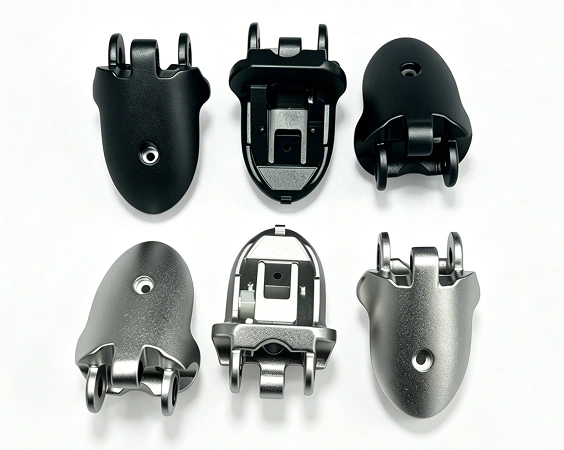
KING TOOL's engineers assess the optimal process route upon receiving your drawings. Five-axis machining isn't always more expensive; it's often the faster, more accurate choice.
Our 5-Axis Capabilities
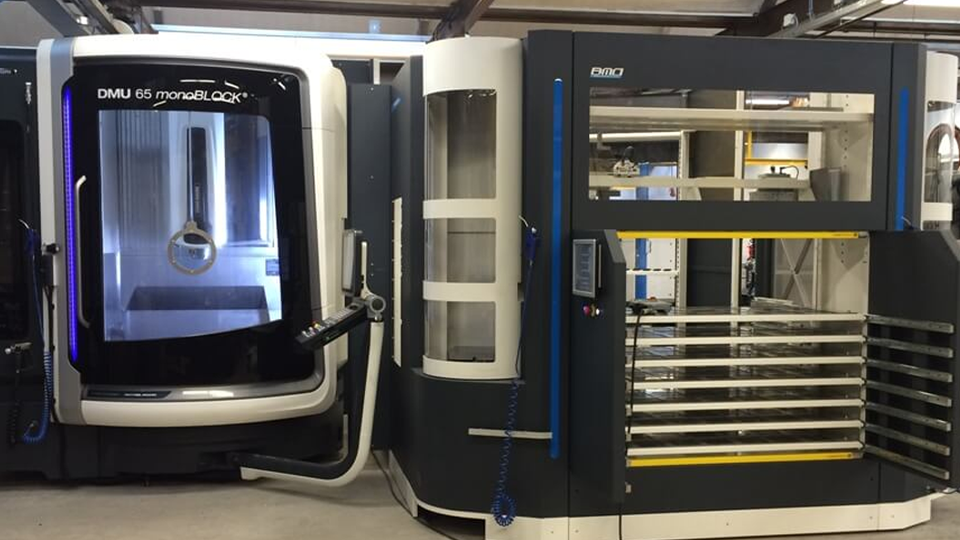
True 5-Axis
Our 5-axis centers handle all features in one setup — milling, drilling, tapping, and angled holes. No repositioning means higher accuracy and better repeatability for complex components.
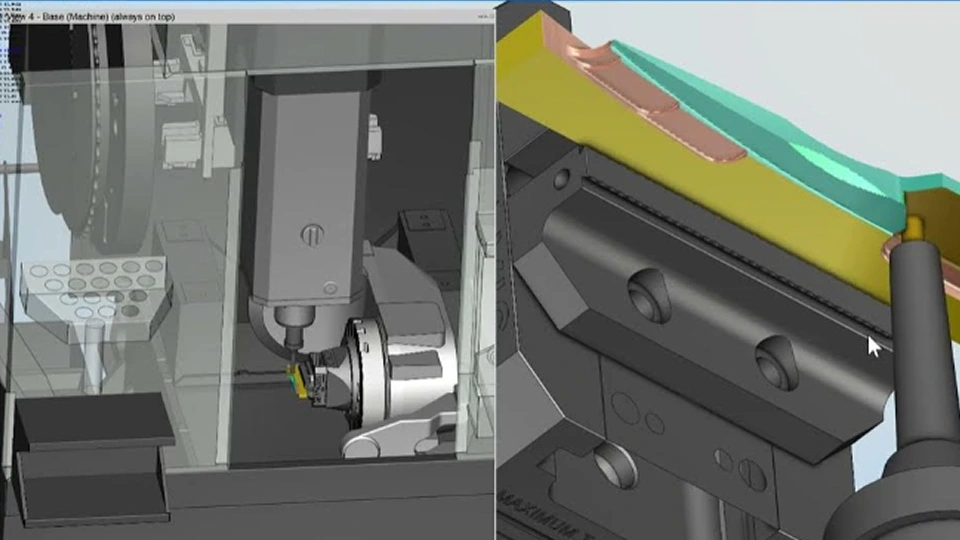
Programming
Our team designs collision-free toolpaths and optimizes tool orientation. All complex geometries are simulated offline, ensuring your first parts are right the first time.
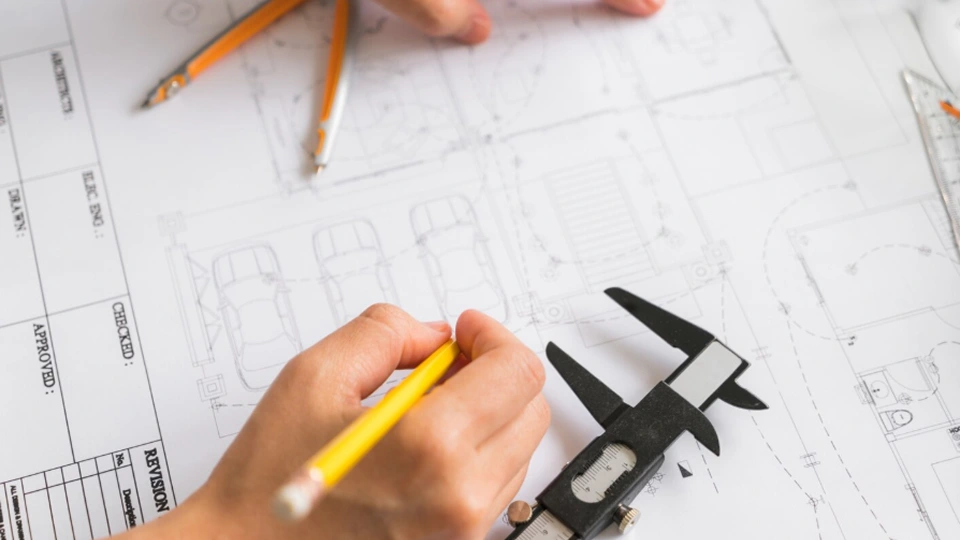
DFM Review
We review your drawings upfront to identify risks, define the best process route, and confirm adjustments. First articles are CMM-inspected, and every part ships with a full dimensional report.
Our Typical 5-Axis Machined Components
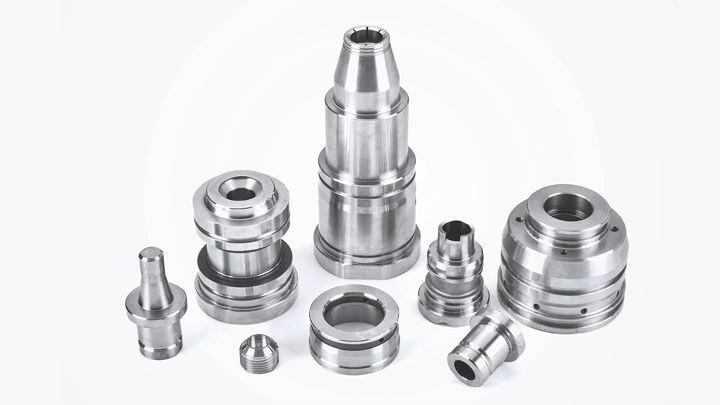
Mold Inserts & Tooling
Core inserts, cavity blocks, forming dies, fixture components
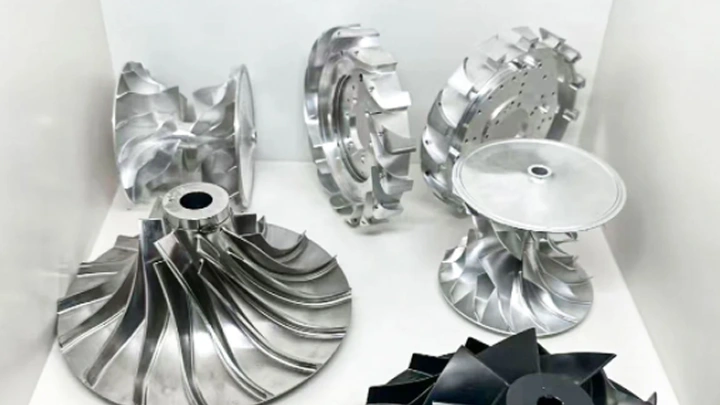
Aerospace & Turbine Components
Turbine blades, impellers, compressor wheels, structural brackets
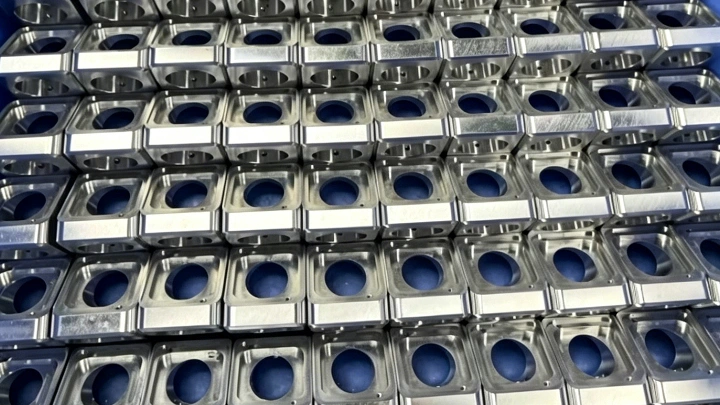
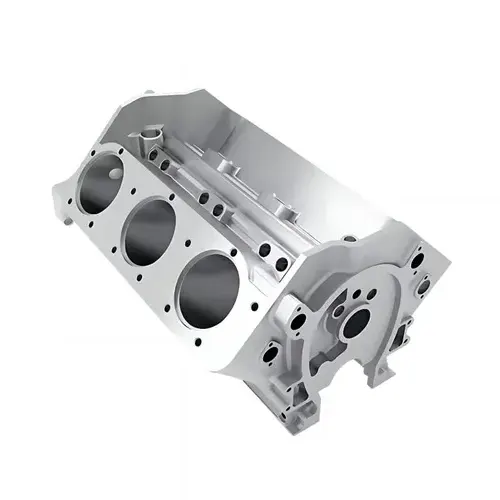
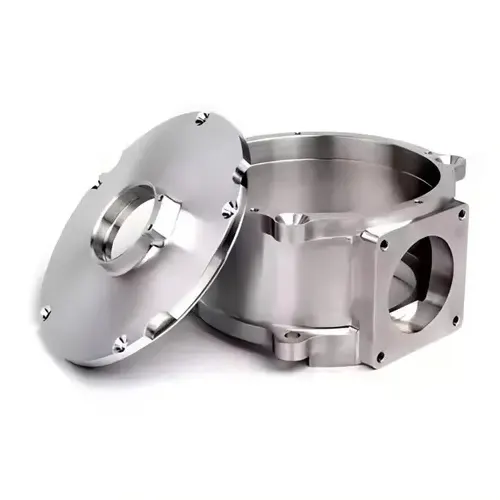
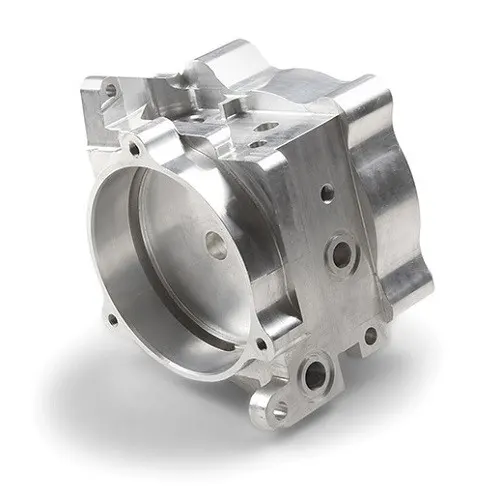
Precision Housings & Enclosures
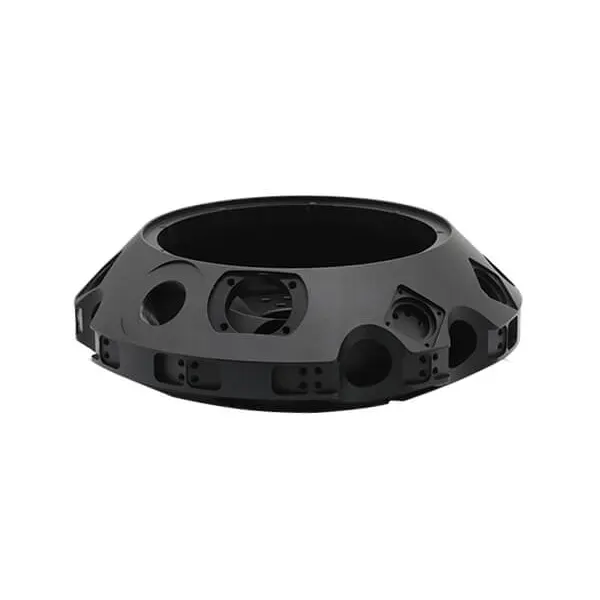
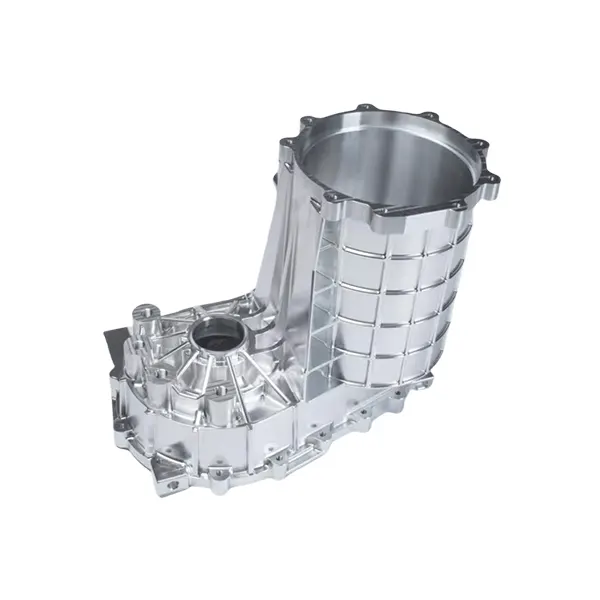
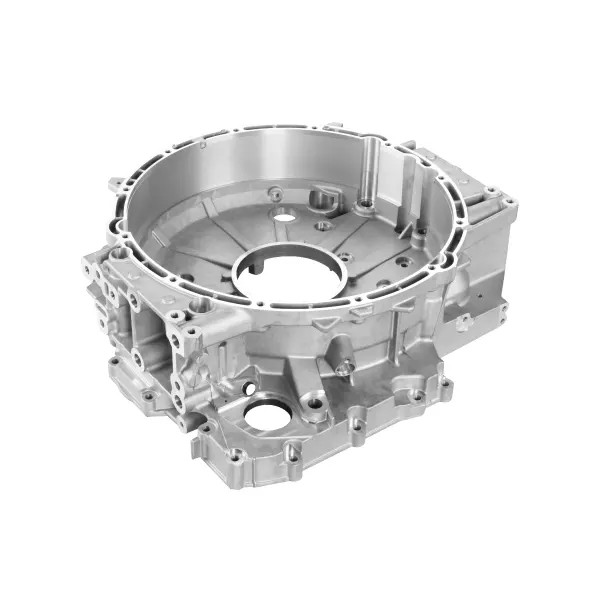
Motor housings, sensor enclosures, optical mounts, medical instrument bodies
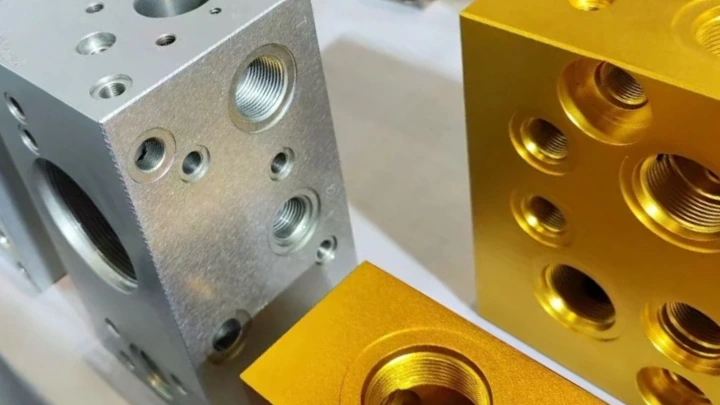
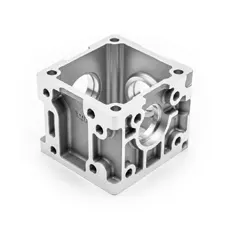
Valve Bodies & Manifolds
Hydraulic valve bodies, directional control manifolds, high-pressure fittings
More Case Studies
Materials for 5-Axis Machining
Aluminum Alloys
- 6061
- 7075
- 2024
- 5083
Stainless Steel
- 304
- 316
- 17-4
- 15-5
Copper Alloys
- C1100
- C36000
- C17200
Titanium Alloys
- Ti-6Al-4V
- Ti-5Al-2.5Sn
Thermoplastic
- ABS (Acrylonitrile Butadiene Styrene)
- PE (Polyethylene)
- PP (Polypropylene)
- PVC (Polyvinyl Chloride)
- PC (Polycarbonate)
- POM (Polyoxymethylene)
Engineering
- PEEK (Polyether Ether Ketone)
- PPS (Polyphenylene Sulfide)
- PTFE (Polytetrafluoroethylene)

Whether you're in aerospace, automotive, medical, or consumer electronics, our advanced technology and expert team are here to deliver high-quality, precise components that exceed your expectations.

Surface Finishing Options
We provide a range of surface finishing techniques to improve the appearance, durability, and performance of your CNC 5-axis machined components.
-
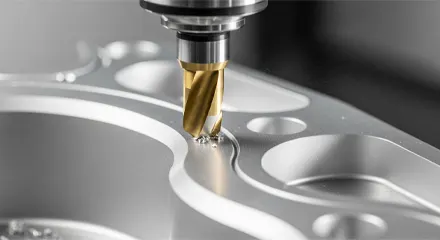
Milling
Traditional milling processes can be used for surface finishing, achieving smooth surfaces with varying finishes depending on the tool used.
-
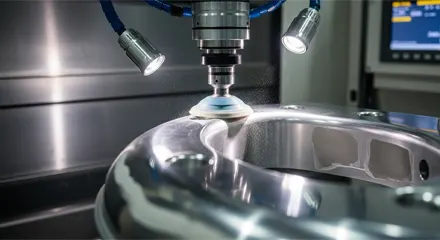
Polishing
This is a high-quality finishing process that smooths the surface, removing any scratches or marks left by previous machining steps. Polishing can achieve a mirror-like finish.
-
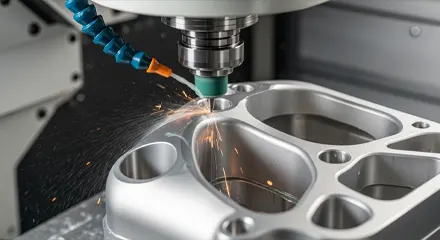
Grinding
A fine grinding process is used to smooth and refine surfaces, particularly when high precision and smoothness are required. It is ideal for harder materials.
-
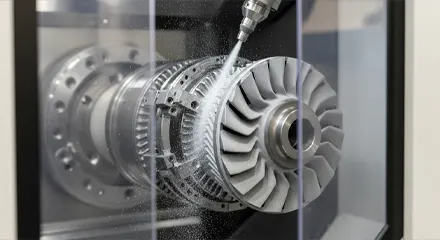
Bead Blasting
Bead blasting involves shooting fine beads (typically glass or ceramic) onto the surface, creating a matte, uniform finish, and improving surface texture for better adhesion or coating.
-
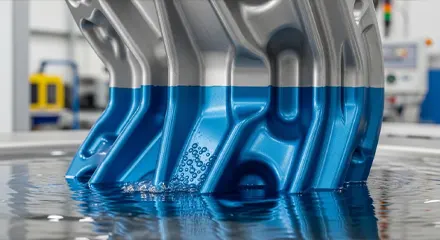
Anodizing
For aluminum parts, anodizing is often used not only for surface protection but also to create a decorative finish. It enhances corrosion resistance and can introduce colors.
-
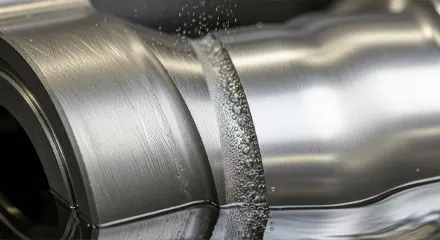
Electropolishing
This is a process that removes material from a metal surface through an electrochemical reaction, resulting in a shiny, smooth surface ideal for corrosion resistance and aesthetic appeal.
-
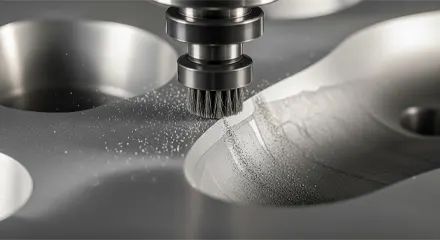
Deburring
Removing any burrs or sharp edges left on the part after machining. This process ensures smooth edges and a safer, more visually appealing finish.
-
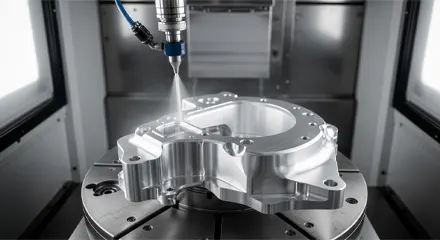
Coating
Various coatings, like powder coating, can be applied to improve surface finish, add a protective layer, or provide specific aesthetic qualities. It’s often used on metal parts.
-
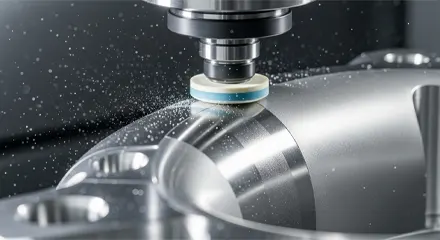
Lapping
A process where parts are polished using a soft abrasive slurry to achieve extremely fine finishes, often used for precision optical or mechanical components.
*Not sure which finish is right for your part? Explore our complete guide
Tolerance Guide
Precision is critical in CNC 5-axis machining. We define tolerances based on part function, material characteristics, and manufacturing feasibility to ensure optimal performance and cost balance.
Proper tolerance design helps reduce machining cost and improve production efficiency:
- Avoid over-tight tolerances where not functionally required
- Use standard tolerances for non-critical features
- Simplify complex geometries when possible
- Maintain uniform wall thickness for better stability
- Consider material behavior during machining
| Tolerance Type | Standard Tolerance (±mm) | Material | Cost Impact | Machining Feasibility |
| Non-critical Linear Dimensions | ± 0.05 | Aluminum (6061, 7075) | Medium | Easy to machine with standard tools, suitable for complex geometries |
| Critical Linear Dimensions | ± 0.02 - 0.05 | Stainless Steel (304, 316) | Medium/High | Requires precision tools, machining is more complex due to material hardness |
| High-precision Linear | ± 0.02 / 0.03 | Titanium (Ti) | High | Requires 5-axis machining and CMM inspection, specialized tooling required |
| Non-critical Linear Dimensions | ± 0.05 | Brass | Low | Easy to machine, good for detailed parts with intricate features |
| Non-critical Linear Dimensions | ± 0.05 | PEEK, Delrin (POM), Polycarbonate (PC), PTFE (Teflon) | Medium | Good for high-performance, complex parts; require specialized tooling for smooth finishes |
| Non-critical Linear Dimensions | ± 0.10 | Copper / Brass | Medium | Ideal for electrical components, relatively easy to machine |
Not sure about the right tolerance for your part?
Get Free Quote Our CNC 5-Axis Machining Process
-
 STEP 1
 Design & Modeling
 -
 STEP 2
Tool Selection
STEP 2
Tool Selection -
 STEP 3
G-Code Generation
STEP 3
G-Code Generation -
 STEP 4
Workpiece Setup
STEP 4
Workpiece Setup -
 STEP 5
Machining Operations
STEP 5
Machining Operations -
 STEP 6
Inspection & Quality
STEP 6
Inspection & Quality -
 STEP 7
Packaging & Delivery
STEP 7
Packaging & Delivery
Common CNC 5-Axis Machining Questions