Contact Us
  Home /
Tolerance and Quality Control


Tolerance and Quality Control
Why Tolerance Matters in CNC Machining
In CNC machining, tolerance defines the allowable variation in a part’s dimensions. — While often overlooked, it is one of the most critical factors determining whether a component will function as intended, assemble correctly, and maintain long-term reliability.
1. Ensuring Proper Fit and Assembly
Accurate tolerance control guarantees that mating parts fit together precisely — Excessive deviation can result in loose connections, interference fits, or complete assembly failure. For components used in mechanical systems, electronics, or precision equipment, even minor dimensional errors can disrupt the entire assembly process.
2. Maintaining Functional Performance
Tolerance directly affects how a part performs under real working conditions — Improper tolerances may lead to vibration, noise, poor sealing, or accelerated wear. In high-precision industries such as medical devices, automotive systems, and industrial equipment, consistent dimensional accuracy is essential for safety and durability.
3. Balancing Precision and Cost Efficiency
Tighter tolerances increase machining complexity, inspection requirements, and production time — However, specifying unnecessarily tight tolerances can significantly raise costs without adding functional value. Effective CNC machining focuses on applying tight tolerances only where necessary, while allowing standard tolerances in non-critical areas.
4. Supporting Consistency in Mass Production
For batch production, stable tolerance control ensures that every part meets the same qualit standard. This reduces variability, minimizes rejection rates, and guarantees reliable performance across large volumes.
Factors Affecting CNC Machining Tolerance
CNC machining tolerance is influenced by multiple factors throughout the manufacturing process, including:
Material Properties
Material hardness, thermal expansion, and deformation affect machining stability.
Machine Accuracy
Equipment precision and repeatability determine achievable tolerance levels
Tooling Conditions
Tool wear and cutting parameters impact dimensional consistency
Part Design
Complex geometries and thin-wall structures increase machining difficulty
Fixturing Method
Improper clamping may cause deformation or positioning errors
Environment & Temperature
Thermal variation can lead to dimensional deviation
Achieving precise tolerance requires controlling all variables throughout the entire machining process. From material selection and machining strategy to final inspection, we ensure every step is carefully managed to deliver consistent, reliable, and cost-effective results.
Achievable Tolerance Range for Manufacturing Processes
Tolerance depends on material properties, part geometry, machining equipment, and process conditions. Our quality control ensures that every part meets design specifications consistently, with advanced inspection methods like CMM and strict process monitoring. Tighter tolerances are achievable upon request.
| Process / Service | Typical Tolerance Achievable | High-Precision Capability | Notes |
| CNC Machining | ±0.05 mm | ±0.005 mm | Achievable with stable materials and optimized CNC setup |
| Sheet Metal Fabrication | ±0.1 mm | ±0.05 mm | Thin sheets; bending and cutting precisely controlled |
| Metal Stamping Tooling | ±0.05 mm | ±0.02 mm | Dies and tools manufactured to tight specifications |
| Die Casting | ±0.1 mm | ±0.05 mm | Shrinkage compensated for zinc, aluminum, and magnesium |
| Injection Molding | ±0.1 mm | ±0.02 mm | Precision molds and plastics handled for tight tolerances |
| Tool & Die | ±0.02 mm | ±0.005 mm | Critical tooling produced with extreme precision |
| 5-Axis CNC / Complex Components | ±0.03 mm | ±0.002 mm | Multi-axis machining for complex, high-precision parts |
We provide comprehensive control across all processes — CNC machining, sheet metal, stamping, casting, molding, and tool/mold making — to deliver precise, reliable, and cost-effective results for your project.
Workshop Equipment Gallery
-
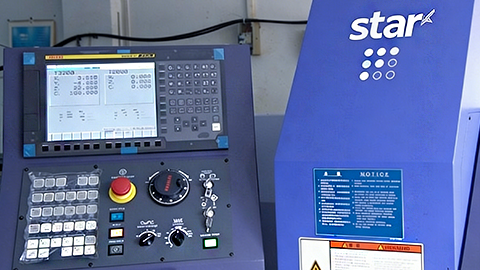 Compound CNC
 -
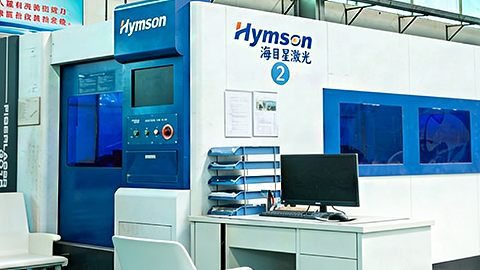 Laser Cutting Machine
 -
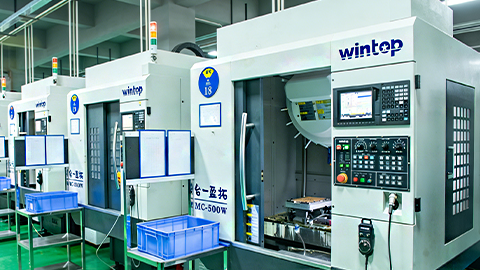 CNC Machining Equipment
 -
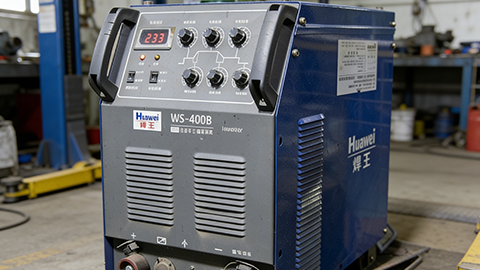 Welding Machine
Precision Control from Material to Finished Part
-
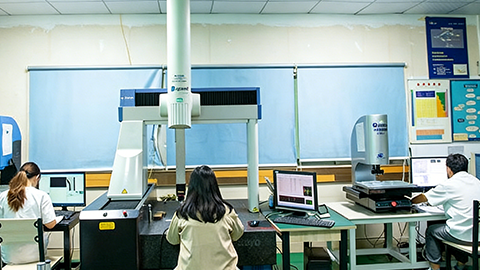 step1: Material Control, Carefully choose stable materials to minimize deformation.
 -
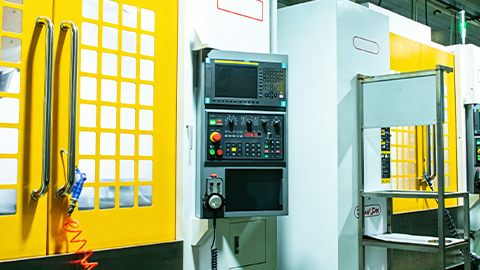 step2: Machining Control, Calibrate machines and optimize CNC processes.
 -
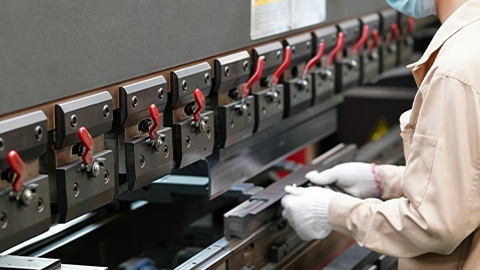 step3:Setup & Environment, Secure parts and control workshop conditions.
 -
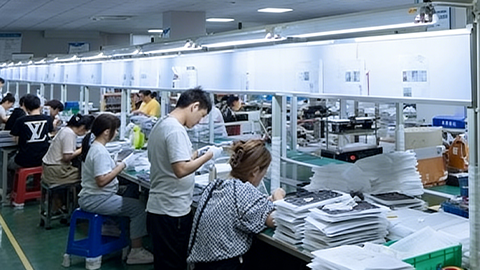 step4: Inspection & Improvement, Measure and correct to maintain precision.
FAQ