Contact Us
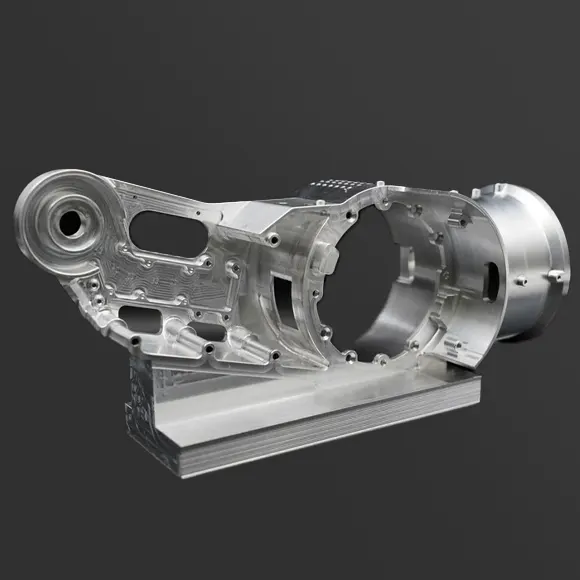


5-Axis CNC Machining of Robot Main Joint Housing | 7075 Aluminum Complex Contour Milling
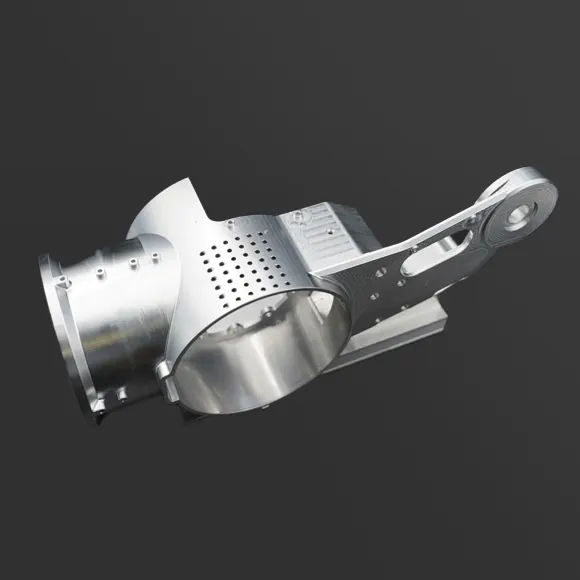
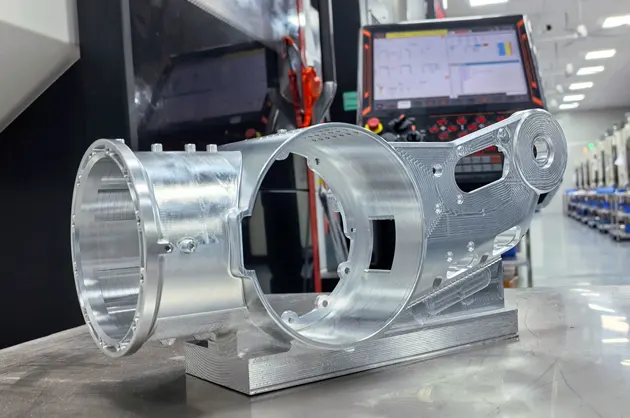
The robot main joint housing is crafted from a solid 7075 aerospace-grade aluminum billet using 5-axis simultaneous CNC machining. This advanced process allows for the creation of intricate internal channels, irregular mounting surfaces, and a lightweight, topology-optimized structure—all in a single setup. The result is a component that offers exceptional rigidity, precision, and smooth motion.
- Processing Equipment: 5-Axis CNC Machining Center
- Technology: 5-Axis Simultaneous Milling
- Testing Instruments: CMM, Laser Scanner
- Surface Treatment: As-Machined (No Coating)
- Post-process Inspection Equipment: CMM
- Application Areas: Industrial Automation / Robotics
 Get Free Quote


KT, founded in 2005, is a leading company in the field of precision CNC machining, specializing in the manufacture of high-performance components for industries such as aerospace, robotics, automotive, and industrial automation. With a state-of-the-art manufacturing facility, KT employs the latest 5-axis CNC technology, enabling them to produce complex geometries, multi-dimensional parts, and high-precision components.
Capabilities and Expertise
- Advanced CNC Machines: KT’s facility is equipped with top-tier 5-axis CNC machining centers, capable of machining parts with complex contours, irregular surfaces, and internal geometries that would be difficult to achieve with traditional manufacturing methods.
- Material Expertise: KT is highly proficient in working with a variety of advanced materials, including 7075 aluminum, which is widely used in industries where both strength and lightness are critical, such as aerospace and robotics.
- ISO 9001 Certified Processes: KT operates under ISO 9001 standards, ensuring rigorous quality control throughout the manufacturing process. Every component is subjected to a series of tests and inspections, including CMM (Coordinate Measuring Machine) scanning, 3D laser scanning, and material testing to meet the highest standards of quality and performance.
Production Facility
- Cutting-edge Equipment: KT utilizes advanced 5-axis CNC machining centers that allow for simultaneous milling along five different axes, achieving intricate geometries in a single setup.
- Flexible Production: Whether for prototypes, small-to-medium batch production, or high-volume manufacturing, KT’s production line is flexible enough to accommodate a variety of customer needs.
- Material Options: The company has extensive experience working with a range of materials, such as 7075-T6 aluminum, stainless steel, and engineering plastics like PEEK and POM.
Process Control
- Programming & Simulation: The CNC machining process begins with Mastercam or Hypermill software to generate the 5-axis tool paths. Interference checks are carried out to ensure the tools do not collide with the machine's rotating components.
- Rough Machining: During this stage, the bulk of the material is removed using high-speed machining. A 0.3-0.5mm finishing allowance is left for precision milling, and the part undergoes heat treatment to relieve any residual stresses that could lead to distortion.
- 5-Axis Precision Milling: This stage involves high-precision milling of complex curves and bearing seats, ensuring that the required surface finish is achieved. The bearing seat is machined to a Ra 0.4μm surface finish, ensuring smooth motion for bearing operation.
- Post-Processing: The parts are deburred, cleaned, and anodized if necessary (hard anodizing is typically used for improving wear resistance and corrosion protection).
- Measurement & Validation: The final part undergoes dimensional inspection using CMM (Coordinate Measuring Machine) to verify the concentricity of the bearing bore and the relative positional accuracy of the joints.
Key Features & Advantages
- Monolithic Complex Structure: Using 5-axis CNC machining, the part is manufactured as a monolithic structure, meaning multiple features such as mounting surfaces, cooling channels, and conduits are integrated into a single piece, reducing the risk of assembly errors and improving overall rigidity.
- Precision Manufacturing: The part achieves tight dimensional tolerances of ±0.025mm (with critical bore tolerances of ±0.015mm), ensuring that it fits seamlessly with the other components of the robotic system. This precision is crucial for high-performance robotic arms where exact motion and alignment are required.
- Internal Cooling Channels & Cable Conduits: These critical features are machined directly into the housing, allowing for better heat dissipation and reducing the need for additional components, making the design cleaner and more reliable.
- Weight Optimization: The part’s design is optimized using topology optimization techniques, which help to reduce the weight by 35% compared to traditional designs. This helps to improve the dynamic performance of the robotic arm, reducing the overall mass and increasing speed and energy efficiency.
- Datum-Free Assembly: All critical features, such as mounting surfaces and bearing seats, are machined in a single setup, ensuring exceptional geometric tolerances and coaxiality between components, which simplifies the assembly process and improves overall quality.
Technical Specifications
| Parameter | Value |
| Processing Equipment | 5-Axis CNC machining Center |
| Technology | 5-Axis Simultaneous Milling |
| Testing Instruments | CMM, Laser Scanner |
| Surface Treatment | As-Machined (No Coating) |
| Post-process Inspection Equipment | CMM |
| Application Areas | Industrial Automation / Robotics |
Core Parameters
| Characteristic | Specification | Standard |
| Material | 7075-T6 Aluminum | ASTM B209 |
| Dimensional Tolerance | ±0.025mm (Critical Bore: ±0.015mm) | ISO 2768-mK |
| Surface Finish | Ra 0.4μm (Bearing Seat) | ASME B46.1 |
| Tensile Strength | 572 MPa | ASTM B557 |
| Weight Reduction | >35% (vs. Traditional Design) | Topology Optimized |
| Bearing Bore Roundness | ≤ 0.008mm | DIN 42962 |
Applications
- Industrial Robotics: The main joint housing is a crucial component in the core joint of industrial robots and collaborative robots. It ensures the required rigidity and precision for dynamic movements in highly demanding tasks.
- Aerospace Applications: The 7075-T6 aluminum, known for its superior strength-to-weight ratio, makes it an ideal material for aerospace components where strength and lightweight properties are paramount.
- Automated Systems: The housing can also be utilized in other industrial automation systems that require high precision, low weight, and durability under dynamic loads.