Contact Us
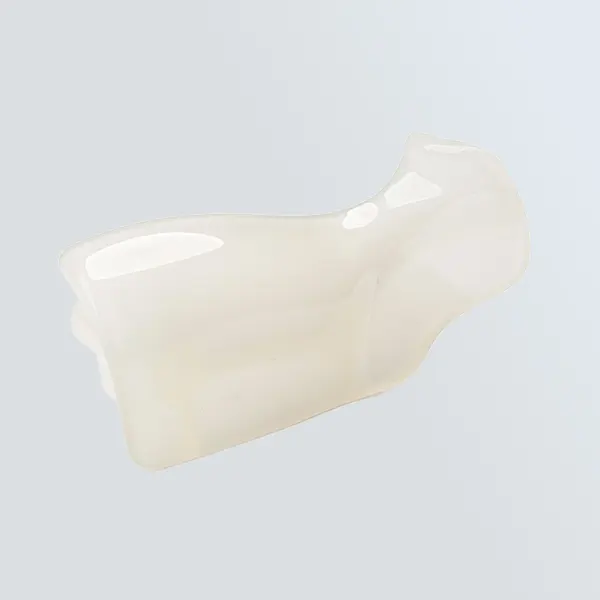


PU Polyurethane Ergonomic Component
- Material: PU
- Process: Vacuum Casting with Silicone Mold
- Key Features: Smooth glossy finish, ergonomic curved geometry, semi-translucent appearance
- Typical Applications: Consumer Goods, Medical Devices, Automotive, Industrial Equipment
- Tolerance: ±0.1–0.2 mm
- Surface Treatment: Mold release cleaning, polishing, buffing
 Get Free Quote


At KT, we provide expert vacuum casting services using a wide range of engineering-grade resins, including PE/PP-like polyurethanes. These materials bridge the gap between prototyping and production, offering properties similar to polyethylene and polypropylene while supporting the complex geometries and low-volume runs common in product development. We specialize in delivering functional, aesthetically consistent parts for consumer, medical, and industrial applications.
📌 Product & Process Overview
- The smooth, organic shape features no visible seams or parting lines, showcasing the high-quality surface finish achievable with vacuum casting
- The semi-translucent appearance is typical of these polyolefin-like resins, allowing light transmission while maintaining structural integrity
- The material’s flexibility and impact resistance make it ideal for ergonomic parts that require repeated contact and handling
- The full vacuum casting workflow includes:
- Master pattern creation (via CNC or 3D printing)
- Silicone mold design and curing
- Degassing and vacuum-assisted pouring of PE/PP-like resin
- Curing, demolding, and post-processing
🔍 Key Advantages of PE/PP-like Polyurethanes
✅ Polyolefin-like Performance: Replicates the flexibility, chemical resistance, and impact strength of PE/PP, making it suitable for parts that would typically use these production-grade plastics.
✅ Excellent Processability: These resins are optimized for vacuum casting, with low viscosity for fine detail reproduction and minimal shrinkage during curing.
✅ Aesthetic Versatility: Available in clear, translucent, and opaque grades, allowing for the production of parts with the exact visual appearance required for your design.
✅ Cost-Effective Prototyping: Eliminates the need for expensive hard tooling to test parts that will eventually be injection-molded in PE or PP.
✨ Surface Finish & Post-Processing
- Mold release agent removal and cleaning
- Manual polishing to achieve the glossy finish shown
- Buffing to remove minor surface imperfections
- Optional coating or tinting for color customization
- Functional testing (impact, flexibility, chemical resistance)
📋 Specification Table
| Item | Specification |
|---|---|
| Material | PU |
| Process | Vacuum Casting, Silicone Mold |
| Key Features | Ergonomic organic shape, semi-translucent, high-gloss finish |
| Tolerance | ±0.1–0.2 mm |
| Surface Treatment | Polishing, buffing, cleaning |
| Typical Lead Time | 3–7 days for mold + first parts |
🎯 Applications
- Consumer Goods: Ergonomic handles, grips, and housings for household appliances and personal care products
- Medical Devices: Non-critical components requiring flexibility, chemical resistance, and biocompatibility (where applicable)
- Automotive: Interior trim, grips, and functional prototypes for car interiors
- Industrial Equipment: Protective covers, flexible housings, and ergonomic control parts
✅ Advantages
✅ True-to-Properties Prototyping: PE/PP-like polyurethanes allow you to test parts with the same feel and performance as the final production material, reducing the risk of costly design changes later.
✅ Complex Geometry Freedom: Vacuum casting easily reproduces the organic curves and ergonomic shapes that would require complex tooling in traditional injection molding.
✅ Excellent Surface Quality: The smooth, glossy finish requires minimal post-processing, resulting in parts that look nearly identical to mass-produced products.
✅ Flexible Material Options: Choose from different hardness grades (soft to rigid) to match the specific feel and function of your part.
✅ Cost-Effective for Low Volumes: Ideal for prototyping, market testing, and small-batch production without the high upfront cost of PE/PP injection molds.
✅ Chemical and Impact Resistance: These resins offer good resistance to common household chemicals and impact, making them suitable for parts that see regular use and abuse.