Contact Us
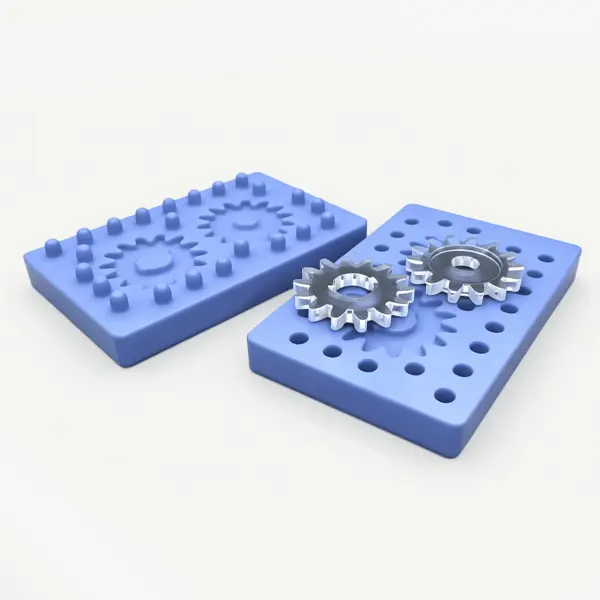


Vacuum Casting Silicone Mold & Gear Prototype
Compared to traditional metal tooling, vacuum casting offers an economical, fast-turnaround solution for small-batch production and functional prototyping. It is ideal for producing complex plastic components without the high upfront investment of injection molds.
- Mold Material: Food-Grade Silicone Rubber
- Prototype Material: Engineering Resin (PU / Nylon-like)
- Key Advantages: Low cost, fast mold making, no high-pressure tooling required
- Typical Applications: Prototyping, Small-Batch Production, Functional Testing
- Tolerance: ±0.1–0.2 mm (depending on part geometry)
 Get Free Quote


At KT, we provide comprehensive vacuum casting services, from master pattern creation to silicone mold making and final part production. We specialize in delivering cost-effective, high-quality plastic prototypes and small-batch components. Our process is optimized for fast lead times, low initial investment, and flexible material options, helping customers bring products to market quickly and affordably.
📌 Product & Process Overview
- A two-part silicone mold is created around a master pattern (the gear)
- Liquid resin is poured into the mold under vacuum to eliminate air bubbles
- After curing, the mold is opened to reveal a functional plastic gear part
The process allows for:
- Complex part geometries, including fine gear teeth and undercuts
- Material properties matching many engineering plastics
- Multiple copies from a single mold, ideal for low-volume production
💰 Cost & Lead Time Advantages
✅ Lower Initial Investment:
Silicone molds cost a fraction of metal injection molds, with no need for expensive high-pressure tooling. This drastically reduces upfront costs, making it accessible for startups and small projects.
✅ Fast Mold Production:
Silicone molds can be made in just a few days, compared to weeks or months for metal molds. This accelerates the prototyping and validation phase significantly.
✅ Affordable Material Options:
Resins and curing agents are cost-effective, with a wide range of grades available (transparent, flexible, flame-retardant, and more). This allows you to test different material properties without committing to expensive bulk orders.
🔧 Production Workflow
- Master Pattern Fabrication:The initial gear part is created via SLA 3D printing or CNC machining. While these methods are precise, many manufacturers outsource this step to save on equipment costs and lead times.
- Silicone Mold Making:Liquid silicone is poured around the master pattern to form a two-part mold. Once cured, the mold is split, and the master pattern is removed.
- Vacuum Casting:Liquid resin is mixed, degassed, and poured into the mold under vacuum to ensure no air bubbles are trapped.
- Curing & Finishing:The resin cures at controlled temperatures. After demolding, parts are cleaned, deburred, and inspected.
✨ Surface Finish & Post-Processing
- As-molded smooth surface finish
- Manual deburring and trimming
- Sanding, polishing, and painting (optional)
- Assembly and functional testing
📋 Specification Table
| Item | Specification |
|---|---|
| Mold Material | Silicone Rubber |
| Part Material | PU / Engineering Resin (various grades) |
| Process | Vacuum Casting, Silicone Mold |
| Production Volume | 10–50 parts per mold (depending on complexity) |
| Lead Time | 3–7 days for mold + first parts |
| Cost Level | Low initial investment, economical for small batches |
🎯 Applications
- Product Prototyping: Form, fit, and functional testing of complex parts
- Small-Batch Production: Low-volume manufacturing for custom equipment and niche markets
- Consumer Electronics: Functional enclosures, gears, and components for limited-run products
- Medical & Lab Equipment: Non-critical functional parts for research and development
✅ Advantages
- High Cost Efficiency: The most affordable method for small-quantity plastic components compared to injection molding.
- Fast Turnaround: From master pattern to finished parts in days, not weeks.
- Flexible Materials: Wide range of resins to match mechanical, thermal, and aesthetic requirements.
- No High-Pressure Tooling: Eliminates the cost and lead time associated with hard metal molds.
- Excellent Detail Reproduction: Captures fine features, textures, and complex geometries accurately.
- Low Risk, High Flexibility: Ideal for iterative design changes and market validation without large capital expenditure.