Contact Us
  Home /
 Transparent 5-Axis CNC Machining Cost Analysis


Table of Contents

Five-axis CNC machining enables parts with deep cavities, undercuts, freeform surfaces, and multi-angle features—capabilities that 3-axis machines simply cannot deliver. However, this capability comes with higher perceived costs and production risks, leaving many clients unsure about whether five-axis is worth it.
At KT, we approach this with complete transparency, breaking down the process, cost drivers, and quality control measures, so clients can make informed decisions.
1. Breaking Down the Cost of Five-Axis Machining
A five-axis machining quote is not a single number. It is the sum of five distinct cost categories. Understanding each one helps clients ask better questions and compare suppliers on more than just the bottom line.
1.1 Material Cost
Five-axis parts are often made from expensive materials: titanium (Grade 5, Ti-6Al-4V), Inconel (718, 625), stainless steel (17-4PH, 316), or high-temperature alloys. Raw material prices for these grades range from $15/kg for standard stainless to over $150/kg for aerospace-grade titanium.
Key factor affecting material cost: Scrap rate.
On a 3-axis machine, a complex part might have 30-40% material removal. On a five-axis machine, with optimized tool paths and better access, removal can be reduced to 15-20%. However, if the supplier's programming is poor, scrap can exceed 50%. The material you pay for but do not receive is a direct cost.
What to ask suppliers: What is your estimated material utilization rate for this part?
1.2 Machine Time Cost
Five-axis cycle times are not inherently longer than 3-axis times. For a part requiring three separate setups on a 3-axis machine, a single-setup five-axis process may be faster. But for complex surface machining, five-axis cycle times can be significant.
Typical machine hour rates for five-axis equipment:
| Machine Type | Hourly Rate (USD) | Typical Application |
| 3-axis VMC | $60 - $90 | Simple parts, low complexity |
| 5-axis (3+2 positioning) | $100 - $150 | Multi-face parts, moderate complexity |
| Full 5-axis (simultaneous) | $150 - $250+ | Complex surfaces, aerospace/mold work |
A part requiring 10 hours of 3-axis machining at $80/hour costs $800 in machine time. The same part requiring 6 hours of five-axis machining at $180/hour costs $1,080. The machine time cost is higher, but the part may be finished in one setup with better accuracy.
The trade-off: Higher hourly rate vs. fewer setups, less handling, and lower scrap risk.
1.3 Programming and CAM Cost
This is the most underestimated cost category. Five-axis programming requires:
- Advanced CAM software (annual license: $15,000 - $30,000 per seat)
- Experienced programmers (3-5 years of five-axis experience minimum)
- Collision simulation for every tool path
A complex five-axis part can require 8-40 hours of programming time. At a programmer rate of $50-$100/hour, that is $400 to $4,000 in programming cost alone. For low-volume production (1-10 parts), programming cost can dominate the per-part price.
How suppliers handle this differently:
- Low-cost suppliers: Program with minimal simulation, take risks, discover collisions on the machine. This leads to crashes, broken tools, and scrapped parts.
- Professional suppliers: Invest in full simulation, catch problems in software, charge higher programming fees but deliver first-part-correct.
The client pays for programming either way. The difference is whether you pay for it once (good simulation) or multiple times (crashes and rework).
1.4 Tooling and Workholding Cost
Five-axis parts often require specialized tooling:
| Item | Typical Cost Range | Notes |
| Custom fixture | $500 - $5,000 | Often needed for complex geometries |
| Shrink-fit or hydraulic tool holders | $150 - $500 each | Required for high-speed five-axis work |
| Long-reach or tapered tools | $50 - $300 each | For deep cavity access |
| Tool presetter | Included in machine setup | Reduces setup time |
A supplier who already owns a range of five-axis tooling will not need to charge the client for new tooling. A supplier who does limited five-axis work may pass these costs through as line items.
1.5 Inspection and Quality Cost
Five-axis parts typically have tighter tolerances and more critical dimensions than 3-axis parts. Inspection requirements are higher.
| Inspection Method | Time per Part | Cost Implication |
| Manual inspection (calipers, micrometers) | 10-30 minutes | Low, but limited to simple dimensions |
| CMM (offline) | 1-4 hours | $100 - $400 per part for complex geometries |
| On-machine probing | 10-30 minutes | Lower cost, integrated into cycle time |
For a batch of 50 complex five-axis parts, CMM inspection at 2 hours per part adds 100 hours of inspection time. That is a significant cost. Professional five-axis suppliers build inspection into their process, using on-machine probing for in-process checks and CMM only for final validation.
2. The Hidden Risks That Drive Five-Axis Cost Up
Even when the quote seems reasonable, hidden risks can double or triple the final cost. These risks are not always visible in the supplier's initial price.
2.1 Risk: Collision and Machine Crash
Five-axis machines have more moving parts and tighter clearances than 3-axis machines. A programming error that would cause a minor tool break on a 3-axis machine can cause a catastrophic collision on a five-axis machine — spindle damage, fixture destruction, part scrap.
Cost of a five-axis collision:
- Spindle replacement: $15,000 - $40,000
- Machine downtime: 2-6 weeks
- Scrapped part: material cost + machining time already invested
How professional suppliers mitigate this: Full CAM simulation for every tool path, plus first-part test runs at reduced feed rates.
2.2 Risk: Tool Interference and Gouging
On a five-axis machine, the tool holder or the machine head itself can collide with the part — even if the cutting edge clears the material. This is called interference. It is difficult to detect without proper simulation.
Result: Gouged part surface, scrapped part, or damaged tooling.
How professional suppliers mitigate this: Use of machine simulation models that include the exact tool holder and spindle geometry, not just the cutting tool.
2.3 Risk: Thermal Deformation During Long Cycles
Five-axis parts often require long continuous cycle times — 4, 8, or even 12 hours. During this time, the machine warms up, the part warms up, and dimensions drift.
Result: The first part of the batch and the last part may have different dimensions, even though the program is identical.
How professional suppliers mitigate this: Warm-up cycles before production, coolant temperature control, and in-process probing to detect and compensate for thermal drift.
2.4 Risk: Stress Relief Distortion
Complex five-axis parts often start as a solid block of material. Removing 80-90% of the material releases internal stresses. The part can warp after machining.
Result: Parts that pass inspection on the machine but fail when removed from the fixture.
How professional suppliers mitigate this: Rough machining, then stress-relieving heat treatment, then finish machining. This adds time but prevents scrap.
3. KT's Six Transparent Nodes – Making Five-Axis Cost Predictable
We have structured our five-axis service around six checkpoints. Each node produces a deliverable that the client receives. No guesswork. No hidden steps.
Node 1: Drawing Evaluation and Feasibility Feedback
What the client receives: A written evaluation within 24 hours of drawing submission.
Contents of the evaluation:
- Confirmation that the part is suitable for five-axis machining
- Identification of challenging features (deep pockets, sharp internal corners, thin walls)
- Material recommendations if applicable
- Preliminary cost range and lead time estimate
What this does for the client: You know before committing whether the part is feasible. No back-and-forth. No "we'll try and see."
Node 2: Process Plan and Workholding Confirmation
What the client receives: A documented machining strategy.
Contents of the process plan:
- Fixturing approach (custom vise jaws, vacuum fixture, or tombstone)
- Tooling list (diameter, length, coating, estimated tool life)
- Machining sequence (roughing, semi-finishing, finishing)
- Estimated cycle time per part
What this does for the client: You see exactly how the part will be made. If you have concerns about a specific feature, this is the time to address them.
Node 3: CAM Simulation Video
What the client receives: A video file showing the full tool path simulation.
What the simulation shows:
- Tool motion in all five axes
- Clearance between tool holder and part
- Any potential collisions or near-misses
- Surface finish patterns
What this does for the client: You do not need to understand five-axis programming to review a simulation. You can see whether the tool is accessing all required features and whether any movement looks risky.
Node 4: Test Cut Report (First Article Inspection)
What the client receives: A full dimensional inspection report for the first part produced.
Contents of the test cut report:
- CMM measurement data for all critical dimensions
- Surface finish measurements (Ra, Rz where specified)
- Photographs of the finished part
- Any deviations or adjustments made during test cut
What this does for the client: You approve the first part before we run the full batch. If changes are needed, they happen on one part, not on 100.
Node 5: In-Process Inspection Data
What the client receives: Periodic inspection data during production.
For a typical batch:
- First piece: full CMM report (Node 4)
- Every 20th piece: key dimension check
- Last piece: full CMM report
What this does for the client: You do not need to wait until the entire batch is finished to know if quality is holding. If a problem appears mid-batch, we catch it and correct it.
Node 6: Final Inspection Report and Shipment
What the client receives: A complete quality package with every shipment.
Contents of the final package:
- Final CMM inspection report for the batch
- Material certification (if applicable)
- Surface finish records (if specified)
- Certificate of conformance
What this does for the client: Your incoming inspection is simplified. You can spot-check for validation, but the data package provides the full story.
4. Comparing the Total Cost of Ownership
The table below compares a typical low-transparency supplier approach with KT's six-node transparent approach for a medium-complexity five-axis part (batch size: 50 pieces).
| Cost Factor | Low-Transparency Supplier | KT Six-Node Approach |
| Quoted unit price | $500 | $580 |
| Programming cost | Hidden in overhead | Itemized in quote |
| First-article success rate | 60% (40% require rework) | 95% (5% minor adjustments) |
| Scrap rate during production | 8-12% | 1-3% |
| Inspection cost | Client does incoming inspection | Data package included |
| Emergency rework cost | Client absorbs delay | KT covers if at fault |
| Effective cost per good part | $620 - $680 | $600 - $620 |
| Lead time predictability | ±50% | ±10% |
The transparent supplier may have a higher quoted price, but the effective cost per good part is often lower. More importantly, the client does not need to budget for surprises.
5. Decision Framework – Is Five-Axis the Right Choice?
Not every part needs five-axis machining. Use the following criteria to decide.
Five-axis is justified when:
| Condition | Why |
| Part requires machining on 5+ faces | 3-axis would need multiple setups and re-fixturing |
| Part has undercuts or negative draft angles | 3-axis tool cannot access |
| Part has deep cavities (depth > 3x tool diameter) | 3-axis requires excessive tool extension |
| Critical tolerances require single-setup accuracy | Multiple setups introduce alignment errors |
| Surface finish must be continuous across faces | 3-axis leaves witness marks at setup boundaries |
Five-axis is NOT justified when:
| Condition | Why |
| Part can be machined in 1-2 setups on 3-axis | Additional complexity adds cost without benefit |
| Low precision requirements (±0.1mm or looser) | 3-axis accuracy is sufficient |
| Very small batch (1-2 pieces) of simple geometry | Programming cost outweighs benefits |
If you are unsure, send the drawing. We will provide an honest recommendation, even if that recommendation is "this does not need five-axis."
Transparency Reduces Total Cost
Five-axis machining is more expensive per machine hour than 3-axis machining. That is a fact. But the total cost of owning a five-axis project depends almost entirely on the supplier's process discipline.
A supplier who:
- Does not simulate collisions thoroughly
- Does not share inspection data
- Does not have a structured process
…will cost the client more in rework, scrap, and delays than any savings in the quoted unit price.
A supplier who follows a transparent, node-based workflow — like the six nodes described above — turns five-axis complexity into a predictable, manageable process.
We encourage clients to:
- Send drawings for a no-obligation feasibility review
- Request a process plan before placing an order
- Ask for simulation videos and inspection data throughout production
Talk to the Manufacturer, Not a Middleman
Resources & Insights
-
 Blog
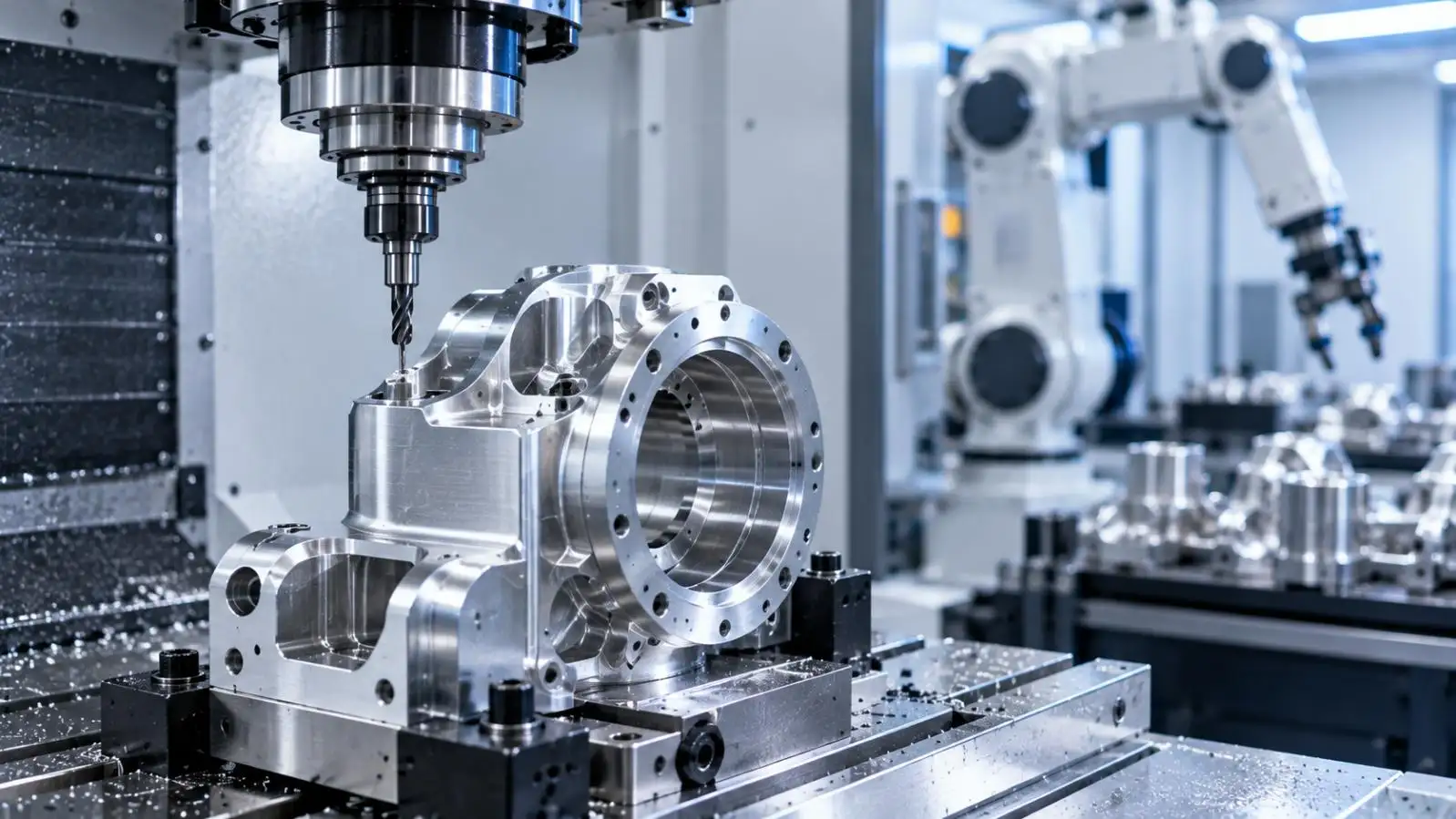
BlogCNC Machining Robotic Parts: How GD&T Controls Robot Assembly Accuracy
2026-09-24By KT Engineering -
 Blog
BlogHardware Stamping Springback Control for High-Strength Steel Parts
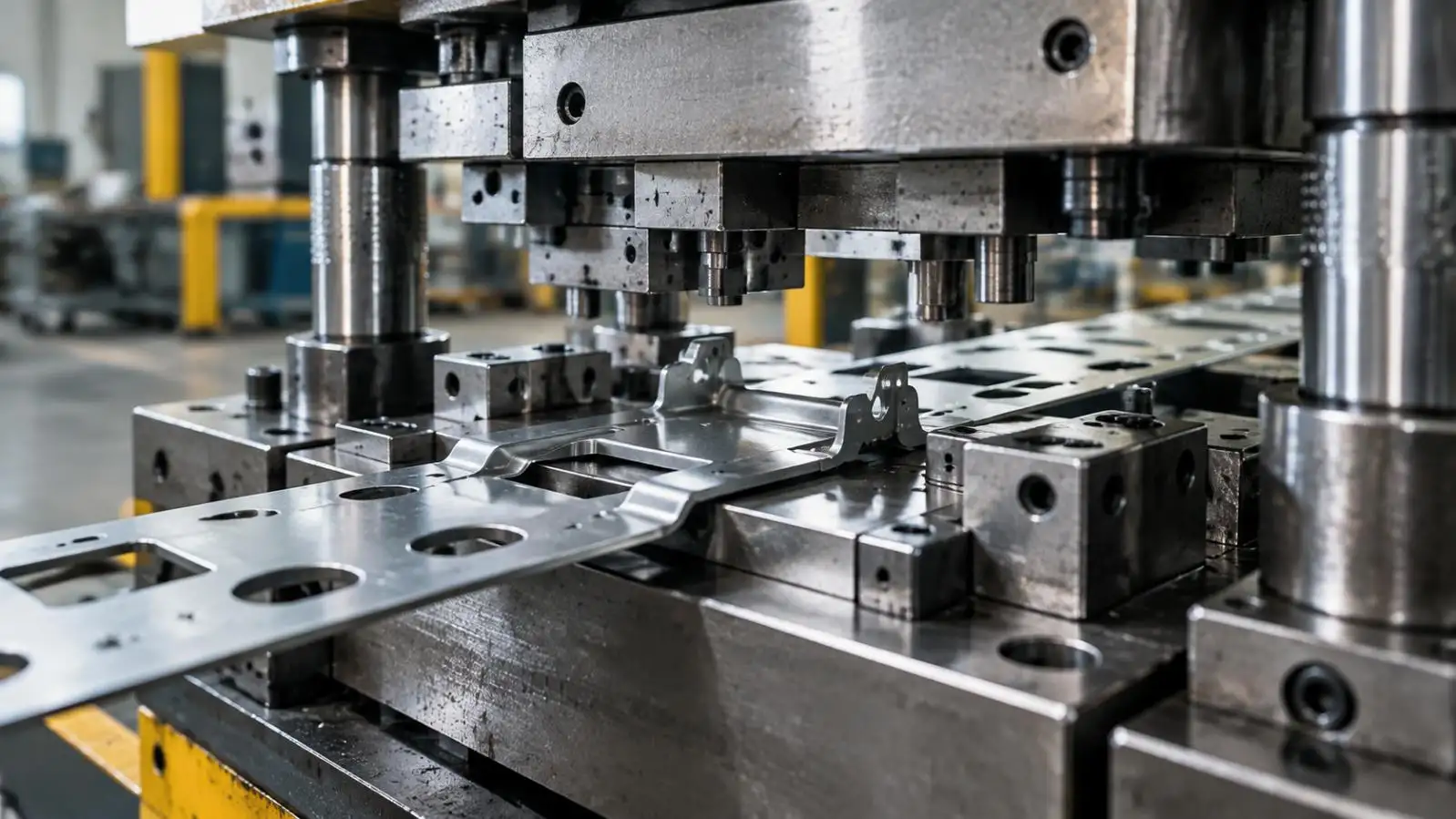
2026-09-24By KT Engineering -
 Blog
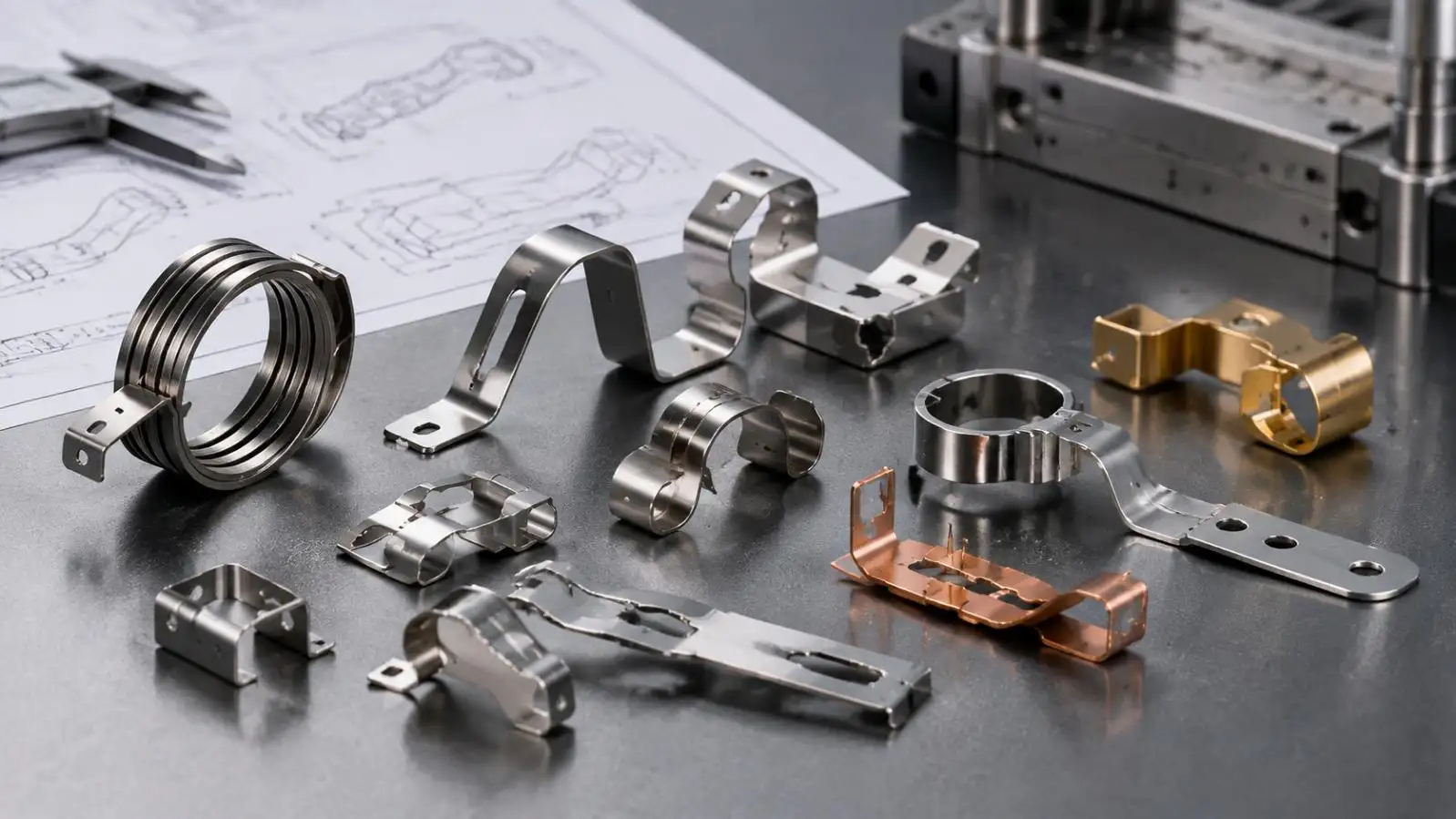
BlogSpring Stamping Fatigue Life: How Geometry, Material and Edge Quality Affect Cycle Life
2026-09-24By KT Engineering -
 Blog
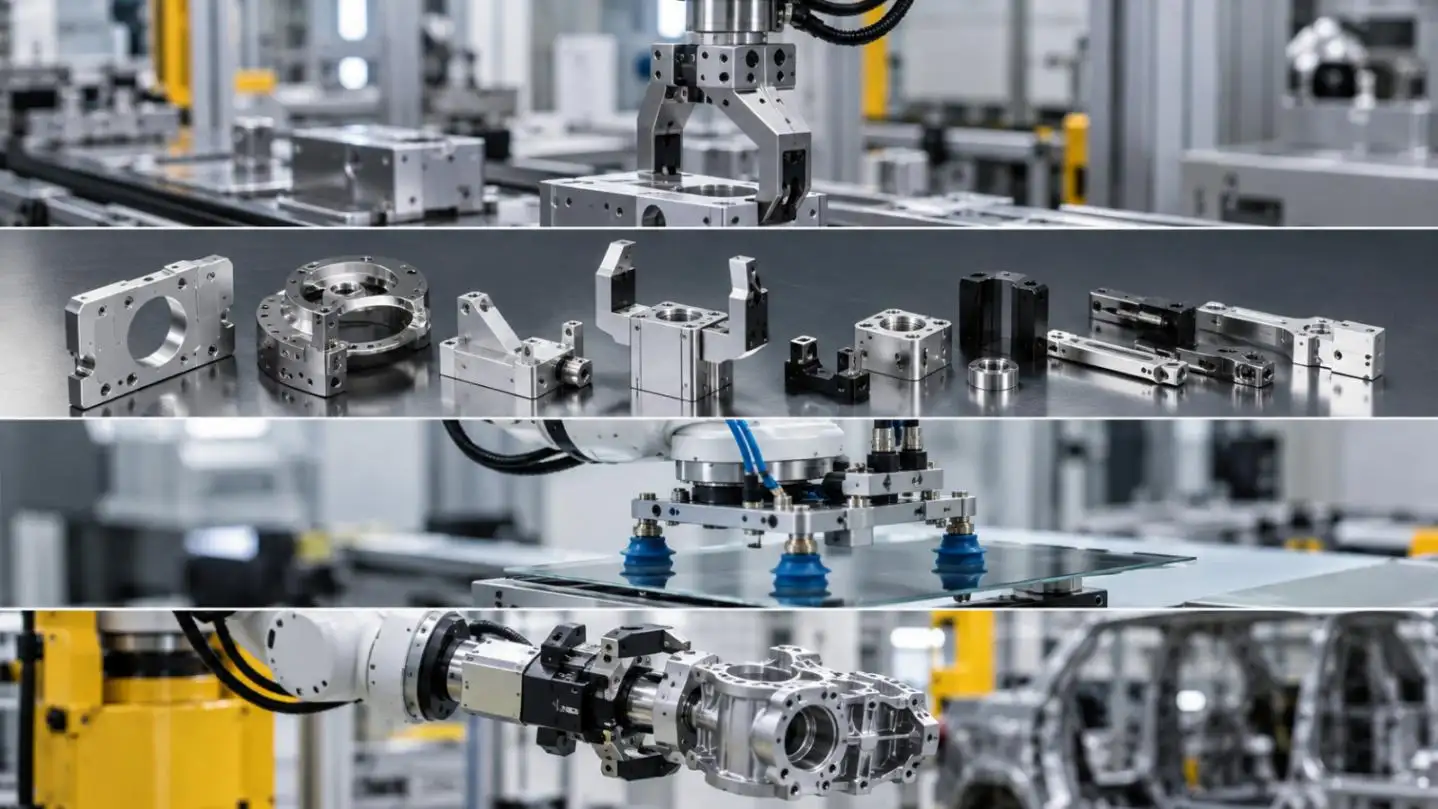
BlogMechanical Automation Parts for Robot End Effectors and Positioning Accuracy
2026-09-23By KT Engineering