Contact Us
  Home /
 Multi Axis CNC Machining: Capabilities, Applications & How to Choose the Right Supplier


Table of Contents
- What Is Multi Axis CNC Machining?
- Why Multi Axis CNC Machining Matters in Today's Market
- Multi Axis vs 3-Axis CNC Machining
- 3+2 vs Full 5-Axis CNC Machining
- Typical Materials in Multi Axis CNC Machining
- Tolerances and Surface Finish in Multi Axis CNC Machining
- Key Applications of Multi Axis CNC Machining
- Process Flow: From CAD to Finished Multi Axis CNC Parts
- Current Trends in Multi Axis CNC Machining
- When Should You Choose Multi Axis CNC Machining?
- How to Design Parts for Multi Axis CNC Machining
- Selecting a Multi Axis CNC Machining Supplier
- Multi Axis CNC Machining Services at K-T CNC Machining
- How to Start a Multi Axis CNC Machining Project
- Conclusion: Using Multi Axis CNC Machining to Strengthen Your Products

Multi axis CNC machining has become essential for manufacturing complex products—from aerospace components and EV platforms to medical devices and robotics. As designs grow more intricate and lead times compress, multi axis CNC machining delivers superior precision, surface quality, and efficiency in a single operation.
This guide explains what multi axis CNC machining is, how it works, current market trends, and how to select a supplier. It's written from a manufacturing perspective and intended for engineers, buyers, and project managers evaluating multi axis CNC solutions.
What Is Multi Axis CNC Machining?
Multi axis CNC machining uses cutting tools and workpieces that move simultaneously along more than three linear axes. A traditional 3-axis machine moves in X, Y, and Z. Multi axis machines add one or two rotary axes (A, B, C), letting the tool approach the workpiece from many angles in one setup.
Common configurations include:
- 3+2 axis CNC machining (also called positional 5-axis)
- Full 5-axis simultaneous machining
- Mill-turn / turn-mill centers with live tools and multiple axes
- Multi axis lathes with Y-axis and sub-spindles
By combining linear and rotary motion, multi axis CNC machining produces complex geometries that are difficult or impossible to machine with conventional 3-axis equipment or manual methods.
Why Multi Axis CNC Machining Matters in Today's Market
Several industry trends have accelerated adoption of multi axis CNC machining over the past few years.
Rising Complexity of Product Design
Modern products require lightweight structures, organic surfaces, integrated features, and tight assembly tolerances. Multi axis CNC machining enables single-setup manufacturing of these parts, improves alignment between features, and maintains accuracy and consistency throughout production.
Demand for Shorter Lead Times and Smaller Batches
Today's manufacturing environment prioritizes small and medium batch sizes, rapid design iterations, customized products, and tight development cycles—especially in EV, electronics, and medical sectors. Multi axis CNC machining supports this with fewer setups, reduced manual handling, faster changeover, and the ability to move from prototype to production on the same equipment.
Higher Quality Requirements and Certifications
Aerospace, medical, and automotive industries expect stable dimensional tolerances, superior surface finish, traceability, and standards compliance. Multi axis CNC machines with high-precision tooling and CAD/CAM programming make it easier to hit demanding tolerances and finishes repeatedly across batches.
Multi Axis vs 3-Axis CNC Machining
3-Axis CNC Machining
3-axis machining remains widely used for flat surfaces, simple pockets and slots, and parts fully machined from one or two setups. However, complex parts often require multiple setups, custom fixtures, and manual re-clamping, which increases cost and risk.
Multi Axis CNC Machining: Key Advantages
Access to Complex Geometries. Multi axis machines handle undercuts, compound angles, deep cavities, and free-form surfaces. Complex geometry that would otherwise require assembly from multiple parts can be machined as one piece.
Fewer Setups, Higher Accuracy. Multiple faces and features machine in one clamping. This reduces cumulative error from re-clamping and repositioning while improving feature-to-feature alignment.
Improved Surface Finish and Tool Life. The tool stays optimally oriented relative to the surface, reducing vibration and chatter. Shorter, more rigid tools work better for deep features.
Lead Time and Cost Efficiency. Less fixture design, shorter process chains, and lower labor content per part make multi axis machining cost-effective for medium and high-mix production.
3+2 vs Full 5-Axis CNC Machining
3+2 Axis Machining
In 3+2 machining, the two rotary axes orient the workpiece or tool to a fixed angle. Machining then proceeds with conventional 3-axis motion in X, Y, and Z. This approach works well for multi-face machining without re-clamping and costs less than full 5-axis for parts that don't need continuous dynamic contouring.
Full 5-Axis Simultaneous Machining
In full 5-axis machining, the three linear axes and two rotary axes move at the same time. The tool continuously adjusts orientation while cutting. This excels on complex free-form surfaces like impellers and turbine blades, aerospace structural parts with compound angles, medical implants, and high-performance automotive components.
Typical Materials in Multi Axis CNC Machining
Multi axis CNC machines process almost all machinable engineering materials.
Metals. Aluminum alloys work well at high speeds due to low density. Stainless steels are common in medical and marine applications. Tool steels and alloy steels appear in tooling and wear-resistant components. Titanium alloys are important for aerospace and medical implants. Copper and brass suit electrical and thermal applications.
Plastics and Engineering Polymers. POM, PEEK, PTFE, nylon, ABS, and PC are used for insulators, medical components, and prototypes. Multi axis machines produce good surface finish on complex plastic geometries.
Difficult Materials. Heat-resistant and hardened steels particularly benefit from multi axis machining. Tool orientation reduces cutting forces, adaptive toolpaths distribute wear evenly, and deep features can use shorter tools to avoid deflection.
Tolerances and Surface Finish in Multi Axis CNC Machining
Multi axis CNC machining achieves tight tolerances when the machine, tooling, programming, and inspection are well controlled.
Typical capabilities depend on part size and geometry:
- Dimensional tolerances: ±0.01–0.02 mm (±0.0004–0.0008 in) for general precision parts; tighter tolerances possible with careful process control
- Geometric tolerances: Flatness, parallelism, and position tolerances within a few microns on small parts; consistent hole location and true position across multiple faces
- Surface finish: Ra 0.8–1.6 µm commonly achievable directly from machining; finer finishes with additional finishing passes or secondary processes
Multi axis machining also minimizes blending lines between surfaces, reduces manual polishing on complex shapes, and maintains consistent surface quality across compound curves and angled faces.
Key Applications of Multi Axis CNC Machining
Aerospace and Defense
Multi axis machining handles structural airframe components, engine parts and housings, brackets with complex interfaces, and lightweight pocketed parts. Integrated pocketing and ribs machined in a single setup improve strength and accuracy.
Automotive and New Energy Vehicles
Multi axis machining supports powertrain components, suspension and steering parts, battery trays, cooling plates, and motorsport components needing both strength and weight reduction. As EV platforms accelerate, multi axis machining offers flexible manufacturing for prototype and low-to-medium volume production.
Medical and Healthcare
Multi axis CNC machining suits orthopedic implants, dental implants, surgical tools, and diagnostic equipment. The combination of biocompatible materials and complex organic shapes makes 5-axis machining especially valuable.
Industrial Equipment and Robotics
Applications include robot joints and end-effectors, automation components, high-precision jigs and fixtures, and fluid control components. Complex parts in this sector often need high stiffness, precise alignment, and multiple mounting faces.
Molds, Dies, and Tooling
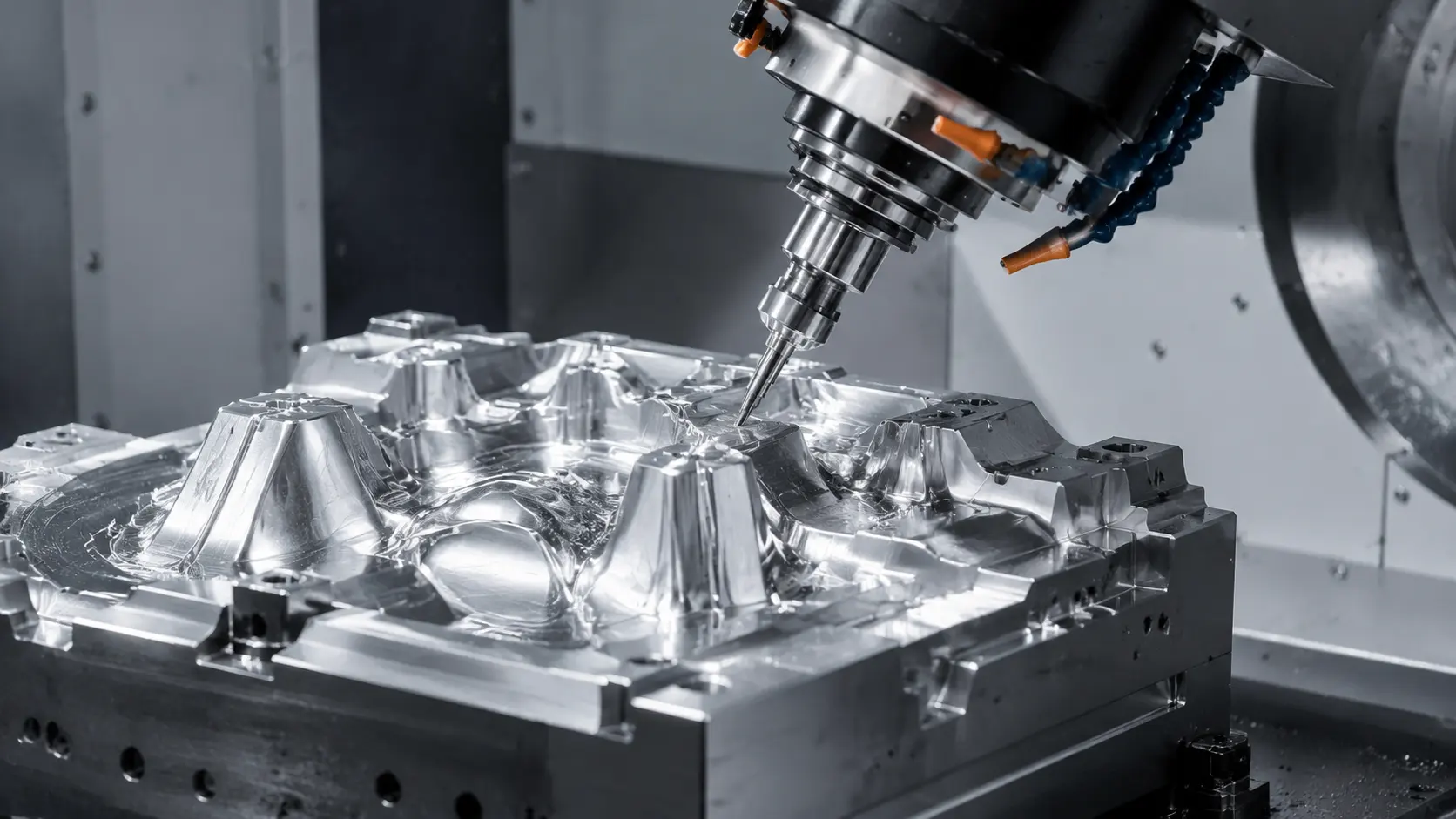
Multi axis machining efficiently handles complex mold cavities and cores, reduces EDM operations, improves surface quality on free-form mold surfaces, and cuts polishing time before surface treatments.
Process Flow: From CAD to Finished Multi Axis CNC Parts
A typical workflow includes:
Design and DFM Review. CAD files are imported and reviewed for manufacturability. Feedback on wall thickness, radii, undercuts, and tolerances helps optimize geometry for multi axis machining and cost.
CAM Programming. The appropriate machining strategy is selected and toolpaths are generated. Feeds, speeds, and tool engagement are optimized for each material.
Fixture and Setup Planning. Efficient fixturing is designed for rigid clamping and clear tool access, minimizing the number of setups.
CNC Machining and In-Process Verification. The machine executes the program on high-precision multi axis centers. In-process checks and probing verify accuracy where applicable.
Deburring, Surface Finishing, and Treatments. Manual or automated deburring and optional surface treatments are performed, typically through qualified partners when in-house capability is limited.
Inspection and Quality Assurance. Dimensional inspection uses calipers, micrometers, and CMM where required. Documentation and measurement reports are provided for critical dimensions.
Packaging and Shipping. Parts are packaged to prevent surface damage and shipped according to customer requirements.
Current Trends in Multi Axis CNC Machining
Integration With Digital Manufacturing Workflows. CAD/CAM integration and simulation prevent collisions. Digital twins and virtual setups support multi axis machining. Data-driven optimization of cutting parameters increases throughput.
Shift Toward High-Mix, Low-Volume Production. Flexible production capable of switching between different parts rapidly is increasingly important. Multi axis machines serve as universal equipment for diverse jobs. Fast setup and programming are competitive factors.
Combination With Additive Manufacturing. CNC machining finishes features on additively manufactured parts. Hybrid process chains use 3D printing for near-net shapes followed by 5-axis machining for precision surfaces. Multi axis machines are particularly effective for finishing complex printed geometries.
Global Supply Chain Rebalancing. More companies diversify suppliers and regions for risk management. Demand exists for suppliers who handle both prototypes and series production. Transparent communication, stable quality, and predictable lead times are emphasized.
When Should You Choose Multi Axis CNC Machining?
Multi axis CNC machining becomes the preferred solution when:
- The part has features on multiple faces that must be accurately related
- Undercuts, compound angles, or deep cavities are not reachable from one direction
- Surface continuity and aesthetics matter on complex curves
- Design targets weight reduction with pockets, ribs, or thin walls
- You want to reduce setups, fixtures, and manual rework
Simple prismatic parts with features accessible from one or two directions may be more cost-effective on 3-axis machines.
How to Design Parts for Multi Axis CNC Machining
Use Reasonable Wall Thicknesses
Very thin walls can vibrate and deform during machining. Discuss critical wall thicknesses early; minor design changes often enable more stable machining and better quality.
Optimize Radius and Tool Access
Add corner radii to match standard cutter sizes. Avoid extremely sharp internal corners unless necessary. Ensure adequate tool access angles for deep pockets and undercuts.
Consolidate Parts Where Beneficial
Since multi axis machines handle complex geometries, consider merging multiple simpler parts into a single machined component if it reduces assembly time and tolerance stack-up, improves reliability and stiffness, or keeps the consolidated part manufacturable at acceptable cost.
Clearly Define Critical Features and Tolerances
Not all dimensions need the tightest possible tolerance. Mark critical features and interfaces; use general tolerances elsewhere. This balances cost, machining time, and quality.
Selecting a Multi Axis CNC Machining Supplier
When evaluating a supplier for multi axis CNC machining, look beyond machine count.
Technical and Engineering Support. The supplier should perform DFM reviews, have experience with similar parts and industries, and offer CAM and process planning expertise for 3+2 and 5-axis machining.
Equipment and Capability Range. Consider the number and type of multi axis machining centers, spindle speeds, table size, maximum part envelope, and support for both milling and turning.
Quality Control Systems. The supplier should offer inspection capabilities like CMM and surface roughness measurement, maintain process documentation and traceability, and provide inspection reports for key projects.
Flexibility in Order Quantities. Look for prototyping and small batch capabilities, capacity for scaling to higher volumes, and stable lead times.
Communication and Project Management. Clear communication channels, responsiveness to technical queries and design changes, and transparent pricing and lead time estimates matter.
Multi Axis CNC Machining Services at K-T CNC Machining
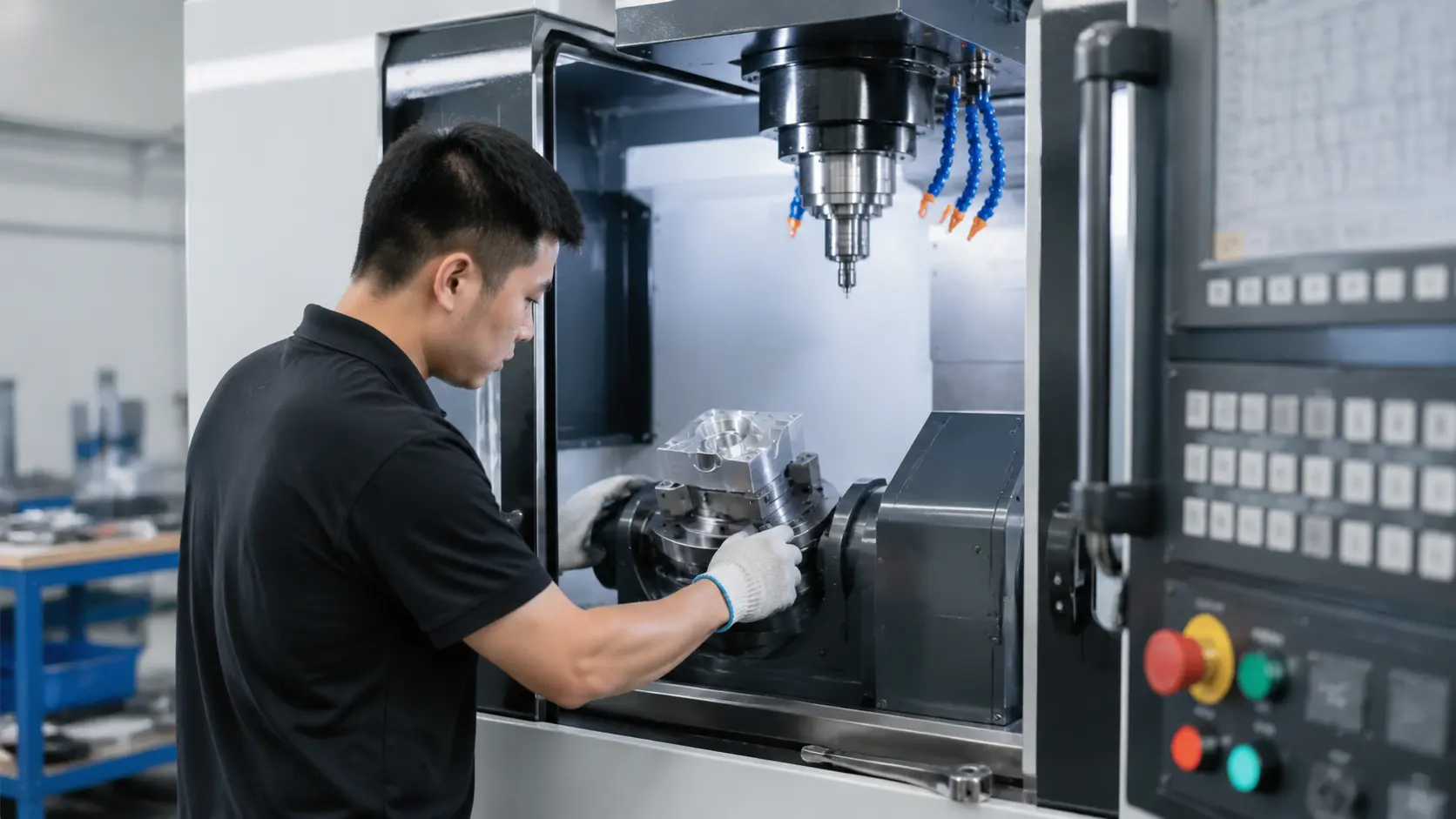
K-T CNC Machining provides precision CNC machining services backed by skilled staff and modern equipment. For multi axis CNC machining projects, we offer 3+2 and 5-axis CNC machining for complex geometries, precision milling and turning for metals and engineering plastics, prototype and production support, engineering support and DFM feedback, and quality control aligned with customer specifications.
We work with customers in machinery and industrial equipment, automotive and emerging mobility, robotics and automation, electronics and instrumentation, and medical and healthcare components.
If you're considering moving parts from manual processes or basic 3-axis machining to multi axis CNC machining, our team can review your drawings and advise on process selection, cost drivers, and design improvements.
How to Start a Multi Axis CNC Machining Project
To obtain a quotation or technical evaluation, prepare the following:
- 3D CAD files (STEP, IGES, or other standard formats)
- 2D drawings with critical dimensions and tolerances
- Material specification and heat treatment requirements (if any)
- Quantity and delivery requirements (prototype, trial batch, or production)
- Any special requirements, such as surface treatment, cleanliness, or documentation
Send your information and project details to K-T CNC Machining.
Contact K-T CNC Machining
Company: K-T CNC Machining
Website: https://www.ktcncmachining.com/
Email: info@ktcncmachining.com
For the latest contact details, refer to the official website's "Contact Us" or "About Us" section.
Conclusion: Using Multi Axis CNC Machining to Strengthen Your Products
Multi axis CNC machining is now essential for products that need complex geometry and tight tolerances, reliable long-term performance, short lead times and flexible volumes, or competitive production cost in a dynamic market.
By understanding the differences between 3-axis, 3+2, and full 5-axis machining and working with an experienced supplier, you can improve functional performance and robustness, reduce components and assembly steps, and achieve consistent quality across prototypes and production.
If you have a current or upcoming project that could benefit from multi axis CNC machining, share your drawings and requirements with K-T CNC Machining. Our engineering and production teams can evaluate the best manufacturing route and support you from prototype to stable production.
Talk to the Manufacturer, Not a Middleman
Resources & Insights
-
 Blog
BlogCNC Machining Robotic Parts: How GD&T Controls Robot Assembly Accuracy
2026-09-24By KT Engineering -
 Blog
BlogHardware Stamping Springback Control for High-Strength Steel Parts
2026-09-24By KT Engineering -
 Blog
BlogSpring Stamping Fatigue Life: How Geometry, Material and Edge Quality Affect Cycle Life
2026-09-24By KT Engineering -
 Blog
BlogMechanical Automation Parts for Robot End Effectors and Positioning Accuracy
2026-09-23By KT Engineering