Contact Us
  Home /
 best die casting factory


Table of Contents
- What Is Die Casting?
- Why Choosing the Best Die Casting Factory Matters
- Key Characteristics of the Best Die Casting Factory
- Industries Served by Top Die Casting Factories
- Die Casting vs Other Manufacturing Processes
- How to Evaluate a Die Casting Factory
- Benefits of Working with a Global Die Casting Factory
- Future Trends in Die Casting Manufacturing
- Conclusion

Choosing the optimal die casting factory is one of the most germane decisions faced by company developing high quality metal elements. As far as the automotive industry, aerospace, electronics field, medical or industrial equipment is concerned—the quality of your die casting supplier is tied to product performance, production efficiency and total costs.
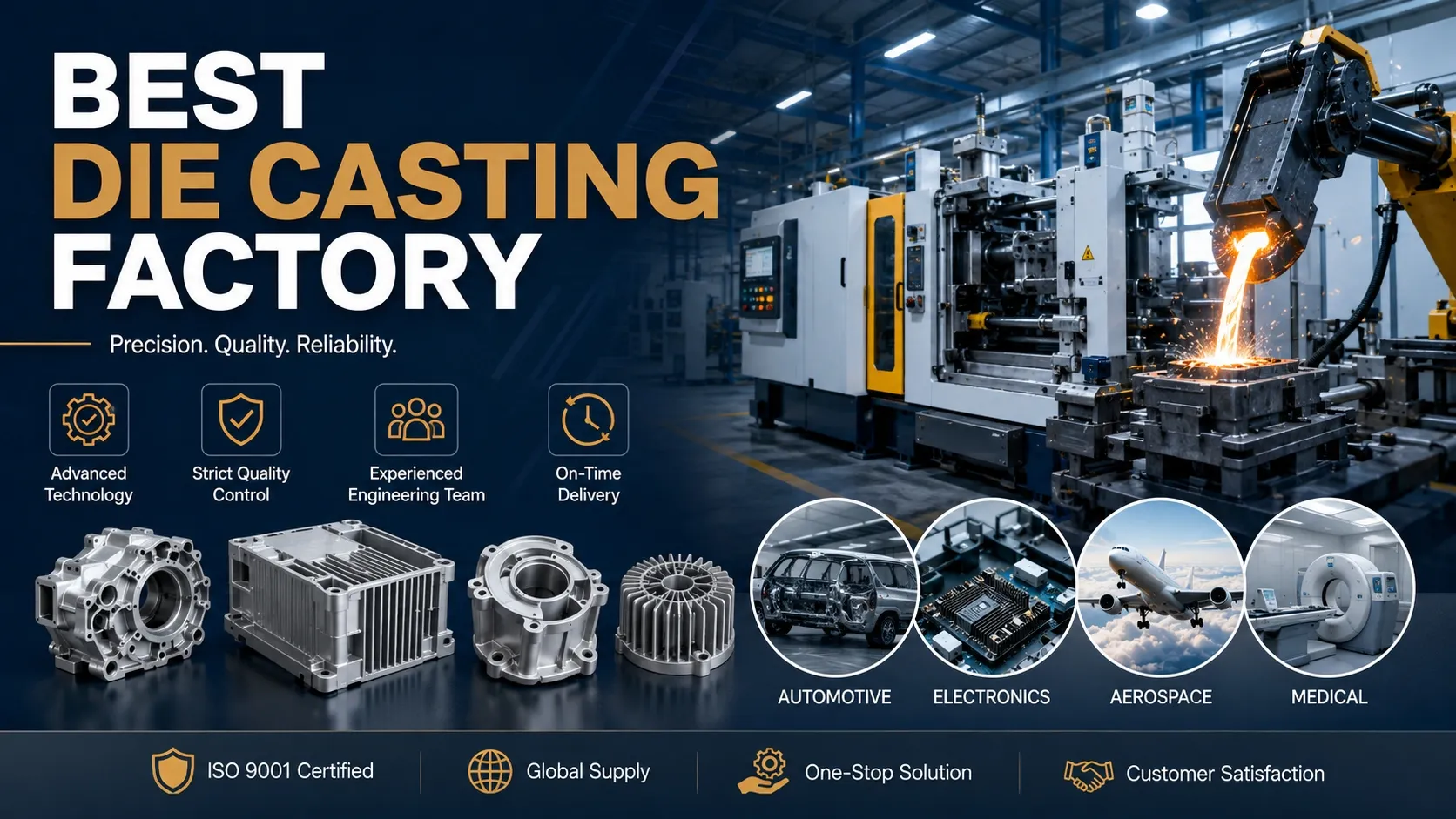
Nowadays, major die casting firms will incorporate the best in manufacturing technology, quality management, and engineering expertise to bring out intricate metal parts to a degree of accuracy you could never dream of. But, not every manufacturer has the same capabilities! By knowing what sets them apart, businesses can determine what factory to work with and ensure that they achieve success in the long run.
What Is Die Casting?
The manufacturing method in which the molten metal is injected into the hardened steel mould at high pressure is called die casting. Through the process, manufacturers are able to manufacture highly detailed metal parts with excellent dimensional accuracy and repeatability.
Commonly used die casting materials are:
- Aluminum alloys
- Zinc alloys
- Magnesium alloys
- Copper-based alloys
The die casting method is very efficient and accurate and has been widely used to manufacture a large number of quality metal parts.
Why Choosing the Best Die Casting Factory Matters
A reputable die casting factory is more than just a production house. It becomes part of your supply chain and product development process.
Advantages of dealing with a top-notch die casting manufacturer consist of:
Superior Product Quality
High-specification casting equipment, automatic quality inspection system, and professional engineering team are the working supports that top factories have.
Lower Manufacturing Costs
More efficient production processes also means less waste of material, less defects and better overall productivity equaling cost savings to the customer.
Faster Time to Market
Rapid tooling, design optimisation, and production process optimisation can boost the product development speed for experienced factories.
Supply Chain Reliability
When using a reliable manufacturer, customers can be assured they will have continuity with the production schedule to avoid delay or an absence of inventory.
Key Characteristics of the Best Die Casting Factory
Advanced Manufacturing Equipment
State-of-the-art equipment is essential for producing precision die cast parts.
Leading factories invest in:
- High-pressure die casting machines
- Automated robotic systems
- CNC machining centers
- Coordinate Measuring Machines (CMM)
- X-ray inspection equipment
- Automated trimming and finishing systems
Modern equipment improves consistency, reduces cycle times, and enhances product quality.
Engineering Expertise
The best die casting factories provide comprehensive engineering support throughout the product lifecycle.
Their engineering services often include:
- Design for Manufacturability (DFM)
- Mold flow analysis
- Prototype development
- Tooling design
- Material selection assistance
- Process optimization
Engineering involvement early in the project can significantly reduce production costs and improve product performance.
Comprehensive Quality Control
Quality management is a critical factor when selecting a die casting supplier.
A world-class factory typically follows international standards such as:
- ISO 9001
- IATF 16949
- ISO 14001
- AS9100 (for aerospace applications)
Quality control processes may include:
- Incoming material inspection
- In-process monitoring
- First article inspection
- Dimensional verification
- X-ray testing
- Mechanical property testing
- Final product validation
These measures help ensure consistent production quality.
Industries Served by Top Die Casting Factories
Automotive Industry
Die casting is extensively used in automotive manufacturing because it enables lightweight and durable components.
Common applications include:
- Engine housings
- Transmission cases
- Motor housings
- Structural components
- EV battery enclosures
Consumer Electronics
Precision die casting supports the production of electronic devices requiring tight tolerances and attractive finishes.
Applications include:
- Laptop frames
- Smartphone components
- LED lighting housings
- Heat sinks
Aerospace Industry
Aerospace manufacturers require high-strength, lightweight components with exceptional reliability.
Die casting applications include:
- Aircraft structural components
- Sensor housings
- Communication equipment enclosures
Medical Equipment
Medical device manufacturers use die casting for:
- Diagnostic equipment housings
- Surgical instrument components
- Medical imaging system parts
Die Casting vs Other Manufacturing Processes
Die Casting vs CNC Machining
Die casting is generally more cost-effective for high-volume production because multiple parts can be produced quickly using the same mold.
Advantages of die casting include:
- Lower cost per unit at scale
- Faster production cycles
- Complex geometries
- Excellent surface finishes
CNC machining offers greater flexibility for low-volume production and custom parts.
Die Casting vs Injection Molding
While injection molding is commonly used for plastic components, die casting is preferred for metal parts requiring higher strength, durability, and thermal performance.
Die Casting vs Metal Stamping
Metal stamping works well for flat sheet metal components, whereas die casting is ideal for producing complex three-dimensional parts.
How to Evaluate a Die Casting Factory
Before selecting a manufacturing partner, consider the following factors.
Production Capacity
Assess whether the factory can meet your current and future production requirements.
Questions to ask include:
- How many casting machines are available?
- What is the maximum annual production volume?
- Can capacity be scaled quickly?
Material Expertise
Different projects require different materials.
Choose a supplier experienced in:
- Aluminum die casting
- Zinc die casting
- Magnesium die casting
Material expertise can significantly influence product quality and performance.
Tooling Capabilities
Tooling quality directly affects casting performance.
The best die casting factories offer:
- In-house mold design
- Tool manufacturing
- Mold maintenance
- Tool life optimization
Secondary Services
Many customers prefer suppliers that provide complete manufacturing solutions.
Additional services may include:
- CNC machining
- Surface finishing
- Powder coating
- Anodizing
- Assembly
- Packaging
A one-stop manufacturing solution simplifies supply chain management.
Benefits of Working with a Global Die Casting Factory
Global manufacturers often provide significant advantages:
Competitive Pricing
Large-scale operations can achieve economies of scale that reduce production costs.
International Logistics Support
Well-versed in customs regulations and international shipping requirements, alongside understanding the global supply chain.
Technical Innovation
Top manufacturers continually invest in smart manufacturing systems, advanced production technologies, and automation.
Dedicated Customer Support
Professional project managers and engineering teams enhance communication and project management.
Future Trends in Die Casting Manufacturing
Technology has always been an effective part of a player's game in the die casting industry.
Key trends include:
Smart Manufacturing
Factories are increasingly adopting Industry 4.0 technologies, including:
- Real-time production monitoring
- AI-driven quality control
- Predictive maintenance
- Automated process optimization
Sustainable Manufacturing
Environmental sustainability is becoming a major priority.
Leading factories are investing in:
- Energy-efficient equipment
- Recycled materials
- Waste reduction programs
- Green manufacturing practices
Electric Vehicle Growth
Large structural die cast components and lightweight aluminum parts are in high demand due to the quick growth of EV manufacturing.
Conclusion
When choosing the die casting factory, you need to evaluate the manufacturing ability, engineering strength, quality systems and manufacturing capacity. A reliable die casting partner can not only help a company save on the expenses and increase product quality, but can also help save development timing, create more effective supply chains, etc.
Furthermore, with the continuous development of industries, such as the manufacturing of lightening, durable, and precision-casting parts, the advanced die casting manufacturer will always be a partner that's essential for the business to acquire competitive advantages in the global market. Choosing a factory that has a long history and has the experience and technology to produce high-quality die cast parts will help companies succeed in manufacturing and continue their development.
Talk to the Manufacturer, Not a Middleman
Resources & Insights
-
 Hide blog post
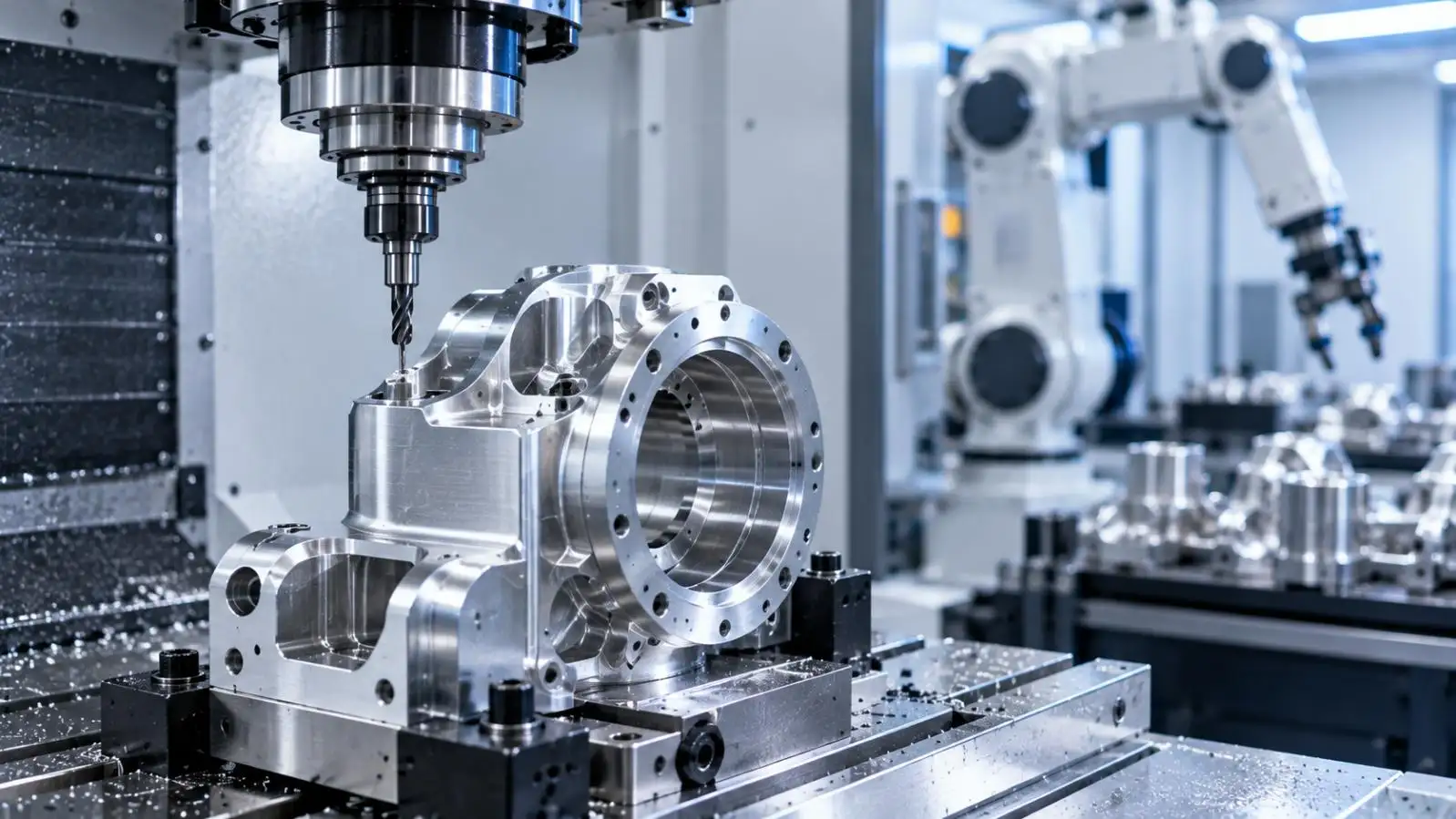
CNC Machining Robotic Parts: How GD&T Controls Robot Assembly Accuracy
2026-09-24By KT Engineering -
 Hide blog post
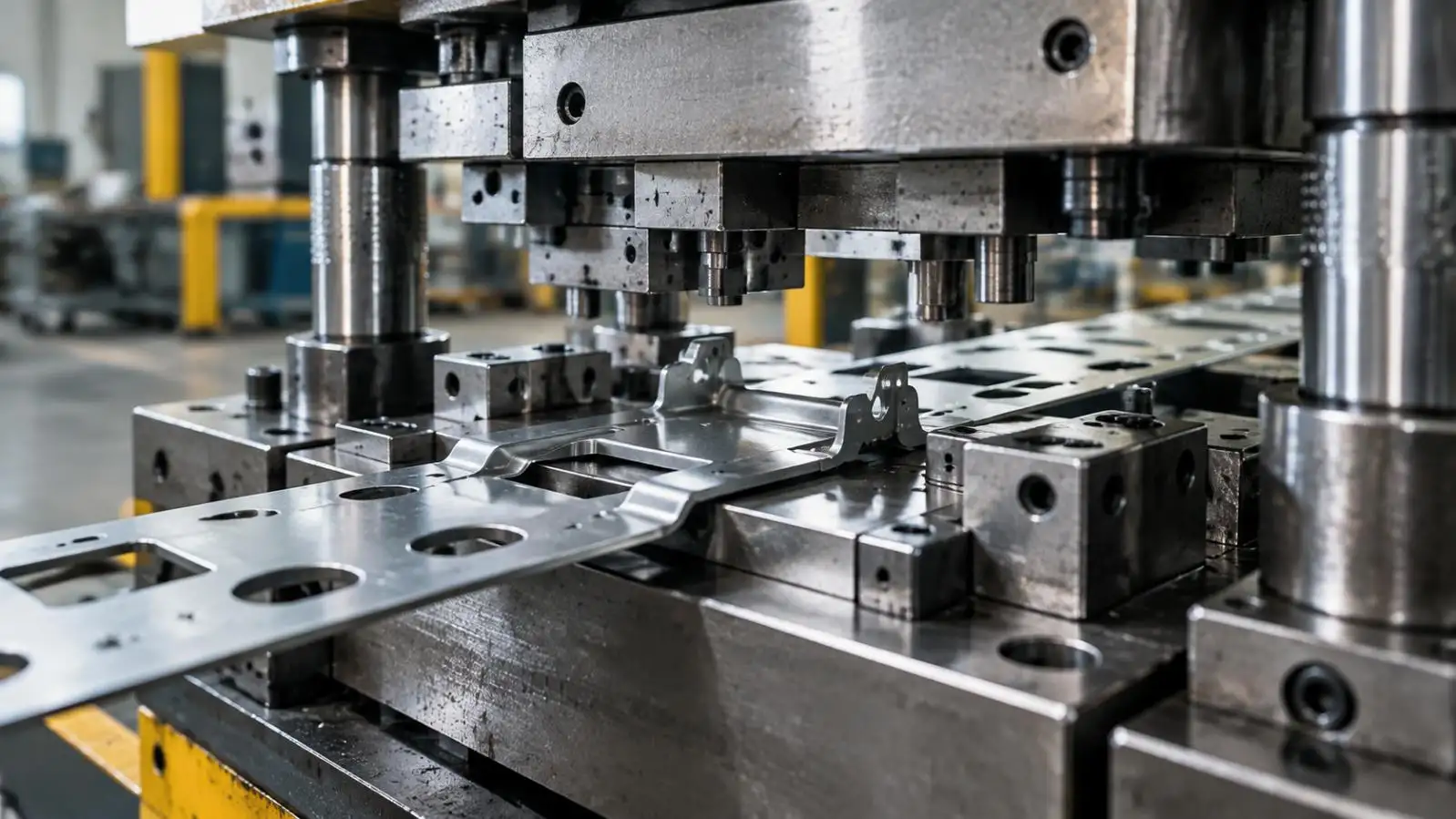
Hardware Stamping Springback Control for High-Strength Steel Parts
2026-09-24By KT Engineering -
 Hide blog post
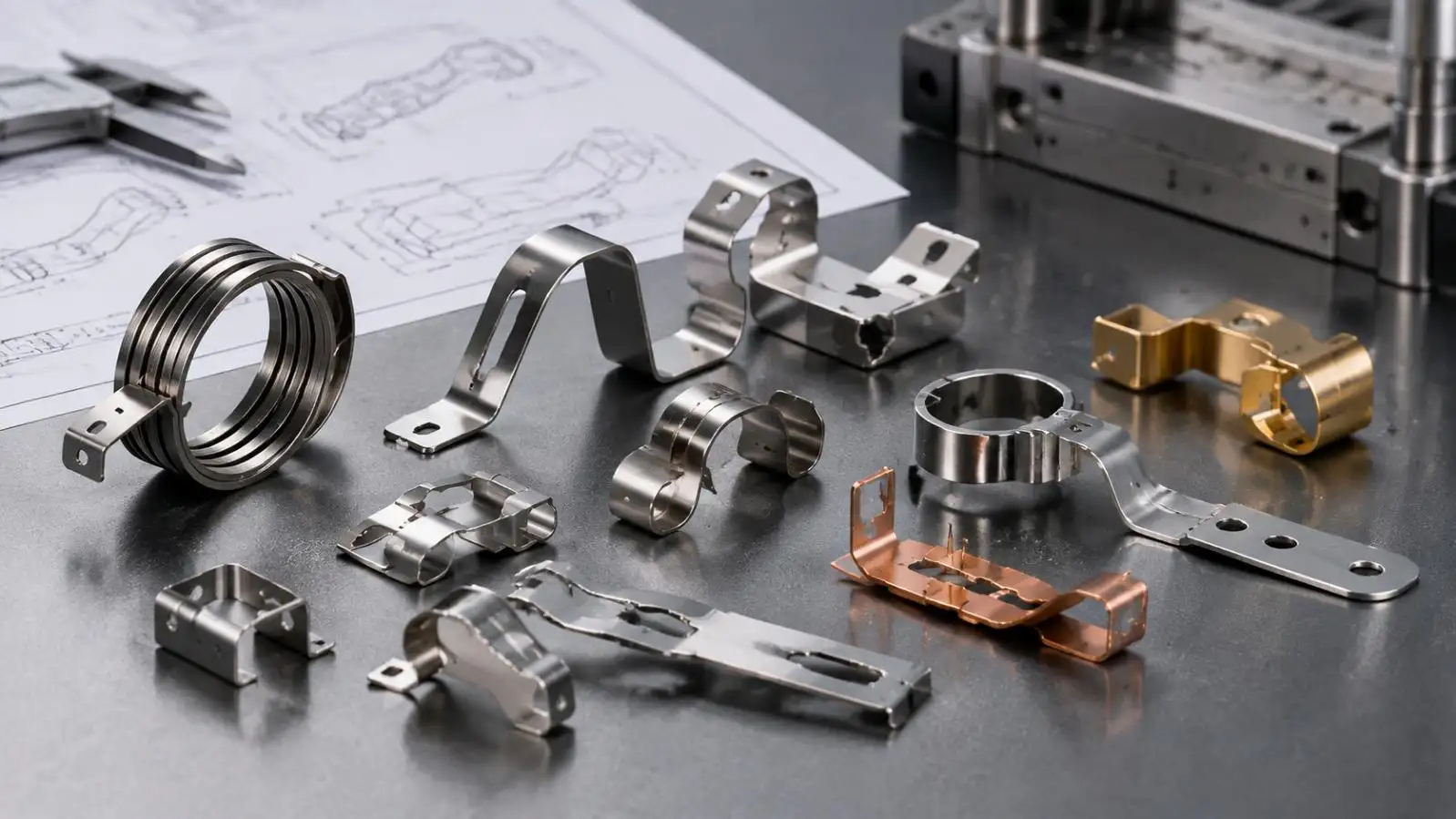
Spring Stamping Fatigue Life: How Geometry, Material and Edge Quality Affect Cycle Life
2026-09-24By KT Engineering -
 Hide blog post
Mechanical Automation Parts for Robot End Effectors and Positioning Accuracy
2026-09-23By KT Engineering