Contact Us
  Home /
 One-Stop CNC Turning Services: From Raw Bar Stock to Finished, Ready-to-Assemble Parts


Table of Contents
- What is CNC Turning?
-
The Turning and Component Assembly Process
- Step 1. Selecting and Preparing the Stock Material
- Step 2: Facing – Creation of a Reference Surface
- Step 3: OD and ID Turning – Core Geometry
- Step 4: Drilling and Boring – Creation of Holes in a Single Setup
- Step 5: Threading – Internal and External
- Step 6: Required Operations - Grooving, Knurling and Form Turning
- Step 7: Parting Off – Cutting the Finished Component
- Enhanced Features: Turn-Mill Technology
- Tolerance and Quality Control
- Surface Treatment Options
- Importance of Custom CNC Turning Services

Turning a raw metal rod into a quality, tailored component has never been simpler for engineers, thanks to specialized technologies found in modern manufacturing. Many industries utilize CNC Machining Turning Services to rapidly and accurately convert bar stock into cylindrical, ready-to-assemble components.
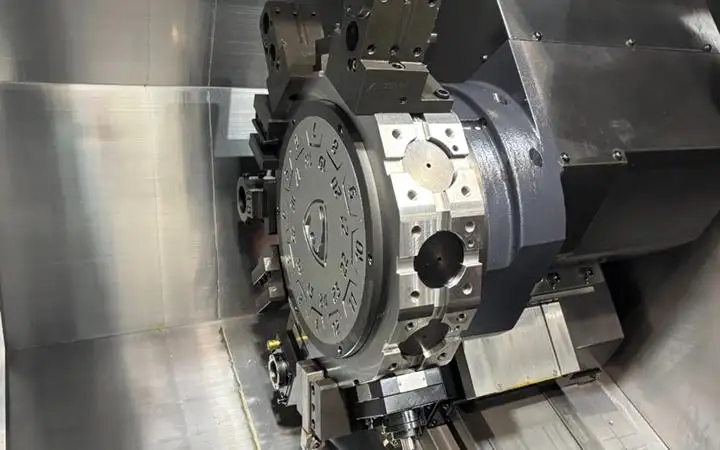
What is CNC Turning?
CNC turning is a subtractive manufacturing process that utilizes controlled rotation of a piece of stock material that is subsequently cut by a sharpened, stationary tool. This is different from CNC milling, which is distinguished by a tool that is free to cut in a 3D plane. Because of this, and the symmetry that is a characteristic of materials best suited for this service (i.e. shafts and bushings), CNC machining is best suited for round components and those with contours.
CNC turning also entails:
•A Lathe: CNC turning utilizes a tool that is free to move along the x and y axes to create a variety of different dimensions (i.e. diameter) and shapes (i.e. contours) along a piece of stock material.
•A Automatic Bar Stock Feeder: In a CNC turning center, bar stock is often automatically loaded into the machine, allowing for uninterrupted and fully automated production of multiple identical components.
•CNC Accuracy: Because CNC turning relies on a digital template, there is no margin for operator error, and the tolerances for the completed component are often an order of precision greater than that of other manufacturing techniques.
The Turning and Component Assembly Process
Part and component designers must have a solid understanding of what to expect from professional CNC machining to fully realize the potential of their designs and to manufacture the best quality components. The CNC turning process is straight forward, and each of the steps in the process is fundamental to the steps that precede it.
Step 1. Selecting and Preparing the Stock Material
The stock material that is selected dictates many of the physical and economic characteristics of the completed component. Some examples of stock materials used in CNC turning are: 45# steel, titanium, stainless steel (304/316), aluminum (6061/7075), and brass, just to name a few. Each metal has its own individual characteristics of strength and corrosion resistance.
•Available engineering plastics include: ABS, polycarbonate, POM (Delrin), PTFE (Teflon), PEEK, and polyethylene. These plastics are perfect when applications require low weight, non-conductivity, or chemical resistance.
•Bar stock is supplied from extruded or cold drawn round bars, typically between 3–100 mm in diameter, and cut to lengths suitable for automatic feeding.
Step 2: Facing – Creation of a Reference Surface
Bar stock must first be squared before any work on diameters is undertaken.
•Facing removes stock from the end of a work piece to create a flat, perpendicular surface as a reference for length and for all other operations to be performed on the work piece.
•Modern CNC machining turning services incorporate facing as the first operation, as part of a setup, to ensure all features reference the same zero point.
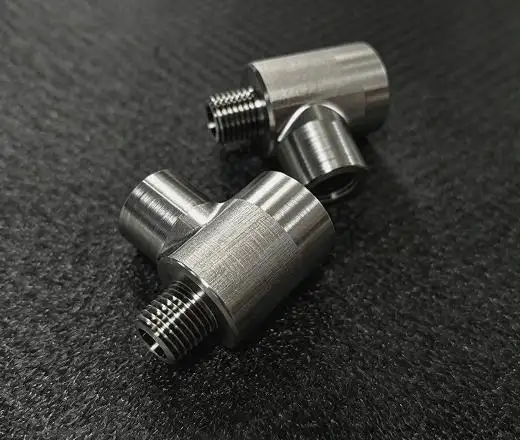
Step 3: OD and ID Turning – Core Geometry
This is the primary shaping operation.
•Turning of the outside diameter (OD):
The outside dimension of the bar is reduced to the specified diameter. Stepped profiles may be created for shafts, flanges, housings, etc.
•Turning of the inside diameter (ID):
Elongation or finishing of a hole diameter is performed by boring. This operation is required for bushings, sleeves, and fitting bodies.
•Form turning and grooving:
Other surface or sealing grooves and undercuts may be completed in a single operation, thus reducing cycle time, compared to multiple tools.
Step 4: Drilling and Boring – Creation of Holes in a Single Setup
Holes are feature of a work piece that are required for assembly or for the passage of fluids.
•Drilling: Produces holes along the center axis or at offset positions—performed in the same setup using live tooling on turn-mill centers.
•Boring: Enlarges and finishes existing holes to tighter tolerances and better surface finish than drilling alone can achieve.
•Stack-up Tolerance Mitigation: Performing all the Drilling and Boring Operations in a single setup mitigates the alignment errors which are inevitable in transferring work pieces between Machines.
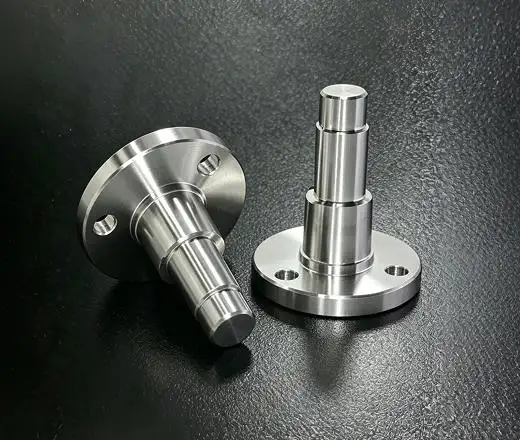
Step 5: Threading – Internal and External
Threads perform the functions of fastening, sealing and adjustment.
•External threads: Thread the ODs of bolts, studs, and threaded fittings, which can be in the metric system, imperial system UNF/UNC, or pipe threads.
•Internal threads: Form threaded holes of set screws, fittings, or other assembly hardware while still on the lathe.
•Single-point threading: Uses a geometrically unique tool to form threads tightly, offering some control regarding the thread form and fit.
Step 6: Required Operations - Grooving, Knurling and Form Turning
Apart from the nominal diameters, parts may require additional surface features.
•Grooving: Forms a narrow recess to accommodate retaining, O, or snap rings, which is essential in the assembly of rotating machinery.
•Knurling: A surface is impressed with a diamond or straight pattern to provide a grip on a hand turned knob or on a press fit feature.
•Form Turning: Substitutes secondary milling for many of the features with curves by following a complex contour path to produce radii and tapers or any other custom profile.
Step 7: Parting Off – Cutting the Finished Component
This operation separates the finished component from the rest of the stock.
•Action of the parting tool: A tool of special geometry cuts radially in and through the material, releasing the component with a clean flat cut.
•Stock Remnant Handling: The bar remaining is automatically removed while the stock for the next cycle is loaded. This allows for lights-out production.
Enhanced Features: Turn-Mill Technology
Older lathes simply spin the workpiece. Current CNC lathing services utilize turn-mill machines, which integrate both spinning and cutting.
•One machine, numerous functions: Turn-mill machines facilitate turning, cutting, drilling, tapping, and even keyway cutting within the same operation saving time and reducing setup errors.
•Ability to create intricate details: This machining service is perfect for projects that require the use of a lathing machine, but that also require the drilling of off-center holes, and features such as flats, keyways, and non-standard end shapes.
•CNC lathing service symmetry: Features milled, drilled, or cut on turn-mill machines will be perfectly symmetrical, and in line with any turned diameters and machine cuts.
Tolerance and Quality Control
Precision separates general machining from high-performance CNC machining turning services.
•Standard tolerance: ±0.01 mm (10 microns) for most features—suitable for over 90% of industrial applications including bushings, fittings, and shafts.
•High Precision CNC Machining: ±0.005 mm for fits of bearing journals, valve seats, hydraulic spools, etc.
•In-Process Inspection: Automated tool probing and post-process measurement are applied to ensure compliance of all individual parts to the specifications before shipment.
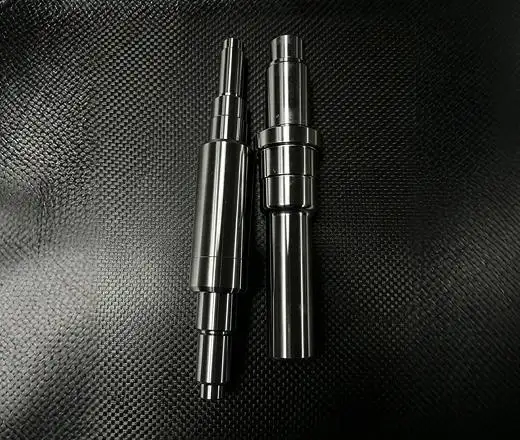
Surface Treatment Options
Raw parts from turning usually require secondary procedures to enhance either esthetical characteristics, or surface/ dimensional precision & part integrity.
•Polishing: Results in a shiny, tool mark-free, surface that is ideal for cosmetic low friction applications.
•Grinding: Improves surface finishes that are better & more precise than turning alone. A must for precision bearing & sliding surfaces.
•Anodizing (Aluminum): Used for electronic housings & consumer products, this will create a clear or colored, hard, protective finish.
•Shot blasting: Surface is made rough (matte) & is peened for a compressive finish. Fatigue is improved.
•Coating: Thin finishes are applied to parts for low friction & improved wear resistance. Nickel, Zinc, PTFE, etc. are common.
Importance of Custom CNC Turning Services
For OEMs making shafts, bushings, fittings, & rotational parts on a large scale, the advantages of dedicated CNC turning services are obvious.
•Consistency: A turning center can be programmed once to produce the same part for thousands of cycles.
•Material Savings: Feeding raw stock minimizes waste more than cutting from sheets or blocks. This can lower material costs by 15–30%.
•Time Savings: Prototypes can be made in 3 days which reduces validation time & improves the timeline of getting to market.
•Flexibility: The setup used to make 10 prototypes can be used to make 10,000 production parts with no changes to tools or programming.
Summary: The Turnkey Advantage
CNC machining turning services offer a quick, convenient way to handle a manufacturing order, moving the order from bar stock all the way to a part that is finished and ready to assemble. Modern turning centers are amazing and incorporate a number of different processes, which include, but are not limited to, facing, drilling, threading, grooving, etc. These centers are able to work with materials of varying constituents, from aluminum and stainless steel all the way to PEEK and PTFE. Because of this turning technology, creating parts, whether a single one or many (i.e. a production run), has never been more efficient.
FAQs
Q1: What materials can you turn?
Brass, aluminum (6061/7075), stainless steel (304/316), titanium, and engineering plastics such as PEEK, PTFE, POM.
Q2: What tolerance can CNC turning achieve?
Turning has a standard tolerance of ±0.01 mm and can reach ±0.005 mm for tight bearing and hydraulic fits.
Q3: Do you offer milling and turning in one setup?
Yes, our turn-mill centers perform turning and milling, as well as drilling and tapping, in one setup.
Q4: What surface finishes are available after turning?
Polishing, grinding, burnishing, anodizing, and coating, as well as shot blasting.
Q5: Do you provide prototyping services?Yes. Rapid prototyping is available with samples ready in as few as 3 days.
Talk to the Manufacturer, Not a Middleman
Resources & Insights
-
 Blog
BlogCNC Machining Robotic Parts: How GD&T Controls Robot Assembly Accuracy
2026-09-24By KT Engineering -
 Blog
BlogHardware Stamping Springback Control for High-Strength Steel Parts
2026-09-24By KT Engineering -
 Blog
BlogSpring Stamping Fatigue Life: How Geometry, Material and Edge Quality Affect Cycle Life
2026-09-24By KT Engineering -
 Blog
BlogMechanical Automation Parts for Robot End Effectors and Positioning Accuracy
2026-09-23By KT Engineering