Contact Us
  Home /
 Cpk ≥ 1.33: The "Inspection-Free" Trust Standard in Industrial Machinery Parts Machining


Table of Contents

In precision manufacturing, trust is not given—it is calculated. For industries relying on Industrial Machinery Parts Machining, one statistical figure has become the global benchmark for process capability and supplier reliability: Cpk ≥ 1.33. When a machining partner quotes this value, they are essentially offering "inspection-free" status. But what does it truly mean, and why do engineers accept it as proof of quality?
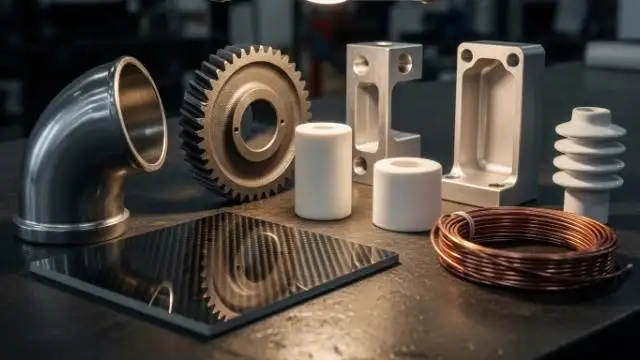
This article reviews the science of Cpk and its implications on heavy-duty components while discussing how advanced engineering solutions and design by KT TOOL can help transform the Cpk number into a promise of structural integrity.
What Is Cpk?
The Process Capability Index, or Cpk, defines the ability of a process to produce parts that are within specified tolerances. Unlike a defect rate, Cpk also accounts for centering (accuracy) and spread (precision).
•Cpk = 1.00: Non-critical application with about 99.73% of parts within specifications.
•Cpk = 1.33: 99.9937% conformity (64 defects per million opportunities).
•Cpk = 1.67 or higher: Six Sigma level (3.4 defects per million).
Why Cpk ≥ 1.33 is the benchmark: It indicates the supplier can absorb a typical variation of the process, and is, therefore, unlikely to produce a nonconforming part. In the machining of Industrial Machinery Parts, this is vital since a failed piston or valve body can stop the entire line. The 1.33 Cpk benchmark represents a 25% buffer over and above the level of standard compliance.
The "Inspection-Free" Logic: Statistical Trust in Practice
When a machining process maintains Cpk ≥ 1.33, manufacturers often reduce or eliminate incoming inspections. Here is why:
Engineering Robust Solutions for Industrial Strength
Machines operating in harsh environments—high vibration, temperature swings, abrasive dust—cannot rely on batch-by-batch checks. They need Engineering Robust Solutions for Industrial Strength. A stable process with Cpk ≥ 1.33 signals that:
•The process is immune to common cause variation: Ambient temperature changes, raw material batch differences, or tool wear won't push dimensions out of spec.
•Sampling replaces 100% inspection: Statistical confidence allows quality teams to test 5–10 parts per shift instead of every component.
•Supply chain velocity improves: No inspection queue means just-in-time delivery becomes feasible.
For a CNC machining partner to claim Cpk ≥ 1.33 on features like bore diameters, flange thicknesses, or shaft concentricities, they must demonstrate weeks or months of uninterrupted process control.
How KT TOOL Achieves and Exceeds Cpk ≥ 1.33
Not every machine shop can sustain this capability. KT TOOL integrates four pillars to guarantee sustained precision in Industrial Machinery Parts Machining:
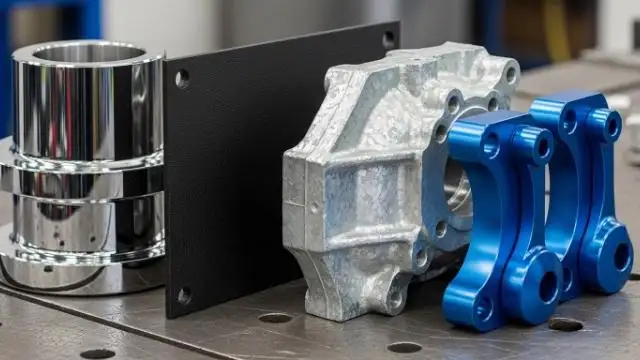
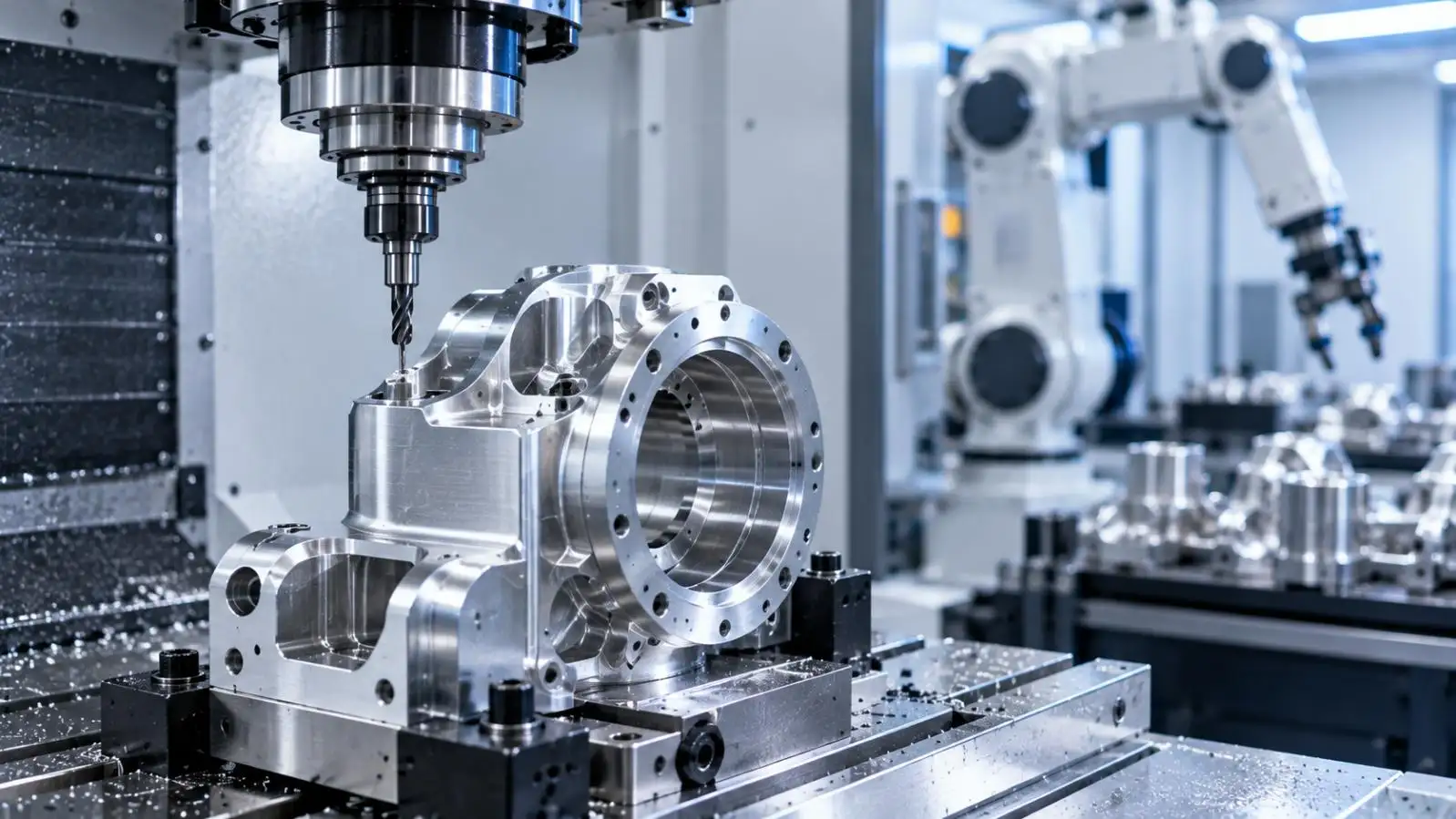
1. Heavy-Duty CNC Machining with Thermal Compensation
•Closed-loop feedback systems: Tool paths are adjusted mid-cycle during the machining operation to compensate for thermal growth of the spindle and for environmental drift using real-time probes.
•Stiff Machine Architecture: Heavy, large-volume horizontal machining centers with tough, cast iron bases and damped bases lessen vibrations caused by machining large, thick cuts of tough alloys like 4140 and Inconel (or other tough alloys).
2. Process-First Engineering
•Design for Manufacturability (DFM) review: Tolerance stacking is checked for all drawings. If a feature needs a Cpk = 1.33, KT TOOL proposes datum structures for the measurement ease.
•Pre-production capability studies: The process is validated by the machining and measuring of 50–100 pre-production prototype parts in numerous setups, which is done before actual production.
3. In-Process Statistical Process Control (SPC)
•Automated data capturing: Each finished dimension (ID/OD, depth, position, etc.) is documented after each and every machining cycle.
•Cpk instantaneous dashboards: A trend chart is available for each dimension to every operator. Before the Cpk is 1.33, the dimension is adjusted.
4. Metrology-Grade Inspection Protocols
•CMM and optical comparators: Used for first-article and periodic audits, not for 100% checking.
•Gage R&R studies: Measurement systems are certified to ensure that variation seen is from machining, not inspection error.
"Sustained precision (Cpk ≥ 1.33)" is not a tagline at KT TOOL—it is a contractual commitment backed by hourly data logs shared with clients.
Why Cpk ≥ 1.33 is Required for Different Parts
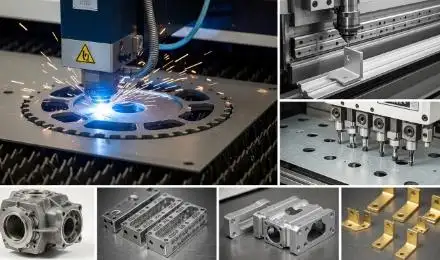
Tolerance requirements differ based on part function. Cpk ≥ 1.33 becomes necessary for the following components:
•Hydraulic Valve Bodies: Spool-to-bore clearance (often < 0.01 mm) must be controlled to prevent leakage or jamming.
•Pistons and Cylinders: Blow-by and premature wearing of the seal is prevented by controlling roundness.
•Machine Beds and Columns: To maintain the alignment of the linear guides, flatness must be controlled to be within 0.025 mm over two meters.
•Gear Housings: Boring noise and service life are influenced by the concentricity of the bearing bore.
Cpk at 1.00 would allow 3 defectives per 1000 produced, which is totally unacceptable for high cycle and safety critical components.
The Cost of Cpk Noncompliance: Scrap, Rework, and Lost Time
Those who do not verify Cpk spend:
•Increased Inspection Time: Defect free supply is ensured by a 100% inspection, which doubles lead times.
•Field Failures: Nonconforming parts installed in the support of a conveyor or arms of a robot will fail in service and will incur a cost 10 times the cost of the failed part.
•Loss of Ship to Stock: Once a defect is supplied by a supplier, the customer reinstitutes rigid inspections, which increases the supplier's inspection related administrative costs.
Conversely, sourcing from a partner with documented Cpk ≥ 1.33 transforms quality from a cost center into a competitive advantage.
How to Verify a Supplier's Cpk Claim
Not every shop that writes "Cpk ≥ 1.33" in a quote can deliver it. Use these validation steps:
•Request a capability study report: Look for 30+ consecutive subgroups (each subgroup = 3–5 parts) measured over multiple days or shifts.
•Normality and Stability Check: Data should fit a normal distribution and should not show presence of trends, variations, or outliers. Ask if the process was challenged—e.g., tool wear test, coolant temperature change.
•Audit their measurement system: If they cannot prove their calipers or CMM are repeatable (Gage R&R < 10%), the Cpk number is meaningless.
KT TOOL provides clients with transparent capability packages including raw measurement data, control charts, and third-party verification options—because trust is earned through evidence, not slogans.
Conclusion: Cpk ≥ 1.33 as a Partnership Language
In modern Industrial Machinery Parts Machining, Cpk ≥ 1.33 is more than a quality metric—it is a commitment to predictable output, reduced transaction costs, and mutual accountability. It tells engineers: You do not need to inspect every incoming component. Our process has proven its stability.
For companies seeking Engineering Robust Solutions for Industrial Strength, this capability unlocks faster ramp-ups, lower total cost of ownership, and reliable performance under extreme operational stresses. Whether fabricating a fabricated base plate for a mining conveyor or precision-boring a cylinder for a hydraulic press, the question should never be "Do you inspect?" but "What is your documented Cpk?"
Ready to move to inspection-free receiving? Share your most challenging industrial machinery drawings with KT TOOL's engineering team for a free manufacturability and capability assessment.
FAQs
Q1: What does Cpk ≥ 1.33 mean in simple terms?
A: The process produces 99.9937% conforming parts, allowing reduced or no incoming inspection.
Q2: Cpk being ≥ 1.33 allows for what kind of status?
A: There is a normal variation without a defect of about 25% above the minimum tolerance.
Q3. What components of industrial machinery would require Cpk's of greater than 1.33?
A: Hydraulic valves, pistons, and cylinders, as well as the beds and housings.
Q4: What are the consequences for ignoring Cpk and buying uncertified products?
A: High costs for inspection, failures in the field, unexpected downtime, and loss of the right to ‘ship to stock'.
Q5: What are the principal industries where Cpk of 1.33 or greater is a requirement for machining?A: Heavy machinery, systems for Robotics/Automation, Hydraulic systems, and Conveyors.
Talk to the Manufacturer, Not a Middleman
Resources & Insights
-
 Blog
BlogCNC Machining Robotic Parts: How GD&T Controls Robot Assembly Accuracy
2026-09-24By KT Engineering -
 Blog
BlogHardware Stamping Springback Control for High-Strength Steel Parts
2026-09-24By KT Engineering -
 Blog
BlogSpring Stamping Fatigue Life: How Geometry, Material and Edge Quality Affect Cycle Life
2026-09-24By KT Engineering -
 Blog
BlogMechanical Automation Parts for Robot End Effectors and Positioning Accuracy
2026-09-23By KT Engineering