Contact Us
  Home /
 CNC Machining for Custom Metal Parts | Precision CNC Services


Table of Contents
-
CNC Machining for Custom Metal Parts: A Practical Guide to Precision Manufacturing
- What is CNC Machining in the Production of Metal Parts?
-
How CNC Machining of Metal Components Works?
- CAD/CAM Manufacturing Workflow
- CNC Machining and Programming
- Subtractive Manufacturing Process
- Inspection and Metrology Processes
- Complex Metal Parts CNC Milling and Turning
- Accuracy Standards and Quality Control Systems
- Materials in Custom CNC Metal Fabrication
- CNC Machining Services in Industry
- Scales of Production and Commercial Applications
- Why is CNC Machining Important to the Modern Manufacturing Systems?
- Conclusion

CNC Machining for Custom Metal Parts: A Practical Guide to Precision Manufacturing
CNC machining for custom metal parts is a subtractive manufacturing process. It bends metal with computer-controlled cutting tools. It cuts away the material in layers until the final geometry is created.
The process helps in precision engineering production in most industries. It is relied on by aerospace, automobile, and medical systems. The process provides consistent quality, narrow tolerance, and repeatability.
At KTC CNC Machining, we specialize in the production of engineered metal parts. We integrate CAD/CAM manufacturing processes with sophisticated CNC programming and machining configuration.
What is CNC Machining in the Production of Metal Parts?
Coded instructions are used in computer numerical control machining. These are instructions that direct CNC milling and turning. Machines adhere to toolpaths with great precision.
The system supports:
- CNC machining 3-axis and 5-axis.
- Multi-axis machining process
- Prototype to production machining
- Automated machining systems
This produces fabrication of metal components with uniform outcomes. The process minimises manual error and enhances dimensional accuracy control.
Key Advantages of CNC-Machined Metal Parts Services
CNC-machined metal parts are used to support small and large production runs. The process accommodates on-demand manufacturing services and OEM metal parts manufacturing.
Key benefits include:
- Close tolerance machining with machining precision of microns.
- Complex shape component production with high accuracy.
- Fast turnaround for prototype CNC machining for metal parts
- Mass production machining of large quantities.
- Optimization of smooth surface finish in industry.
The system is effective in custom CNC machining of metal parts that must fit and operate precisely.
How CNC Machining of Metal Components Works?
CNC machining employs a controlled workflow. Each step ensures stability and repeatability.
CAD/CAM Manufacturing Workflow
Design starts in CAD software. The engineers develop 3D models. They are translated into machine code using CAM software.
CNC Machining and Programming
Operators prepare toolpaths. They determine cutting speed, feed rate, and tool choice.
Subtractive Manufacturing Process
The machine cuts off excess material. It forms aluminum, steel, titanium, and brass.
Inspection and Metrology Processes
Tolerances are checked by quality checks. ISO-certified machining standards guide the process.
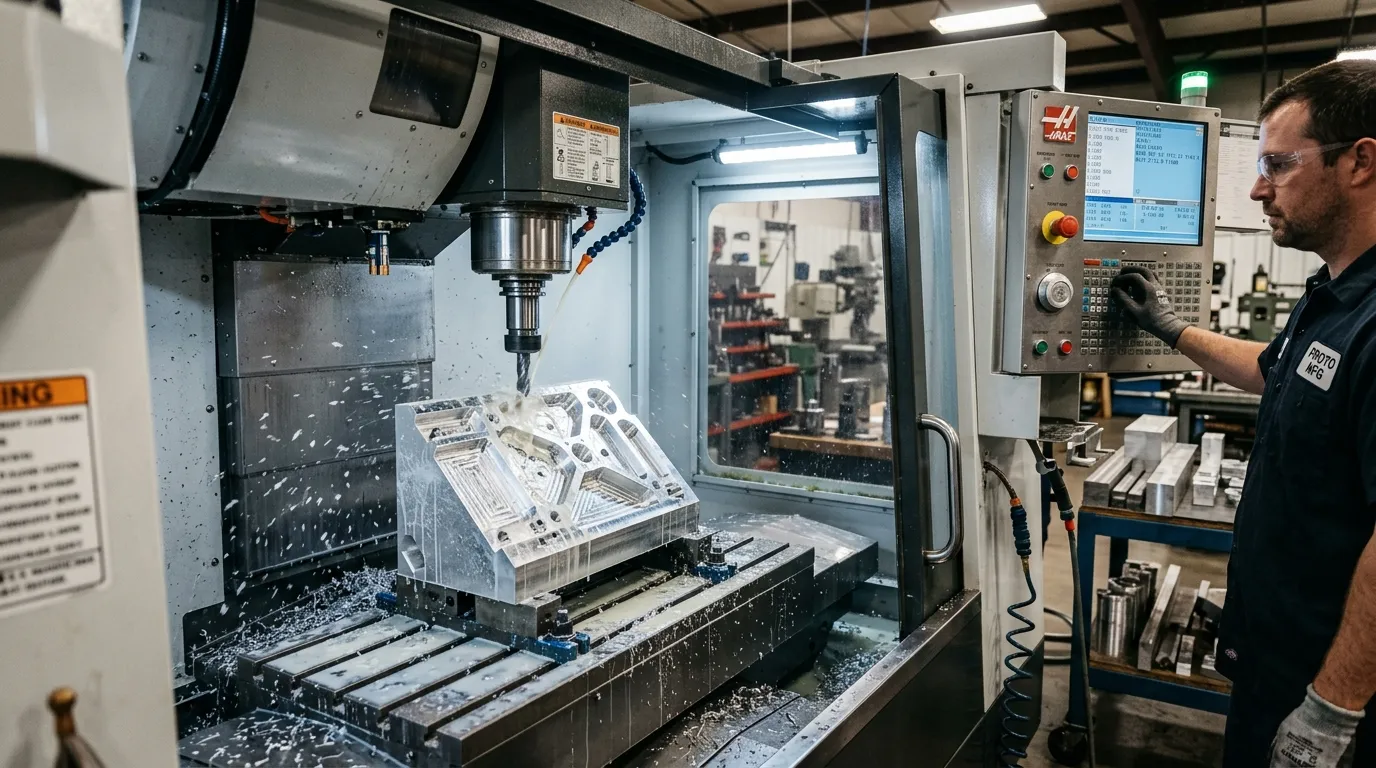
Our CNC milling solutions are engineered to provide precision, reliability, and efficiency. Our superior technology and professional craftsmanship are used in the manufacture of quality parts that are customized to suit your needs. Having a material compatibility, tight tolerance, and short turnaround time is our specialty, and we make each part to the best of our ability, guaranteeing unparalleled performance and value to a broad spectrum of industries.
Complex Metal Parts CNC Milling and Turning
The metal shaping process is based on CNC milling and turning. Milling takes care of flat and 3D surfaces. Turning works on cylindrical components.
Advanced setups include:
- Multi-axis machining process of complex geometry.
- High-strength metal machining for industrial use.
- Machining support of sheet metal and solid metal.
- Efficiency toolpath optimization.
This enables CNC machining to manufacture complex metal parts without any limits in design.
Accuracy Standards and Quality Control Systems
Accuracy characterizes CNC machining. Each section has to be within rigid boundaries.
Key Quality Factors
- High accuracy machining with ±0.01 mm tolerance
- Surface finish between 0.8 and 1.6 μm.
- Control of dimensional accuracy between production batches.
- CNC machining with quality inspection tools.
We also employ inspection and metrology procedures to ensure stability. This facilitates high-accuracy CNC machining of custom metal parts.
Materials in Custom CNC Metal Fabrication
The strength and durability are influenced by the material choice. CNC systems are supportive of a broad spectrum.
Common materials include:
- Lightweight part machining solutions in aluminum alloy.
- Precision machining in stainless steel to resist corrosion.
- Fabrication of titanium components to be used in aerospace.
- Brass and copper CNC machining of electrical parts.
- Structural machining of carbon steel.
All materials require varying cutting speeds and tool pressure. This guarantees quality-engineered metal parts.
CNC Machining Services in Industry
CNC machining favors numerous industries that demand consistent metal components.
- Aerospace CNC machining of metal parts
- Applied to lightweight and high-strength parts.
- Custom-machined automotive parts.
- Used in engine systems, brackets, and housings.
- CNC machining of metal parts in the medical field.
- Used for surgical tools and precision devices.
- CNC metal part manufacturing (industrial).
- Applied to machines, tools, and factory systems.
- CNC machining of precision engineering.
- Used for high-demand technical assemblies.
Scales of Production and Commercial Applications
CNC machining contributes to flexible models of production.
- CNC machining of small batch custom metal parts.
- Quick prototyping of initial design testing.
- Startup machining of low-volume production.
- OEM CNC machining metal parts supplier solutions
- Mass manufacturing of the industrial supply chain.
This renders it a good option in testing and complete production cycles.
Why is CNC Machining Important to the Modern Manufacturing Systems?
Design and production are linked through CNC machining. It enhances efficiency and minimizes wastage.
Key advantages:
- Digital manufacturing solutions enhance control.
- Manual errors are minimized in automated machining systems.
- Industrial machining technology enhances repeatability.
- Production of engineered metal parts is stable.
It also facilitates scalable machining of production to meet increasing demand.
Post Processing and Surface Finishing
Post-processing enhances the quality of parts after machining.
Services include:
- Deburring and polishing
- Coating and anodizing
- Strength treatment by heat.
- Surface finish optimization to smooth output.
This is done to guarantee ultimate usability in the actual settings.
The Importance of Precision in CNC Machining
Part performance is characterized by precision. Even minor mistakes have an impact on the assembly.
High precision machining guarantees:
- Fit in assemblies.
- Less wear with time.
- Stable mechanical function
- Long service life
Aerospace and medical systems are sensitive to tight tolerance machining services.
Conclusion
CNC machining for custom metal parts is not merely a process. It is a controlled system for stable production. It integrates design, precision, and reproducible output within a single workflow.
Powerful sectors rely on it to be safe and to operate. KT TOOL delivers dependable performance even under demanding production conditions. The result is simple: higher-quality components, fewer manufacturing errors, improved accuracy, and continuous production efficiency.
Talk to the Manufacturer, Not a Middleman
Resources & Insights
-
 Blog
BlogCNC Machining Robotic Parts: How GD&T Controls Robot Assembly Accuracy
2026-09-24By KT Engineering -
 Blog
BlogHardware Stamping Springback Control for High-Strength Steel Parts
2026-09-24By KT Engineering -
 Blog
BlogSpring Stamping Fatigue Life: How Geometry, Material and Edge Quality Affect Cycle Life
2026-09-24By KT Engineering -
 Blog
BlogMechanical Automation Parts for Robot End Effectors and Positioning Accuracy
2026-09-23By KT Engineering