Contact Us
  Home /
 CNC Prototype Manufacturer: How to Choose the Right Partner for Fast, Accurate Prototyping


Table of Contents
-
CNC Prototype Manufacturer: Complete Guide to Choosing the Right Partner
- What is a CNC prototype manufacturer?
- Why CNC prototyping matters in today's product development
- Key capabilities to look for in a CNC prototype manufacturer
- Current market trends in CNC prototype manufacturing (2024–2025)
- How to evaluate and select a CNC prototype manufacturer
- Why work with KTC as your CNC prototype manufacturer?
- Best practices for working with a CNC prototype manufacturer
- Applications and industries that benefit most from CNC prototype manufacturers
- Checklist: Selecting your CNC prototype manufacturer
- Conclusion: Turn your designs into reliable CNC prototypes

CNC Prototype Manufacturer: Complete Guide to Choosing the Right Partner
As product development cycles shorten and customization becomes the norm, choosing a reliable CNC prototype manufacturer is critical to getting your product to market on time and on budget. Whether you're developing a new consumer product, an industrial component, or a complex aerospace part, high-quality CNC machined prototypes help you validate design, test performance, and shorten iteration loops.
This guide explains what a CNC prototype manufacturer does, how the market is evolving in 2024–2025, which capabilities really matter, and how to evaluate suppliers—using KTC as a practical example of what to look for in a manufacturing partner.
What is a CNC prototype manufacturer?
A CNC prototype manufacturer is a machining supplier that specializes in producing low-volume, often one-off or small-batch parts using CNC (Computer Numerical Control) equipment. Unlike high-volume mass producers, prototype-focused manufacturers are optimized for fast setup and quick turnaround, frequent design changes and engineering iterations, wide material compatibility, and tight tolerances on small batches.
Typical services include CNC milling (3-axis, 4-axis, 5-axis), CNC turning and mill-turn machining, rapid prototyping for fit, form, and functional tests, small-batch bridge production between prototyping and mass production, secondary operations such as drilling, tapping, and reaming, and standard surface finishes like anodizing, polishing, and bead blasting via in-house or qualified partners.
For OEMs, startups and engineering teams, a capable CNC prototype manufacturer becomes an extension of the R&D department, translating digital designs into physical parts quickly and accurately.
Why CNC prototyping matters in today's product development
Faster time-to-market
Modern markets move quickly. Hardware startups and established brands face shorter product life cycles, rapid technology updates, and tight launch windows. CNC prototyping allows engineers to go from CAD to component in days instead of weeks. Shorter feedback loops mean more design iterations before tooling investment, earlier detection of design flaws, and faster transition from prototype to pilot run.
Real materials, real performance
Compared with 3D printing, CNC machining offers end-use materials like aluminum, copper, brass, stainless steel, tool steel, and engineering plastics. It also provides superior mechanical properties with higher strength, heat resistance, and dimensional stability, plus surface finish and tolerance closer to production conditions.
This is crucial for functional testing under real loads, thermal and vibration testing, and regulatory and safety validation.
Design risk reduction
By working with an experienced CNC prototype manufacturer, teams can validate DFM (Design for Manufacturability) early, identify features that may be difficult or expensive to machine, optimize wall thickness, radii, and tolerances, and avoid expensive changes to molds or production tooling later.
Key capabilities to look for in a CNC prototype manufacturer
When you search for a CNC prototype manufacturer, you'll find many suppliers claiming similar capabilities. The difference is in the details. Here are the critical factors to evaluate.
1. Range of CNC machining services
A capable prototype shop should cover CNC milling (3-axis for general prismatic parts, 4-axis for more complex geometries and reduced setups, 5-axis for multi-surface machining, undercuts, and complex contours), CNC turning for shafts, bushings, and cylindrical components with live tooling and Y-axis for turned-milled features, and high-precision machining with tight tolerances down to ±0.005 mm on critical features depending on materials and geometry.
KTC operates advanced machining centers suitable for precision CNC turning parts and custom machined components, optimized for prototyping as well as small-batch runs.
2. Material and surface finish capabilities
Your CNC prototype manufacturer should handle a wide range of materials relevant to your industry. Metals include aluminum alloys (6061, 6082, 7075), stainless steels (304, 316, 17-4PH), carbon steels and alloy steels, and brass, copper, and bronze. Plastics include ABS, PC, PMMA (acrylic), POM (Delrin), PEEK, Nylon, and PTFE.
Surface finishes in-house or via trusted partners include as-machined, bead blasting, anodizing (clear, color), hard anodizing, electroplating, passivation, brushing, polishing, and powder coating. For prototyping, finishes are not only aesthetic; they impact corrosion resistance, friction, and functional performance tests.
3. Prototyping lead time and responsiveness
In the current market, lead time is often the decisive factor when choosing a CNC prototype manufacturer. Competitive timelines include DFM review and quotation in 24–72 hours and machining for standard parts in 3–10 working days depending on complexity and quantity.
Responsiveness matters just as much as raw speed. Look for clear communication about feasibility and risk, ability to accommodate last-minute design changes, and transparent scheduling and progress updates.
4. Tolerance control and quality assurance
For prototypes that simulate or become early production parts, quality control is crucial. Measurement equipment includes calipers, micrometers, height gauges, and ideally CMM or 3D measurement tools. Ask your prototype manufacturer about typical achievable tolerances per process and material, capability to follow customer drawings and GD&T requirements, and experience with industry-specific standards like those for automotive or aerospace applications.
5. Experience with prototyping and small batches
Prototyping is not just small production. It requires frequent program changes and quick setup, flexibility to adjust features between iterations, and willingness to work with incomplete or evolving documentation. A shop focused on high-volume production may not be as flexible. A dedicated CNC prototype manufacturer like KTC organizes workflow specifically for one-off and low-volume runs, making it easier to support engineering changes and design revisions.
6. Engineering support and DFM feedback
The best prototype manufacturers act as technical partners, not just order takers. Look for suppliers who review CAD models for manufacturability, point out potential issues like deep pockets, thin walls, and sharp internal corners, offer suggestions to reduce cost or improve reliability, and can provide early DFM feedback before you commit to tooling.
Current market trends in CNC prototype manufacturing (2024–2025)
The CNC prototyping landscape is evolving rapidly. Several trends are shaping how buyers select manufacturers and how suppliers deliver parts.
Trend 1: Shorter development cycles and "design to prototype" speed
Across automotive, consumer electronics, medical devices and industrial equipment, companies are tightening development schedules. This leads to higher demand for faster turnaround on prototypes, more design iterations per project, and preference for suppliers who can move quickly from CAD to part without bureaucratic delays. CNC prototype manufacturers that can deliver parts in days instead of weeks are gaining a competitive edge.
Trend 2: Complex geometries and 5-axis CNC
As products become more compact and multi-functional, prototypes often require complex contoured surfaces, multi-side machining, and precise alignment between features. 5-axis CNC capabilities are increasingly important for aerospace and drone components, medical implants and instruments, and high-performance automotive parts. The broader industry trend shows a clear shift toward advanced multi-axis machining for prototyping.
Trend 3: Integration with digital design and remote collaboration
With distributed design teams and global supply chains, buyers of CNC prototypes expect seamless sharing of CAD files and drawings, online quoting and rapid feedback, and digital tracking of orders and revisions. Manufacturers that respond quickly to online inquiries, provide clear digital documentation, and communicate effectively across time zones are better positioned to serve international customers.
Trend 4: Cost optimization and bridge production
Given global economic uncertainty and rising material costs, many companies now use CNC machined prototypes not only for testing but also for bridge production before molds or dedicated tooling are ready. They combine rapid prototyping with low-volume CNC production runs and optimize designs for both prototyping and mass production from the start. This makes it even more important to choose a CNC prototype manufacturer that can handle both prototypes and small-batch orders reliably.
How to evaluate and select a CNC prototype manufacturer
When you screen potential suppliers, use these practical criteria to compare options.
1. Technical fit with your parts
Check that the manufacturer's equipment and experience match your typical parts. Maximum part size and weight, required tolerances and surface finishes, material types (metals vs. plastics), and complexity (3-axis vs. multi-axis, turned vs. milled features) all matter. If you frequently need precision turned parts, a manufacturer like KTC, specialized in precision CNC turning and custom machining, can be a strong fit.
2. Lead time and capacity
Ask about standard lead times for prototype quantities, capacity for urgent orders, and how they handle spikes in demand. Suppliers with stable capacity and clear scheduling are more likely to deliver on time as your project scales.
3. Quality assurance and certifications
Even for prototypes, quality assurance matters. Ask what inspection tools are used, whether they can provide inspection reports if needed, and how they handle non-conformances or rework. While not every prototype requires full documentation, knowing your supplier can scale up quality control when you move closer to production is reassuring.
4. Communication and engineering support
Evaluate responsiveness to email and inquiry forms, clarity of questions and feedback, and willingness to discuss design and manufacturability. Clear technical communication is essential, especially for international customers working remotely.
5. Location and logistics
If you are working with an overseas CNC prototype manufacturer, factor in shipping options and transit times, packaging quality for delicate prototypes, and customs documentation for international shipments. Many buyers use a mix of local and overseas suppliers to balance speed, cost, and capabilities.
Why work with KTC as your CNC prototype manufacturer?
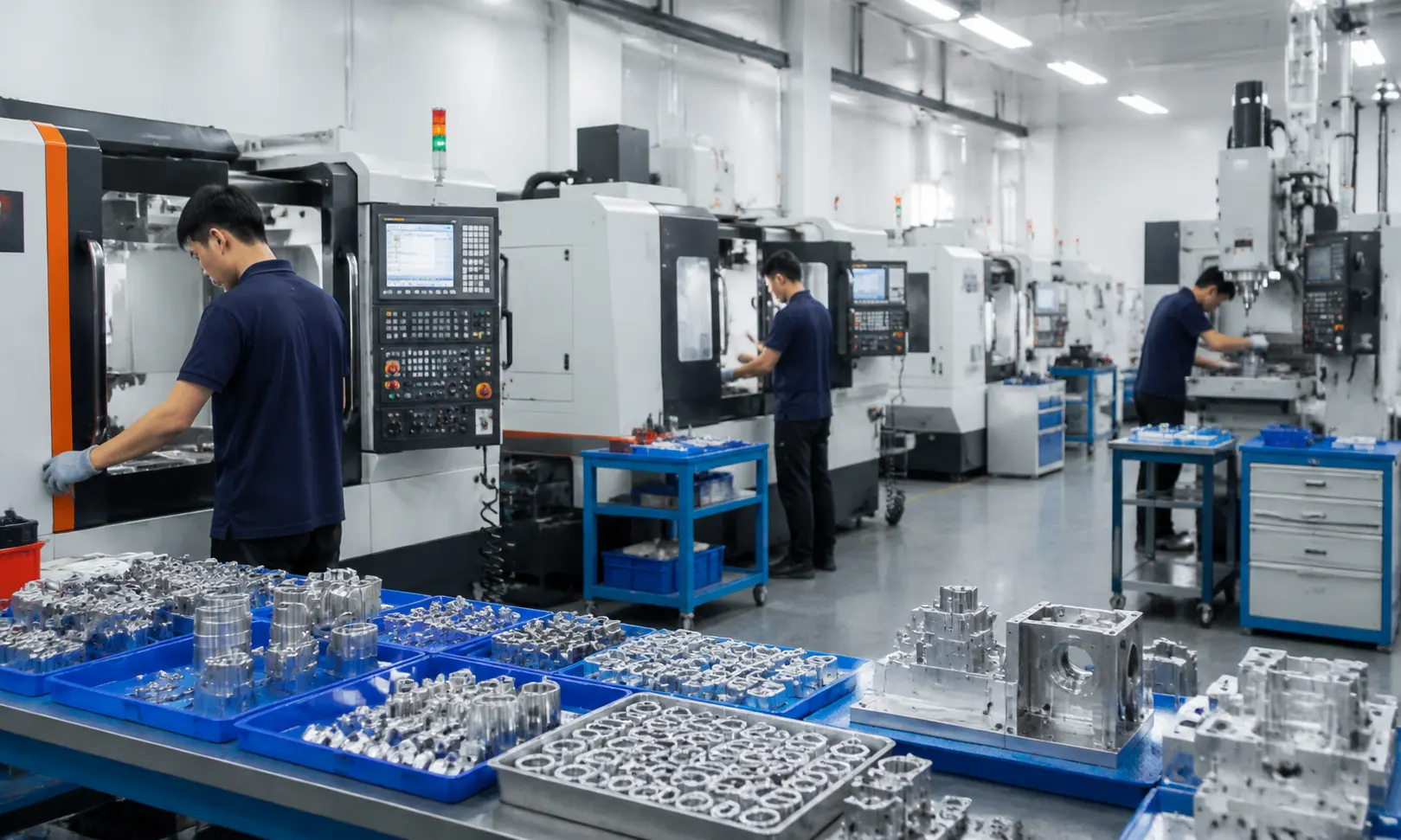
KTC is a professional machining supplier and manufacturer that provides precise CNC machining services for global customers. While the company serves broader machining needs, many of its strengths are directly relevant to CNC prototyping.
Core strengths relevant to prototyping
Precision CNC turning and machining: KTC focuses on precision turning parts and custom machined components, suitable for prototypes and low-volume production in multiple industries.
Customized machining solutions: The company tailors manufacturing to customer drawings and requirements rather than offering only standard catalog parts.
Service for global customers: KTC is experienced in serving customers worldwide, which is important for communication, packaging, and export processes.
Typical projects KTC can support
While specific project details depend on your requirements, KTC's capabilities are suitable for mechanical prototypes for industrial equipment and automation, precision shafts, bushings, and housings for machinery, automotive and motorcycle aftermarket parts, customized brackets, fixtures, and tooling components, and test rigs, jigs and functional prototypes for R&D. If your prototypes include turned features, tight tolerances, or require robust metallic materials, KTC's experience in precision machining can be particularly useful.
How to start a CNC prototyping project with KTC
Step 1: Prepare your design data including 3D CAD model (STEP/IGES), 2D drawing with critical dimensions and tolerances, and material and surface finish requirements.
Step 2: Send an inquiry to sales@ktcncmachining.com or visit https://www.ktcncmachining.com to use the contact page.
Step 3: Discuss requirements and indicate quantity, target lead time, and any special functional tests. Ask for DFM feedback if you're unsure about certain features.
Step 4: Review quotation and feasibility and evaluate pricing, lead time, and manufacturing approach. Confirm that critical features and tolerances are fully understood.
Step 5: Approve order and production and KTC proceeds with CNC programming, machining, and inspection. You receive the prototypes for testing and validation.
Best practices for working with a CNC prototype manufacturer
To get the most value from any CNC prototype manufacturer, including KTC, follow these practical tips.
Provide clear design intent
Highlight critical dimensions and tolerances, mark surfaces that are cosmetic vs. functional, and specify where you can accept deviations to save cost. This helps the manufacturer prioritize what really matters.
Balance tolerances and cost
Over-tight tolerances increase machining time and inspection effort. Use tight tolerances only where necessary; for other features, standard machining tolerances may be sufficient.
Consider prototyping and production together
Even though you're ordering prototypes, think ahead. Ask if the same processes and setups can be used for small-batch runs, validate materials and finishes that you plan to use in production, and gather feedback about how design changes could reduce production cost. This approach makes each prototype iteration a step toward a manufacturable product.
Communicate early about deadlines
If you have a hard deadline (trade show, investor demo, field test), communicate it upfront. Your CNC prototype manufacturer can then suggest feasible design adjustments to meet timing, plan machine time early, and propose partial shipments if needed.
Applications and industries that benefit most from CNC prototype manufacturers
Industrial machinery and automation
Prototype mechanical assemblies and fixtures, precision shafts, couplings, gears, and brackets, and custom tools and inspection gauges.
Automotive and transportation
Engine and drivetrain components for testing, brackets, mounts, and custom housings, and small batches of custom performance parts.
Consumer products and electronics
Mechanical interiors and structural frames, heat sinks and metal housings, and precision plastic parts machined from engineering plastics.
Medical and laboratory equipment
Instrument housings and frames, custom clamps, holders, and fixtures, and components for test rigs and prototypes (subject to regulatory considerations).
Energy and industrial infrastructure
Valve components, flanges, and connectors, mounting hardware and structural parts, and custom machined parts for prototypes of new systems.
Checklist: Selecting your CNC prototype manufacturer
Use this condensed checklist when comparing suppliers:
Technical capability: Suitable machines (milling, turning, 5-axis if needed), materials and surface finishes available.
Prototyping experience: Proven record with one-off and small-batch parts, comfort with design changes and short runs.
Quality and tolerances: Achievable tolerances match your requirements, inspection and quality control procedures.
Lead time and flexibility: Competitive prototype turnaround, clear communication about scheduling and changes.
Engineering support: DFM feedback and problem-solving mindset, ability to work from your CAD and drawings.
Communication and service: Fast response to inquiries, clear, professional English communication for international customers.
Scalability: Ability to support bridge production and low-volume runs after prototyping.
KTC is an example of a CNC machining supplier that aligns with many of these criteria, particularly for precision turned and custom machined components.
Conclusion: Turn your designs into reliable CNC prototypes
Choosing the right CNC prototype manufacturer is a strategic decision that affects your project's schedule, cost, and technical risk. In today's fast-moving market, you need a partner who can turn CAD designs into accurate prototypes quickly, handle a variety of materials and geometries, support multiple iterations and design changes, and provide practical manufacturing feedback.
By focusing on technical capability, quality control, responsiveness, and engineering support, you can build a long-term relationship that supports both prototyping and early production.
If you are looking for a CNC prototype manufacturer with strong precision machining capabilities and experience serving global customers, you can contact KTC at https://www.ktcncmachining.com or sales@ktcncmachining.com. Send your drawings and requirements, and explore how KTC can help turn your next design into a precise, test-ready CNC prototype.
Talk to the Manufacturer, Not a Middleman
Resources & Insights
-
 Blog
BlogCNC Machining Robotic Parts: How GD&T Controls Robot Assembly Accuracy
2026-09-24By KT Engineering -
 Blog
BlogHardware Stamping Springback Control for High-Strength Steel Parts
2026-09-24By KT Engineering -
 Blog
BlogSpring Stamping Fatigue Life: How Geometry, Material and Edge Quality Affect Cycle Life
2026-09-24By KT Engineering -
 Blog
BlogMechanical Automation Parts for Robot End Effectors and Positioning Accuracy
2026-09-23By KT Engineering