Contact Us
  Home /
 High Resolution 3D Printing | Additive Manufacturing Solutions


Table of Contents

Future of Digital Manufacturing at the Ultimate Precision
The 3D printing of high resolution is transforming the way modern manufacturing is done. It is no longer just a matter of making parts, but of making ultra-detailed, highly accurate, and production-ready parts directly out of digital designs.
- The world of fast innovation, which is the modern world, demands fast, precise, and consistent industries. It is here that high-resolution 3D printing, or ultra-high-resolution 3D printing, comes into play. In the field of aerospace to medical engineering, it is shaping the future of designing and manufacturing parts.
- Essentially, this technology integrates additive manufacturing systems of high quality, including SLA high-resolution 3D printing and DLP 3D printing high-detail processes, to achieve micro-level accuracy and fine surface finishes that can often be outperformed by more traditional manufacturing processes.
High Resolution 3D Printing is so Advanced?
Extreme detail is given priority in high-resolution 3D printing. It uses micro-level 3D printing resolution and high-accuracy layer deposition techniques. The system layer heights can be as low as 10 to 50 microns.
This results in:
- Sub-millimetre printing accuracy
- Output of 3D printing with a smooth surface finish.
- Small step effect of layers.
- High fidelity prototyping ability.
These enhancements enable engineers to transition straight out of a CAD model to physical prototypes with near-identical geometry.
Stereolithography (SLA) 3D Printing
SLA is a process that involves the use of a laser to cure photopolymer resin printing materials in layers. It offers:
- Creation of minute details.
- Excellent quality of surface finish.
- Tight tolerance manufacturing
- Engineering-grade accuracy
Digital Light Processing (DLP) Printing
DLP is a digital projector used to cure a number of layers at a time. This enhances speed and accuracy:
- Faster build times
- Good reproduction ability in detail.
- Multi-layer curing accuracy
- Consistent dimensional control
Both technologies are high-precision additive manufacturing, which is extensively applied in industry.
Industrial 3D Printing High Resolution
Aerospace engineering is a very precise field. High-resolution 3D printing can be used with:
- Aerospace component prototyping
- Lightweight structural designs
- Generative design and additive processes.
Engineering in Medicine and Dentistry
Accuracy is a life-saving factor in healthcare. Applications include:
- Accuracy of medical device modelling.
- Dental modeling high resolution printing
- Surgical guide production
- Custom implants and anatomical models.
Planning and outcomes are enhanced by the capability to develop patient-specific models.
Automotive Prototype Development
The rapid prototyping with high accuracy is used by automotive companies to:
- Rapidly experiment with designs.
- Validate aerodynamics
- Reduce production costs
- Improve design cycles
- High-resolution 3D Printing has Technical Strength.
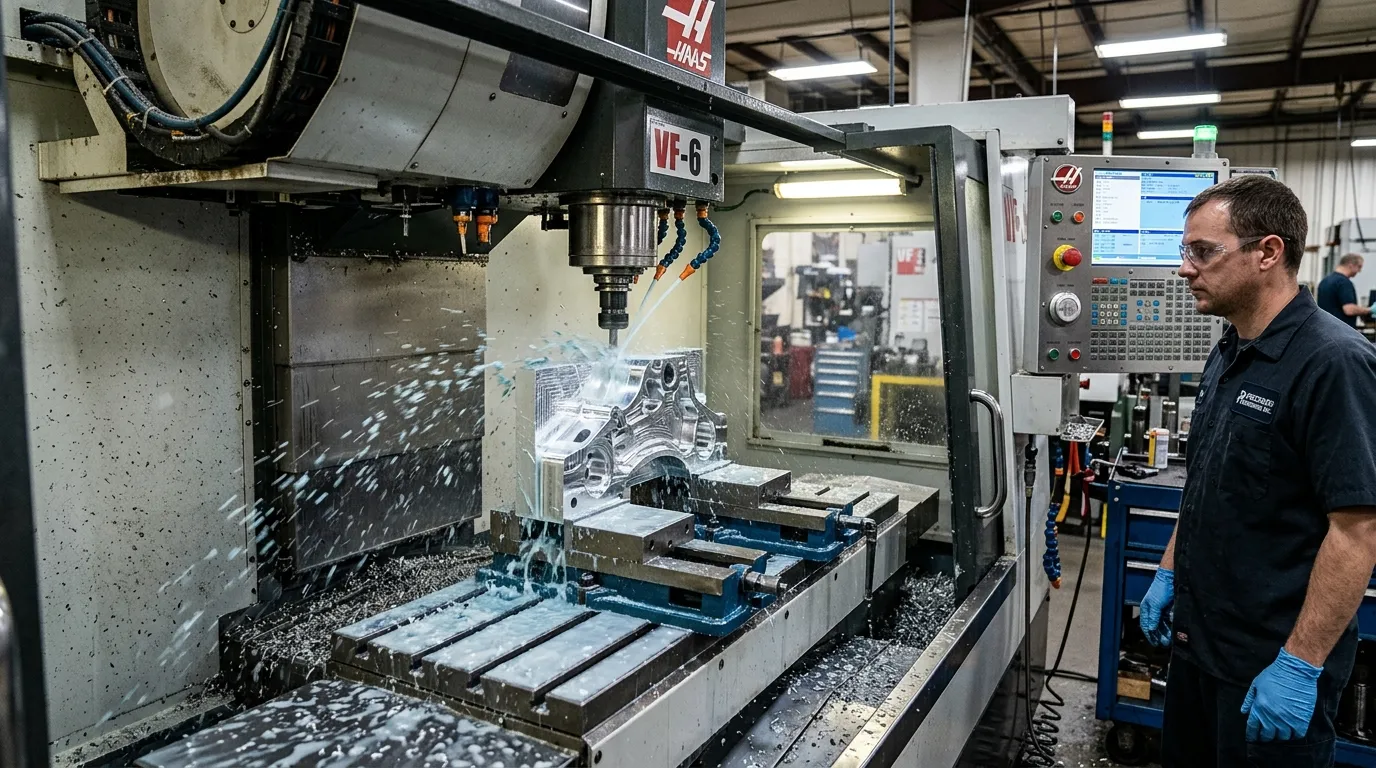
Layer Control and Surface Quality
One of the largest strengths is high-accuracy layer deposition. This ensures:
- Control of fine-layer thickness.
- Less visible print lines.
- Precision surface detailing
- Quality-designed surface finish.
This directly impacts the look and performance of the final part in regard to professionalism.
CAD into Physical Workflow
The contemporary systems are dependent on:
- Printing Computer-aided design (CAD) modelling.
- Digital manufacturing technologies
- Commercial-grade 3D printers.
- Automated slicing software
This workflow minimises human error and enhances repeatability.
Stringent Tolerance Production
Advanced systems achieve:
- Close tolerance production within the range of ±0.05 mm in some cases.
- CNC-level additive manufacturing.
- Periodic check of dimensional accuracy.
- High-performance validation testing
Aluminium Alloy 3D Printing in the Modern Manufacturing
Already, 3D printing of aluminium alloys is a significant part of the new manufacturing processes. It offers a trade-off between weight and strength, and is applicable in aerospace and industry.
In KTC CNC Machining, the 3D printed parts made of aluminium alloy are designed with:
- Lightweight structural efficiency
- High thermal resistance
- Excellent mechanical performance
- Complex geometry support
The technology bridges the gap that exists between traditional CNC machining and additive manufacturing technologies and gives engineers more freedom in their designs.
3D Printing Services of Industry High Resolution
The industries that exist rely on the accuracy of 3D printing services to conserve funds and improve speed. These include:
- 3D printing services with high resolution.
- Professional 3D printing is very accurate.
- High-resolution 3D printing solutions that are customised.
- High precision 3D printing service in the industry.
- On demand high detail 3D printing.
Such services enable companies to scale production without the need to invest a lot in tooling or moulds.
Benefits of High Precision Additive Manufacturing
- Speed and Flexibility
- Quick production cycles minimise time-to-market.
- Cost Efficiency
- It does not need any tooling, reducing initial manufacturing expenses.
- Design Freedom
- Complex internal structures and geometries can be used.
- Material Efficiency
- Less wastage than subtractive processes.
- High Resolution 3D Printing in the Future.
- The future is heading towards:
- Micro-level resolution systems of 3D printing.
- Generative design optimisation using AI.
- Hybrid CNC/additive manufacturing systems.
- High-technology photopolymer resin.
We are also in a stage where digital manufacturing is fully incorporated in industrial production lines.
Conclusion
High-resolution 3D printing is not just an upgrade of technology, but a paradigm shift in the way industries design and manufacture. It offers accuracy that is not easily possible using other conventional techniques in making ultra-fine details to industrial-grade metal components.
With industries pushing to tighter tolerances, increased production speed, and smarter workflows, high precision additive manufacturing will be at the heart of innovation. A fusion of SLA, DLP and advanced materials is establishing a future in which imagination is a reality that can be made.
The real power of high-resolution 3D printing is to make complex ideas into an ideal physical shape. Production is unrestricted when accuracy is coupled with imagination.
KT CNC Machining offers high-resolution 3D printing and hybrid manufacturing services to satisfy the needs of modern engineering, in case you are interested in reliable, precise and industrial-grade solutions. Find solutions, custom-order prototypes, and increase your production capacity today.
Talk to the Manufacturer, Not a Middleman
Resources & Insights
-
 Blog
BlogCNC Machining Robotic Parts: How GD&T Controls Robot Assembly Accuracy
2026-09-24By KT Engineering -
 Blog
BlogHardware Stamping Springback Control for High-Strength Steel Parts
2026-09-24By KT Engineering -
 Blog
BlogSpring Stamping Fatigue Life: How Geometry, Material and Edge Quality Affect Cycle Life
2026-09-24By KT Engineering -
 Blog
BlogMechanical Automation Parts for Robot End Effectors and Positioning Accuracy
2026-09-23By KT Engineering