Contact Us
  Home /
 Finding a Precision Stamping Tooling Supplier for Multi-Material Capabilities


Table of Contents

When Searching for a Precision Stamping Tooling Supplier, having the capability to work with multiple materials boosts competition advantage. A contemporary Precision Stamping Tooling Supplier must be able to work with steel, aluminum, copper, brass, and stainless steel, and sometimes, must be able to do this for multiple product lines. This article outlines how the appropriate Precision Stamping Tooling Supplier assists in optimizing supply chain, assisting with design flexibility, and maintaining the desired level of quality.
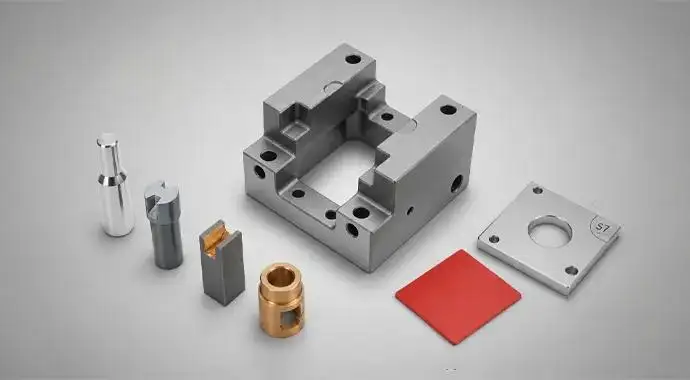
Why Multi-Material Capability is Important
All products of the automotive, electronics, and consumer goods have included multiple, and often, different types of metals. For instance, a given bracket may use steel, and a copper conductive path. Having a Precision Stamping Tooling Supplier of multi-material capability, also, reduces your supplier base.
• Less Supplier Base: One Precision Stamping Tooling Supplier covers multiple material families.
• Consistent Quality: Same inspection standards for aluminum, steel, and copper parts.
• Rapid Problem Solving: Knowledge of the behaviors of the materials leads to quicker solutions.
KT TOOL specializes in Precision Metal Stamping Mold systems that take into consideration the multiple properties and types of each alloy.
Core Material Families of Advanced Tooling
A competent Precision Stamping Tooling Supplier possesses the ability to process and have proven capabilities for the following material families.
Steel and Stainless Steel
Tooling of high-strength and stainless steels requires robust Progressive Die systems. These materials often require additional forces and careful management of springback.
• Typical Use: Automotive brackets, motor housings, structural covers.
• What We Do: Precision Stamping with a Progressive Die system for steel with hardened tool steel inserts and tool clearances of ±0.05 mm.
• Surface Finishes: Corrosion protection options include zinc plating, powder coating and polishing.
Aluminum and Aluminum Alloys
Aluminum and aluminum alloys bond easily, too, because they are lightweight and conductive. Because of this, they require very sharp and polished surfaces.
• Typical Applications: Heat sinks, housings and lightweight automotive parts.
• KT TOOL Approach: Less friction and increased die life are achieved from custom stamping dies with surfaces that are polished and custom geometries.
• Capability Note: Stamping Parts in aluminum from 0.5 mm to 12 mm in thickness are achievable.
Copper and Brass
Excellent conductivity makes copper and brass crucial to every electrical component, but they can be quite abrasive to the tooling.
• Typical Applications: Busbars, connector contacts and terminals.
• KT TOOL Approach: Custom Copper Busbar programs utilize carbide inserts that are wear resistant and incorporate lubrication channels to sustain tool life.
• Precision Level: For contact surfaces, tolerances of ±0.01mm are achievable.
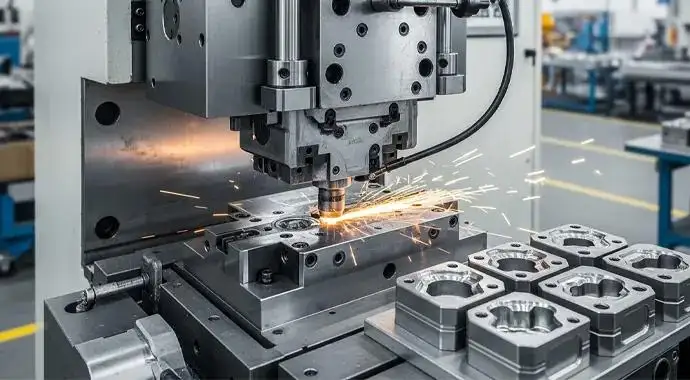
Designing Tooling That Adapts to Different Materials
A good Precision Stamping Tooling Supplier considers that a one-size-fits-all mold design is not going to be effective. The Precision Metal Stamping Mold design will be adapted considering material flow, hardness and surface.
Adjustable Clearance and Radii
• Material will dictate what effect bending and shearing will have.
• Soft Materials (Copper, Aluminum): Smaller clearances areideal to avoid burrs.
• Hard Materials (Steel, Stainless): Larger clearances will help reduce tool stress and edge cracking.
Surface Finish Integration
The right surface finish on a part will help a function and protect the Stamping Mold.
In High Volume Chips with Copper, Electro and Chrome Plating and Anodizing will add a finish that improves wear and protects the mold, and improves copper in a high volume mold run. It will protect the Stamping Mold, and Al molds will take a finish that improves wear but protects the mold and anodizing that will offer increased wear while protecting the Stamping Mold.
Powder Coating
• Powder Coating creates a protective layer on steel components that adds durability.
Tool Material Selection
Steel grades pose no problem for the Progressive Tooling.
• Tool Steel (H13, P20): General-purpose stamping and toughness.
• Carbide: Abrasive materials, aluminum high in silicon, brass.
• High-Speed Steel: medium/high volume steel and wear resistance.
Quality Assurance Across Different Materials
A good Precision Stamping Tooling Supplier maintains the same quality control regardless of the material.
• 100% Incoming Materials Inspection: Control the grade and surface condition of the alloys.
• 100% Dimension Achievement: Compare every critical feature with CAD.
• 100% Surface Finish Standard: Profilometer and visual control.
• 100% Pre-shipment Inspection: Final validation before packaging.
These four 100% checks ensure that whether the part is steel, aluminum, or copper, the buyer receives the same high standard.
Real-World Applications of Multi-Material Stamping
Experienced buyers Finding a Precision Stamping Tooling Supplier look for relevant case examples.
Automotive Sector
• Part Type: Automotive Precision Bracket Progressive Stamping Die (Steel)
• Tolerance: ±0.05 mm
• Finishes: Powder coating for corrosion resistance
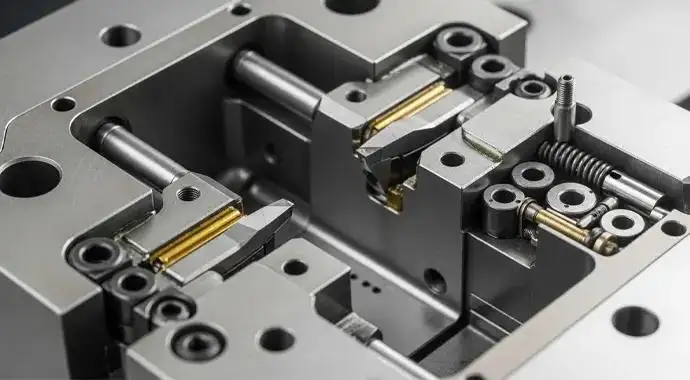
Electronics Sector
• Part Type: Aluminum Alloy Connector Spring Contacts
• Tolerance: ±0.02 mm
• Thickness: 0.2–0.4 mm
Industrial Components
• Part Type: Stamped Progressive Die for Stainless Steel Motor Housing
• Tolerance: ±0.01 mm
• Thickness: 0.3–1.5 mm
These examples show how a single Precision Stamping Tooling Supplier serves diverse industries with the same core competency.
How KT TOOL Supports Your Multi-Material Projects
KT TOOL operates as a group company established in 2005, serving over 300 global partners. They are all complementary components of our model. Adaptive production, engineering, and communication.
Engineering-Based Design Reviews: We consider part geometry and material behavior and production volume, among other thing, before toolpath generation.
• Progressive Stamping Die Stress and Springback Simulation: Stress concentration and springback are simulated in the CAD model.
• Prototype to Production: Full production stamping is preceded by rapid die trials.
Helpful Hints for Buyers
Please consider the following when sourcing suppliers for multi-material Precision Stamping Tools.
• Ask for Material Specific Tool Samples: They should be able to provide samples of tool and die sets that process related families of alloys.
• Check Their Tolerance Records: Look for consistent histories in the tolerances of ±0.01 mm to ±0.05 mm.
• Consider Their Surface Finish: Surface finish limits die design as well as clearances.
• Research Their Inspection Equipment: Look for suppliers who possess CMM, optical comparators, and surface roughness testers.
Conclusion
When looking for a Precision Stamping Tooling Supplier with true multi-material capabilities, it simplifies logistics and improves consistency and reduces risk. KT TOOL has the engineering support, and flexible Precision Metal Stamping Mold design and surface finishes support Steel, Aluminum, Copper, Brass, and Stainless Steel. The same high standards are applied to the Automotive Progressive Stamping Dies and Custom Copper Busbars.
Reach out to KT TOOL to discuss your material needs and to request a quote.
FAQs
Q1: What materials does a Precision Stamping Tooling Supplier use?
These Precision Stamping Tooling Suppliers use Steel, Stainless Steel, Aluminum, Copper, Brass, and Specialty Alloys.
Q2: What are some of the tolerances for multi-material stamping?
Stamping can have tolerances from ±0.01 mm to ±0.05 mm.
Q3. Does KT TOOL give prototype tooling to customers before mass production?
Of course. We have prototypes for you to examine the design and for you to see how the material behaves.
Q4. What types of surface finishes can be done on stamped parts?
There are many types of surface finishes done on stamped parts. Some examples include anodizing, polishing, brushing, powder coating, electroplating, and Chrome plating.
Q5. Does KT TOOL do high volume production orders?Yes, we can do high volume production with presses from 25 to 300 tons.
Talk to the Manufacturer, Not a Middleman
Resources & Insights
-
 Blog
BlogCNC Machining Robotic Parts: How GD&T Controls Robot Assembly Accuracy
2026-09-24By KT Engineering -
 Blog
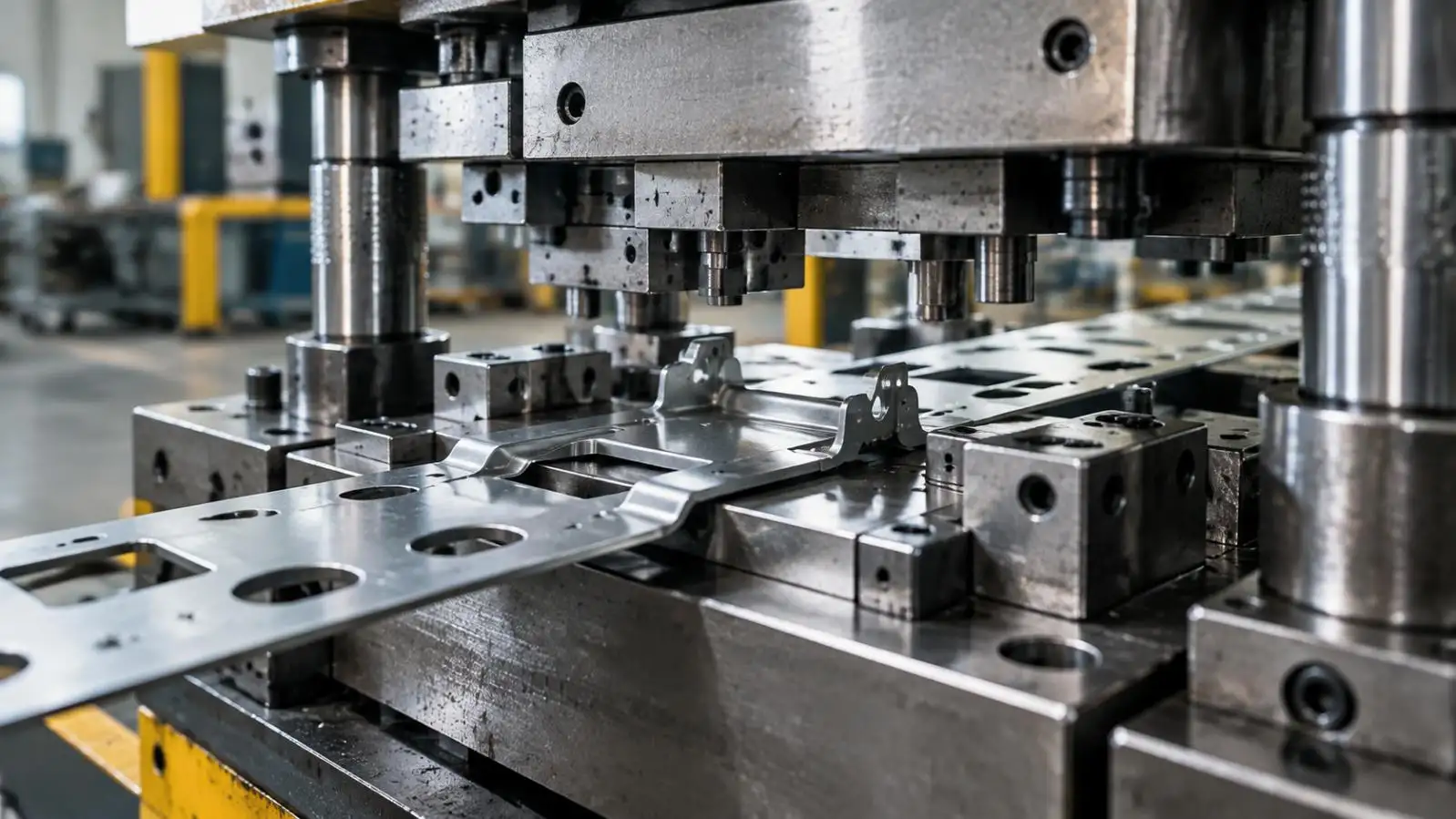
BlogHardware Stamping Springback Control for High-Strength Steel Parts
2026-09-24By KT Engineering -
 Blog
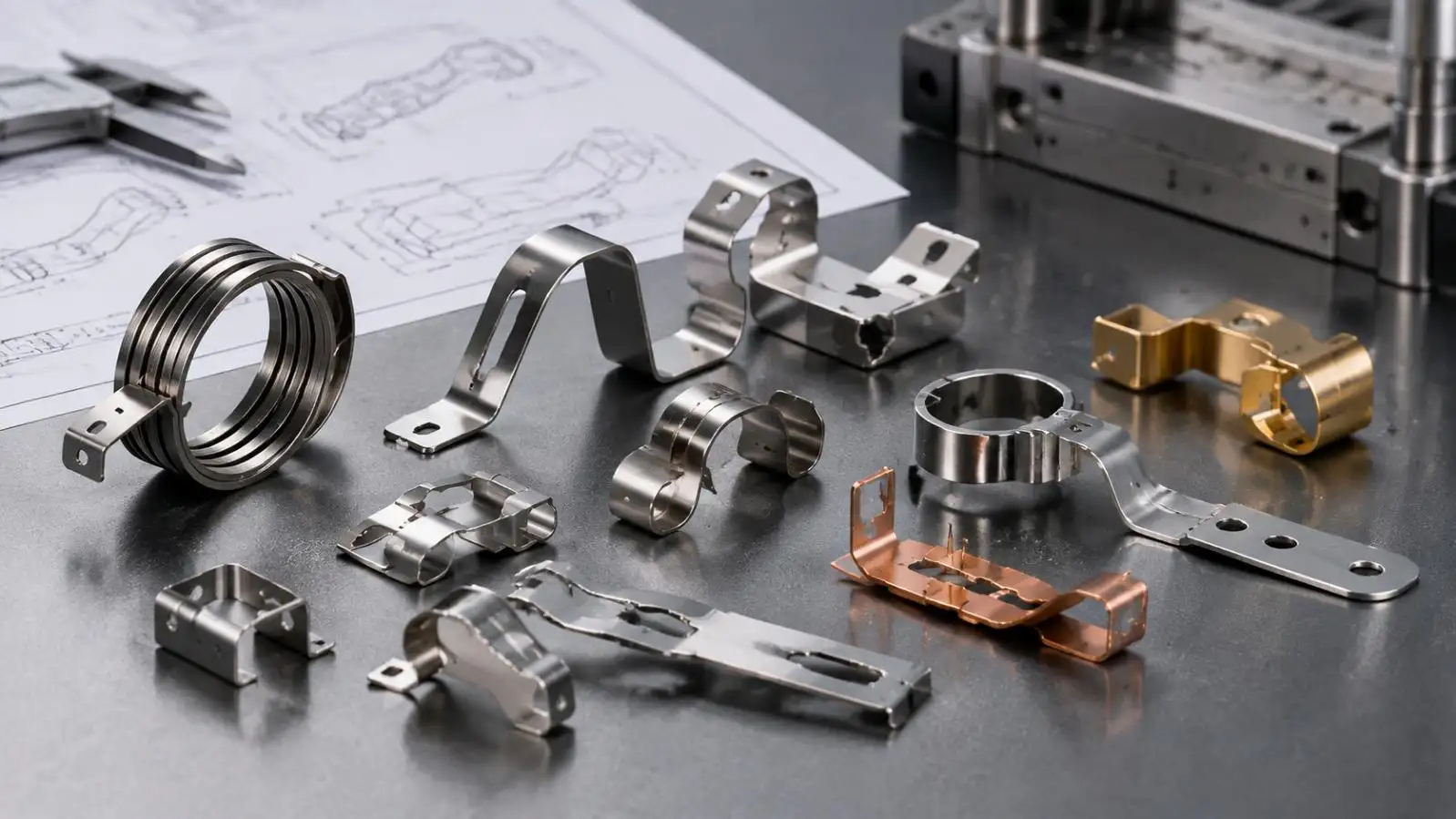
BlogSpring Stamping Fatigue Life: How Geometry, Material and Edge Quality Affect Cycle Life
2026-09-24By KT Engineering -
 Blog
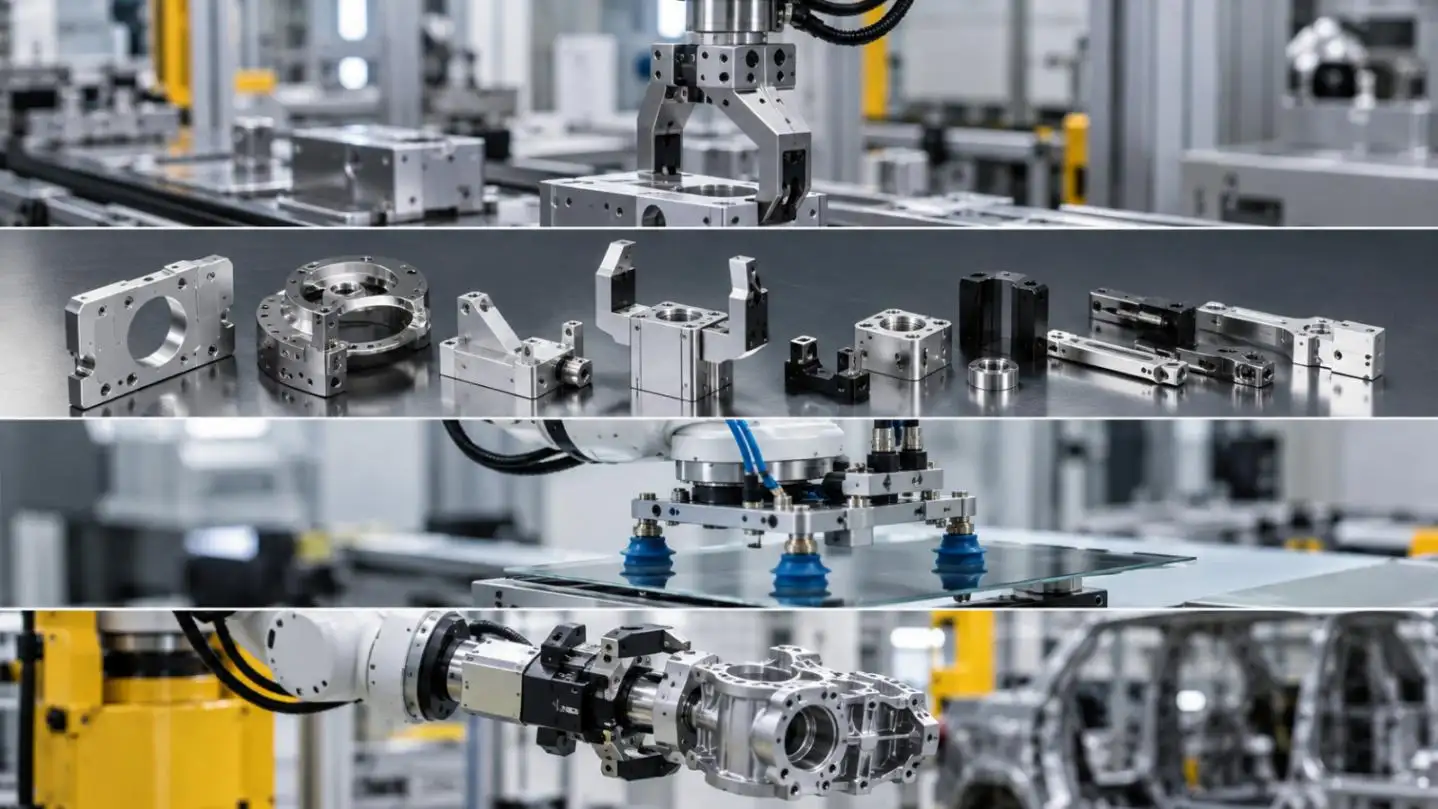
BlogMechanical Automation Parts for Robot End Effectors and Positioning Accuracy
2026-09-23By KT Engineering