Contact Us
 Home /
Sheet Metal Fabrication Manufacturer: Prototype-to-Production Experience


Table of Contents
- Prototype Manufacturing Should Validate the Future Process
- Bridging the Gap Between Prototyping and Production
- Why Prototype Processes Change at Production Scale
- Manufacturing Precision Must Be Feature-Specific
- From Part Inspection to Production Process Control
- Manufacturing Experience Should Reduce Scaling Risk
- What Buyers Should Verify Before Scaling Production

Producing five acceptable prototypes and producing thousands of interchangeable sheet metal parts are different manufacturing challenges. A capable Sheet Metal Fabrication Manufacturer must do more than reproduce a CAD model once. It must convert prototype knowledge into a repeatable process covering material control, cutting, bending, welding, finishing, inspection, and engineering changes.
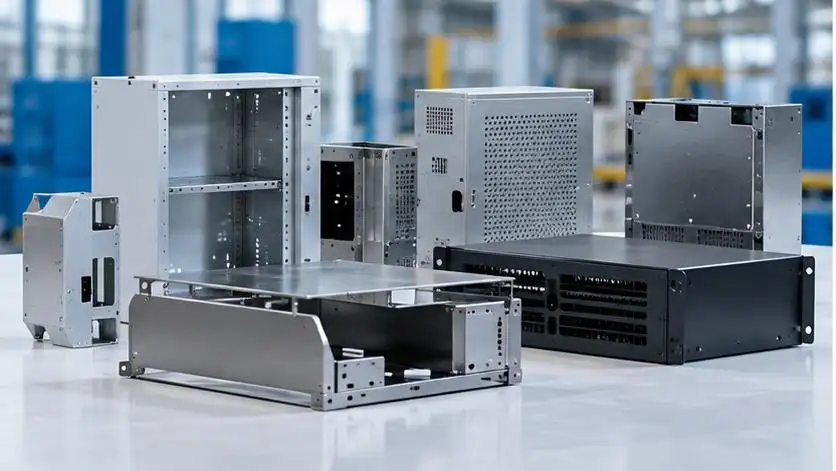
The critical question is therefore not simply, "Can this supplier make my prototype?" It is: Can the same part be manufactured consistently when production scales?
Prototype Manufacturing Should Validate the Future Process
A prototype is valuable when it exposes manufacturing risks before dedicated fixtures, tooling, or larger material orders are committed.
An experienced Sheet Metal Fabrication Manufacturer should review:
• Material grade and sheet thickness;
• Bend radius, direction, and bend allowance;
• Hole-to-bend and edge distances;
• K-factor and flat-pattern calculation;
• Welding access and joint sequence;
• Assembly datums and mating interfaces;
• Coating or plating allowance;
• Critical-to-quality, or CTQ, dimensions.
This is where DFM becomes important. A prototype may be dimensionally acceptable after manual adjustment, but that does not prove the process is suitable for production.
KT assesses drawings and reviews design for manufacturability (DFM) as part of our preprior to production, sheet metal fabrication process. During this review, we look at a variety of factors related to bend interference and manufacturability, such as tolerance requirements, access for welding and finish allowances, hole-to-edge distance, and other similar factors.
We have the ability to fabricate sheet metal utilizing a variety of processes including laser cutting, CNC forming, bending, punching, welding and robotic welding and other surface finishing processes. Evaluating these processes during prototype fabrication enables us to assess if the selected manufacturing process is supporting the later volumes of pilot and production runs.
Bridging the Gap Between Prototyping and Production
Pilot batches are a good way to evaluate process control during the production run. Producing a pilot batch helps to evaluate repeatability of the process.
| Stage | Main Objective | Main Manufacturing Concern |
| Prototype | Validate design | Fit, geometry, function |
| Pilot production | Validate process | Repeatability, fixtures, CTQs |
| Mass production | Control variation | Batch consistency and process drift |
During pilot production, the Sheet Metal Fabrication Manufacturer should determine whether manual adjustments used during prototyping can be eliminated.
Important verification points include:
• Stable bend angles across multiple parts;
• Fixture repeatability;
• Welding distortion;
• Inspection time and measurement method;
• Production sequence;
• Surface-finishing consistency;
• Assembly compatibility.
A scalable process should rely increasingly on defined production conditions rather than operator correction.
Why Prototype Processes Change at Production Scale
Cutting Variables
Laser cutting accuracy depends on more than machine positioning. Sheet flatness, material thickness, cutting speed, focus position, assist gas, piercing conditions, and kerf width can all influence the resulting feature.
These variables become more important when cut features establish later bending or assembly locations.
Bending and Springback
Bending introduces another variation chain:
Material properties → Springback → Bend angle → Feature position → Assembly fit
Springback can change with:
• Material yield strength;
• Thickness variation;
• Grain direction;
• Inside bend radius;
• V-die opening;
• Tooling condition;
• Bend sequence.
A Sheet Metal Fabrication Manufacturer should therefore evaluate more than an individual bend angle. Hole positions, flange dimensions, and accumulated tolerances after multiple bends must also be considered.
Welding Distortion
Welding introduces localized heat. Expansion, cooling, and shrinkage can alter flatness, angularity, and interface positions.
Repeatable production may require standardized:
• Tack locations;
• Welding sequence;
• Fixture restraint;
• Heat input;
• Clamping points.
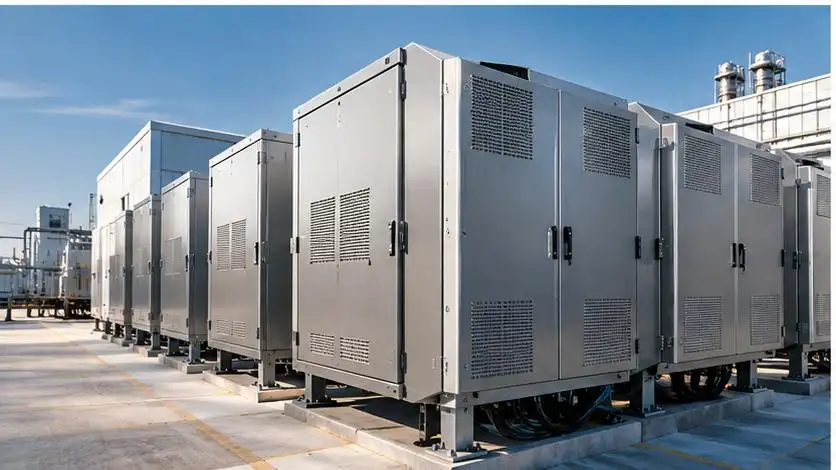
A prototype welded successfully by an experienced operator may still require dedicated fixtures before stable production is possible.
Manufacturing Precision Must Be Feature-Specific
Tolerance should be treated as a feature-specific engineering requirement rather than a single number applied to every sheet metal part.
At KT, our sheet metal capability references high-precision manufacturing down to ±0.01 mm, with angular control capability within ±0.5°. For individual sheet metal processes, our published tolerance references also include cutting features from approximately ±0.2 mm, bend angles from approximately ±1.0°, and bend-to-edge dimensions from approximately ±0.254 mm.
These values are manufacturing capability references rather than universal guarantees. Actual achievable tolerance depends on:
• Material and sheet thickness;
• Part geometry;
• Feature type;
• Bend sequence;
• Welding;
• Surface finishing;
• Datum strategy;
• Inspection method.
For production projects, we therefore recommend identifying CTQ dimensions first and applying tighter tolerances only where they directly affect fit, function, or assembly.
From Part Inspection to Production Process Control
Prototype inspection answers:
Was this part made correctly?
Mass-production quality control must also answer:
Is the process remaining stable?
The inspection strategy normally evolves through three stages.
• Prototype verification: dimensions, bends, holes, flatness, and functional assembly are checked intensively.
• Pilot verification: production tooling, fixtures, datums, CTQ dimensions, measurement methods, and process sequence are validated.
• Control of Production: includes exercising adequate control over increasing critical characteristics, more traceable materials, examination of batch-to-batch variations and process drifts and final acceptance.
Quality control is embedded at all stages of manufacturing at KT. This includes verification of the quality of raw materials and work-in-process, as well as final dimension and quality inspections.
During the prototyping phase of a part, we focus on measuring and validating the part's final dimensions and quality as well as the flatness and geometries of bends and holes. During pilot production, we further confirm the tooling, fixturing and datum, as well as the CTQ dimensions, and Inspection procedures. During repeat production, the focus is on maintaining the process consistent to ensure control of critical characteristics across batches.
Manufacturing Experience Should Reduce Scaling Risk
Years in business alone do not prove production capability. Useful experience appears in how a Sheet Metal Fabrication Manufacturer anticipates known failure modes.
Previous production experience should help determine:
• Where springback compensation is necessary;
• Which dimensions require CTQ control;
• When dedicated fixtures are justified;
• Where tolerance stack-up may affect assembly;
• Which prototype processes should change for higher volumes;
• How coating thickness affects final fit;
• When inspection frequency should increase.
At KT, we view manufacturing experience as accumulated process knowledge rather than simply the number of years a factory has operated.
Our manufacturing group has been operating since 2005, and supports projects from prototype to low volume and large scale production. Our experience in sheet metal allows our engineering team to evaluate items such as springback, tolerance stack-up, fixture requirements, welding distortion, bend sequence, critical inspection, and finishing allowances prior to a significant increase in production volume.
We also have the capability of CNC punching and robotic welding, which can become more applicable as part geometry becomes more stable, and the requirements of the production become repetitive.
What Buyers Should Verify Before Scaling Production
Before increasing order quantity, buyers should ask a Sheet Metal Fabrication Manufacturer:
• Will prototype and production parts use the same manufacturing route?
• How will material-lot variation be controlled?
• How is bending springback compensated?
• Are dedicated production fixtures required?
• How is welding distortion controlled?
• How are drawing revisions managed?
• What inspection records can be supplied?
• Will surface finishing affect final dimensions?
• Which processes change when volume increases?
A strong supplier should be able to explain these points from the drawing and actual manufacturing requirements rather than simply promising that mass production will match the prototype.
At KT, we do not think of prototyping and mass production as separate phases. We integrate improvement as the volume increases. Early in the process, we use prototype manufacturing to check part geometry and manufacturability, pilot production to check process repeatability, and production controls to check process consistency and conformance to specification. Throughout, we measure, analyze, and improve our processes to minimize variation.
During transition from design validation to production, KT is prepared to perform a DFM review, assess materials, and utilize different fabrication, finishing and quality verification processes within a contiguous integrated manufacturing workflow. Prior to committing to large-volume production, KT sourcing and engineering teams are invited to review KT production drawings to understand critical dimensions, process sequence, and flow, as well as assess whether the process is scalable.
FAQs
Q1. How does KT control bending accuracy?
KT evaluates bend geometry, tooling, material thickness, bend sequence, springback, and critical dimensional requirements.
Q2. Can KT support both prototypes and mass production?
Yes. KT supports prototype development, low-volume production, pilot runs, and larger-scale manufacturing.
Q3. Does KT provide DFM support for sheet metal projects?
Yes. KT reviews drawings and manufacturing requirements before production to identify potential manufacturability risks.
Q4. What sheet metal processes does KT offer?
KT provides laser cutting, CNC bending, CNC punching, welding, robotic welding, assembly, and surface finishing.
Q5. What sheet metal precision can KT achieve?
KT publishes high-precision sheet metal capability references down to ±0.01 mm, depending on feature, material, geometry, and process conditions.
- PREV: Precision 5 Axis Machining for Medical Components and Surface Finish
- NEXT: Null
Talk to the Manufacturer, Not a Middleman
Resources & Insights
-
Industry Insights
Sheet Metal Fabrication Manufacturer: Prototype-to-Production Experience
2026-10-23By KT Engineering -
 Industry Insights
Precision 5 Axis Machining for Medical Components and Surface Finish
2026-10-23By KT Engineering -
 Industry Insights
CNC Machining Service and Digital Twins: Reducing Collision and Setup Risk
2026-10-23By KT Engineering -
 Industry Insights
Custom Aluminum Automation Parts Machining for Robotic Joint Housings
2026-10-21By KT Engineering