Contact Us
  Home /
 how much does a cnc machine cost


Table of Contents
- What Is a CNC Machine?
- Average CNC Machine Price by Type
- What Factors Affect CNC Machine Cost?
- Additional Costs Beyond the Machine
- Which CNC Machine Fits Your Budget?
- Is a More Expensive CNC Machine Worth It?
- Tips for Choosing the Right CNC Machine
- Should You Buy New or Used?
- How to Reduce CNC Machine Ownership Costs
- Final Thoughts

If you are a hobbyist, a small business or a manufacturing company, buying a CNC machine is a big decision. The first question consumers ask when considering purchasing a CNC machine is, "What is the machine's cost? There are many factors to consider, such as machine type, working area, spindle power, automation level, precision requirement, and software compatibility.
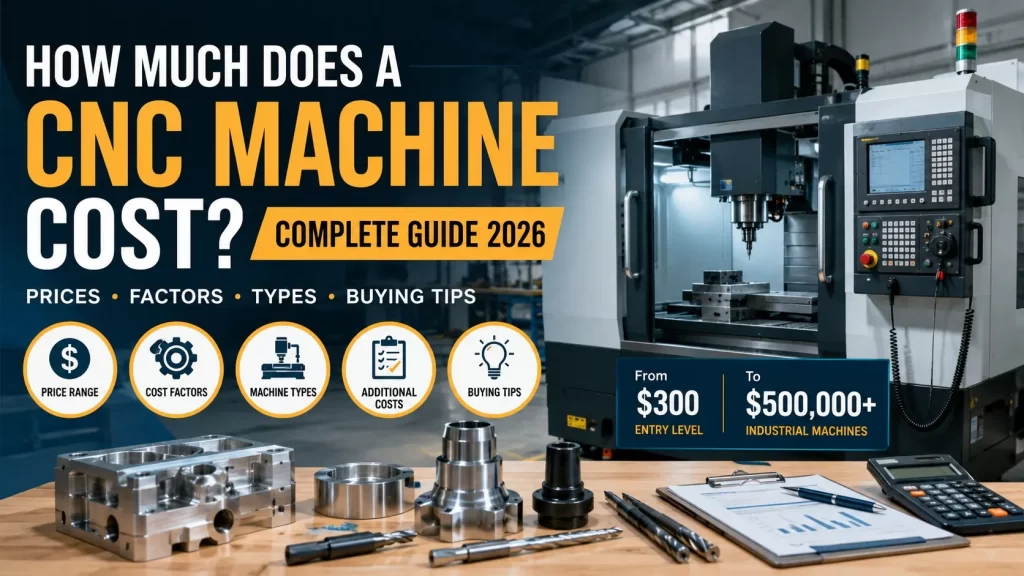
In this extensive guide, we will delve into how CNC machine pricing works, what factors affect the price, and how to decide which machine is the best option for your business.
What Is a CNC Machine?
A CNC (Computer Numerical Control) machine is an automated manufacturing system used to make cuts, engravings, holes and shapes, with great precision, according to programmed instructions.
Modern CNC machines are often used for:
- Woodworking
- Metal fabrication
- Plastic machining
- Foam cutting
- Composite materials
- Sign making
- Furniture manufacturing
- Aerospace components
- Automotive parts
- Product prototyping
CNC has made more accurate production possible, it has boosted productivity and as a result of this, it has become a vital tool for manufacturers globally.
Average CNC Machine Price by Type
CNC machine prices vary dramatically depending on the intended application.
| Machine Type | Typical Price Range |
|---|---|
| Desktop CNC Router | $300 – $2,000 |
| Hobby CNC Router | $1,000 – $5,000 |
| Professional CNC Router | $5,000 – $20,000 |
| Industrial CNC Router | $20,000 – $100,000+ |
| CNC Milling Machine | $15,000 – $150,000+ |
| CNC Lathe | $25,000 – $250,000+ |
| 5-Axis CNC Machine | $80,000 – $500,000+ |
These ranges represent the machine only. Additional equipment can significantly increase your total investment.
What Factors Affect CNC Machine Cost?
If the buyer has knowledge of why a product is priced the way it is, they will never have to pay for something they don't need and can be sure that they are getting the equipment that will make the production possible.
1. Machine Size
Larger work areas demand more robust frames, larger motors and stiffer frame construction.
For example:
- Small desktop machines cost much less.
- 4×4 or 5×10 industrial routers cost substantially more because they process larger materials.
If you are a cabinet, furniture or sign maker, a bigger work area might be worth the expense.
2. Frame Construction
The manufacturing accuracy is directly related to machine rigidity.
The following are common types of frame materials:
- Aluminum
- Steel
- Cast iron
- Welded heavy-duty steel
Heavy duty machines have sturdier structures to reduce vibration during cutting, resulting in smoother finishes and better tool life.
3. Spindle Power
The heart of any CNC machine is the spindle.
Typical options include:
- 500W–1.5kW for hobby use
- 2.2kW–4kW for professional woodworking
- 6kW–12kW for industrial production
The more powerful spindles are faster to run harder materials with better precision.
4. Motion System
Belt drives are often found in entry level machines, and higher quality machines will have either ball screws or precision linear guide rails.
Premium motion systems provide:
- Higher accuracy
- Faster speeds
- Longer service life
- Better repeatability
These upgrades increase machine cost but significantly improve production quality.
5. Automation Features
Automation can dramatically increase productivity.
Optional upgrades include:
- Automatic Tool Changers (ATC)
- Vacuum tables
- Rotary axes
- Touch probes
- Tool length sensors
- Automatic lubrication
- Dust collection integration
While these features raise the initial purchase price, they reduce labor costs over time.
6. Controller and Software
Professional CNC systems often include advanced controllers with features such as:
- Real-time monitoring
- Remote operation
- Multi-axis support
- Advanced toolpath optimization
- CAD/CAM compatibility
Software licensing may also be an additional expense depending on the manufacturer.
Additional Costs Beyond the Machine
Many first-time buyers underestimate the total cost of owning a CNC machine.
Consider budgeting for:
Cutting Tools
End mills, engraving bits, drill bits, and specialty tooling wear out over time.
Estimated cost:
- $100–$2,000+
Dust Collection
Essential for woodworking applications.
Typical investment:
- $300–$2,000
Air Compressor
Required for machines with pneumatic components or automatic tool changers.
Estimated cost:
- $200–$1,500
Workholding
Depending on your workflow, you may need:
- Clamps
- Vacuum pumps
- Fixtures
- T-slot tables
Software
Professional CAD/CAM software may require:
- One-time purchase
- Annual subscription
- Cloud licensing
Installation
Industrial CNC systems often require:
- Freight shipping
- Professional setup
- Electrical installation
- Operator training
These costs should be included when comparing suppliers.
Which CNC Machine Fits Your Budget?
Under $2,000
Ideal for:
- Beginners
- Hobbyists
- DIY enthusiasts
Best for:
- Small woodworking projects
- Crafts
- Signs
- Educational use
$2,000–$10,000
Suitable for:
- Small businesses
- Furniture makers
- Sign shops
- Custom woodworking
Offers:
- Better rigidity
- Larger cutting areas
- Higher precision
- Faster production
$10,000–$50,000
Designed for:
- Professional workshops
- Manufacturing companies
- Commercial production
Benefits include:
- Heavy-duty construction
- Faster machining
- Higher reliability
- Improved automation
$50,000+
Ideal for:
- High-volume manufacturers
- Aerospace
- Automotive
- Medical device production
These machines prioritize productivity, precision, and continuous operation.
Is a More Expensive CNC Machine Worth It?
Not always.
The best CNC machine is one that matches your production needs.
A premium machine often delivers:
- Greater precision
- Faster cycle times
- Lower maintenance
- Longer lifespan
- Higher resale value
However, purchasing industrial equipment for occasional hobby use rarely provides a positive return on investment.
Evaluate:
- Production volume
- Materials
- Required tolerances
- Future expansion plans
before making a purchase.
Tips for Choosing the Right CNC Machine
Before requesting quotations, ask yourself:
- What materials will I machine?
- What is my maximum workpiece size?
- How many hours will the machine run daily?
- Do I need automatic tool changing?
- What accuracy is required?
- Will production volume increase over time?
Answering these questions narrows your options and prevents overspending.
Should You Buy New or Used?
Buying New
Advantages:
- Manufacturer warranty
- Technical support
- Latest technology
- Better reliability
Disadvantages:
- Higher initial investment
Buying Used
Advantages:
- Lower purchase price
- Immediate availability
Disadvantages:
- Unknown maintenance history
- Limited warranty
- Possible repair costs
- Older control systems
For many businesses, a new machine offers better long-term value despite the higher upfront cost.
How to Reduce CNC Machine Ownership Costs
Maximize your investment by:
- Performing regular preventive maintenance
- Using high-quality cutting tools
- Training operators properly
- Keeping machines clean
- Updating software regularly
- Purchasing from reputable manufacturers with strong after-sales support
These practices reduce downtime and extend equipment life.
Final Thoughts
So, what's the price of a CNC machine? It depends on your production intentions and features desired. The prices of entry-level desktop CNC routers range from a few hundred dollars, to the industrial 5-axis machining centers costing over several hundred thousand dollars. The top commercial entry-level machines available to the market are priced as low as $995; high-end production systems and bundle solutions are available for several thousand dollars or more.
Look at the total cost of ownership not just the purchase price, as it will include the cost of software, tooling, installation, maintenance, future upgrades etc. Choosing the right machine for your needs, type of material and expansion strategy will ensure optimal productivity and ROI.
From the smallest woodworking shop to the largest manufacturing plant or the first time entering CNC machining, selecting the correct machine can be a long-term investment that provides years of precision, efficiency and business growth.
Talk to the Manufacturer, Not a Middleman
Resources & Insights
-
 Hide blog post
CNC Aluminum Components: How Surface Finish Affects Anodizing Quality
2026-08-18By KT Engineering -
 Hide blog post
Stamping Supplier in China: Dongguan Precision Tooling and Metal Stamping Guide
2026-08-18By KT Engineering -
 Hide blog post
Cabinet Cover Components: Lightweight, Modular and Smart Enclosure Design Guide
2026-08-17By KT Engineering -
 Hide blog post
Connector Mold Components for Automotive High-Voltage Connectors
2026-08-16By KT Engineering