Contact Us
  Home /
 injection molding machine


Table of Contents
- What Is an Injection Molding Machine?
- Main Components of an Injection Molding Machine
- How Does an Injection Molding Machine Work?
- Types of Injection Molding Machines
- Important Machine Specifications
- Applications of Injection Molding Machines
- How to Choose the Right Injection Molding Machine
- Maintenance Best Practices
- Future Trends in Injection Molding Machines
- Conclusion

The injection molding machine is the main equipment in plastic manufacturing. These precise manufacturing systems are used to create millions of parts every day, ranging from automotive parts and medical devices to consumer electronics and household products. Selecting the right injection molding machine directly impacts product quality, production efficiency, manufacturing costs, and long-term profitability.
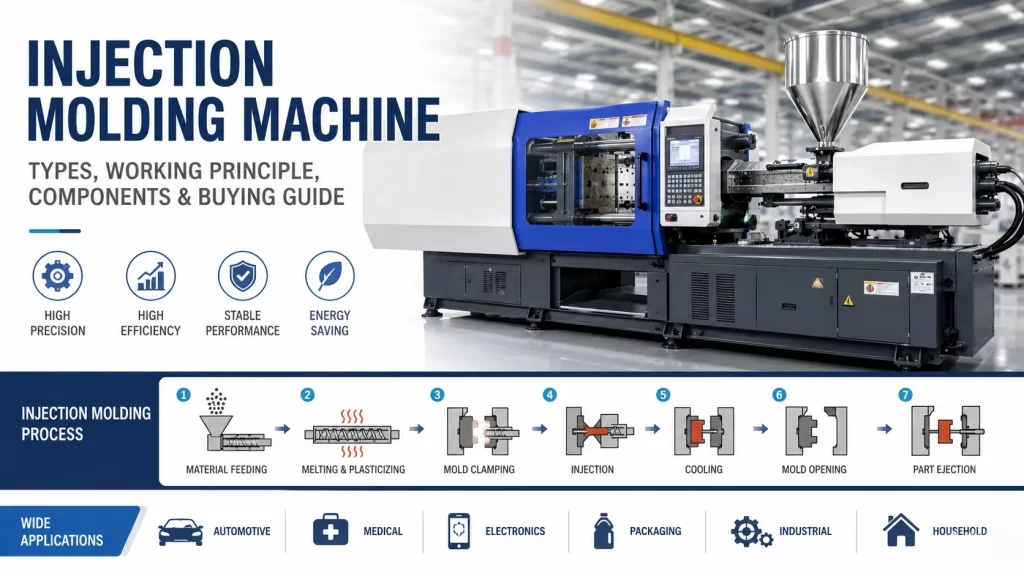
This guide includes details on how injection molding machines operate, their main components, various injection molding machines, factors to take into account when purchasing, maintenance, and the future direction of the industry to make an educated choice when purchasing injection molding machines.
Injection molding is still one of the most productive manufacturing processes for high volume plastic parts, where dimensional accuracy and repeatability are of paramount importance. Industrial use has continued to grow with the ongoing advancements in machine technology, automation and material science.
What Is an Injection Molding Machine?
Injection molding machine is a piece of industrial machinery used to produce plastic products by feeding thermoplastic or thermosetting materials, melting them under high pressure, and injecting the molten material into a precision molded cavity.
When the plastic cools and hardens the mold separates and the finished part is ejected. The cycle then repeats automatically, allowing manufacturers to make thousands (or millions) of identical parts with little variation in the product.
The reasons for injection molding being so popular are that it provides:
- High production efficiency
- Excellent dimensional consistency
- Low cost per part for mass production
- Minimal material waste
- Ability to manufacture highly complex geometries
Industries relying heavily on injection molding include:
- Automotive
- Medical equipment
- Consumer electronics
- Aerospace
- Packaging
- Household appliances
- Industrial equipment
Main Components of an Injection Molding Machine
While the designs differ from one machine to another, all injection molding machines have a number of key systems in common.
1. Hopper
Hopper for storing plastic pellets prior to processing. Engineering plastics like Nylon, PET or PC can be dried using drying equipment depending on their production requirement.
2. Barrel and Screw
The heated barrel has a rotating screw that carries the plastic pellets forward and produces heat by friction and external heaters.
The screw has 3 jobs:
- Feeding
- Melting
- Metering
The modern screw design is designed to achieve optimized melting with a constant shot size.
3. Injection Unit
The molten plastic is forced into the mold under carefully controlled pressure and speed by the injection unit.
Important process variables are:
- Injection pressure
- Injection speed
- Holding pressure
- Back pressure
- Shot volume
Control accuracy reduces defects like short shots, sink marks and flash.
4. Clamping Unit
During injection the mold is tightly shut by the clamping unit.
It has the following main tasks:
- Mold opening
- Mold closing
- Locking force
- Part ejection
The clamping force is as low as 20 tons for micro parts and as high as 6,000 tons for large automotive parts.
5. Mold
The product is formed into the shape of the mold.
Common mold elements are:
- Core
- Cavity
- Runner system
- Cooling channels
- Gates
- Ejector pins
Because molds are frequently the biggest expense of an injection molding project, good design will have a great impact on production cost and quality.
How Does an Injection Molding Machine Work?
The injection molding process follows a highly repeatable manufacturing cycle.
Step 1: Material Feeding
Plastic pellets enter the hopper and are transported into the heated barrel.
Step 2: Plasticizing
The rotating screw melts and homogenizes the resin.
Step 3: Mold Clamping
The mold closes under high clamping force to withstand injection pressure.
Step 4: Injection
Molten plastic is injected rapidly into the mold cavity.
Step 5: Packing and Holding
Additional pressure compensates for material shrinkage during cooling.
Step 6: Cooling
Cooling channels remove heat until the plastic solidifies.
Step 7: Mold Opening
The mold separates after cooling.
Step 8: Part Ejection
Ejector pins release the finished component.
The machine then begins the next production cycle automatically.
Types of Injection Molding Machines
Manufacturers typically choose among three primary machine categories.
Hydraulic Injection Molding Machines
Hydraulic systems have dominated the industry for decades.
Advantages include:
- High clamping force
- Lower initial investment
- Reliable operation
- Excellent for large parts
Disadvantages:
- Higher energy consumption
- More hydraulic maintenance
- Slower cycle times
Hydraulic machines remain popular in heavy industrial manufacturing.
Electric Injection Molding Machines
Electric machines replace hydraulic systems with servo motors.
Advantages:
- Higher precision
- Faster cycles
- Lower energy consumption
- Cleaner operation
- Reduced maintenance
These machines are widely used in:
- Medical manufacturing
- Electronics
- Precision engineering
- Optical products
Hybrid Injection Molding Machines
Hybrid machines combine hydraulic power with electric precision.
Benefits include:
- Improved energy efficiency
- High injection performance
- Greater productivity
- Lower operating costs
Many manufacturers consider hybrids the ideal balance between performance and investment.
Important Machine Specifications
Before purchasing an injection molding machine, buyers should evaluate several technical specifications.
Clamping Force
Measured in tons, clamping force determines how much pressure the machine can withstand without mold separation.
Larger projected part areas require greater tonnage.
Shot Size
Shot size refers to the maximum amount of molten plastic injected during one cycle.
Proper sizing improves efficiency while minimizing material waste.
Injection Pressure
Higher injection pressure allows manufacturers to produce:
- Thin-wall parts
- Complex geometries
- Engineering plastics
Screw Diameter
Screw size affects:
- Plasticizing capacity
- Material mixing
- Production rate
Tie Bar Spacing
Tie bar spacing limits the maximum mold dimensions the machine can accommodate.
Cycle Time
Shorter cycle times significantly increase production output and reduce manufacturing costs.
Applications of Injection Molding Machines
Injection molding supports virtually every manufacturing industry.
Common applications include:
Automotive
- Dashboards
- Interior trims
- Lighting housings
- Connectors
- Air intake components
Medical
- Syringes
- Diagnostic devices
- Laboratory equipment
- Surgical instruments
Consumer Electronics
- Smartphone housings
- Laptop components
- Connectors
- Chargers
Packaging
- Bottle caps
- Food containers
- Cosmetic packaging
- Pharmaceutical packaging
Industrial Manufacturing
- Gears
- Valves
- Electrical enclosures
- Precision engineering parts
How to Choose the Right Injection Molding Machine
Selecting the correct machine depends on several production factors.
Production Volume
Large-volume production generally justifies higher-performance machines with greater automation.
Material Compatibility
Different plastics require different injection temperatures and screw designs.
Common materials include:
- ABS
- PP
- PE
- Nylon
- PC
- POM
- TPU
Product Size
Part dimensions determine:
- Clamping force
- Shot capacity
- Mold size
Precision Requirements
Medical and electronic components often require electric machines for tighter tolerances.
Energy Efficiency
Servo-driven systems reduce electricity consumption, lowering long-term operating costs.
Automation Compatibility
Modern production increasingly integrates:
- Robotic part removal
- Vision inspection
- Automatic packaging
- Smart factory systems
Maintenance Best Practices
Preventive maintenance extends machine life while minimizing downtime.
Recommended practices include:
- Clean the barrel regularly
- Inspect hydraulic systems
- Lubricate moving components
- Check heaters and thermocouples
- Monitor screw wear
- Calibrate sensors
- Maintain cooling systems
- Inspect electrical connections
Regular maintenance also contributes to the consistency of parts and helps to minimize unexpected production downtimes.
Future Trends in Injection Molding Machines
Digital manufacturing technologies are still growing and evolving in the injection molding industry.
Key trends include:
- Industry 4.0 integration
- AI-assisted process optimization
- Predictive maintenance
- Real-time production monitoring
- Energy-saving servo systems
- Smart factory connectivity
- Automated quality inspection
- Sustainable processing of recycled materials
In today's modern injection molding processes, advanced machine learning and AI are increasingly utilized to optimize the process, ensure quality consistency and minimize defect rates.
Conclusion
An injection molding machine is not just a piece of manufacturing equipment, it's the backbone of efficient and high-volume plastic production. When choosing the right machine, whether for automotive parts, medical devices, consumer products, or industrial parts, it can make a significant impact on productivity, product quality and return on investment.
The performance parameters of equipment should be assessed as production volume, material requirements, clamping force, energy consumption, automation, and maintenance cost. With the continuous development of smart manufacturing technology, today's injection molding machines are more intelligent, faster and more energy efficient, helping manufacturers stay competitive in the global market.
Talk to the Manufacturer, Not a Middleman
Resources & Insights
-
 Hide blog post
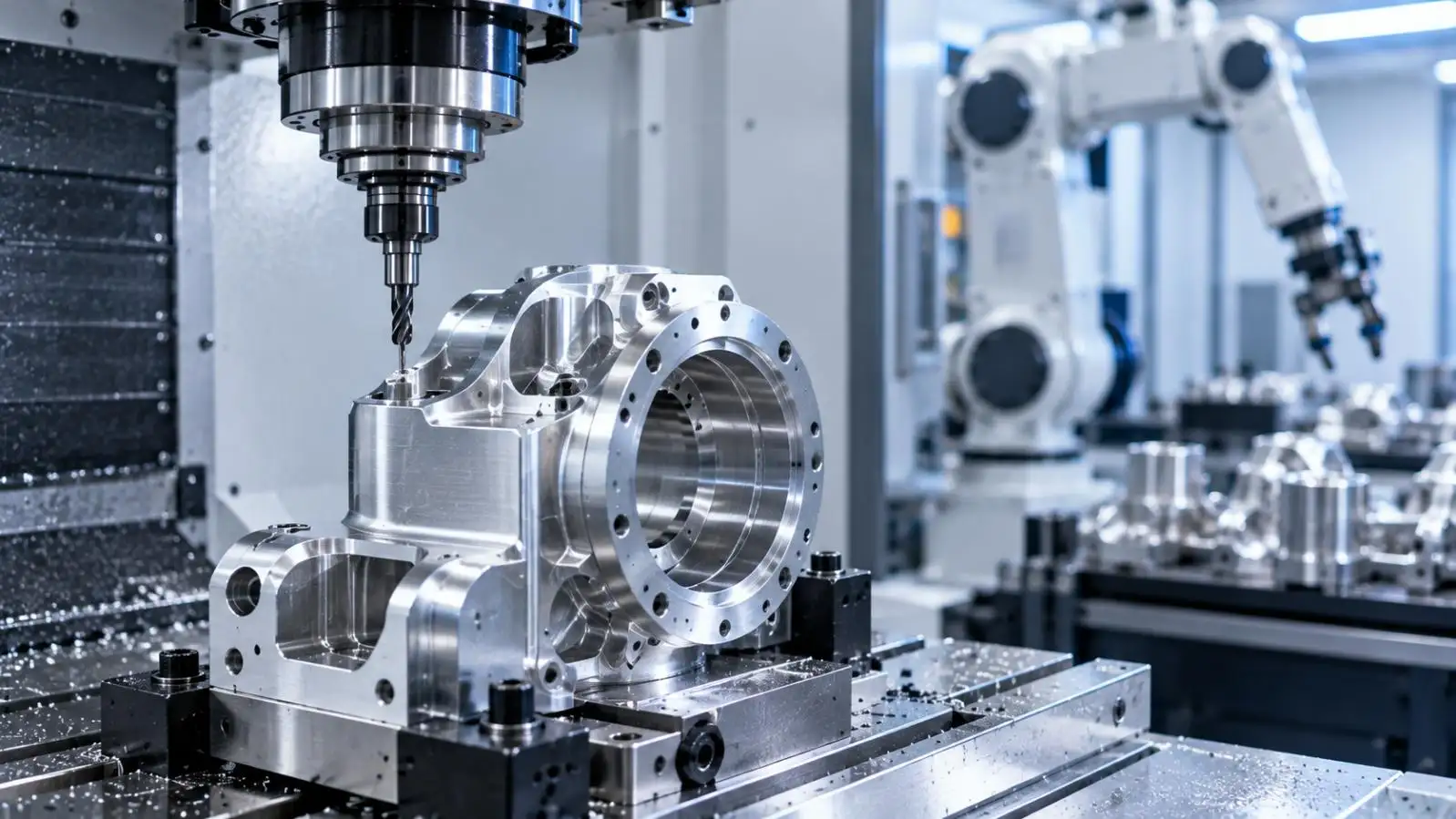
CNC Machining Robotic Parts: How GD&T Controls Robot Assembly Accuracy
2026-09-24By KT Engineering -
 Hide blog post
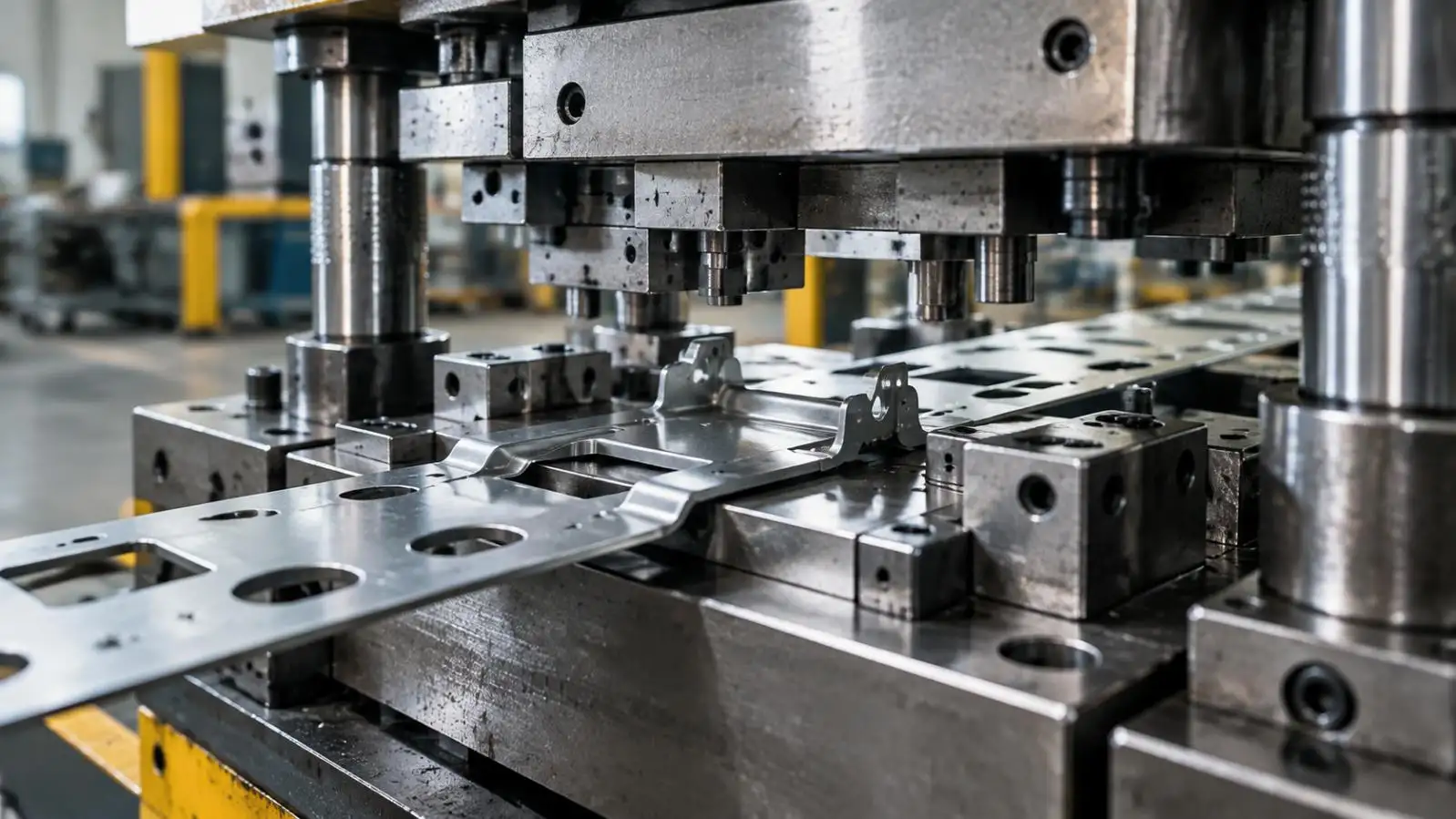
Hardware Stamping Springback Control for High-Strength Steel Parts
2026-09-24By KT Engineering -
 Hide blog post
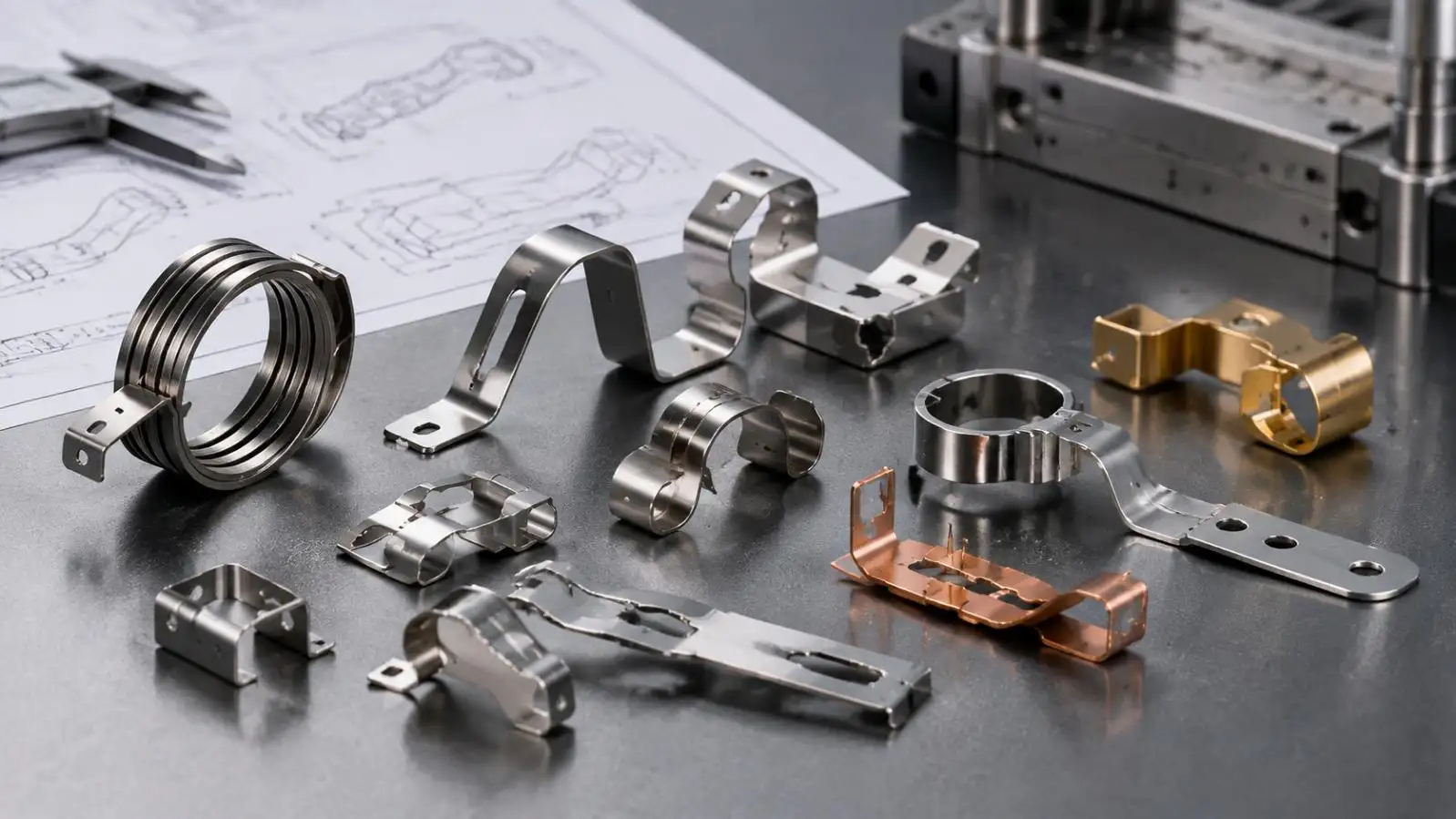
Spring Stamping Fatigue Life: How Geometry, Material and Edge Quality Affect Cycle Life
2026-09-24By KT Engineering -
 Hide blog post
Mechanical Automation Parts for Robot End Effectors and Positioning Accuracy
2026-09-23By KT Engineering