Contact Us
  Home /
 Machined Parts Finishing Services | CNC Surface Finishing Solutions


Table of Contents

Machined Parts Finishing: Accuracy Surface Finish
Finishing of machined parts is not only the last phase of the manufacturing process, but the phase when raw precision is transformed into actual performance. Following CNC machining, all components still have tool marks, micro burrs, surface irregularities, and stress points. This is where machined parts finishing services are used to take a good part and make it a high-performance engineered component.
- In the modern manufacturing process, industries demand precision parts finishing, not only to appear pretty, but also to be durable, corrosive and dependable in their functionality. Whether it is aerospace parts, automotive parts, or medical parts, surface quality will dictate the life cycle and functionality of a part.
- At KT CNC Machining, CNC production is used together with high-tech industrial parts finishing techniques to attain tight tolerances and high-quality surface integrity.
Significance of Finishing of Machined Parts in Modern Manufacturing
All machined parts begin with mechanical cutting. But the cutting will not give final usability. Even the high-precision CNC output may fail in the real world unless the machined parts are post-processed.
The reasons why finishing is necessary are most important:
• Increases the surface roughness (Ra reduction) to obtain a smoother performance.
• Improves wear resistance in moving parts.
• Offers harsh environment coating for corrosion protection.
• Provides dimensional tolerance control post-machining.
• Improves machined parts' surface integrity.
In industries like aerospace-grade engineering or automotive systems, even a minor surface defect can impact tribological performance, heat resistance, or fatigue life.
Explained Finishing Services of Core Machined Parts
The contemporary manufacturing industry is based on a large variety of machined parts finishing services that can be based on material, geometry, and use.
- Deburring and Edge Finishing
Mechanical or thermal processes are used to eliminate sharp edges and micro burrs. This enhances security and the fit of the assembly.
- Polishing and Buffing Processes
The metal surface polishing is applied to smooth the metal surface and give the surface a reflective or functional finish.
- Bead Blasting Surface Treatment
A controlled abrasive process that offers uniform matte finishes and increases adhesion of finishes.
- Metal parts Sandblasting
It is employed to remove oxidation layers, as well as to prepare anodized or electroplated surfaces.
- Anodizing and Electroplating Processes
These machining surface treatment services contribute to corrosion resistance and surface hardness, especially to aluminum and steel components.
Machining of Material Finished Parts
The finishing strategies of metal-machined parts depend on the material.
Aluminum Finishing of Machined Parts
• Anode corrosion resistance.
• Cosmetic finish, light polishing.
• Chemical conversion coatings
Complete Finishing of Steel Machined Parts
• Black oxide coating
• Heat treatment finishing
• Electroplating for protection
Stainless Steel Machined Parts Finishing
• Passivation
• Electropolishing
• Micro finishing techniques
Brass Machined Parts Polishing and Finishing
• High-gloss polishing
• Anti-tarnish coatings
• Decorative finishing
Titanium Machined Parts Surface Finishing
• Chemical etching
• Biomedical controlled anodizing.
• Surface texture optimization
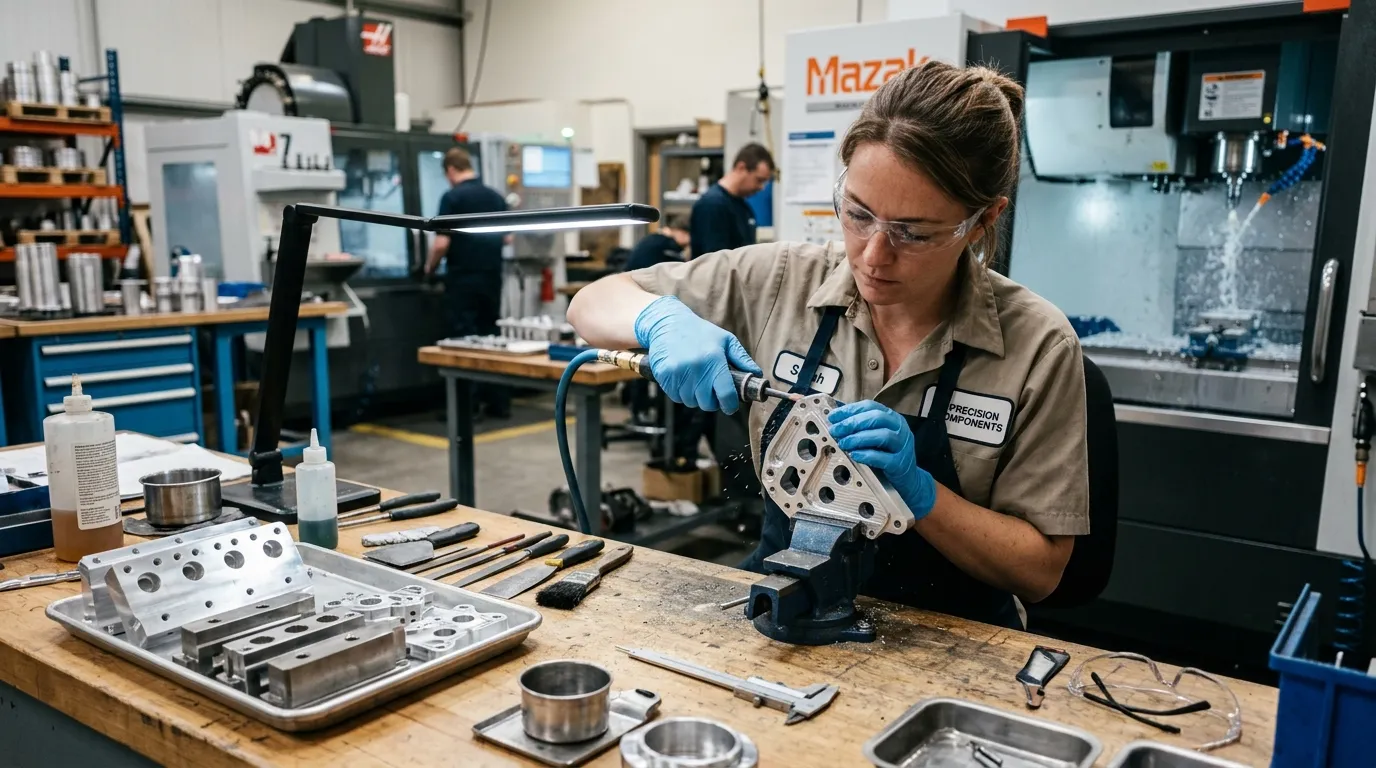
CNC Machined Parts Post-Processing and Engineering Value
Post-processing CNC-machined parts is not merely cosmetic work; it is a refinement of engineering. Enhanced machined component finishing processes:
• Improvement of tribological performance of moving systems.
• Increase in fatigue resistance in structural elements.
• Alteration of the surface of materials to improve bonding.
• Close tolerance assemblies having a high precision surface finish.
Industrial surface finishing solutions are very important in industries such as aerospace and automotive to maintain safety and efficiency. In KT CNC Machining Services, the parts are all under controlled finishing cycles to guarantee uniformity between production batches.
Accuracy of Surface Finishing and Technical Standards
An actual precision surface finishing service is not gauged by the looks but by the technical data.
The important engineering parameters are:
• Surface roughness (Ra of 0.216 µm in high precision parts)
• Tolerance of flats in microns on mating surfaces.
• Stress reduction controlled edge radius.
• Even coating thickness to obtain performance stability.
These are the criteria of high-accuracy surface finish, and close-tolerance finishing criteria are obtained across industries.
Finishing of Machined Parts in Industry
- Aerospace-Grade Surface Finishing
Used on turbine blades, landing gear components, and structural housings requiring a high degree of durability.
- Automotive Precision Finishing
Improves engine components, transmission, and braking components.
- Completion of Medical Devices Parts
Provides biocompatibility, enhancement of surface texture, and resistance to infections.
- High-Precision Manufacturing Finishing
Uses in robotics, automation, and precision instruments.
- Production Machining Finishing Solutions
Provides scalability and consistency in mass production settings.
CNC Finishing and Machining Plastic Parts
Metals are not the only metals that can be surface finished. Precision is also needed in engineering plastics.
• Burrless edges to slide.
• Post machining dimensional accuracy.
• Controlled friction surface texture.
• Lightweight performance optimization
Plastic gears and parts also have the advantage of engineered surface finishing methods that enhance wear life and minimize noise in use, particularly in robotics and automation systems.
Quality Advantages of Finishing Parts by Machining
Performance can be measured:
• Longer component lifespan
• Less friction and energy losses.
• Better assembly compatibility
• Enhanced corrosion resistance
• Improved aesthetic quality
• Increased stress resistance.
These are the developments that define the good surface quality machining in modern manufacturing systems.
Conclusion:
Perfection lies in the machined parts finishing in engineering. It transforms raw CNC output to a refined, practical, and strong product capable of enduring real-world stress. Whether it is metal surface refinement, CNC-machined parts post-processing, or high-tech micro finishing, all processes are value-added and directly influence performance and reliability.
KT CNC Machining has the capability to finish your machined parts with precision, consistency, and engineering excellence, and is eager to assist you with your next project in need of parts finishing services that are both reliable and of high quality.
Talk to the Manufacturer, Not a Middleman
Resources & Insights
-
 Blog
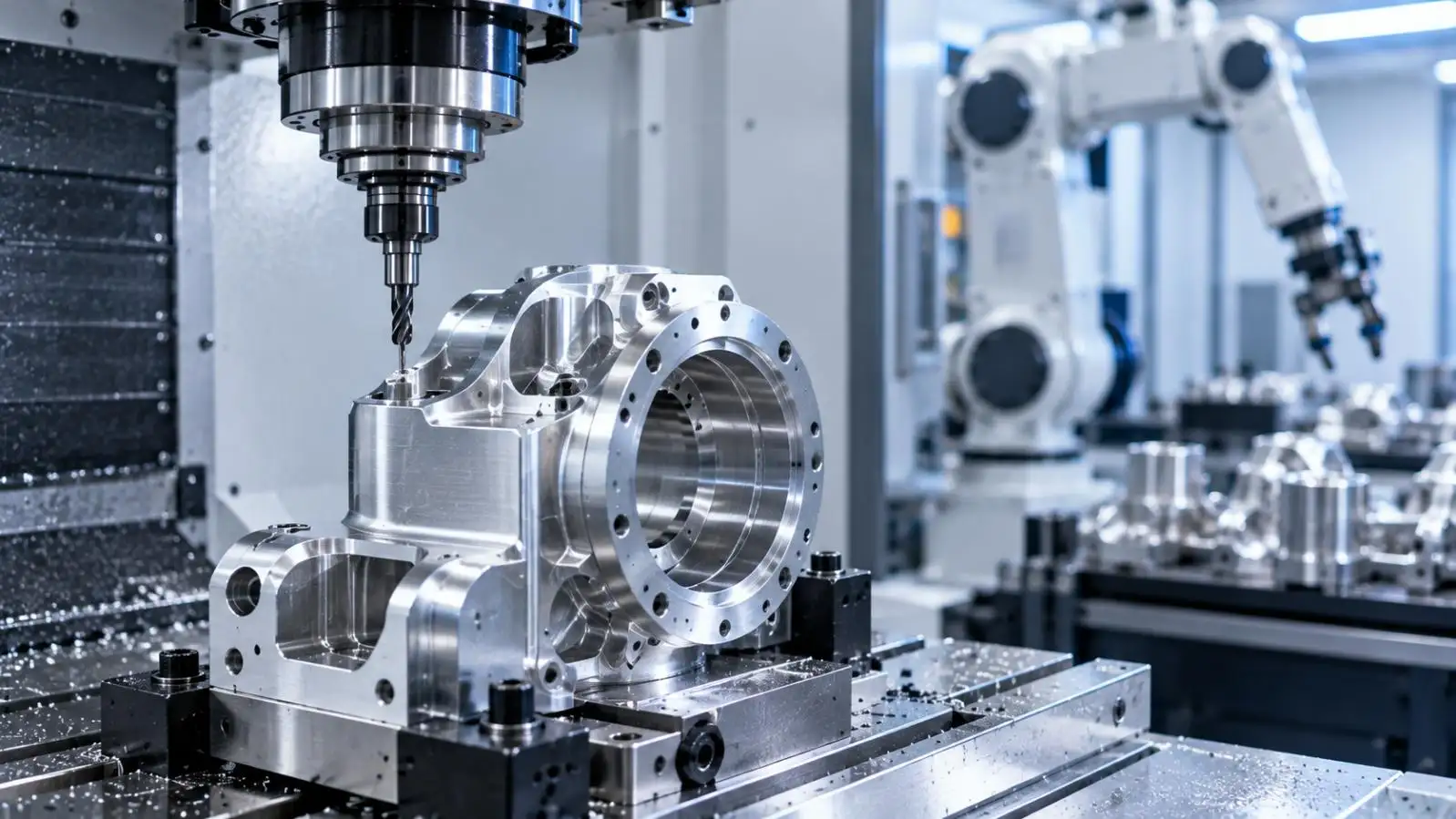
BlogCNC Machining Robotic Parts: How GD&T Controls Robot Assembly Accuracy
2026-09-24By KT Engineering -
 Blog
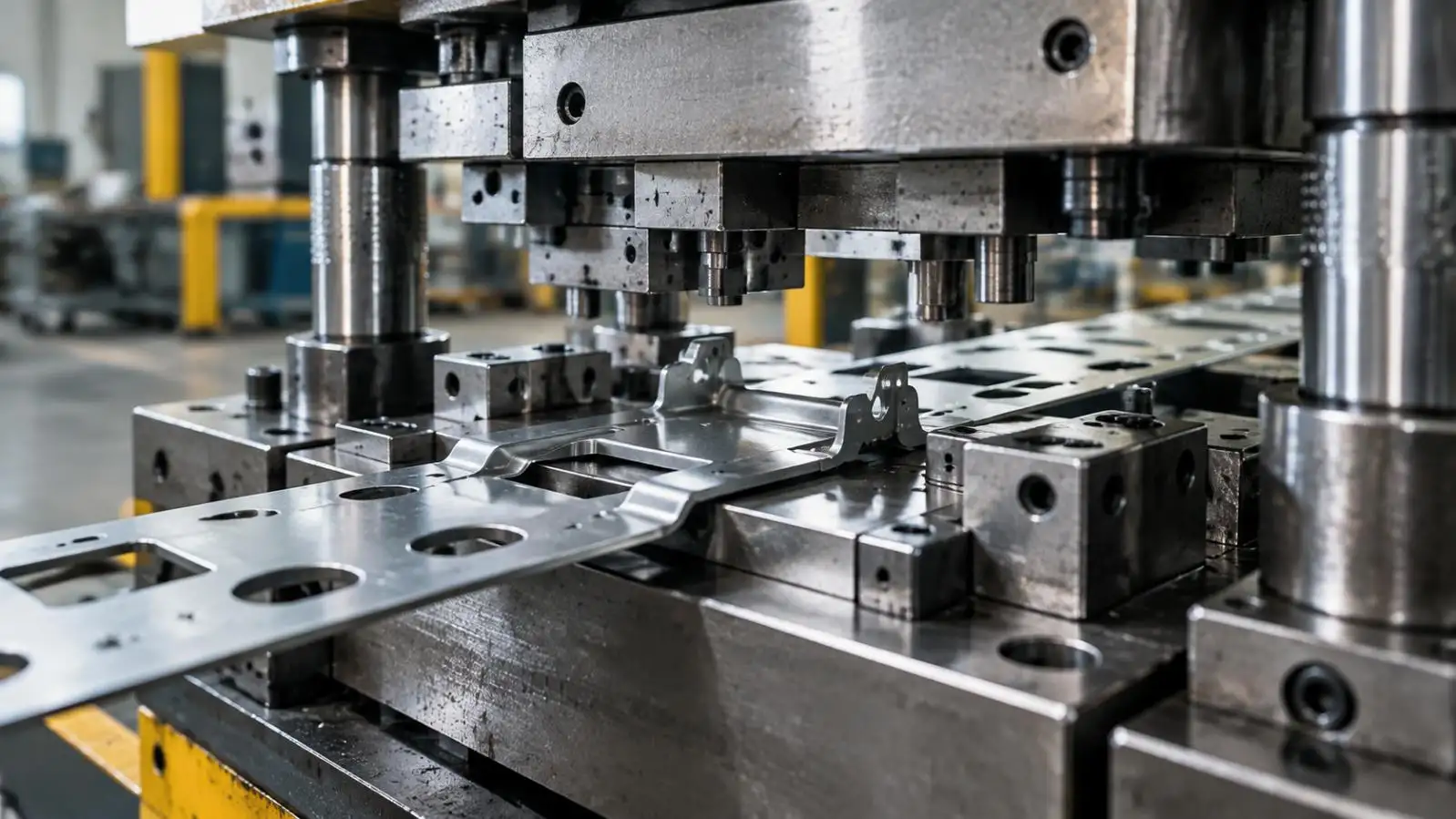
BlogHardware Stamping Springback Control for High-Strength Steel Parts
2026-09-24By KT Engineering -
 Blog
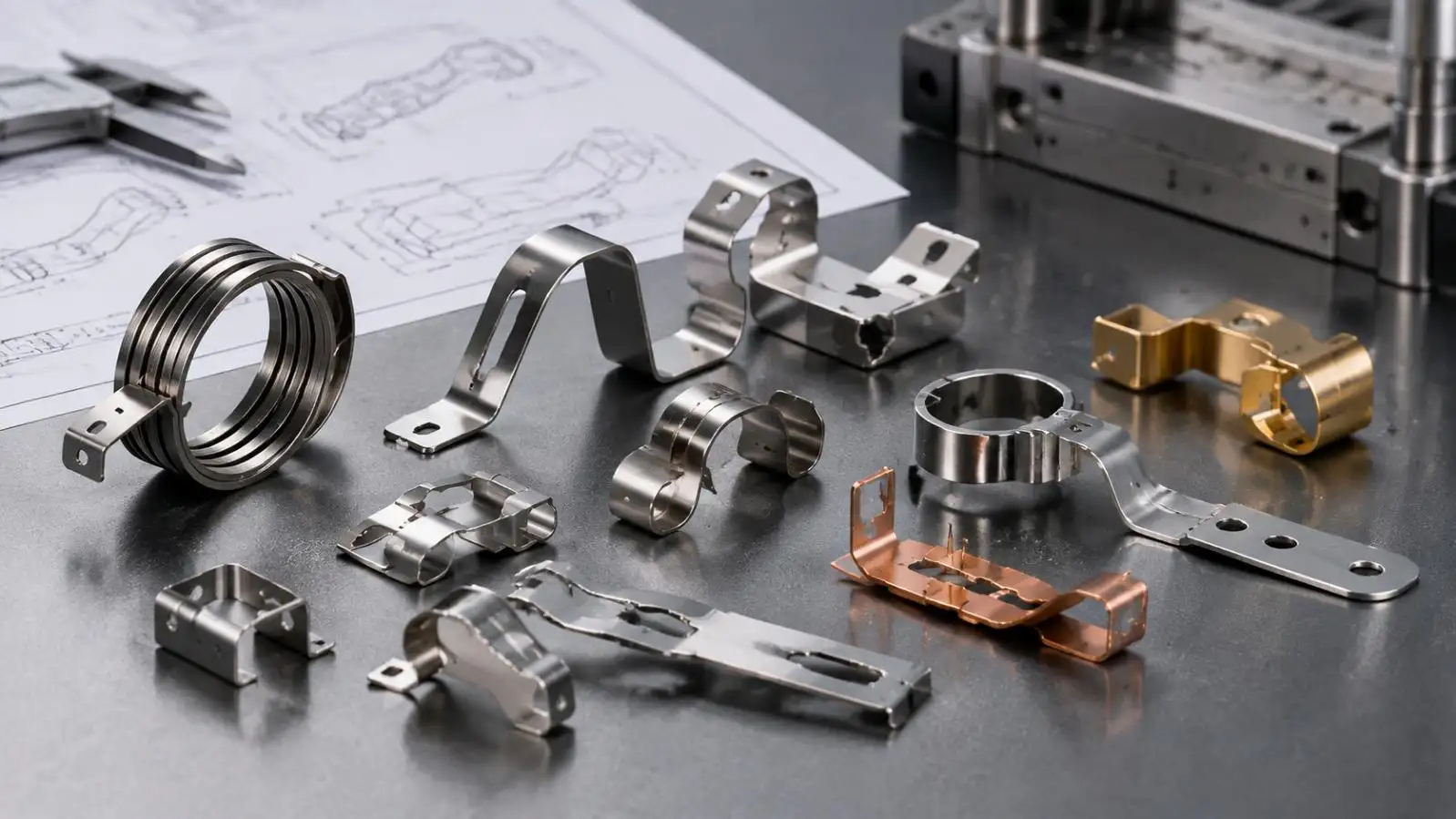
BlogSpring Stamping Fatigue Life: How Geometry, Material and Edge Quality Affect Cycle Life
2026-09-24By KT Engineering -
 Blog
BlogMechanical Automation Parts for Robot End Effectors and Positioning Accuracy
2026-09-23By KT Engineering