Contact Us
  Home /
 Precision CNC Milling Services Built for Production-Ready Parts


Table of Contents
- From Design Intent to Manufacturable Reality
- Why Tolerance Control Defines Manufacturing Value
- KT's CNC Milling Capabilities for Industrial Applications
- Integrated CNC Turning and Milling
- Finishing and Materials Trends in Manufacturing 2026
- Quality Management for Global Manufacturing Consistency
- Engineering Support that Speeds up Production

CNC milling and turning provide an efficient method of both product prototyping and product manufacture by translating digital designs into each component of a final product. The service assists companies in moving from the initial design phase to the final phase of product manufacture. By 2026, the engineering teams and the procurement teams, along with their partnerships and supplier linkages, will focus increasingly on the design manufacturable, range of materials, and quality of materials traceability.
From Design Intent to Manufacturable Reality
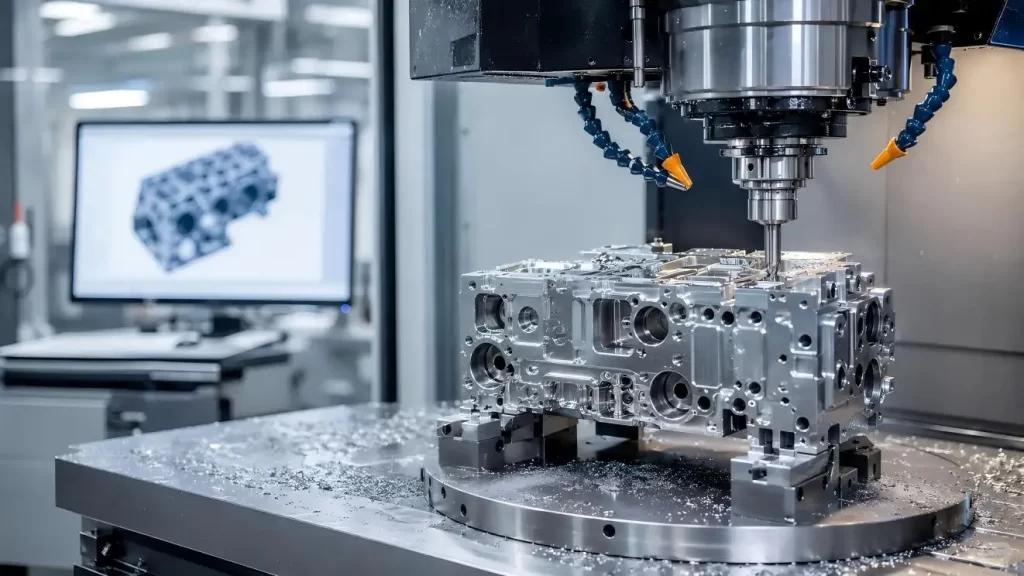
While designing, a majority of customers use CAD models, or 2D models/blueprints of designs. However, the complications really arise once the design is taken to the machining floor. What might be considered a simple design in a CAD model is deceptively simple and can cause complications in tolerances, how the pieces of the assembly fit together, the surface finish, and how the part or assembly holds up structurally.
Examples:
•Controlled flatness and hole positional accuracy may be required for a bracket to ensure it holds together when assembled.
•Multi-channel drilling along with precision to the sealing surfaces may be required for a valve block.
•An enclosure may need strict dimensional repeatability with surface finish along with a cosmetic finish.
At this point, Precision CNC Milling Services are critical in that they go far beyond the basic removal of material from a workpiece. KT helps customers realize their design intents with the help of precision multi-axis machining, CNC turning and integrated turn-mill operations, surface finishing, and value-added inspection services.
Modern manufacturing processes and systems are designed and built for integrated manufacturing and systems. Processes are further optimized through the use of digital technologies. Manufacturing.gov outlines and supports some of the available systems. In this context, CNC suppliers are expected to contribute not only equipment capability, but also process intelligence and production reliability.
Why Tolerance Control Defines Manufacturing Value
In precision procurement, tolerance capability is often a key decision factor. For standard precision requirements, KT accommodates machining tolerances up to ±0.01 mm. For some geometries, tolerances may be smaller when controlled inspection conditions are applied.
For machined components, surface finish selection may achieve Ra values between 0.8 and 1.6 µm, depending on the material.
The above machining capabilities can be applied to:
•Automation equipment structural elements
•Fluid control systems and manifolds
•Mold bases and inserts
•Mechanical structures for medical applications
•New energy vehicle components
•Precision mechanical assemblies
There are always functional and non-functional surfaces to consider when establishing a machining tolerance. A good manufacturer will help the design engineer determine the balance to best manage the performance and the cost.
Some advantages of tolerance planning include:
•Optimal Fit – The alignment of the mating components is secured
•Stable Function – Mechanical and fluid functions maintain repeatability
•Value Added – Unnecessary machining is eliminated
•Scalable Production – Testing and establishing control is supported for shifts between prototype and production runs
KT's CNC Milling Capabilities for Industrial Applications
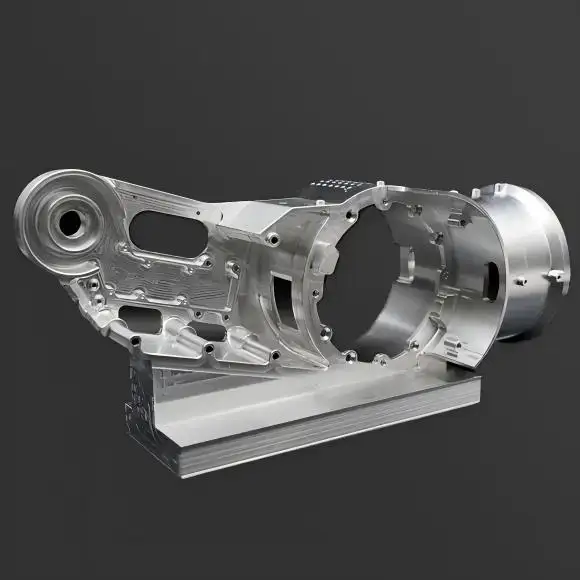
KT offers Precision CNC Milling Services from prototype to small- and large-scale production. Core offering of machining services includes face milling, end milling, drilling, pocketing, contouring, and structural plate machining.
Examples of components include:
•Mounting brackets, valve blocks, heat sinks, fixture plates, mold inserts, motor bases, lock plates, gear housings, shaft supports, and sensor fixtures.
•In addition to machining services, KT applies Engineering, Materials, and Post processing reviews to ensure the required functions and assembly are met.
Core CNC Milling Strengths:
•3/4-Axis Machining: Constructs and machines a variety of structural and geometric features.
•Material Range: aluminum, stainless steel, titanium, copper, brass, alloyed steels, and many engineering plastics such as POM, PTFE, PC, ABS, and PEEK.
•Finishing: Various treatments to enhance corrosion resistance and wear, as well as to improve the aesthetic quality of surfaces.
•Engineering Background: Over 20 years of fabrication and hands-on experience to back up complex drawings along with production optimization.
Integrated CNC Turning and Milling
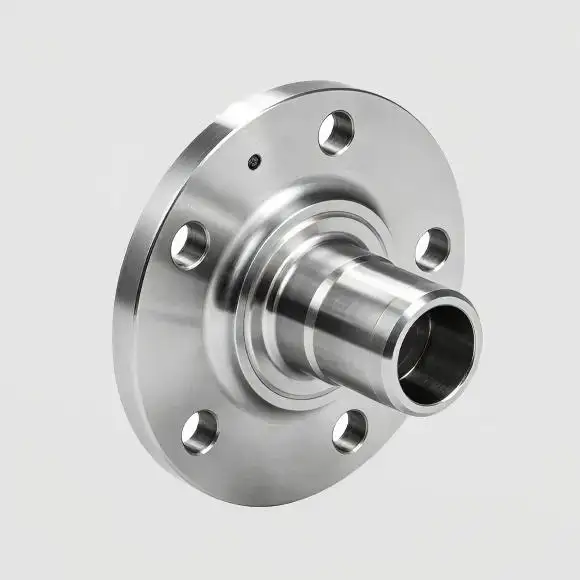
Many functions require both turning and milling operations, including shafts, bushings, threaded fittings, flange components, stepped pins, and rotational connectors.
KT's CNC turning services cover OD turning, ID boring, threading, grooving, and drilling, followed by precision finishing with standard tolerances of ±0.01 mm, depending on the geometry and behavior of the material. In certain conditions, considerably tighter tolerances are attainable with the right tooling and inspection.
The main benefit of KT's turn-mill integration system is the flexibility offered by multiple work operations in a single setup.
The Advantage of One Setup:
•Concentricity: Alignment issues inherent to multiple setups are eliminated.
•Cycle Time: Considerable reduction of total time required for machining.
•Batch Quality: Each production batch will have uniformity of work.
•Workflow: The requirement for various quality control systems is removed as all work is done in one system.
Finishing and Materials Trends in Manufacturing 2026
The choice of Materials is no longer primarily dictated by cost. Factors such as resistance to corrosion, ease of machining, the strength to weight ratio, and durability are now of greater importance to the buyer.
•6061 and 7075 Aluminum are examples of lightweight structural materials. Corrosion resistant materials are 304 and 316 Stainless Steel. Brass and copper are examples of conductive materials and liquids. PEEK, POM, PTFE, PC, and various engineering plastics are examples of high performance materials.
•How surfaces of a product are finished can greatly impact overall product performance. KT offers a wide range of finishing options, including:
•As-machined, bead blast, anodized, powder coated, polished, ground, burnished, coated, shot blast, and electro polished.
•These offerings will enhance surfaces and finished products by improving performance and wear, as well as provide a visually appealing finish.
Cross-industry research (including NIST studies) shows that smart manufacturing and the integration of data into the production process will increase. Not all projects will require the use of digital twins, but there will be a marked increase in the demand for precision and quality control in the measurement and processing of work.
Quality Management for Global Manufacturing Consistency
KT has a quality management system in place in accordance with ISO 9001:2015. This brings a high level of control to the management of production planning, machining, inspection, and logistics.
Quality inspection generally consists of verification and validation of dimensions, surface roughness, tolerances, materials, and packaging.
This methodical control is useful to global customers who maintain multi-supplier and/or assembly production systems, where consistency and traceability are of the utmost importance.
Engineering Support that Speeds up Production
KT supports the customer by providing engineering support throughout the entire manufacturing process. This helps the customer minimize the number of production iterations and helps the customer “get to production” faster.
The process typically involves:
•Review of Design: Evaluation of Geometry, Tolerance, and Machining Feasibility
•Selection of Material: Selection based on stiffness, cost, weight, and environment
•Planning of Processes: Selection of Milling, Turning, or Hybrid processes
•Finishing: The Surface Treatment of the part based on functionality
•Planning of Inspection and Control: Determining inspection and control points along with acceptance criteria
•Planning of Transport and Packaging: Determining the protection and packaging for the part based on the sensitivity of the surface and the condition of the transport
Precision CNC Milling Services for the Manufacturing Requirements of 2026
As global sourcing evolves throughout 2026, customers place a higher value on suppliers capable of faster prototyping and engineering with the ability to scale production with consistent quality.
KT's Precision CNC Milling and Turning Services are aligned with customer needs with a combination of multi-axis machining, a wide range of materials, value added services, and quality management systems based on ISO.
For customers in industries that require manufacturing of structural components, enclosures, manifold blocks, tools, shafts and precision assemblies of mechanical elements, KT's Services support product development and offers long term production.
With two decades of industry experience, advanced CNC machining systems, and a comprehensive framework for quality management, KT accurately and consistently delivers the means to convert engineering drawings to comparable final components.
FAQs
Q1. Where is CNC milling applicable?
CNC milling can manufacture intricate components of high precision.
Q2. What is the tolerance level at KT?
We offer standard machining tolerances of ±0.01 mm depending on the specifics of the components.
Q3. What are the available substrates for machining?
We can machine aluminum, stainless steel, brass, copper, titanium, and many engineering plastics.
Q4. Milling and Turning: What are the differences?
Milling involves the shaping of stationary elements, whereas turning involves the shaping of elements through the rotation of the workpiece. This is primarily for cylindrical components.
Q5. What are the KT capabilities for prototypes?
KT has no issues with supporting prototype development, small volume batches, or mass production.
Talk to the Manufacturer, Not a Middleman
Resources & Insights
-
 Industry Insights
CNC Machining Robotic Parts: How GD&T Controls Robot Assembly Accuracy
2026-09-24By KT Engineering -
 Industry Insights
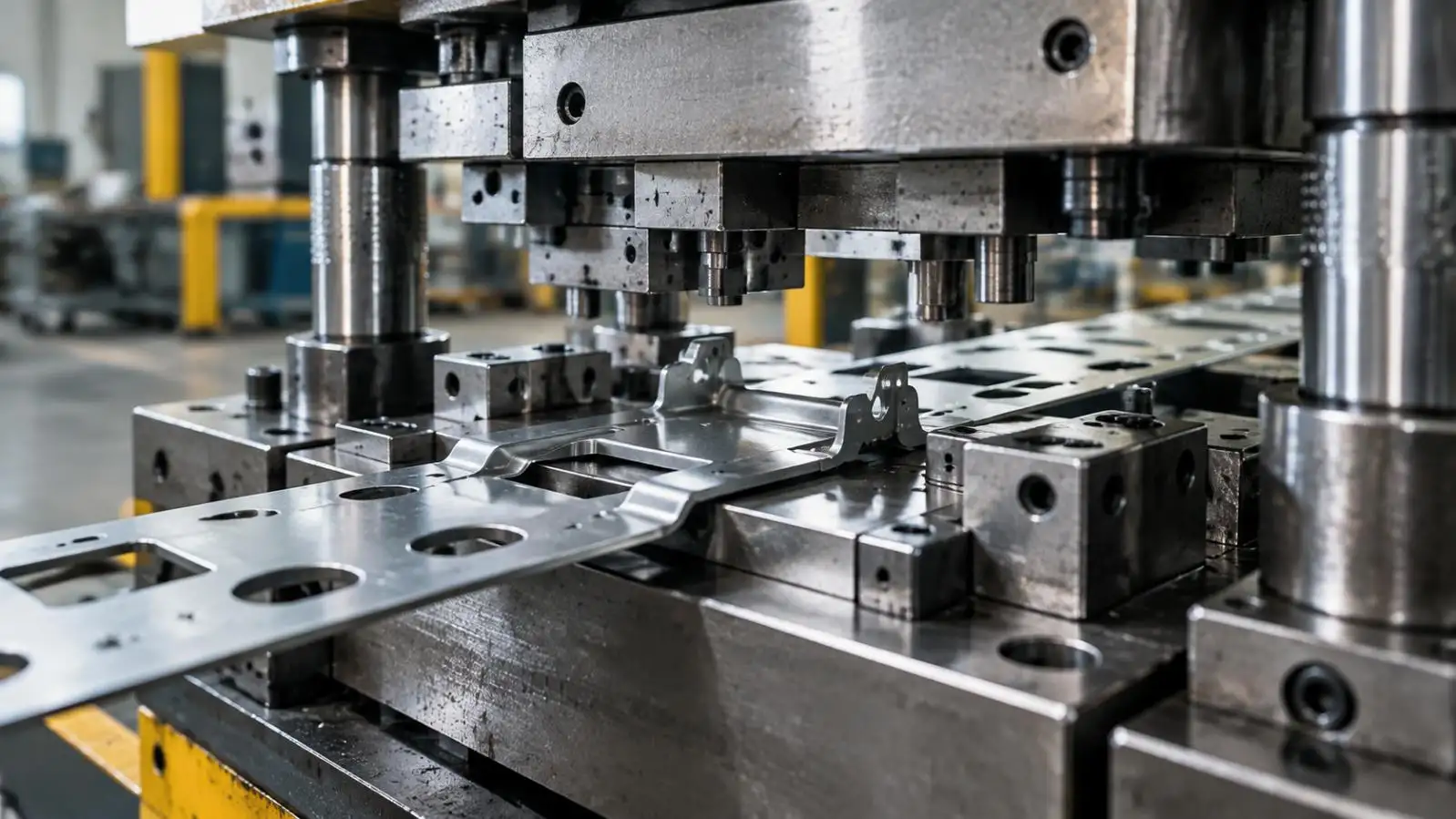
Hardware Stamping Springback Control for High-Strength Steel Parts
2026-09-24By KT Engineering -
 Industry Insights
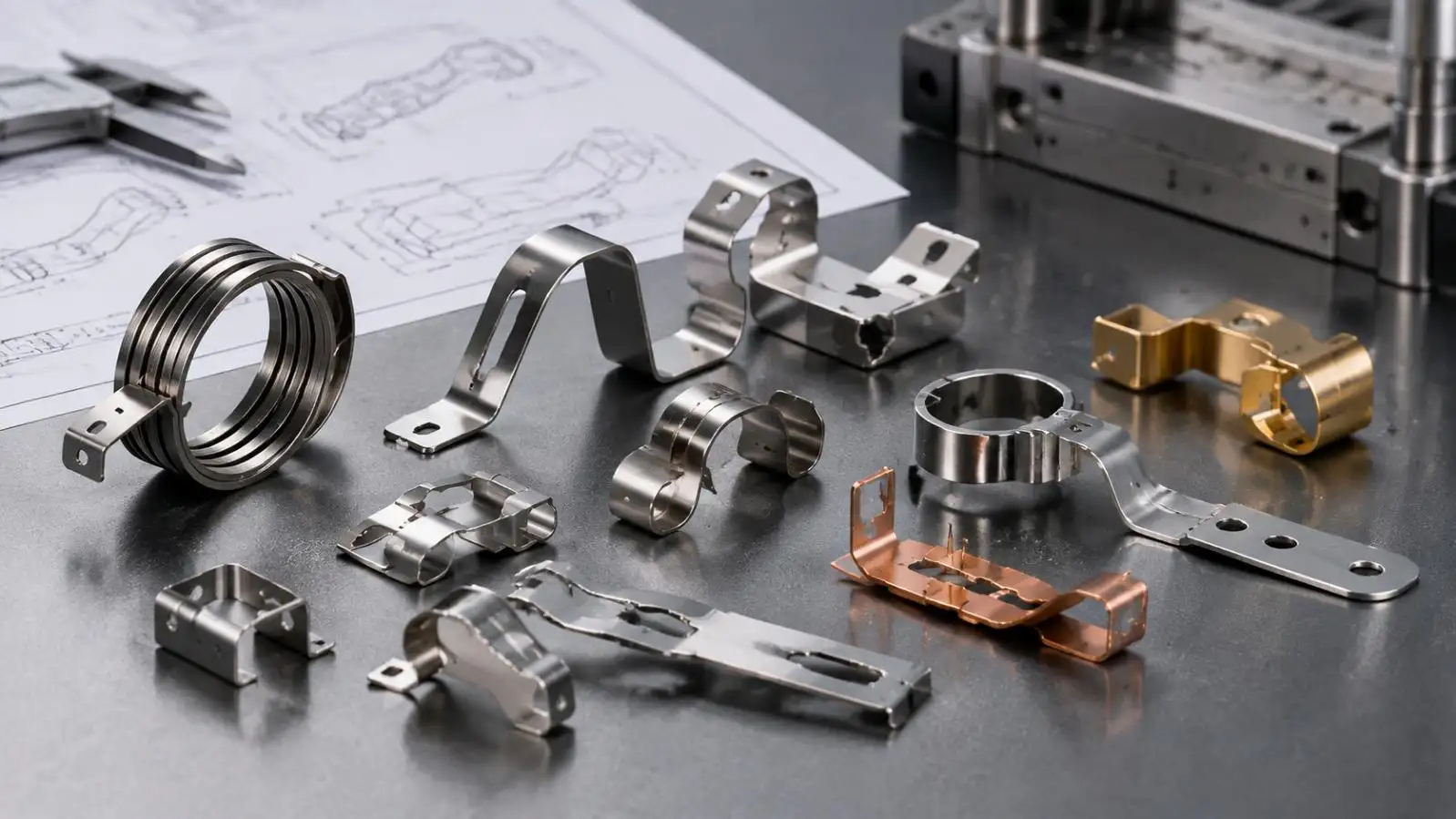
Spring Stamping Fatigue Life: How Geometry, Material and Edge Quality Affect Cycle Life
2026-09-24By KT Engineering -
 Industry Insights
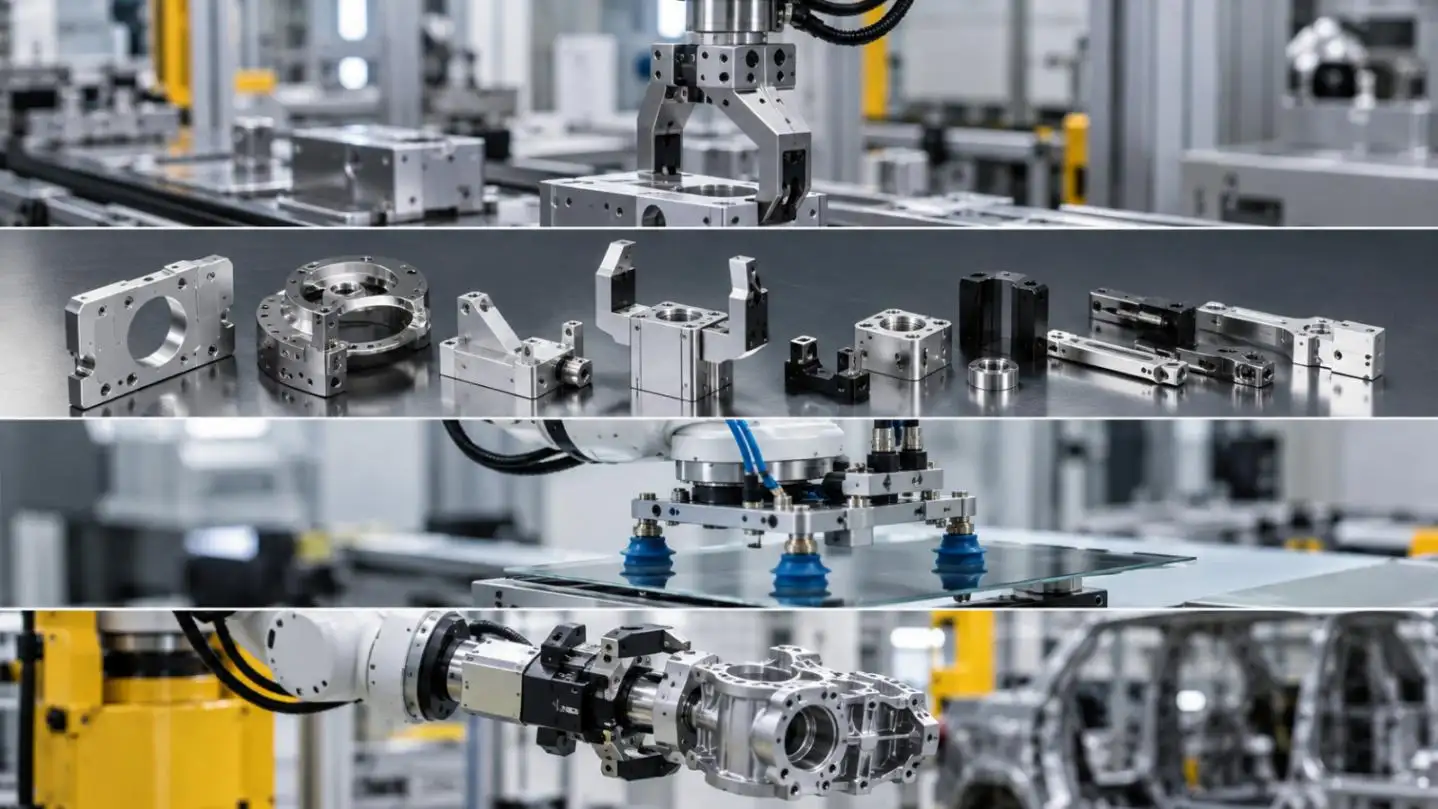
Mechanical Automation Parts for Robot End Effectors and Positioning Accuracy
2026-09-23By KT Engineering