Contact Us
  Home /
 best metal stamping factory


Table of Contents
- What Is Metal Stamping?
- Why Choosing the Best Metal Stamping Factory Matters
- Key Characteristics of the Best Metal Stamping Factory
- Industries Served by Leading Metal Stamping Factories
- Metal Stamping vs Other Manufacturing Processes
- How to Select the Best Metal Stamping Factory
- Benefits of Working with a Professional Metal Stamping Factory
- Future Trends in Metal Stamping Manufacturing
- Conclusion

In terms of high precision manufacturing, low cost, and efficient generation of large quantities of metal parts, metal stamping is one of the best methods. Metal stamping plays a vital role in the creation of precision metal parts for various industries, including automotive, aerospace, electronics, medical devices, telecommunications, and consumer products.
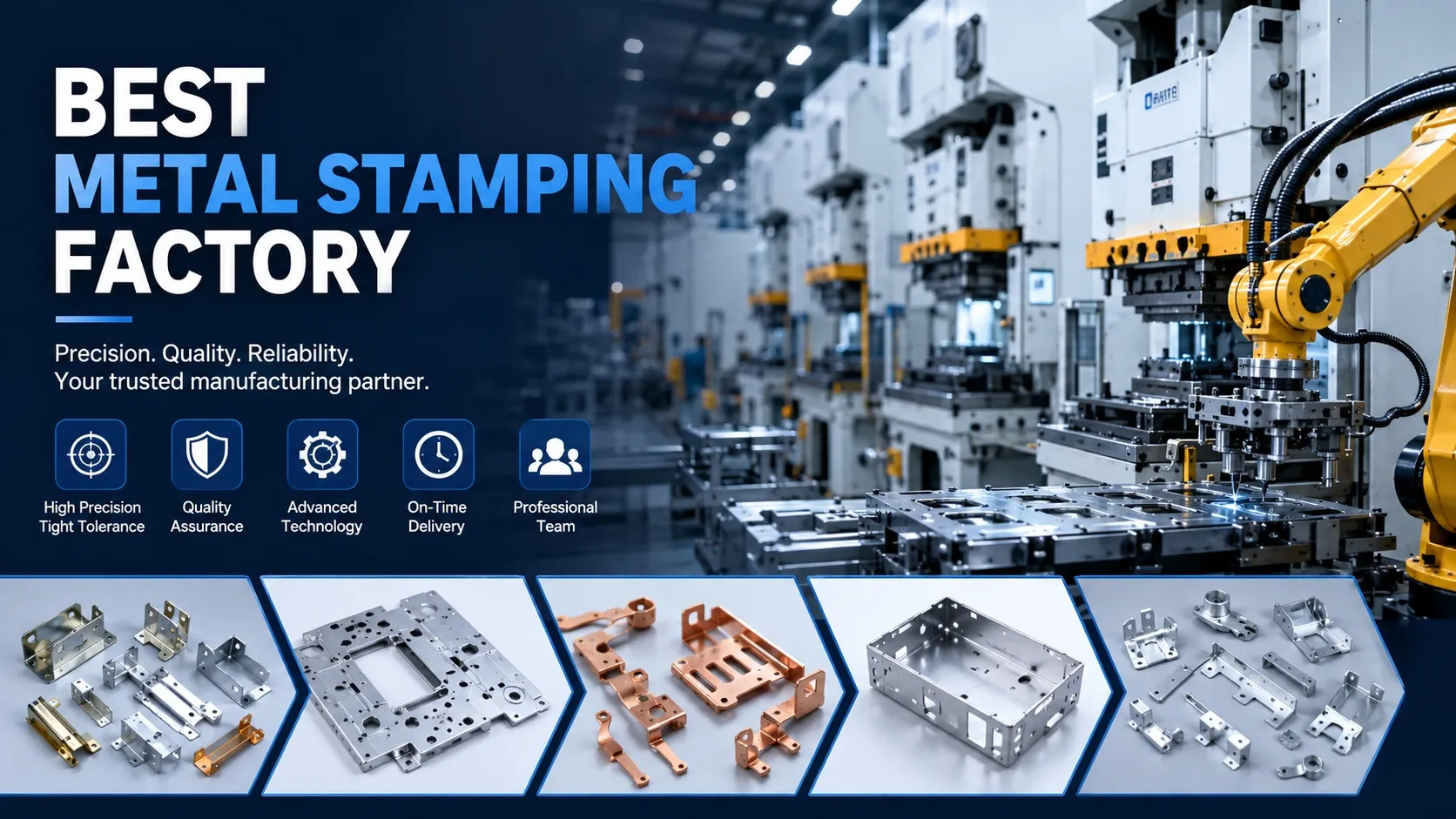
Yet, it is harder to get the optimal metal stamping factory. There are thousands of manufacturers globally and when selecting a supplier a business will need to take into account factors like their ability to produce, their quality control, engineering expertise, their lead time and cost efficiency.
This guide aims to shed light on the special qualities of a metal stamping factory and why it is important to select the best manufacturer for your upcoming project.
What Is Metal Stamping?
Metal stamping is the manufacturing process that involves applying presses and dies to metal sheets to create specific shapes. Could involve:
- Blanking
- Piercing
- Bending
- Coining
- Embossing
- Deep Drawing
- Progressive Die Stamping
Metal stamping has become popular due to its many advantages which include high production speed, high precision, and lower cost for large volume production.
Why Choosing the Best Metal Stamping Factory Matters
Your supplier's quality directly affects the quality of your product, production costs and delivery times.
A professional metal stamping factory can ensure the following:
- Consistent product quality
- Faster production cycles
- Lower manufacturing costs
- Engineering support
- Better supply chain management
- Reduced defect rates
- On-time delivery
On the other hand, an inexperienced supplier may cause production delays, quality issues, and increased costs.
Key Characteristics of the Best Metal Stamping Factory
1. Advanced Manufacturing Equipment
Top metal stamping factories invest heavily in modern production equipment.
Look for manufacturers that offer:
- High-speed stamping presses
- Servo-driven stamping machines
- Progressive die systems
- Transfer stamping equipment
- Automated feeding systems
- Robotic handling solutions
Advanced machinery improves production efficiency while maintaining tight tolerances.
2. Comprehensive Engineering Support
The best metal stamping manufacturers do more than simply produce parts.
They provide:
- Design for Manufacturing (DFM)
- Material selection guidance
- Prototype development
- Tooling optimization
- Cost reduction recommendations
Strong engineering teams help customers identify potential issues early in the development process, reducing both risk and production costs.
3. In-House Tooling Capabilities
Tooling quality significantly affects stamping precision and production efficiency.
A leading metal stamping factory should offer:
- Custom die design
- Tool manufacturing
- Tool maintenance
- Tool repair
- Rapid tooling modifications
In-house tooling allows faster project turnaround and better quality control.
4. Strict Quality Management Systems
Quality assurance is essential for every manufacturing project.
The best factories implement internationally recognized certifications such as:
- ISO 9001
- IATF 16949 for automotive applications
- ISO 13485 for medical devices
- AS9100 for aerospace manufacturing
Quality control procedures often include:
- First Article Inspection (FAI)
- In-process inspection
- Coordinate Measuring Machine (CMM) testing
- Statistical Process Control (SPC)
- Final product verification
These systems ensure every component meets customer specifications.
5. Material Expertise
A high-quality metal stamping factory should have extensive experience with various materials, including:
- Stainless Steel
- Carbon Steel
- Aluminum
- Copper
- Brass
- Titanium
- Nickel Alloys
Material knowledge helps optimize product performance, durability, and manufacturing efficiency.
Industries Served by Leading Metal Stamping Factories
Automotive Industry
Automotive manufacturers use metal stamping for:
- Brackets
- Structural components
- Battery housings
- Electrical connectors
- Engine parts
High-volume production and precision requirements make metal stamping ideal for automotive applications.
Electronics Industry
Electronics companies rely on stamped components for:
- Shielding covers
- Connectors
- Terminals
- Heat sinks
- Precision contacts
Metal stamping enables the production of highly accurate miniature parts.
Aerospace Industry
Aerospace applications demand:
- Tight tolerances
- Lightweight materials
- Exceptional durability
Advanced metal stamping factories provide aerospace-grade manufacturing solutions that meet strict industry standards.
Medical Industry
Medical device manufacturers require:
- Biocompatible materials
- Precision fabrication
- Traceability
- Regulatory compliance
Experienced stamping suppliers can support complex medical manufacturing projects.
Metal Stamping vs Other Manufacturing Processes
Metal Stamping vs CNC Machining
Metal stamping is generally more cost-effective for high-volume production.
Advantages of metal stamping:
- Faster production speed
- Lower per-unit costs
- Excellent repeatability
- High-volume efficiency
Advantages of CNC machining:
- Better for low-volume production
- Greater design flexibility
- Complex geometries
Metal Stamping vs Die Casting
Metal stamping works with sheet metal while die casting forms molten metal into molds.
Metal stamping offers:
- Higher production speeds
- Lower material waste
- Improved dimensional consistency
Die casting is often preferred for complex three-dimensional components.
Metal Stamping vs Injection Molding
Injection molding is primarily used for plastic parts.
Metal stamping provides:
- Higher strength
- Better heat resistance
- Improved structural integrity
Injection molding may offer lower costs for plastic-based products.
How to Select the Best Metal Stamping Factory
When evaluating potential suppliers, ask the following questions:
What Certifications Do They Hold?
Verify whether the factory maintains relevant industry certifications and quality management systems.
Can They Support Your Production Volume?
Choose a manufacturer capable of handling both current and future production requirements.
Do They Offer Engineering Assistance?
Engineering support often leads to better product designs and lower manufacturing costs.
What Is Their Quality Control Process?
Request detailed information about inspection procedures and testing capabilities.
Do They Have Experience in Your Industry?
Industry-specific expertise often reduces development time and improves final product quality.
What Are Their Lead Times?
Reliable delivery schedules are critical for maintaining supply chain stability.
Benefits of Working with a Professional Metal Stamping Factory
Partnering with an experienced manufacturer delivers several advantages:
- Reduced production costs
- Faster time-to-market
- Consistent quality
- Enhanced product reliability
- Supply chain stability
- Engineering expertise
- Scalable production capacity
These benefits can provide a significant competitive advantage in today's global marketplace.
Future Trends in Metal Stamping Manufacturing
Modern metal stamping factories are increasingly adopting advanced technologies, including:
- Smart manufacturing systems
- Industry 4.0 integration
- AI-powered quality inspection
- Automated production lines
- Real-time process monitoring
- Sustainable manufacturing practices
These innovations improve productivity while maintaining exceptional quality standards.
Conclusion
Choosing the top metal stamping factory is an important decision that can impact product quality, production efficiency and business performance. The perfect manufacturing partner has to possess strong engineering capabilities and skill, strict production control, and a broad range of manufacturing experience.
From automotive parts to electronic components, aerospace assembly to medical device parts and components, a reliable supplier for metal stamping can help save money, ensure quality and speed up product development.
Through thorough assessment of metal stamping factory production ability, certifications, quality systems, and expertise, companies build partnerships which lead to sustainable growth and competitive success on the market.
Talk to the Manufacturer, Not a Middleman
Resources & Insights
-
 Hide blog post
CNC Machining Robotic Parts: How GD&T Controls Robot Assembly Accuracy
2026-09-24By KT Engineering -
 Hide blog post
Hardware Stamping Springback Control for High-Strength Steel Parts
2026-09-24By KT Engineering -
 Hide blog post
Spring Stamping Fatigue Life: How Geometry, Material and Edge Quality Affect Cycle Life
2026-09-24By KT Engineering -
 Hide blog post
Mechanical Automation Parts for Robot End Effectors and Positioning Accuracy
2026-09-23By KT Engineering