Contact Us
  Home /
 Cabinet Cover Components: Lightweight, Modular and Smart Enclosure Design Guide


Table of Contents
- Why Are Cabinet Cover Components Becoming Harder to Design?
- Material Thickness Alone Does Not Determine Cover Performance
- Aluminum vs. Carbon Steel vs Stainless Steel
- Modular Cabinet Covers Require Controlled Interfaces
- Smart Enclosures Change Mechanical Cover Requirements
- EMI, Coatings and Grounding Must Be Designed Together
- Installation and Maintenance Should Influence the Original Design
- Which Standards Should Be Verified?
- How Should Buyers Specify Cabinet Cover Components?

Modern Cabinet Cover Components are no longer simple protective sheet-metal panels. As industrial control systems, automation equipment, energy systems and electronic cabinets become lighter, more modular and more connected, enclosure covers must simultaneously manage structural stiffness, sealing, thermal control, EMC, service access and production cost.
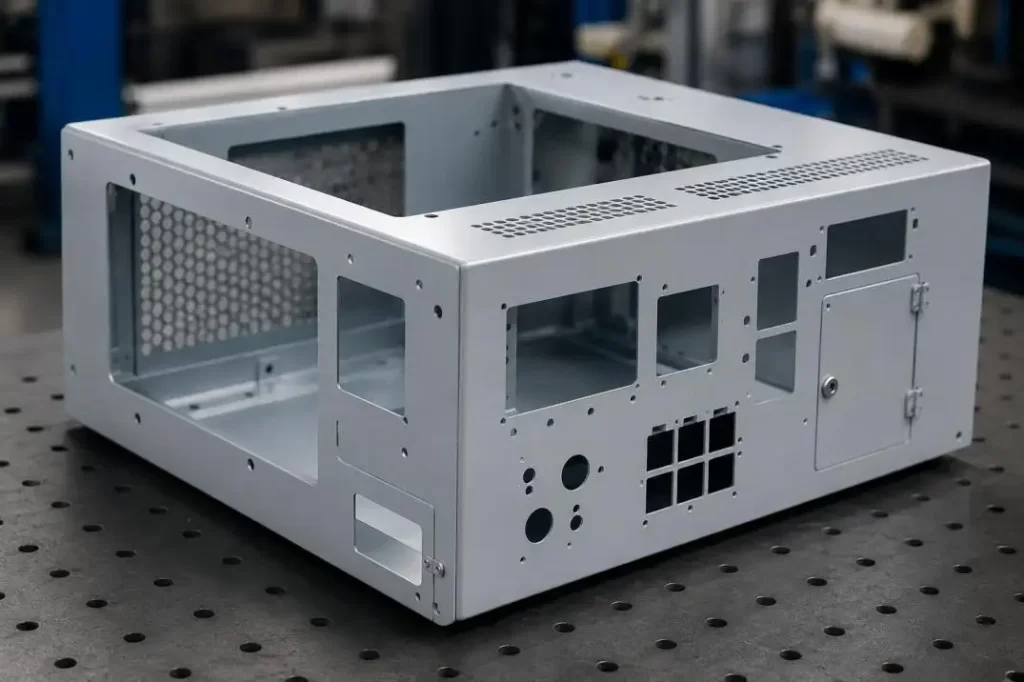
For engineers and buyers, the challenge is therefore not simply choosing a thinner sheet or adding more openings. The correct design requires balancing material properties, geometry, tolerances, environmental protection and manufacturing volume.
Why Are Cabinet Cover Components Becoming Harder to Design?
Three trends are changing the engineering requirements of Cabinet Cover Components.
First, lightweighting causes thinner materials to be used. However, thinner sheets can cause increased vibration, panel deflection and sealing issues. Second, modular cabinets require covers that are interchangeable, standardized mounting interfaces, and demand more control over accumulated tolerances. Third, smart enclosures integrate a variety of components that lead to more cutouts and thermal and electromagnetic concerns.
A cover that performs well mechanically may, therefore, fail somewhere else. For example:
•Sealing can be made more vigorous, which restricts flow.
•Ingress protection and EMI may be negatively impacted by the addition of ventilation.
•Larger cutouts may be required for added HMI.
•Due to increasing modular interfaces, more precise positioning and control of holes and datums are required.
This is why Cabinet Cover Components should be treated as part of the enclosure system rather than isolated cosmetic panels.
Material Thickness Alone Does Not Determine Cover Performance
A common mistake is assuming that thicker material automatically produces a better enclosure. In practice, stiffness depends on material modulus, thickness, unsupported panel span and formed geometry.
Large flat covers can often be strengthened with:
•Folded perimeter flanges
•Formed beads or ribs
•Local reinforcement
•Hat-section stiffeners
•Reduced unsupported spans
This means a thinner reinforced panel may provide a better weight-to-stiffness balance than a thicker flat sheet.
Aluminum vs. Carbon Steel vs Stainless Steel
| Factor | Aluminum | Carbon Steel | Stainless Steel |
| Weight | Low | Higher | Higher |
| Stiffness at equal thickness | Lower | Higher | Higher |
| Corrosion resistance | Good with suitable alloy/finish | Usually needs coating | High |
| Conductivity | High | Moderate | Lower |
| Formability | Good | Very good | More demanding |
| Typical reason to choose | Weight reduction | Cost and rigidity | Harsh environments |
Aluminum is therefore not automatically the best choice for lightweight Cabinet Cover Components. If additional thickness or reinforcement is needed to control deflection, the complete structure and manufacturing cost must be evaluated.
KT TOOL supports sheet-metal fabrication in aluminum, stainless steel and carbon steel using cutting, bending, punching and welding processes, allowing the material and structural approach to be selected around the actual enclosure geometry rather than a single preferred material.
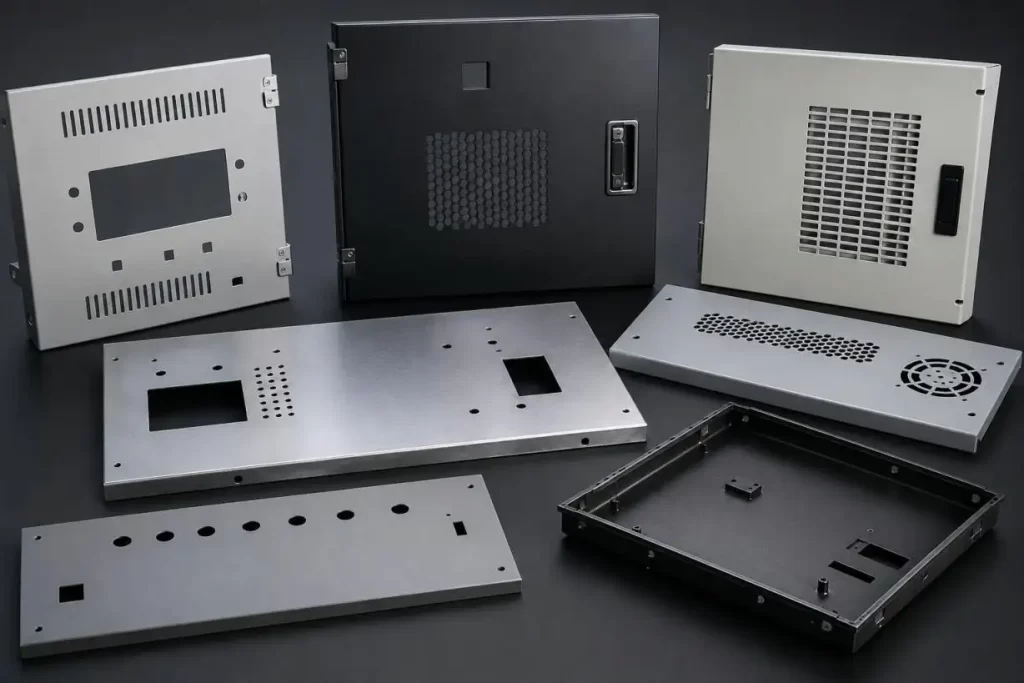
Modular Cabinet Covers Require Controlled Interfaces
True modularity is not achieved by simply adding more screw holes.
Interchangeable Cabinet Cover Components require a controlled datum strategy. Locating features, clearance holes, bend locations and mating surfaces must be defined so tolerance accumulation does not shift the final interface.
Critical dimensions often include:
•Hole-to-hole position
•Hole-to-bend distance
•Panel flatness
•Bend angle
•Gasket contact surface
•Latch and hinge location
A useful design principle is to separate locating features from fastening features. One interface establishes position while other holes provide sufficient clearance for assembly variation.
Fastener choice also changes serviceability:
| Joining Method | Serviceability | Distortion Risk | Typical Use |
| Welding | Low | Higher | Permanent structures |
| Screws | High | None from heat | General removable panels |
| Captive fasteners | Very high | None | Frequently serviced covers |
| Quarter-turn latches | Very high | None | Fast-access cabinets |
For higher-volume stable designs, punching or stamping can also reduce repeated cutting and forming operations. KT TOOL provides CNC punching as well as stamping capabilities for volume production, including press capacities from 25 to 300 tons.
Smart Enclosures Change Mechanical Cover Requirements
Smart equipment adds electronics, but the consequences are also mechanical.
An HMI opening removes material from the cover and can reduce local stiffness. An antenna penetration changes the environmental boundary. A fan opening changes airflow, dust exposure and possibly EMC behavior.
For this reason, cooling and IP protection should be considered together.
| Thermal Strategy | Cooling Ability | Effect on Enclosure Protection | Maintenance |
| Passive ventilation | Low–Medium | Adds openings | Low |
| Fan + filter | Medium–High | Requires controlled vent design | Filter servicing |
| Heat exchanger | High | Better separation from ambient air | Medium |
| Sealed cooling | High | Supports sealed architecture | Higher complexity |
Simply specifying a higher IP rating is not always beneficial. Better sealing can reduce air exchange and raise internal temperature.
IEC 60529 defines IP Codes for degrees of protection provided by electrical enclosures. The required degree should therefore be selected according to the actual environment rather than treated as a general measure of enclosure quality.
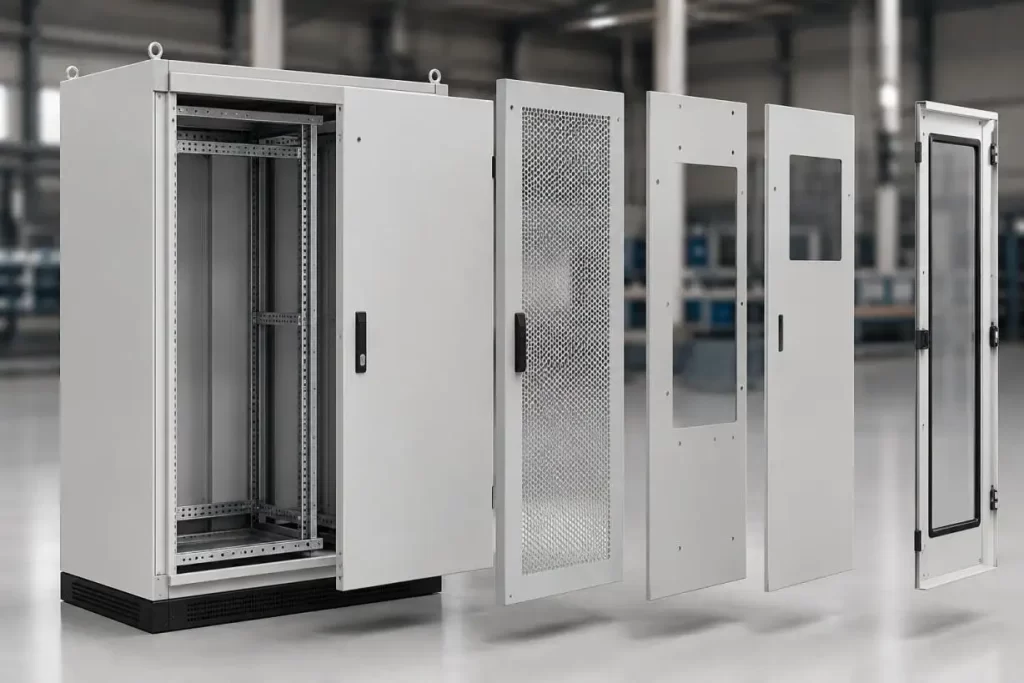
EMI, Coatings and Grounding Must Be Designed Together
Conductive continuity can also be overlooked when Cabinet Cover Components receive powder coating or other insulating finishes.
Grounding may require dedicated:
•Bonding points
•Ground studs
•Masked conductive areas
•Conductive washers
•EMI gaskets
Otherwise, an attractive corrosion-resistant coating can unintentionally increase electrical resistance across enclosure joints.
KT TOOL provides finishing options including anodizing, powder coating, electroplating, painting and electropolishing, so coating selection can be coordinated with material, corrosion requirements and functional contact areas.
Installation and Maintenance Should Influence the Original Design
A modular cover should remain removable after repeated service without losing alignment or sealing performance.
Engineers should therefore check:
•Tool access around fasteners
•Fastener retention
•Gasket compression
•Latch spacing
•Replacement-panel interchangeability
•Cable clearance behind removable panels
Flatness is particularly important around sealing surfaces. Excessive tightening of tolerances everywhere, however, usually raises manufacturing cost without improving function. KT TOOL's machining guidance similarly recommends applying tighter tolerances only to functionally critical features and using standard tolerances elsewhere.
Which Standards Should Be Verified?
Standards should be matched to the complete enclosure application.
IEC 62208:2023 covers unfilled enclosures for low-voltage switchgear and controlgear assemblies. The IEC 61439 series may be applicable for assembled low-voltage assemblies.
For North American projects, ANSI/NEMA 250 defines enclosure Types for specified environmental conditions. NEMA also notes that an IEC IP rating is not automatically a substitute for a NEMA enclosure Type. UL 50/50E requirements may additionally matter for evaluated electrical enclosures and enclosure-mounted components.
The important purchasing question is therefore not "Is this cover IP65?" but what complete enclosure configuration was tested, under which standard and conditions?
How Should Buyers Specify Cabinet Cover Components?
A useful RFQ should provide more than a drawing. Include:
•2D drawing and 3D CAD
•Material and thickness
•Critical tolerances
•Surface treatment
•Expected annual quantity
•Installation environment
•IP or NEMA target
•HMI, vent and cable-opening requirements
•Inspection requirements
•Prototype and production quantities
Manufacturing route should then follow production needs. Laser cutting and bending are flexible for prototypes and changing designs; CNC machining suits precision local features; punching or stamping becomes attractive when geometry is stable and volumes increase.
KT TOOL readily gives you both formed and machined solutions for your Cabinet Cover Components because of our combination of 3-, 4-, and 5-axis CNC machining capabilities and sheet-metal fabrication.
| Capability | Precision / Performance |
| Sheet Metal Fabrication | Down to ±0.01 mm |
| Angular Control | Within ±0.5° |
| CNC Critical Features | Down to ±0.001 mm |
| Quality Verification | CMM inspection + material traceability |
These capabilities assist in controlling the following critical features:
•Mounting-hole positions and interface alignment
•Flatness and contact surfaces
•Precision machined openings and locators
•Consistency within and across batches
•Precision Manufacturing with KT TOOL
KT TOOL is able to manufacture precision components because its sheet-metal fabrication and CMM inspection capabilities with material traceability work in conjunction with its 3-, 4-, and 5-axis CNC machining.
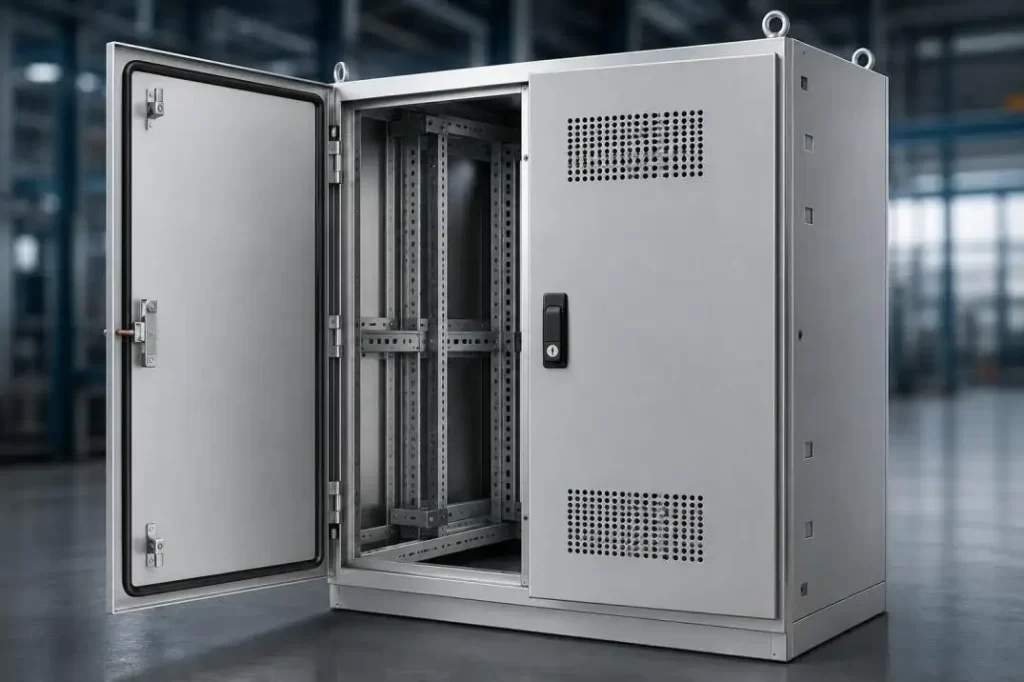
Ultimately, successful Cabinet Cover Components must balance lightweight structure, modular interfaces, thermal management, sealing, EMC, manufacturability and service access. For projects moving from prototype to production, KT TOOL can review drawings, materials and critical tolerances to help establish a practical manufacturing strategy before production.
FAQs
Q1. Can KT TOOL make custom Cabinet Cover Components?
KT TOOL can custom make Cabinet Cover Components via sheet metal fabrication and CNC machining. Their services include cutting, bending, punching, welding, as well as machining, finishing, and inspecting.
Q2. Which materials can KT TOOL use for Cabinet Cover Components?
KT TOOL offers multiple materials for Cabinet Cover Components including aluminum alloys, stainless steel, carbon steel, brass, and titanium. This lets them choose materials for the needs of the application with regard to weight, corrosion resistance, and strength.
Q3. How precise is the machining done by KT TOOL?
For critical features that need to be machined, KT TOOL is able to offer CNC machining with tolerances of ±0.001 mm. This is dependent on the geometry of the part, the material, the type of features, and the machining process.
Q4. What are the sheet metal tolerances for which KT TOOL can offer support?
For high precision sheet metal, KT TOOL is able to offer tolerances of ±0.01 mm and would be able to control angles to within ±0.5°. Real tolerances would depend on the specific cover geometry and material.
Q5. Do prototypes and production quantities fall under the services that KT TOOL offers?
KT TOOL is able to offer services for both prototypes and production quantities. For Cabinet Cover Components, this means that a prototype can be made to verify the design before larger quantities are manufactured.
Talk to the Manufacturer, Not a Middleman
Resources & Insights
-
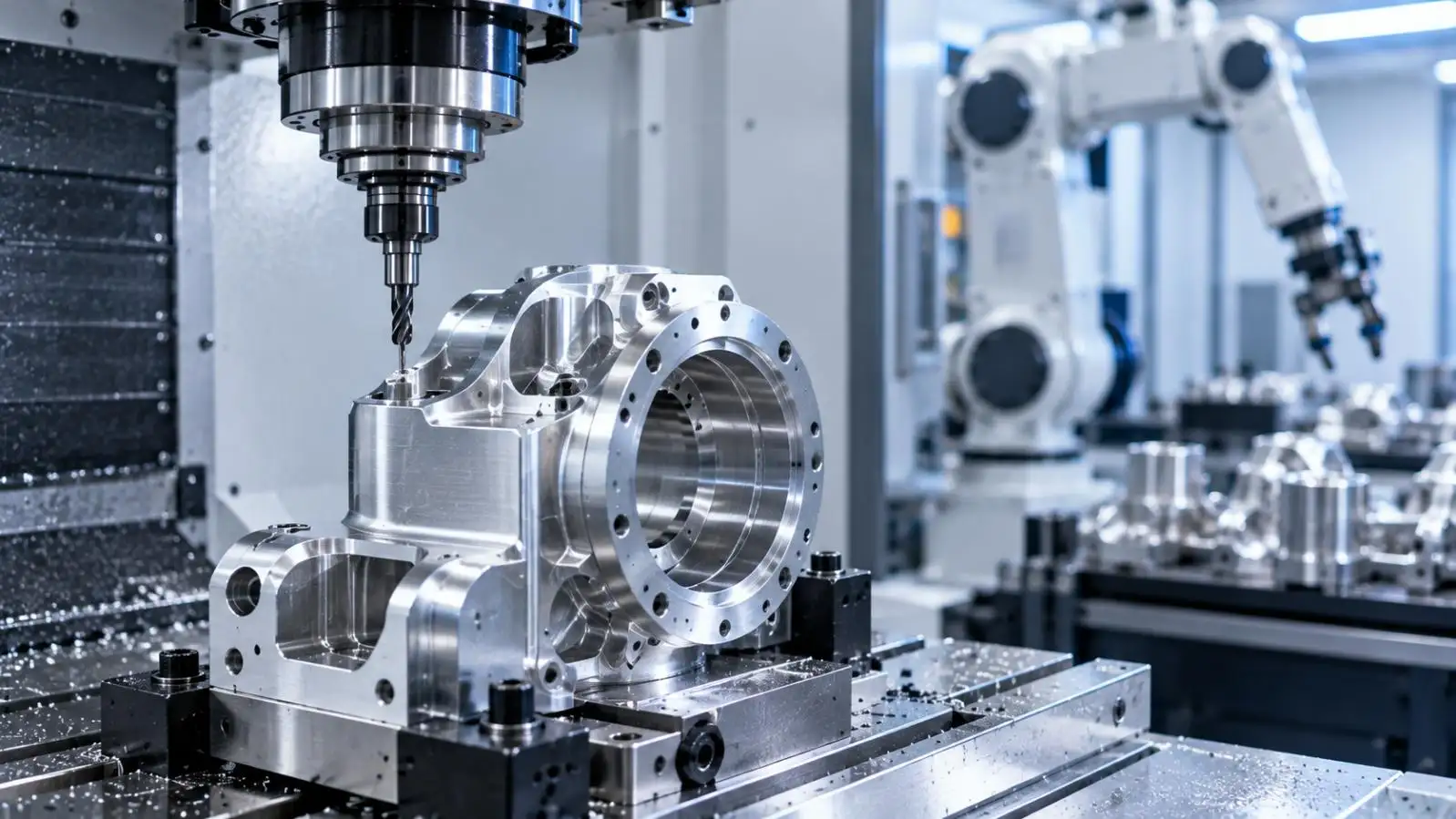 Industry Insights
CNC Machining Robotic Parts: How GD&T Controls Robot Assembly Accuracy
2026-09-24By KT Engineering -
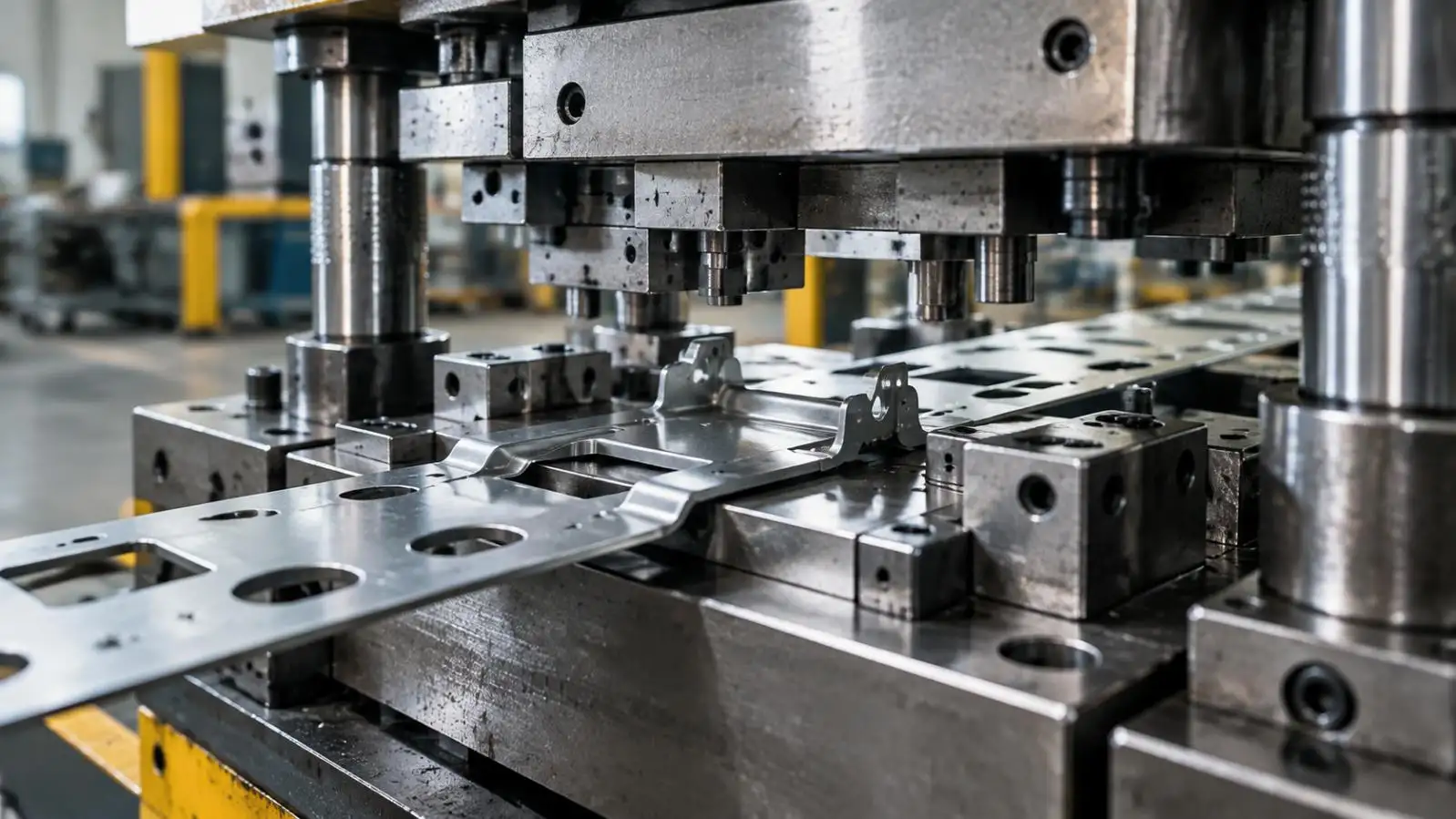 Industry Insights
Hardware Stamping Springback Control for High-Strength Steel Parts
2026-09-24By KT Engineering -
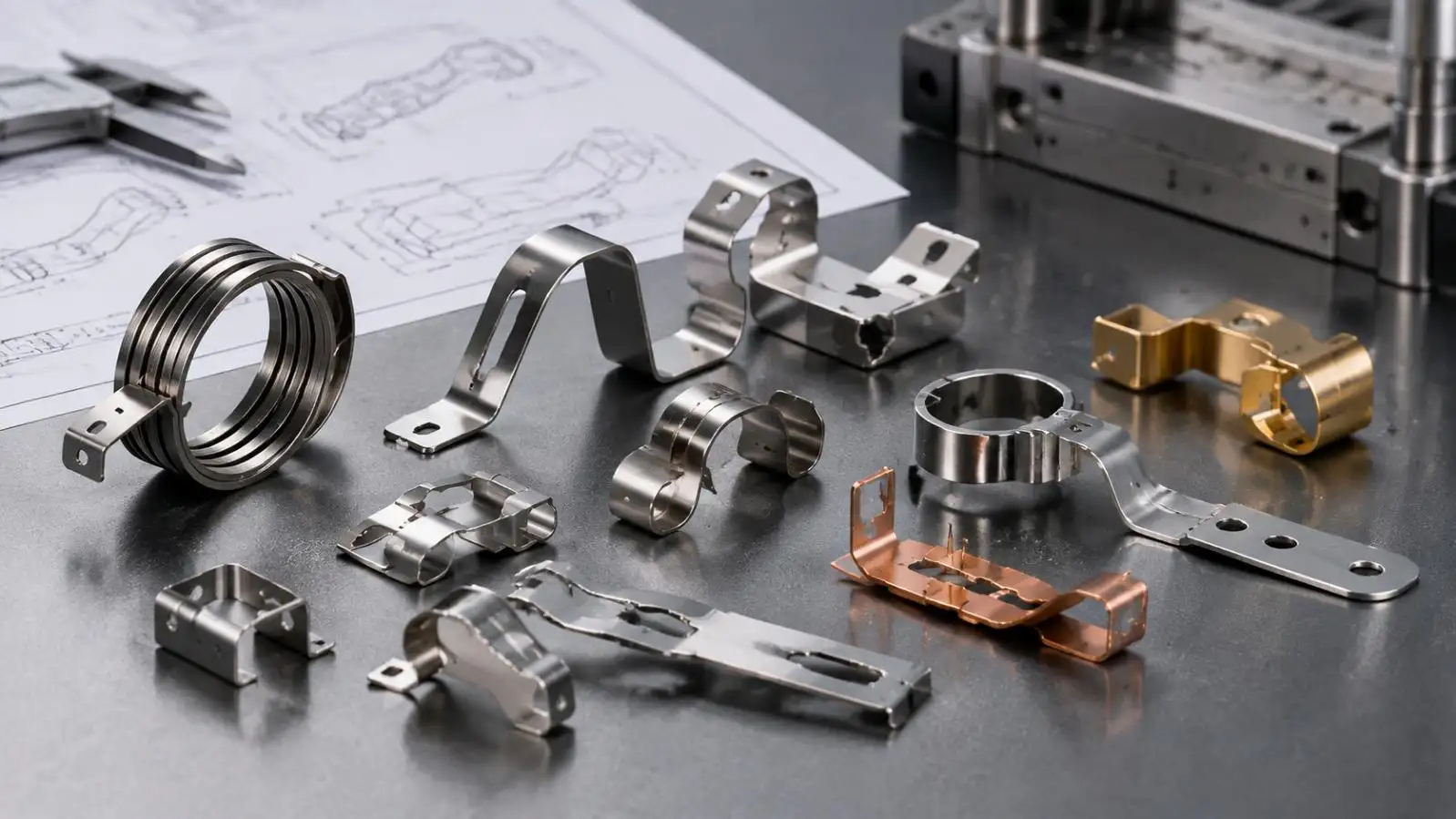 Industry Insights
Spring Stamping Fatigue Life: How Geometry, Material and Edge Quality Affect Cycle Life
2026-09-24By KT Engineering -
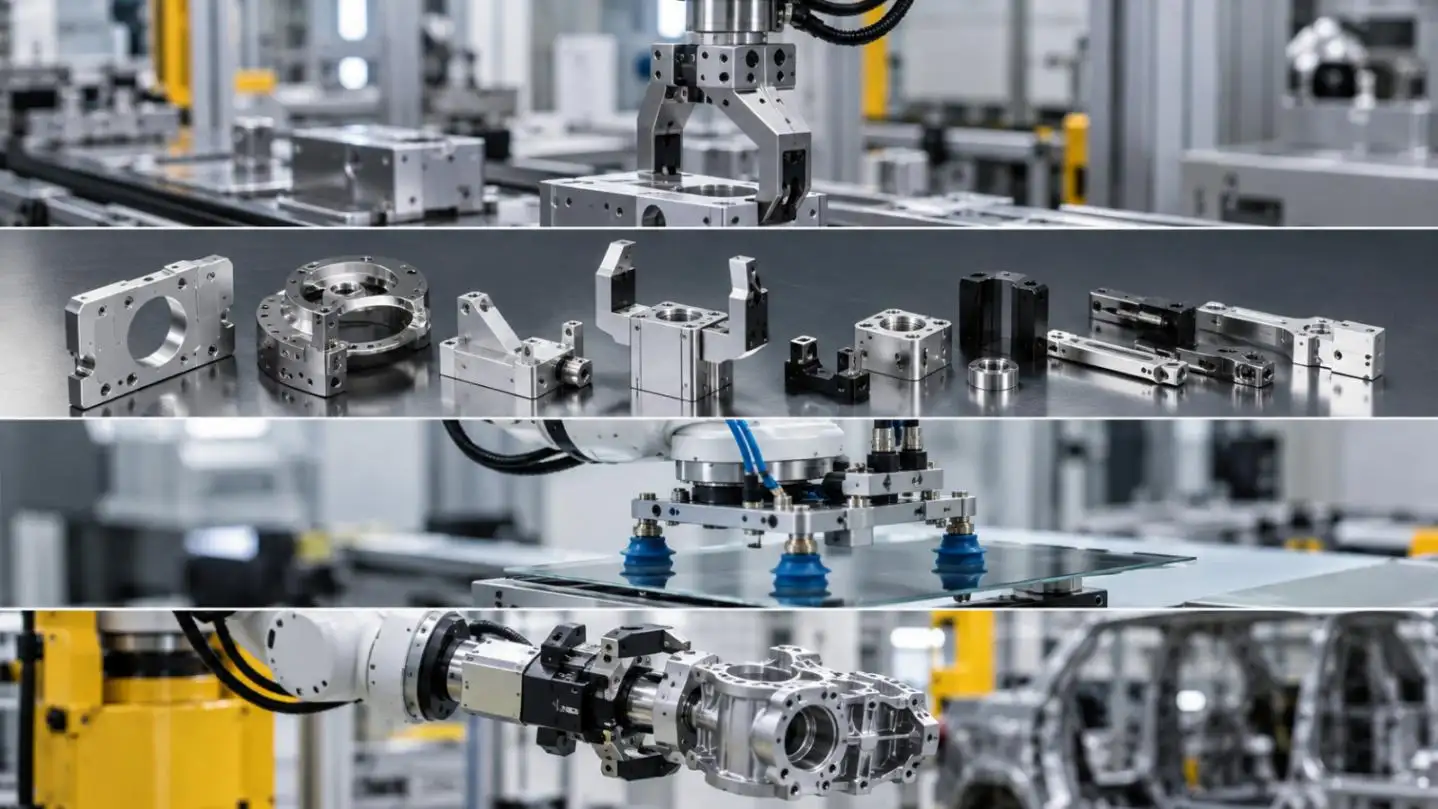 Industry Insights
Mechanical Automation Parts for Robot End Effectors and Positioning Accuracy
2026-09-23By KT Engineering