Contact Us
  Home /
 One-Stop Manufacturing Solutions For Chassis Enclosure Components


Table of Contents
- An Overview of Chassis Enclosure Components
- Integrated Manufacturing Processes for Chassis Enclosure Components
- Engineering Support from Prototype Development to Production
- Selection of Materials and Surface Finishing Process
- Manufacturing Expertise in Electronics and Industrial Applications
- Quality Control and Production Traceability

Modern electronic and industrial products demand enclosures that provide more than protection from the external environment. An effectively designed chassis provides the structural foundation, an interface for assembly, a platform for thermal management, and a layer of electromagnetic shielding.
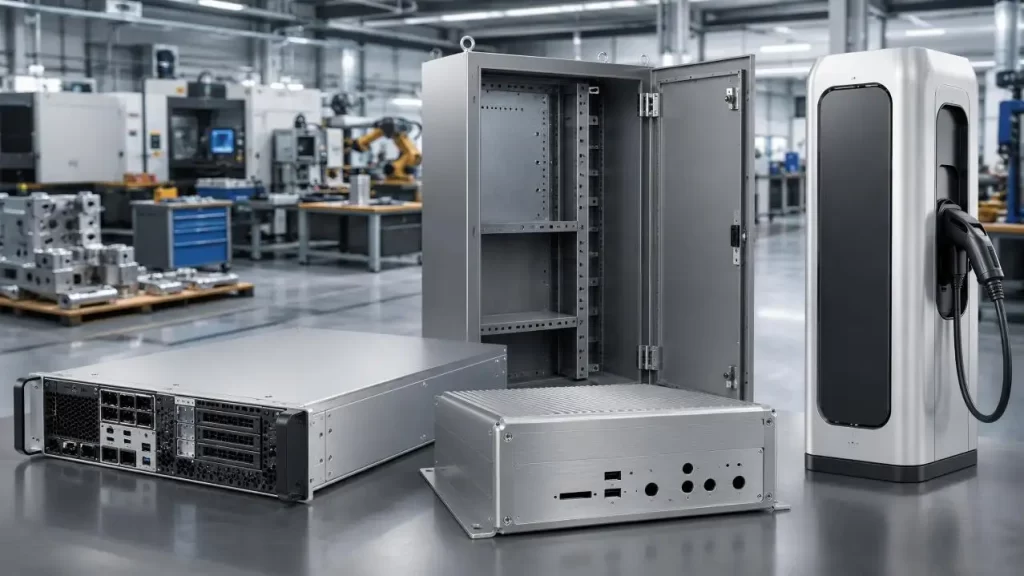
Complex and multiple supply chain management is often a challenge for many engineering teams. However, partnering with KT allows engineering teams to simplify and integrate the process from design to production. KT improves the production of the chassis enclosure components by providing the necessary manufacturing processes such as sheet metal fabrication, CNC machining, die casting, surfacing finishing and assembly.
An Overview of Chassis Enclosure Components
Chassis enclosure components are protective and supportive housings for both electronic and/or mechanical assemblies. They are common in many industries where high levels of precision in manufacturing, durability, thermal management, and a high standard finish are required.
Some examples of chassis enclosure components include:
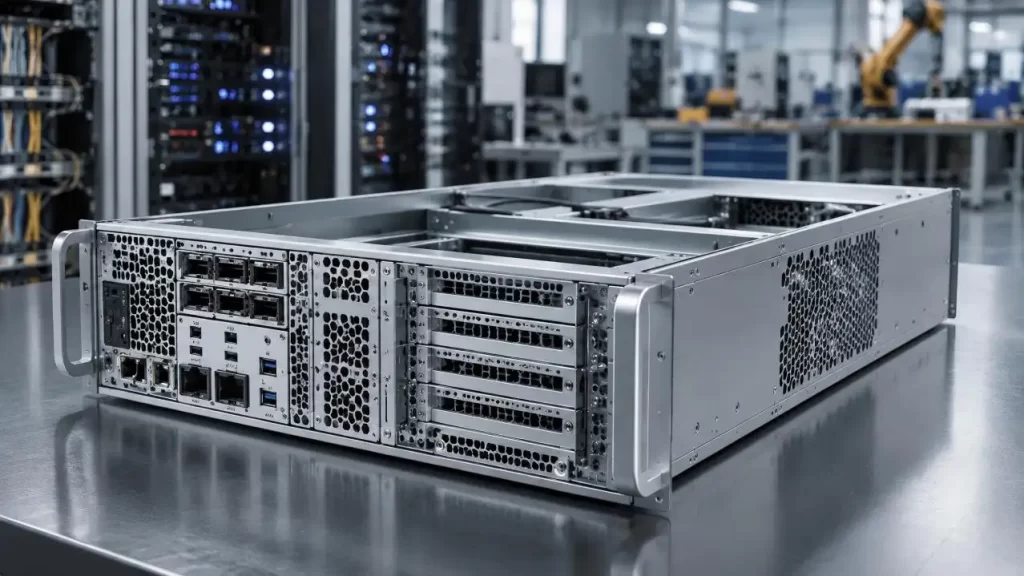
•Server and network equipment chassis
Large chassis are comprised of sheet metal assemblies that contain a variety of connectors and cable management systems as well as routing and cooling openings.
•Portable electronic devices
Enclosures are comprised of lightweight, rigid, precision assemblies with finish control.
•Industrial controls enclosures
Rugged housings provide EMI shielding for the equipment and protection for the occupational safety of the user for long term exposure in the industrial environment.
•Enclosures for EV charging and power equipment
Rugged protective housings combine structural and thermal management of the inner equipment while providing protection from the elements.
The design of a successful enclosure requires finding the optimum balance of the performance of the material, the manufacturing process, and the cost of production.
Integrated Manufacturing Processes for Chassis Enclosure Components
The unified engineering and quality management system means that the one-stop-manufacturing approach uses a range of different production technologies. The chosen processes are dependent on the part's geometry and material, as well as the production volume and the expected performance.
| Manufacturing Process | Key Characteristics | Typical Applications |
| Sheet Metal Fabrication | For large-area metal structures, the combination of laser cutting, CNC bending, welding, and assembly is suitable for the efficient production of thin-wall components of consistent geometry. | Rear panels, mounting brackets, electrical cabinets, and server chassis |
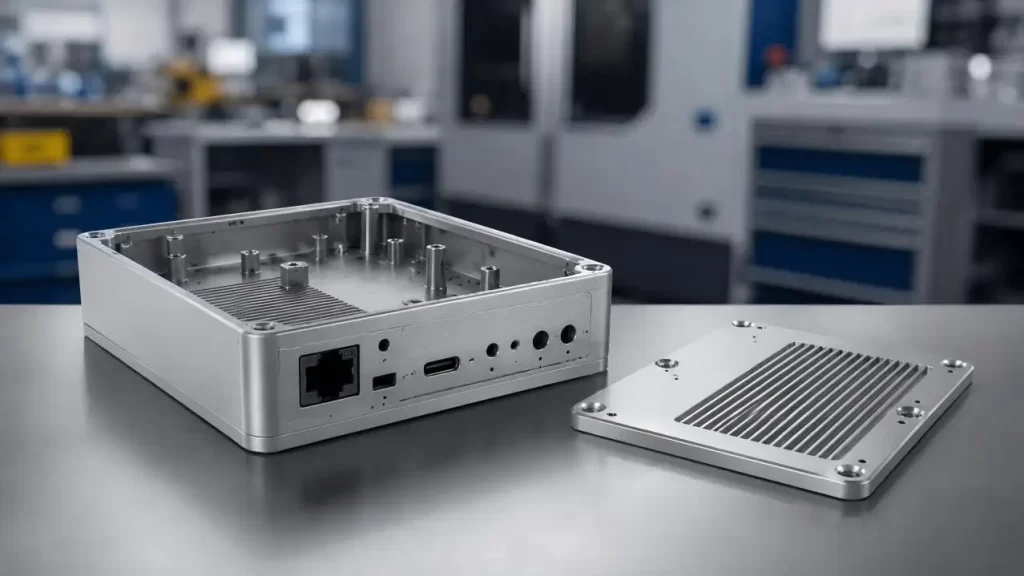
| CNC Machining | Multi-axis milling and turning processes are designed for complex structures, critical functional features, and precision interfaces. High-accuracy features typically achieve tolerances within ±0.01 mm depending on design requirements and material conditions. | Precision mounting components, connector interfaces, and aluminum frames |
| Die Casting | High-pressure die casting is suitable for production of complex shapes and large production volumes. Typical dimensional tolerance is dependent on the alloy, part size, and the design of the tooling. | Structural frames, heat dissipation housings, and covers for electronic devices |
| Additive Manufacturing | As a tool-free process, this method is suitable for rapid, low-volume designs and even prototypes. In some cases, prototype parts are produced in less than 24 hours. | Functional prototypes, customized enclosures, and design verification models |
While some processes may be optimized for a specific function, they are most often implemented in combination. An example of this is the fabrication of a chassis for communication equipment, which combines sheet metal fabrication for the main structure, CNC machined precision interfaces, and die cast thermal management features.
KT provides multiple manufacturing capabilities on a coordinated production route that spans from prototype validation to volume manufacturing.
Engineering Support from Prototype Development to Production
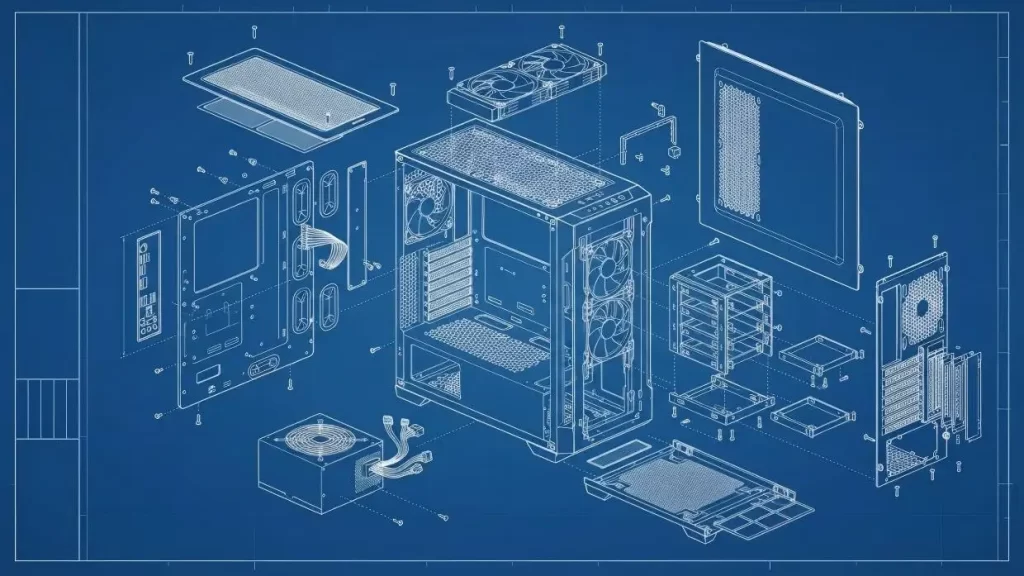
Moving a design from prototype to production requires much more than duplicating via CAD. Different behaviors of materials, assembly considerations, the limitations of various manufacturing processes, and differing Quality Control (QC) processes have to be taken into account.
Rapid Prototyping
For metal sheets and CNC machined chassis enclosures, rapid prototyping by KT allows engineering teams to test:
•Structural design
•Assembly
•Positioning of connectors
•Esthetic appearance
•Functionality
Based on the complexity of the component and the manufacturing technique employed, prototype samples are often completed within several business days.
Design for Manufacturing (DFM) Optimization
When quoting and during the engineering review, KT performs an initial assessment of:
•Uniformity of wall thickness
•Ease of machining
•Minimum achievable bend radii
•Individual piece tooling
•Required assembly fit
•DFM tolerances
DFM feedback is provided early allowing for design alterations to achieve a more manufacturable assembly while adhering to the original design concept.
Scalable Production Capability
With flexible manufacturing, projects can be completed within prototype, small, and medium production runs. All stages of the service can offer consistency of quality and control including optimization of the process of manufacturing.
Selection of Materials and Surface Finishing Process
The selection of materials for chassis enclosures has effect on strength, weight, thermal performance and aesthetics of the finished component.
Common Choices of Materials
• Aluminium Alloys:
6061 aluminium is preferred as it is readily machinable, has good corrosion resistance and anodizing ability. 7075 aluminium is good choice when high strength is required.
• Stainless Steel And Carbon Steel:
These options better suit applications when added stiffness, structural strength, or improved resistance to the elements is important.
• Engineering Plastics:
PEEK, polycarbonate, and other materials in this category are lightweight, provide resistance to chemicals and dominate in electrical insulation.
Surface Treatment Solutions
| Surface Treatment | Primary Benefits | Typical Uses |
| Bead Blasting + Anodizing | Provides a uniform finish and improved appearance with added corrosion resistance. | Aluminum consumer electronic housings and frames |
| PVD Coating | Creates a surface finish that is wear resistant with a decorative metallic appearance. | Exterior and cover components of high-end devices |
| Powder Coating | Protects a product surface from wear and exposure to the elements. | Used with outdoor products and electric vehicle charging housings |
| Laser Etching | Provides a means to mark a surface permanently with high precision and low disruption to the surface. | Used to create serial numbers and marks for logos or identification |
Manufacturing Expertise in Electronics and Industrial Applications
KT's manufacturing capability for chassis enclosure components for consumer electronics and industrial products, smart devices, and outdoor electrical products enables them to support a broad range of important manufacturing functions.
• Consistent Appearance Control:
Finishing methods for surfaces are controlled to ensure uniform texture and a high level of quality in the finished appearance of each production batch.
• Precision Assembly Reliability:
Interfaces and structures are machined to the defined tolerances to ensure assembly with high confidence in the functional performance of the product.
• Confidential Manufacturing Support:
Drawings and design data provided by customers are processed under controlled processes with Non-Disclosure Agreements and data management security.
Quality Control and Production Traceability
Chassis enclosure assemblies are subjected to inspection and testing during manufacturing and assembly processes.
KT implements a quality management process that involves
•Checking the quality of received materials
•Measurement and inspection during the process
•Checking the quality of surfaces
•Checking the assembly
•Provision of documents and data for traceability
Per project requirements, measuring and inspection equipment such as CMMs, precision measuring devices, and surface measuring devices are employed.
For sheet metal fabrication components, standard production tolerances are held +/- 0.2 mm, although CNC machined elements can be produced to tolerances of +/- 0.01 mm if required.
Material certificates and production documentation are used to trace components from the raw material batch to the finished product.
Partner With KT for Custom Chassis Enclosure Manufacturing
Attempting to harness the services of multiple suppliers to produce chassis enclosures typically results in a high degree of process management and a lack of consistency in final product quality. KT integrates the entire chassis production process from design evaluation to fabrication, machining, finishing, and inspection.
KT combines sheet metal fabrication, CNC machining, die casting, and surface finishing to help customers develop chassis enclosure components that meet requirements.
Reach out to KT to review your project chassis enclosure and manufacturing requirements.
FAQs
Q1. What are typical CNC automation components' fabrication materials?
These components are typically comprised of aluminum, stainless steels, carbon steels, brass, and some engineering plastics.
Q2. What criteria should be used to determine the materials used for automation components?
The materials used to fabricate automation components are generally based on the loads to be encountered, the conditions of the working environment, the required tolerances, and quantity produced.
Q3. Can aluminum be used to fabricate parts for CNC automation?
Yes. Aluminum is lightweight, easily machined, and has good corrosion resistant properties.
Q4. In what situations should automation components be made of stainless steel?
Stainless steel should be used when the components need to be of a larger strength, abrasion resistant, and need to be protected from corrosion.
Q5. Will machining a material with a high degree of hardness be less accurate?
Yes. The effects of high material hardness and low thermal stability on machining will be negatively impacted.
- PREV: custom metal stamping
- NEXT: Custom Metal Stamping Services
Talk to the Manufacturer, Not a Middleman
Resources & Insights
-
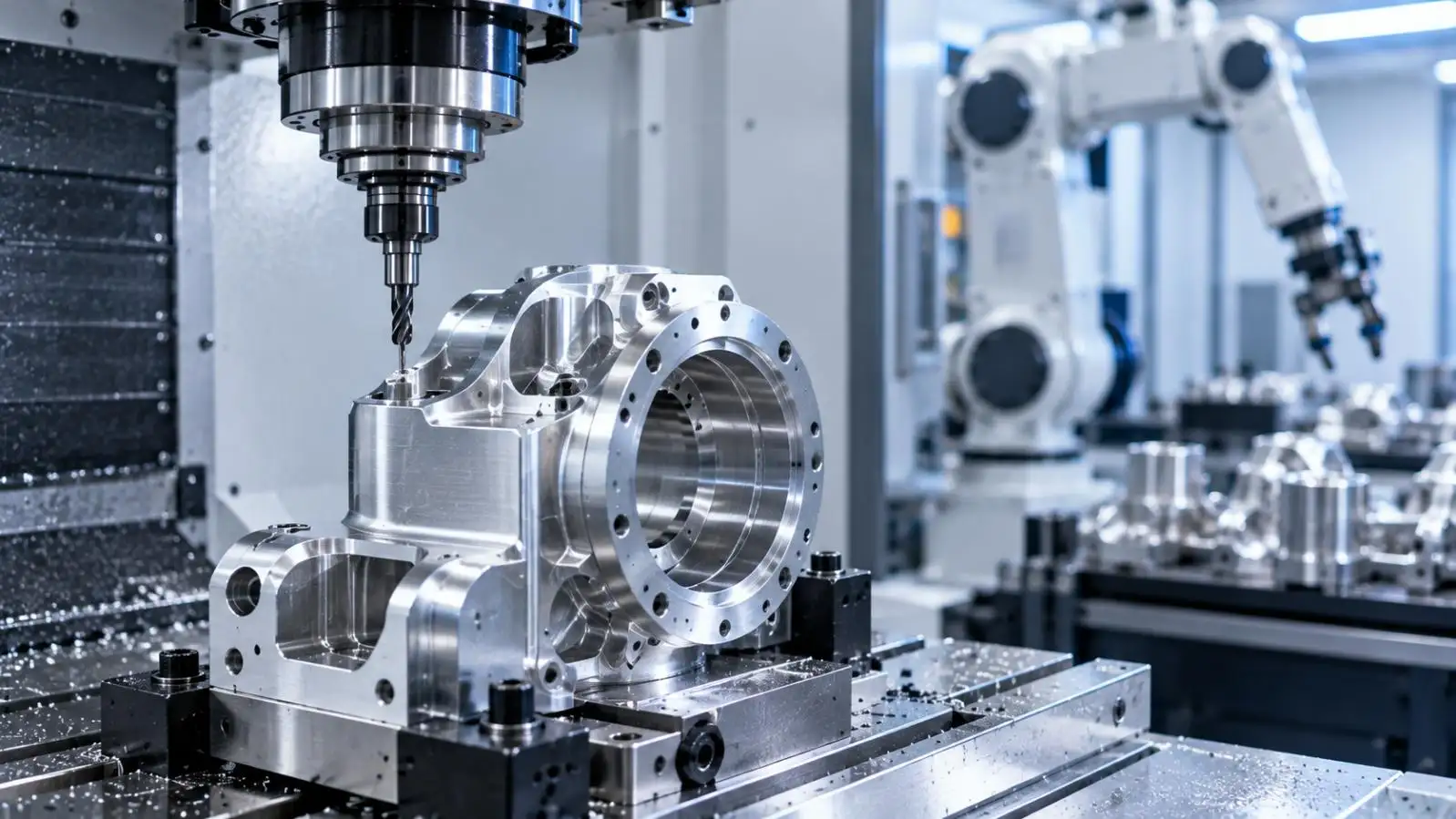 Industry Insights
CNC Machining Robotic Parts: How GD&T Controls Robot Assembly Accuracy
2026-09-24By KT Engineering -
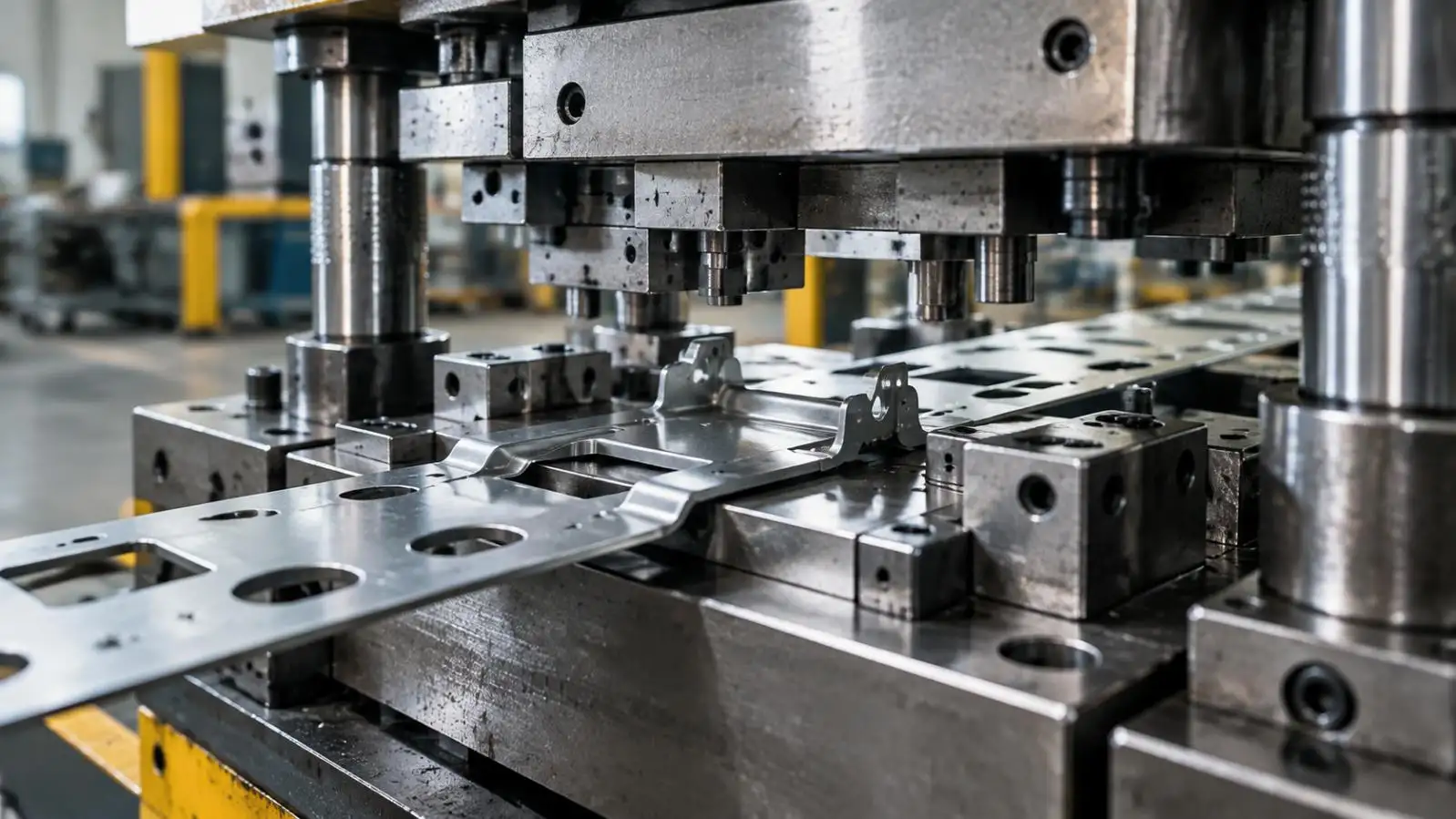 Industry Insights
Hardware Stamping Springback Control for High-Strength Steel Parts
2026-09-24By KT Engineering -
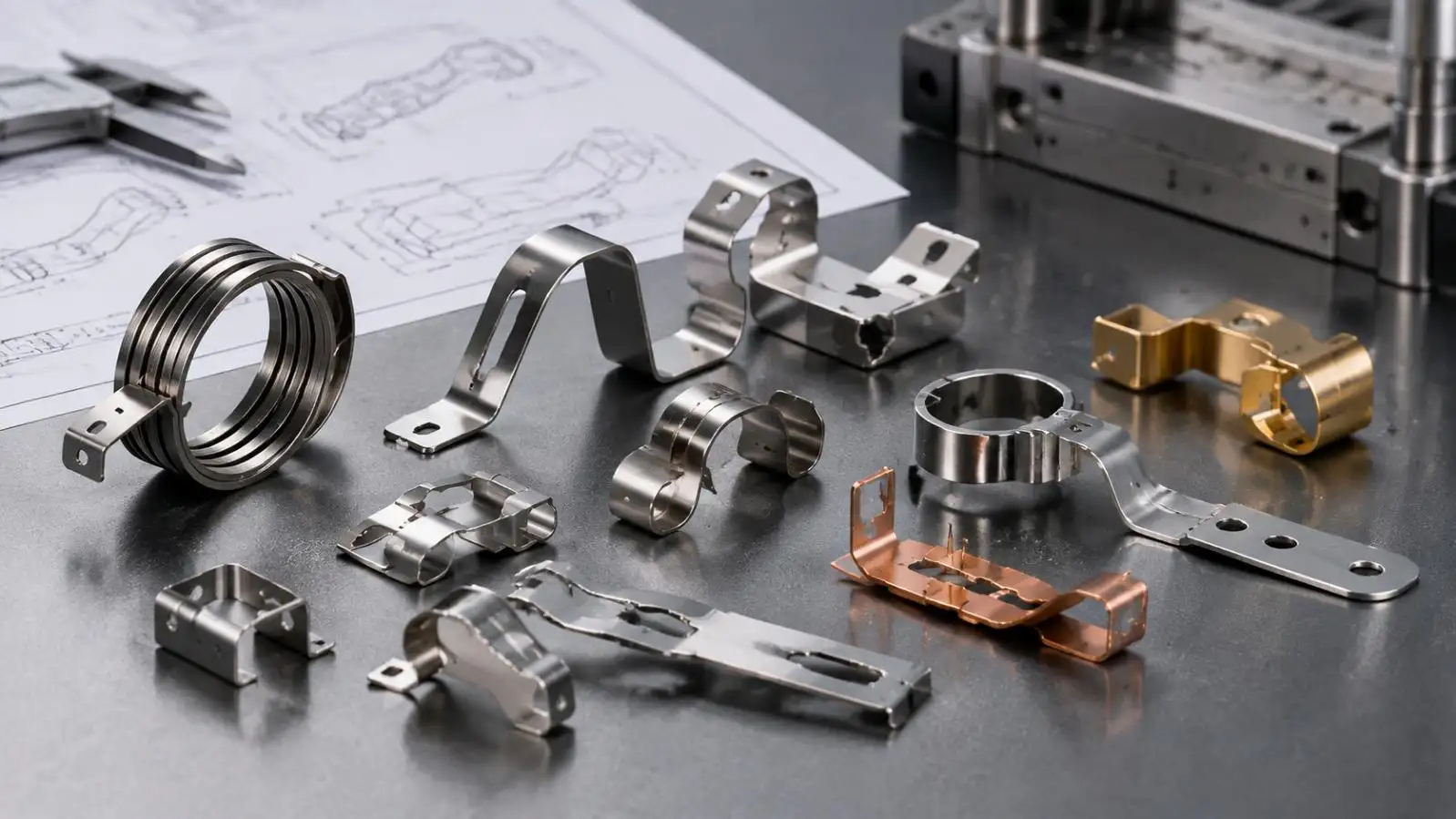 Industry Insights
Spring Stamping Fatigue Life: How Geometry, Material and Edge Quality Affect Cycle Life
2026-09-24By KT Engineering -
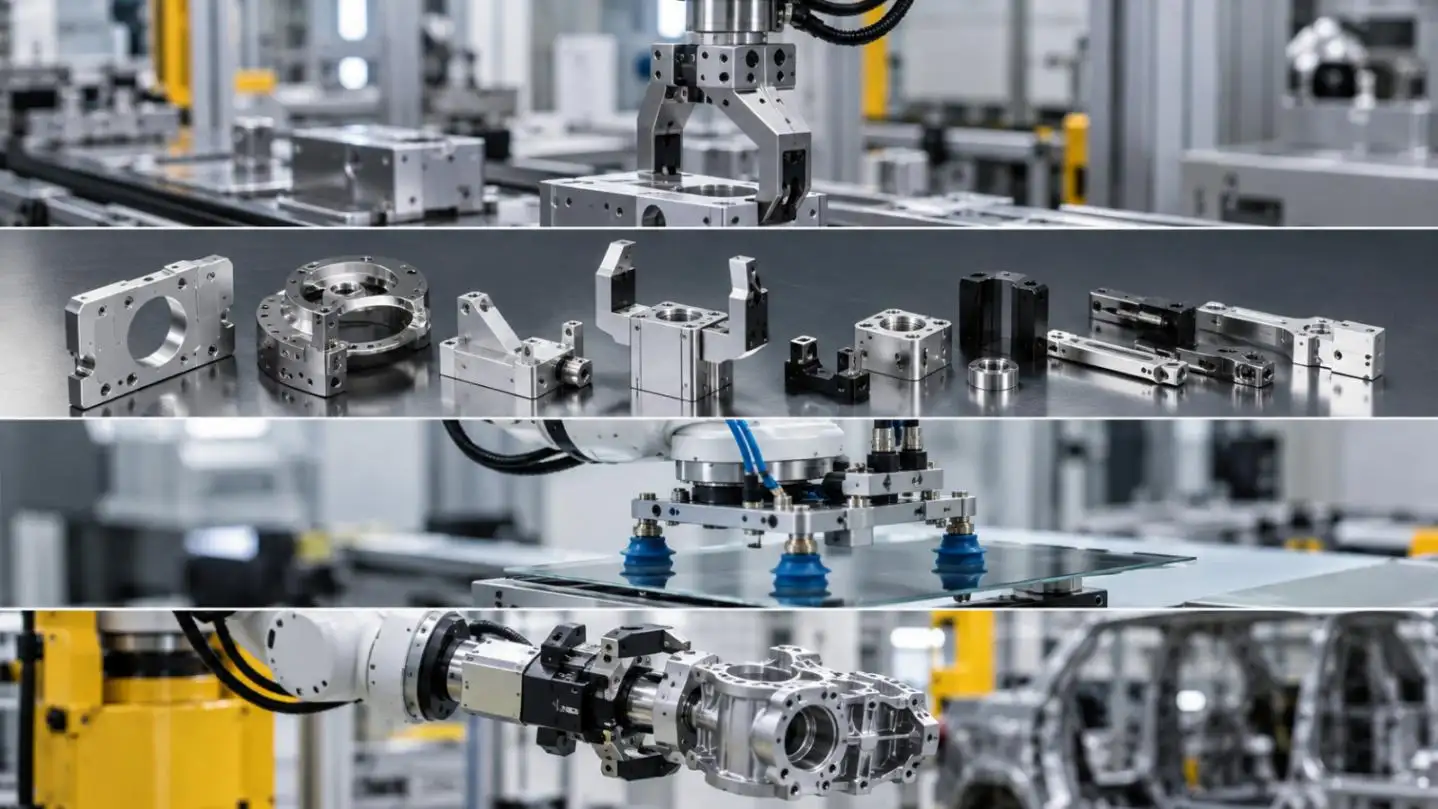 Industry Insights
Mechanical Automation Parts for Robot End Effectors and Positioning Accuracy
2026-09-23By KT Engineering