Contact Us
  Home /
 custom metal stamping


Table of Contents
- What Is Custom Metal Stamping?
- Types of Custom Metal Stamping
- Common Metal Stamping Operations
- Materials Used in Custom Metal Stampings
- Industries That Depend on Metal Stamping
- Benefits of Custom Metal Stampings
- Quality Control in Precision Metal Stamping
- Choosing the Right Custom Metal Stamping Partner
- Final Thoughts

Custom metal stamping is one of the most effective and cost competitive metalwork manufacturing processes that enable the creation of high quality repeatable metal parts at low costs. Precision metal stamping is used in various industries to produce high-precision components, such as automotive brackets, electronic terminals, medical devices, and industrial hardware, with a high degree of accuracy and repeatability.
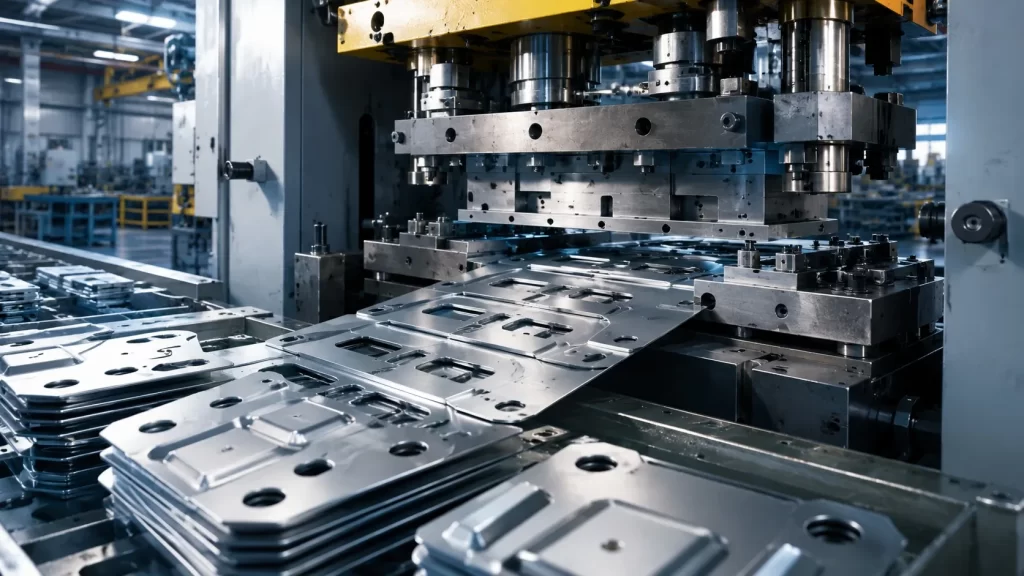
Knowing the capabilities, materials and benefits of custom metal stamping helps narrow down the options to create the perfect manufacturing solution for a new product or scaling up production.
What Is Custom Metal Stamping?
The custom metal stamping process is a way to use a specially designed die and high tonnage stamping press to create a precise component from a flat sheet of metal. It is a process in which cutting, forming, bending, punching, embossing and drawing are all performed in a single step to create parts with precision dimensional requirements.
Metal stamping is a high-speed, efficient manufacturing process that uses a press to form metal pieces, unlike conventional cutting.
Today's stamping systems incorporate the latest in CAD/CAM designed tooling, feed automation and precision stamping presses that can produce consistent parts to tight tolerances, and thousands – even millions – of parts on one single tool. Those manufacturers who have their own tooling facility can have further reductions in the lead time for the dies to be designed and built and can also improve the efficiency of the production process by maintaining their own custom dies.
Types of Custom Metal Stamping
The choice of the stamping method depends on the complexity of the parts, the number of parts to be produced, the material used, and the budget.
Progressive Die Stamping
Progressive die stamping is a production method used more than ever in high volume production. A strip of metal is fed continuously through several stations within a single set of dies. Each station carries out a different process/operation, for example:
- Punching
- Piercing
- Forming
- Bending
- Coining
- Cutting
There is little need for operator intervention in the final station to get the finished product.
Best Applications
- Electrical contacts
- Automotive clips
- Brackets
- Electronic housings
- Precision hardware
Advantages
- Extremely high production speed
- Excellent repeatability
- Lower labor costs
- Minimal material waste
Transfer Die Stamping
In a transfer stamping operation, individual workpieces are moved from station to station between different tooling.
The process is suitable for complex or large parts that require complex forming processes.
Common Applications
- Structural automotive parts
- Appliance components
- Heavy-duty brackets
- Complex industrial assemblies
Benefits include greater design flexibility and improved forming capability for intricate geometries.
Deep Draw Stamping
Deep drawing is a process in which a flat blank is formed into a three-dimensional shape by pressing it into a hole in a special work piece called a die.
This provides structural integrity and components with considerable depth.
Typical products include:
- Metal enclosures
- Cylindrical housings
- Medical containers
- Aerospace components
- Battery cases
Common Metal Stamping Operations
Most custom parts require multiple manufacturing operations performed during a single production cycle.
Blanking
Blanking cuts the desired shape from sheet metal. The removed piece becomes the finished workpiece.
Punching
Punching creates holes or internal openings while the removed material becomes scrap.
Bending
Metal sheets are formed into specific angles, including:
- L bends
- U bends
- V bends
- Offset bends
Forming
Forming reshapes flat material into three-dimensional profiles without removing material.
Embossing
Embossing creates raised or recessed patterns for logos, identification marks, strengthening ribs, or decorative features.
These operations can often be combined into one tooling system, significantly improving manufacturing efficiency.
Materials Used in Custom Metal Stampings
Choosing the right material directly affects product performance, durability, corrosion resistance, and manufacturing cost.
Stainless Steel
Ideal for:
- Medical equipment
- Food processing
- Marine applications
- Corrosion-resistant products
Carbon Steel
Offers:
- High strength
- Excellent durability
- Low material cost
Suitable for structural applications and industrial equipment.
Cold Rolled Steel
Known for:
- Smooth surface finish
- Excellent dimensional accuracy
- Good formability
Hot Rolled Steel
Provides an economical solution for heavier-duty components where surface finish is less critical.
Aluminum
Lightweight and corrosion resistant, aluminum is widely used in:
- Aerospace
- Electronics
- Consumer products
- Transportation
Copper and Brass
Excellent electrical conductivity makes these materials ideal for:
- Connectors
- Electrical terminals
- Bus bars
- Electronic components
Specialty Alloys
Nickel alloys, titanium, and other engineered metals are selected for demanding environments requiring superior heat resistance or mechanical performance.
Industries That Depend on Metal Stamping
Precision metal stampings serve virtually every major manufacturing sector.
Automotive
Applications include:
- Mounting brackets
- Engine components
- Seat mechanisms
- Electrical connectors
Aerospace
Manufacturers require lightweight, high-strength stamped components that meet rigorous quality standards.
Medical Devices
Precision is essential for surgical instruments, diagnostic equipment, and implantable device components.
Electronics
Metal stamping produces:
- EMI shielding
- Battery contacts
- Connectors
- Heat sinks
- Terminal pins
Industrial Equipment
Heavy machinery depends on durable stamped components for long-term reliability.
Construction
Stamped metal parts are commonly used in:
- Fasteners
- Structural connectors
- HVAC systems
- Building hardware
Benefits of Custom Metal Stampings
High Production Efficiency
Modern stamping presses can produce thousands of parts per hour, dramatically reducing manufacturing costs for large production runs.
Exceptional Precision
Advanced tooling enables manufacturers to maintain extremely tight tolerances while ensuring every part remains consistent.
Cost Savings
Although tooling requires an initial investment, unit costs decrease substantially as production volume increases.
Minimal Material Waste
Optimized die layouts maximize sheet utilization, reducing scrap and lowering raw material expenses.
Repeatable Quality
Automation ensures every component matches design specifications throughout the production run.
Flexible Design Options
Complex geometries that would require multiple machining operations can often be produced in one stamping process.
Quality Control in Precision Metal Stamping
Quality assurance plays a critical role in custom manufacturing.
Leading manufacturers implement comprehensive inspection systems that may include:
- First article inspection (FAI)
- In-process dimensional verification
- Coordinate measuring machine (CMM) inspection
- Statistical Process Control (SPC)
- Material certification
- Final quality audits
Additionally, many precision stamping manufacturers hold internationally recognized quality management certificates, such as ISO 9001, AS9100 or ISO 13485, for highly regulated industries.
Choosing the Right Custom Metal Stamping Partner
Not all manufacturers offer the same capabilities. Consider these factors before selecting a supplier:
- Engineering support
- In-house tool and die design
- Press capacity
- Material expertise
- Secondary operations
- Prototyping capabilities
- Production scalability
- Quality certifications
- Lead time performance
- Industry experience
A single-source supplier that can offer design help, tooling, stamping, finishing and assembly is better equipped to communicate, deliver faster lead times and lower overall costs.
Final Thoughts
Custom metal stamping is still one of the best and most cost effective methods to manufacture precision metal components in large quantities. Using advanced tooling, automated manufacturing and a variety of materials, manufacturers can obtain exceptional dimensional accuracy, rapid production and long-term cost savings.
From progressive die stamping to transfer stamping and deep drawing, a skilled precision metal stamping manufacturer can deliver with quality working parts that satisfy rigorous industry requirements. In today's manufacturing environment, businesses can leverage the appropriate process, material and manufacturing partner to enhance product quality, lower production costs and shorten time to market.
Talk to the Manufacturer, Not a Middleman
Resources & Insights
-
 Hide blog post
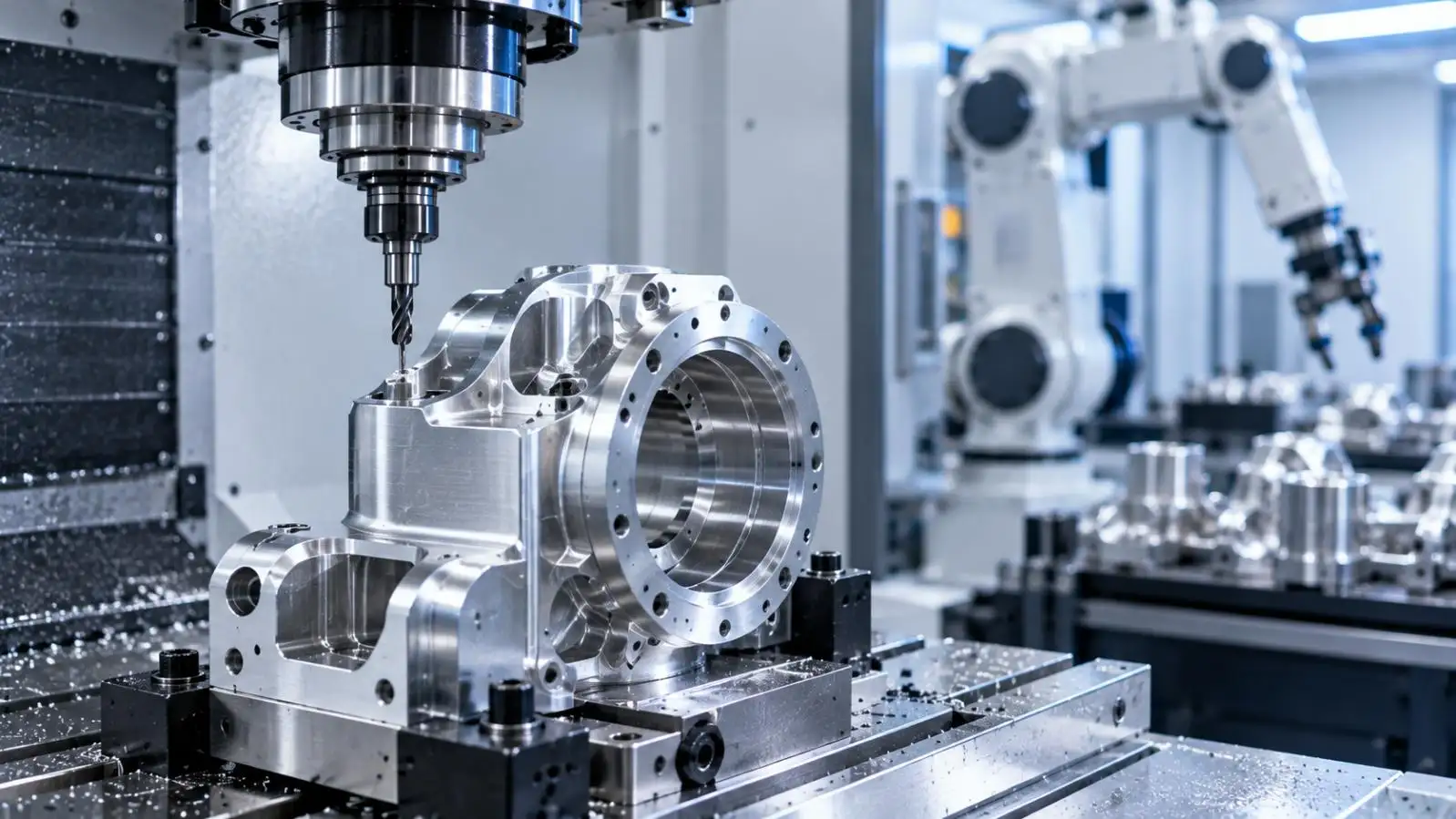
CNC Machining Robotic Parts: How GD&T Controls Robot Assembly Accuracy
2026-09-24By KT Engineering -
 Hide blog post
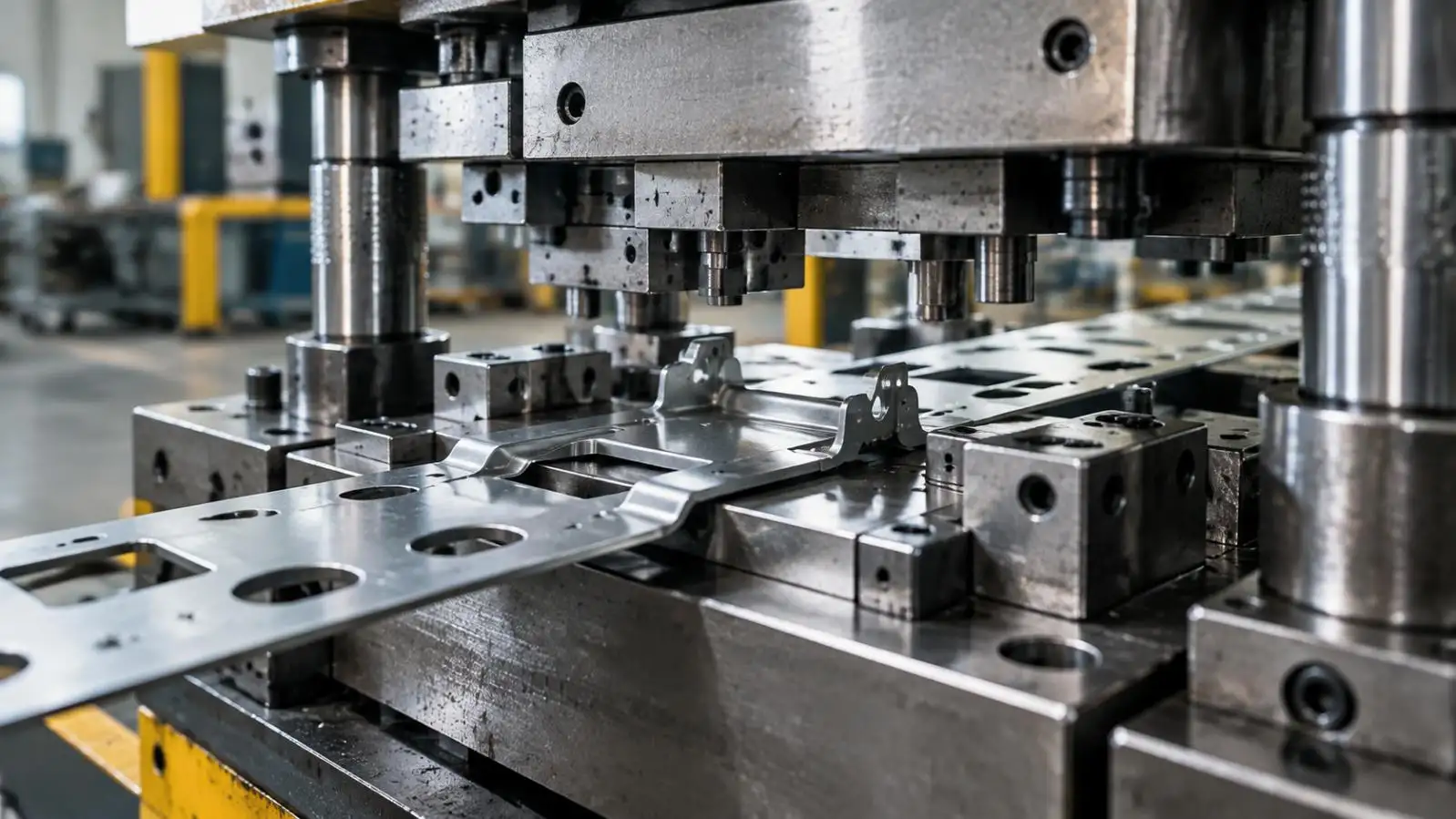
Hardware Stamping Springback Control for High-Strength Steel Parts
2026-09-24By KT Engineering -
 Hide blog post
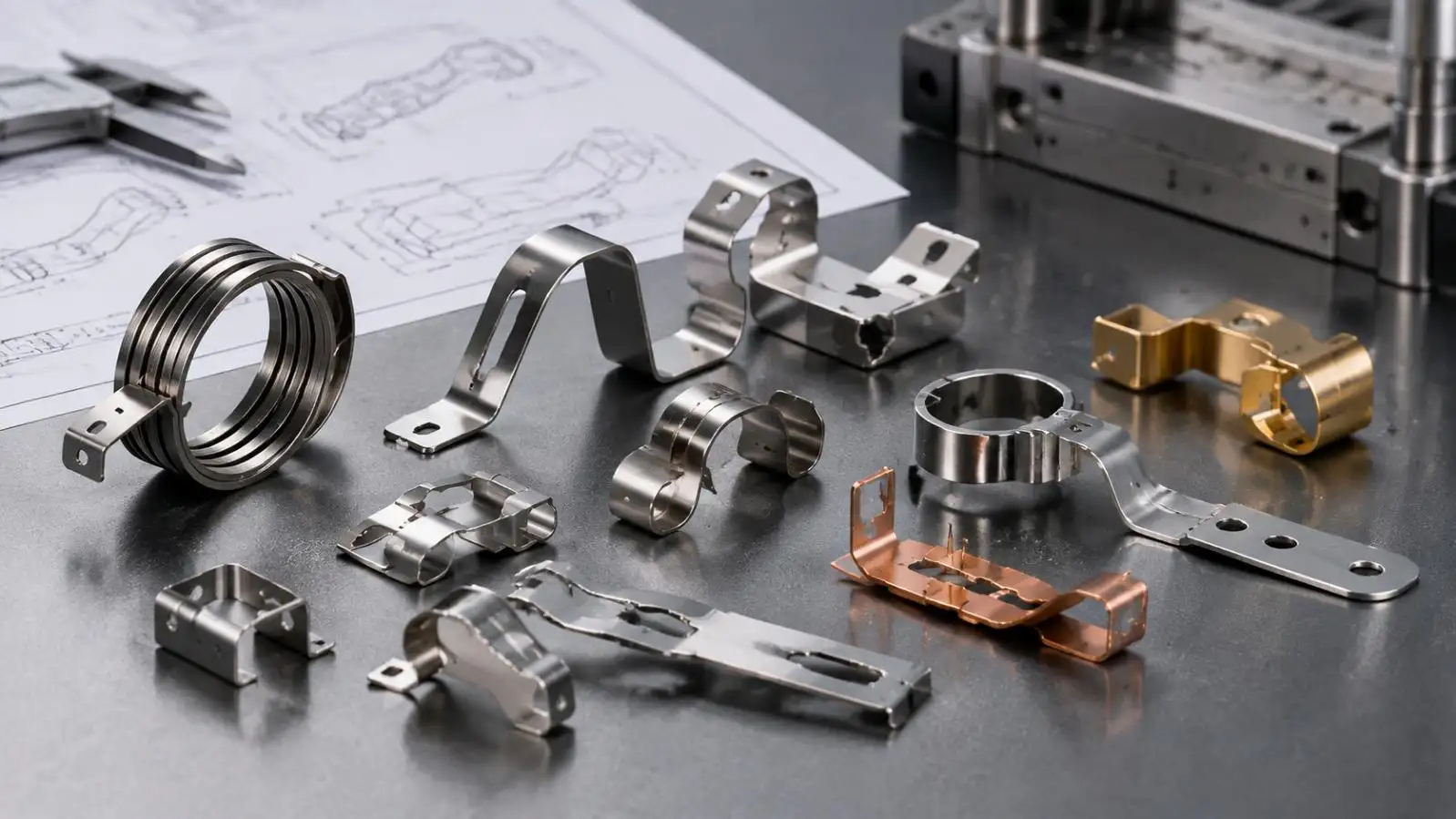
Spring Stamping Fatigue Life: How Geometry, Material and Edge Quality Affect Cycle Life
2026-09-24By KT Engineering -
 Hide blog post
Mechanical Automation Parts for Robot End Effectors and Positioning Accuracy
2026-09-23By KT Engineering