Contact Us
  Home /
 cnc plasma cutting machine


Table of Contents
- Understanding CNC Plasma Cutting
- How a CNC Plasma Cutter Works
- Key Components of a CNC Plasma Cutter
- Advantages of CNC Plasma Cutting
- Limitations of CNC Plasma Cutting
- Common Applications of CNC Plasma Cutters
- CNC Plasma Cutter vs Other Cutting Methods
- Role of Leading Manufacturers
- Future Trends in CNC Plasma Cutting
- Conclusion

The CNC plasma cutting machine is one of the most popular machines in modern metalworking, that includes high-speed thermal cutting and computer numerical control (CNC) automation. It is used to precisely, quickly and efficiently cut electrically conductive materials, such as steel, stainless steel, aluminum, brass and copper. The CNC plasma cutting is an essential manufacturing technology in the industries where accuracy and productivity are required.
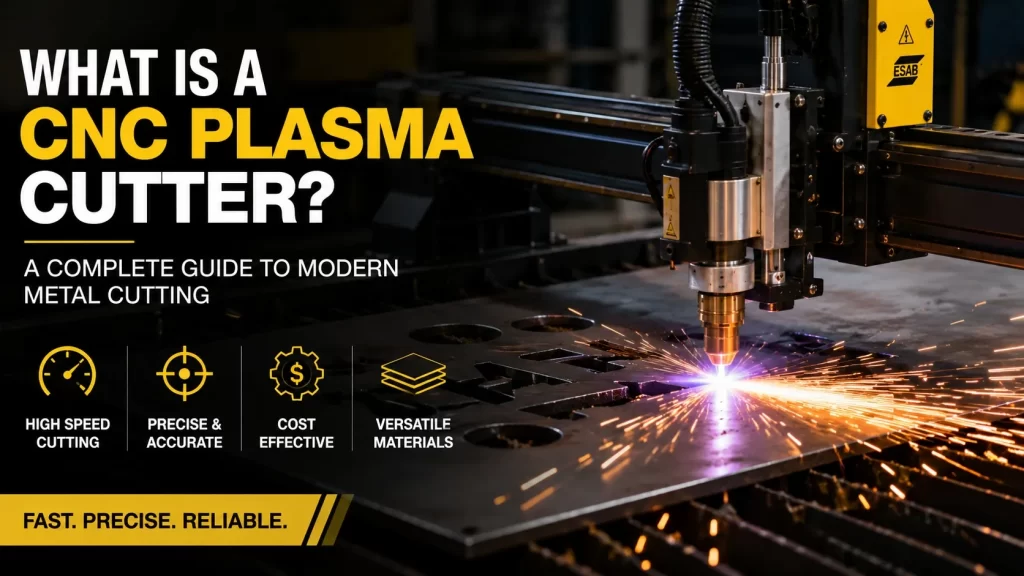
This article will give a description of a CNC plasma cutter, how it works, the key components, benefits, applications and compare it with other cutting solutions used in industrial production.
Understanding CNC Plasma Cutting
CNC plasma cutting is a cutting process in which a high-speed cut of ionized gas (plasma) cuts through the metal. The 'CNC' stands for computer numerical control, which means that the path the cutting tool is to follow is programmed into software and the machine automatically follows it.
A plasma cutting machine is used to cut through the material by sending an electric arc through a gas (compressed air, oxygen or nitrogen). This gas ionizes and becomes plasma, reaching very high temperatures (usually over 20,000°C or 36,000° F). The molten metal is blown away by the very fast gas flow and a clean cut is made while the plasma melts the metal.
The cutting torch, in combination with CNC automation, tracks the precise digital instructions and so, with little manual input, the manufacturer can create complex shapes with repeatability.
How a CNC Plasma Cutter Works
The basic steps of CNC plasma cutting are as follows:
1. Design and Programming
The first step is to create a part design via CAD software. The design is then transformed into machine readable instructions through CAM (Computer-Aided Manufacturing) software. The following instructions are used to guide the cutting path.
2. Arc Ignition
The CNC plasma cutting machine creates an electrical arc between the electrode and the workpiece. This arc raises the gas to the point where it is ionized and becomes plasma.
3. Plasma Jet Formation
The plasma is accelerated through a narrow nozzle at high velocity, generating a jet of plasma which can melt metal instantaneously.
4. Cutting Process
The CNC system guides the torch to move in the desired path and precisely cuts the material in this way.
5. Material Removal
The gas stream sucks up molten metal, creating a clean and precise edge.
Key Components of a CNC Plasma Cutter
A CNC plasma cutting system typically includes:
CNC Controller
The “brain” of the system, which interprets digital instructions and controls movement.
Plasma Power Supply
Provides the electrical energy required to generate the plasma arc.
Plasma Torch
The handheld or machine-mounted tool that produces and directs the plasma jet.
Air or Gas Supply
Compressed air or gases such as nitrogen or oxygen are used to create and stabilize the plasma arc.
Cutting Table
A stable platform where the metal workpiece is placed. Many modern systems include water tables or downdraft systems to control fumes and debris.
Motion System
Motors, rails, and drives that ensure precise movement along X, Y, and sometimes Z axes.
Advantages of CNC Plasma Cutting
CNC plasma cutting is widely used because of its strong balance between cost, speed, and versatility.
High Cutting Speed
Plasma cutting is significantly faster than traditional oxy-fuel cutting, especially on thin to medium-thickness metals.
Excellent Precision
CNC control allows for accurate cuts, tight tolerances, and repeatable results.
Lower Operating Costs
Compared to laser cutting, plasma systems generally have lower initial investment and maintenance costs.
Versatility in Materials
It can cut any electrically conductive metal, making it suitable for a wide range of industries.
Automation and Efficiency
Once programmed, CNC systems reduce manual labor and increase production efficiency.
Limitations of CNC Plasma Cutting
While highly effective, CNC plasma cutting also has some limitations:
- It is not suitable for non-conductive materials like wood or plastic.
- Edge quality may not be as smooth as laser cutting, especially on thicker metals.
- Heat-affected zones (HAZ) can be larger compared to advanced laser systems.
- Precision decreases slightly on extremely thick materials.
Despite these limitations, plasma cutting remains a preferred choice for many industrial applications due to its cost-effectiveness and speed.
Common Applications of CNC Plasma Cutters
CNC plasma cutting is used across multiple industries worldwide, including manufacturing hubs in the United States, Europe, and Asia.
Metal Fabrication
Used for cutting structural steel components, brackets, frames, and custom parts.
Automotive Industry
Helps produce chassis parts, exhaust systems, and body components.
Shipbuilding
Used for cutting large steel plates and structural sections for ships.
Construction
Essential for creating steel beams, supports, and architectural metalwork.
Agriculture Equipment
Used in manufacturing tractors, plows, and heavy machinery components.
Art and Custom Design
Artists and designers use CNC plasma cutters to create decorative metal signs and sculptures.
CNC Plasma Cutter vs Other Cutting Methods
Understanding how CNC plasma cutting compares to other technologies helps manufacturers choose the right solution.
Plasma vs Laser Cutting
- Laser cutting offers higher precision and smoother edges.
- Plasma cutting is faster and more cost-effective for thicker materials.
Plasma vs Oxy-Fuel Cutting
- Plasma works on all conductive metals, including aluminum.
- Oxy-fuel is limited mainly to steel and is slower.
Plasma vs Waterjet Cutting
- Waterjet cutting produces no heat-affected zone.
- Plasma cutting is faster and more affordable but introduces heat into the material.
Each method has its strengths, but plasma cutting remains a balanced solution for general industrial use.
Role of Leading Manufacturers
Pioneering companies such as ESAB are leading the way in plasma cutting technology. The systems are highly relied upon in industrial fabrication for their reliability, performance, and innovation in cutting solutions.
If you'd like to learn more about the technicalities and industry information, check out the official ESAB education resources:
This guide explains how to use the ESAB University CNC Plasma Cutter.
Future Trends in CNC Plasma Cutting
Automation, digitalisation and smart manufacturing are shaping the future of CNC plasma cutting.
Smart CNC Systems
Modern machines now include AI-assisted path optimization and real-time monitoring.
Improved Cut Quality
The development of torch technology and gas control systems continues to help edge quality.
Integration with Industry 4.0
Production tracking and predictive maintenance are increasingly done in the cloud.
Energy Efficiency
New power supplies are engineered to lower power usage while retaining cutting power.
Conclusion
CNC plasma cutting machine is a powerful, efficient and versatile machine that has revolutionized the modern metal fabrication industry. Its ability to use high-temperature plasma technology in a CNC automated environment makes it a tool for efficient and precise cutting of conductive metals in a variety of industries.
It is not quite as accurate as laser cutting at the finest of tolerances, but it is a necessary tool for manufacturers around the world due to its cost, speed and flexibility. With the ongoing development of automation and digital manufacturing, CNC plasma cutting will play an important role in industrial manufacturing systems for years to come.
Talk to the Manufacturer, Not a Middleman
Resources & Insights
-
 Hide blog post
CNC Machining Robotic Parts: How GD&T Controls Robot Assembly Accuracy
2026-09-24By KT Engineering -
 Hide blog post
Hardware Stamping Springback Control for High-Strength Steel Parts
2026-09-24By KT Engineering -
 Hide blog post
Spring Stamping Fatigue Life: How Geometry, Material and Edge Quality Affect Cycle Life
2026-09-24By KT Engineering -
 Hide blog post
Mechanical Automation Parts for Robot End Effectors and Positioning Accuracy
2026-09-23By KT Engineering