Contact Us
  Home /
 Custom Sheet Metal Parts Manufacturer For Precision Engineering


Table of Contents
- The Importance of DFM in Sheet Metal Fabrication
- Concentrated on 2026 Manufacturing Vision
- 2026-Centric Manufacturing Capabilities
- Comprehensive Solutions for Sheet Metal Fabrication
- Precision that Meets the Demands of Real-World Assemblies
- Materials and Surface Finishes for Functionality
- Integrated Manufacturing

KT, a Custom Sheet Metal Parts Manufacturer built on the principles of DFM (Design for Manufacturability), aids instructors and facilitates the engineering and procurement teams by converting CAD designs into viable manufacturable designs. Our controlled processes with flexible manufacturing capacity are available to help you.
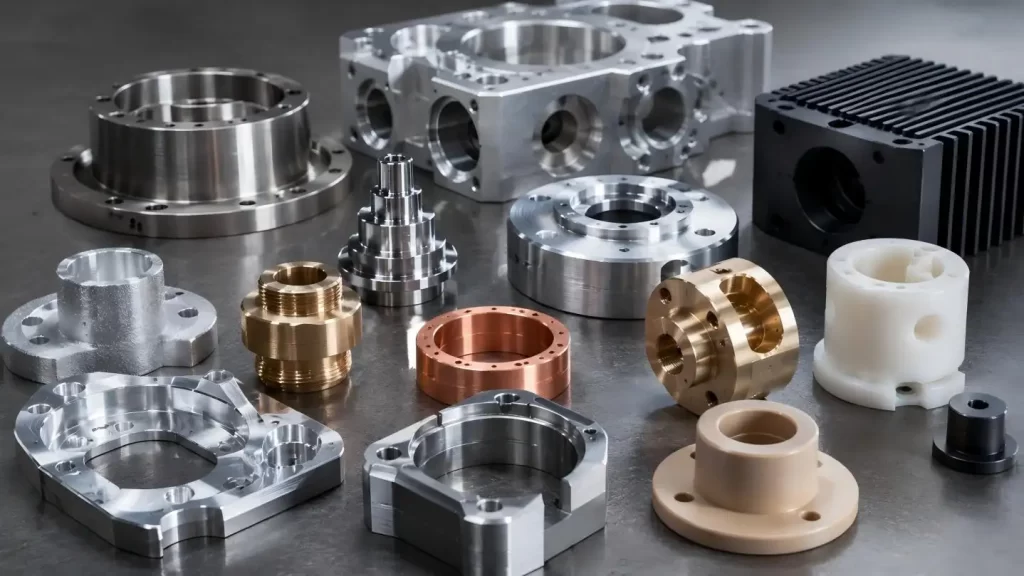
Starting in 2026, the sourcing landscape will no longer consider cutting and bending as features. Buyers will consider the entirety of manufacturability planning, tolerance and performance strategy, material selection and optimization, purposeful documentation, IP shielding, and the entirety of the validation to stabilization transition in production runs.
For sheet metal fabrication, the true value that a service can offer lies in the engineering of the part's manufacturability and the seamless integration of assembly, performance, and production.
In that regard, KT's DFM approach serves a critical purpose for OEMs, product developers, and sourcing teams worldwide.
The Importance of DFM in Sheet Metal Fabrication
As simple as sheet metal parts may appear in CAD, manufacturability is a web of engineering concerns including but not limited to bend radius, thickness, spacing, flanges, grain direction, weld/order of operations, and the finish.
There is no shortage of sources that provide guidance in sheet metal design, including Autodesk. These sources emphasize the importance of DFM in the conversion of a digital model into a manufactured component.
By integrating DFM early in our production cycle, KT helps customers minimize the need for redesigns while making the production process more stable.
Core Components for DFM Review
• Manufacturability Review: Analyzes how design choices may create challenges for both manufacturing and assembly operations.
• Tolerance Definition: Strives to match the cutting and bending tolerances to the welding and assembly tolerances to suit the process.
• Support with the Selection of Material: Assists in the selection of aluminum, stainless steel, carbon steel, copper, brass and titanium.
• Optimization of Production Readiness: Links the assessment of prototypes to the preparation for the planned scalable batch production.
Concentrated on 2026 Manufacturing Vision
The Manufacturing 2026 Vision forecasts an enhancement in the digital manufacturing technologies for flexible, integrated, and robust supply chains. Deloitte's publications expect continued investment in advanced manufacturing technologies and greater operational flexibility within global supply chains.
For buyers of manufactured sheet metal, these changes are beginning to impact the sourcing of sheet metal in the following ways:
• Quicker project turnaround time
• Stronger IP protection and on-demand data
• Increased documented assurance of quality
• Scalable contract manufacturing from prototype to production
KT meets these changes by offering Integrated Engineering and Process Controlled Manufacturing.
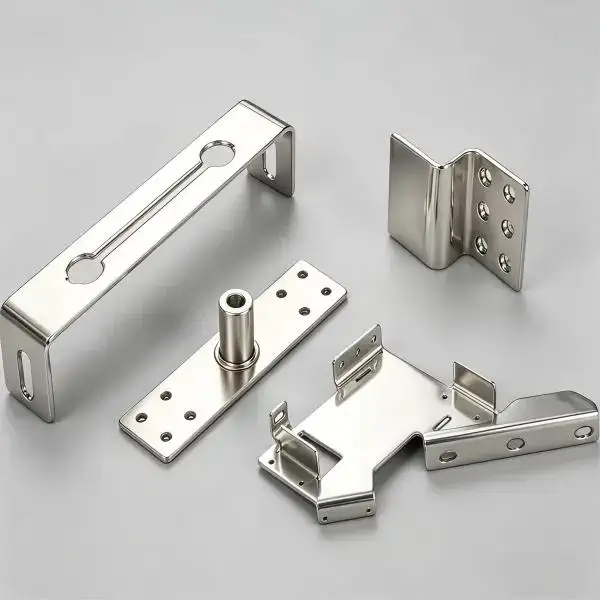
2026-Centric Manufacturing Capabilities
• Rapid Prototypes: Upon receipt of drawings and/or other necessary documentation, we are ready to support sampling within days, not weeks.
• IP Safe Process: We work under NDA, and we design with care to control our clients' design data.
• Production: Up, Down, or Sideways: We manufacture to meet your needs, be they prototypes, small batches, or large scale production.
• ISO 9001:2015 Quality Management System: Your products will be manufactured to meet the requirements of the ISO 9001 standard.
Comprehensive Solutions for Sheet Metal Fabrication
As fabricators of custom sheet metal products, KT constructs integrated systems that support the full range of steps from initial document preparation to cutting, joining, and finishing assemblies, as well as subcomponent inspection.
Fabrication Techniques
1.Cutting (Laser and CNC Controlled Punching)
Precision cutting for brackets, panels, enclosures, vents,, and other structural elements.
2.Bending (CNC Controlled Forming)
Multi-angle bending and forming to precise tolerances (typically process capability, around ± 0.5°)
3.Welding (TIG and Spot)
Stable assemblies for frames, housing, enclosures, and other needed structures.
4.Punching (CNC High Speed)
Repeatable holes, louvers, and other features for high production runs.
5.Forming and Stretching
Curvatures beyond a single sheet or deep-drawn structures.
5.Rolling
Forming and cutting along a curved surface or for cylindrical forms.
The guidelines for design of sheet metal structures emphasize maintaining a uniform material thickness and formability from a single sheet. KT employs these and other techniques in our design for manufacturing (DFM) service.
Precision that Meets the Demands of Real-World Assemblies
Sheet metal components serve a purpose beyond being individual parts in an end product. They achieve their purpose as part of a larger assembly, such as an electrical enclosure, an automation system, a medical device, the structure of a vehicle, or a piece of industrial machinery.
As integrated components of an assembly, all parts of a product must be dimensionally consistent to achieve the desired functional performance of the product and its assembly.
KT enhances assembly precision through:
• Accuracy in Controlled Cutting: Provides consistent dimensions of critical features
• High Precision Capability: Provides support for high precision and tight tolerances, depending on the constraints of the process
• Control of Bend Angle: Aligns the mating components
• Process-Based Inspection: Verifies that the key dimensions conform to the technical and functional requirements
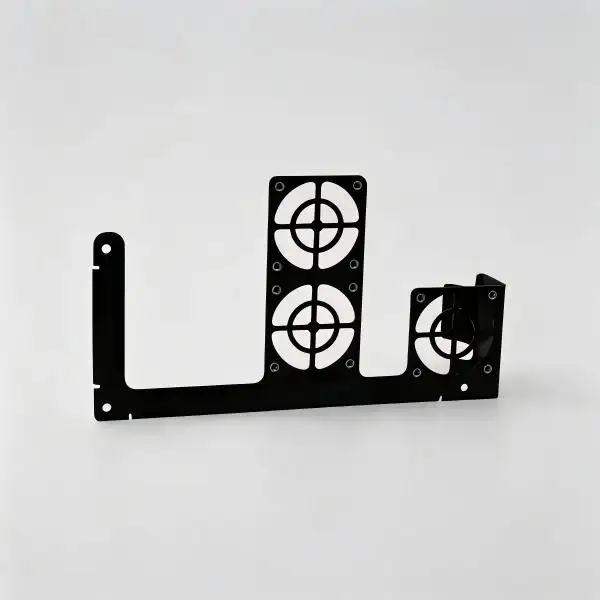
Materials and Surface Finishes for Functionality
Selected materials and surface finishes impact the performance of a product, its durability, and its resistance to corrosion and electricity.
Typical Materials
• Aluminum alloys: Lightweight structures, enclosures, and panels
• Stainless steel: Medical equipment, food equipment, and other corrosion-resistant applications
• Carbon steel: Frameworks and components with a finish of powder coating
• Copper and brass: Conductors and components that perform a function
• Titanium: Strength with weight consideration for high performance
Available Surface Finishes
Sandblasting, anodization, powder coating, electroplating, polishing, painting, and electropolishing are some of the many finishes available. They serve protective as well as aesthetic functions.
KT supports all protective and aesthetic surface finish needs to meet the functional requirements of the product.
Integrated Manufacturing
In addition to its capabilities in sheet metal fabrication, KT provides extensive manufacturing capabilities in other processes including CNC machining, stamping, die casting, injection molding, silicone molding, additive manufacturing, and surface finishing.
This integrated structure supports projects where multiple processes must work together, such as:
• Sheet metal enclosures with CNC machined inserts
• Automation frames that require welding, machining, and finishing
• Medical housings that require the integration of cosmetic and functional elements with precision
This ultimately simplifies the coordination burden on global buyers who have to manage multi-supplier operations.
A Smarter Approach to Sheet Metal Sourcing in 2026
When sourcing sheet metal today, manufacturers and buyers alike consider far more than just the price of the metal. Today's buyers consider manufacturability support, timing and reliability of delivery, clear and responsive engineering, IP protection, and the ability and commitment of the manufacturer to support production at the required scale.
KT's approach to on-demand, DFM sheet metal fabrication supports each of the above considerations, as it incorporates the following:
• CNC laser cutting and forming
• Welding and assembly support
• Finishing and inspection systems
• Engineering-led DFM optimization
• ISO-based quality management
In addition to the above systems and extensive experience with a broad range of materials and international production programs, KT provides valuable guidance and support to bring design confidence to the process of making sheet metal parts, at the level of production, with full confidence regarding production processes.
For engineering teams developing enclosures, brackets, structural frames, or precision assemblies, KT removes the uncertainty of manufacturing, providing a clear pathway from design validation to reliable production.
Partner with KT for DFM-driven sheet metal solutions from design to production-ready manufacturing.
FAQs
Q1: What does DFM mean in sheet metal fabrication?
Design for Manufacturing, or DFM, describes the design optimization for more reliable and simpler manufacturing.
Q2: Does KT provide prototype production services?
KT does provide services for rapid prototyping and low volume production.
Q3: What materials are available for processing at KT?
Aluminum, stainless steel, mild steel, copper, brass and titanium.
Q4: What are the typical tolerances for sheet metal fabrication?
The tolerance typically depends on the specific fabrication process, and is often within ±0.5° for bending.
Q5: Can KT fabricate complex sheet metal designs?
Yes, KT is able to fabricate complex designs and combine multiple fabrication processes.
Talk to the Manufacturer, Not a Middleman
Resources & Insights
-
 Industry Insights
CNC Machining Robotic Parts: How GD&T Controls Robot Assembly Accuracy
2026-09-24By KT Engineering -
 Industry Insights
Hardware Stamping Springback Control for High-Strength Steel Parts
2026-09-24By KT Engineering -
 Industry Insights
Spring Stamping Fatigue Life: How Geometry, Material and Edge Quality Affect Cycle Life
2026-09-24By KT Engineering -
 Industry Insights
Mechanical Automation Parts for Robot End Effectors and Positioning Accuracy
2026-09-23By KT Engineering