Contact Us
  Home /
 how does rapid prototyping work


Table of Contents
- What Is Rapid Prototyping?
- How Does Rapid Prototyping Work?
- Advantages of Rapid Prototyping
- Industries That Use Rapid Prototyping
- Choosing the Right Rapid Prototyping Method
- The Future of Rapid Prototyping
- Final Thoughts

In today's product development, the process of rapid prototyping has revolutionised the way that engineers, designers and manufacturers are able to bring a digital idea to physical form in a few hours or days. From consumer electronics to automotive parts, aerospace to medical devices, rapid prototyping is vital to getting a better product to market quickly, cost-effectively and efficiently.
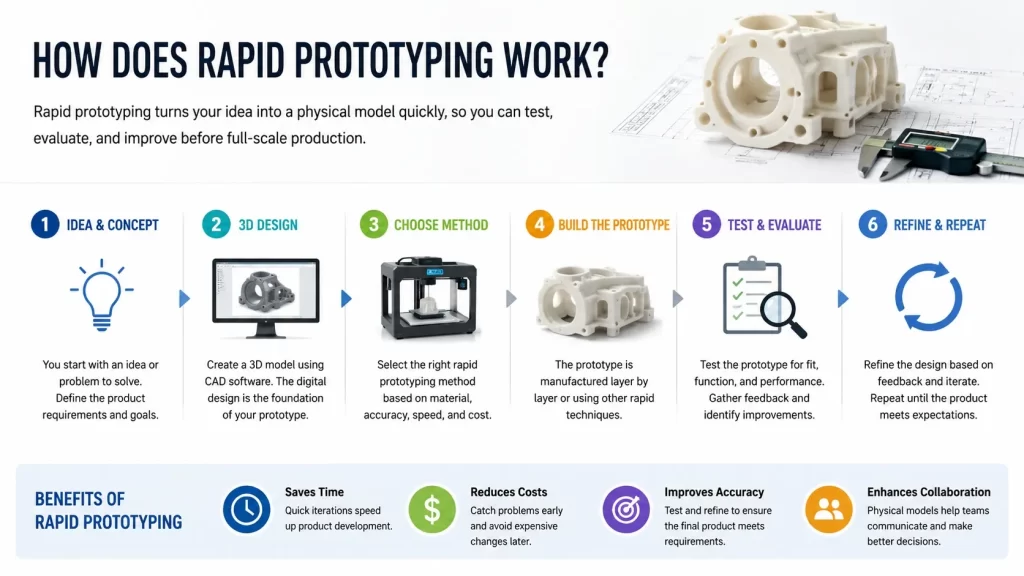
In this guide, you will find out what rapid prototyping is, what technologies are used in rapid prototyping, why it is beneficial, some of the common uses of rapid prototyping, and which prototyping techniques would you use in your project?
What Is Rapid Prototyping?
Rapid Prototyping is a manufacturing process which produces physical models directly from 3D CAD (Computer-Aided Design) files. Digital manufacturing technologies like 3D printing, CNC machining, vacuum casting or other rapid fabrication processes are used to quickly create a prototype rather than expensive molds or tooling.
Rapid prototyping differs from conventional manufacturing, because it emphasizes speed, flexibility and continual design improvement. Several design variations are possible before investing in production tooling, thus reducing the risk of design failures.
How Does Rapid Prototyping Work?
This intensive prototyping process involves a number of critical phases that transform an idea into a working prototype.
Step 1: Create a 3D CAD Model
Everything begins with a detailed digital design.
Engineers use CAD software such as:
- SolidWorks
- Autodesk Fusion 360
- CATIA
- Siemens NX
- Creo
All geometric features, dimensions, tolerances and assembly information necessary for manufacturing is included in the CAD model.
In this phase designers also consider:
- Wall thickness
- Material requirements
- Structural strength
- Assembly compatibility
- Manufacturing feasibility
A well-designed CAD model minimizes problems later in the development process.
Step 2: Convert the Design into a Manufacturing File
After the design is completed, it is exported into a machine-readable format.
The most common formats include:
- STL
- STEP
- OBJ
- AMF
- 3MF
In the field of additive manufacturing, STL continues to be the standard format as it translates the model into thousands of small triangles, which are used to capture the shape of the object to a high degree of accuracy.
Then a special slicing software will break the model into hundreds or thousands of thin layers that the manufacturing equipment can build sequentially.
Step 3: Select the Right Rapid Prototyping Technology
Different prototype requirements call for different manufacturing methods.
1. FDM (Fused Deposition Modeling)
Best for:
- Concept models
- Low-cost prototypes
- Functional testing
Advantages:
- Affordable
- Fast turnaround
- Wide material availability
Materials:
- PLA
- ABS
- PETG
- Nylon
- TPU
2. SLA (Stereolithography)
Ideal for:
- High-detail models
- Medical devices
- Product visualization
- Smooth surface finishes
Advantages:
- Exceptional accuracy
- Fine feature resolution
- Excellent appearance
Materials:
- Photopolymer resin
3. SLS (Selective Laser Sintering)
Best suited for:
- Functional engineering parts
- Complex geometries
- Production-grade prototypes
Advantages:
- Strong components
- No support structures
- Excellent mechanical properties
Materials:
- Nylon
- Glass-filled nylon
- Metal powders (specialized systems)
4. CNC Machining
Although subtractive rather than additive, CNC machining is widely used for rapid prototyping when prototypes require production-grade materials and tight tolerances.
Common materials include:
- Aluminum
- Stainless steel
- Brass
- Titanium
- Engineering plastics
Advantages include:
- High precision
- Excellent surface finish
- Functional testing under real conditions
5. Vacuum Casting
Vacuum casting is often used after 3D printing to create small production runs.
Benefits include:
- Rubber-like materials
- Production-quality appearance
- Low-volume manufacturing
- Color matching
Many manufacturers combine several of these technologies depending on project requirements.
Step 4: Manufacture the Prototype
Once the technology is selected, manufacturing begins.
For additive manufacturing, the machine constructs the prototype layer by layer.
The process generally includes:
- Material deposition
- Layer curing or melting
- Cooling
- Automatic layer stacking
- Completion of the full geometry
Depending on complexity, prototype production may take anywhere from one hour to several days.
Step 5: Post-Processing
After fabrication, prototypes usually require finishing operations such as:
- Support removal
- Sanding
- Polishing
- Painting
- Surface coating
- Heat treatment
- Machining
- Assembly
Post-processing improves:
- Surface quality
- Mechanical performance
- Dimensional accuracy
- Product appearance
Step 6: Testing and Evaluation
The finished prototype undergoes comprehensive evaluation.
Typical testing includes:
Form Testing
Verifies overall appearance and dimensions.
Fit Testing
Ensures parts assemble correctly with mating components.
Functional Testing
Confirms the prototype performs as intended.
Mechanical Testing
Measures:
- Strength
- Flexibility
- Wear resistance
- Heat resistance
- Impact performance
User Testing
Allows customers or stakeholders to evaluate:
- Ergonomics
- Usability
- Aesthetics
- Product experience
Testing often reveals opportunities for design improvements before mass production.
Step 7: Design Iteration
One of rapid prototyping's greatest strengths is rapid iteration.
After testing:
- Engineers modify the CAD model.
- Manufacturing files are updated.
- A revised prototype is produced.
- Testing repeats.
This iterative cycle continues until the product satisfies all design, performance, and manufacturing requirements.
Because no permanent tooling is required, each design revision is relatively inexpensive compared to traditional manufacturing.
Advantages of Rapid Prototyping
Organizations across industries rely on rapid prototyping because it delivers significant benefits.
Faster Product Development
Projects that once required months can often be completed within weeks.
Lower Development Costs
Detecting design flaws early prevents costly production changes later.
Better Product Quality
Multiple prototype iterations lead to better functionality and improved reliability.
Improved Team Collaboration
Designers, engineers, manufacturers, and customers can all evaluate physical models instead of relying solely on digital renderings.
Reduced Manufacturing Risk
Testing before production minimizes defects and unexpected manufacturing challenges.
Greater Design Freedom
Complex geometries that are difficult or impossible with traditional manufacturing become practical using additive manufacturing technologies.
Industries That Use Rapid Prototyping
Rapid prototyping is widely adopted across many industries.
Aerospace
Engineers prototype:
- Aircraft components
- UAV structures
- Lightweight assemblies
Automotive
Manufacturers develop:
- Engine components
- Interior parts
- Lighting systems
- Dashboard assemblies
Medical
Applications include:
- Surgical guides
- Prosthetics
- Orthopedic implants
- Medical device housings
Consumer Electronics
Companies rapidly develop:
- Wearables
- Smartphone accessories
- Smart home devices
- Electronic enclosures
Industrial Equipment
Manufacturers validate:
- Custom tooling
- Machine components
- Automation systems
- Robotics assemblies
Choosing the Right Rapid Prototyping Method
Selecting the best technology depends on several factors.
Consider:
- Prototype purpose
- Material requirements
- Mechanical performance
- Surface finish
- Dimensional accuracy
- Budget
- Lead time
- Production quantity
For example:
- Visual models often benefit from SLA.
- Functional engineering parts may require SLS or CNC machining.
- Metal prototypes typically use CNC machining or metal additive manufacturing.
- Small production runs are ideal for vacuum casting.
When the process matches the objectives of the project, the speed, cost and performance are optimally balanced.
The Future of Rapid Prototyping
Rapid prototyping continues to grow in capability with advances in new engineering materials, AI-assisted design, additive manufacturing, and automation.
Today's technologies are becoming more and more capable of producing end use production components that have unparalleled accuracy and consistency. Rapid Prototyping will continue to be a key component of product innovation for all industries as manufacturing becomes increasingly digital.
Final Thoughts
Rapid prototyping has revolutionized the design, testing and manufacturing of products. The ability to rapidly and effectively convert CAD designs into physical prototypes allows businesses to uncover design challenges early, enhance product quality, minimize development expenses, and expedite the time to market.
From a new consumer product to a new aerospace part, medical device or industrial part, rapid prototyping gives you the flexibility to innovate with confidence. Choosing the right prototyping technology and using an iterative design process can help manufacturers deliver superior products, with reduced risk and increased efficiency.
Talk to the Manufacturer, Not a Middleman
Resources & Insights
-
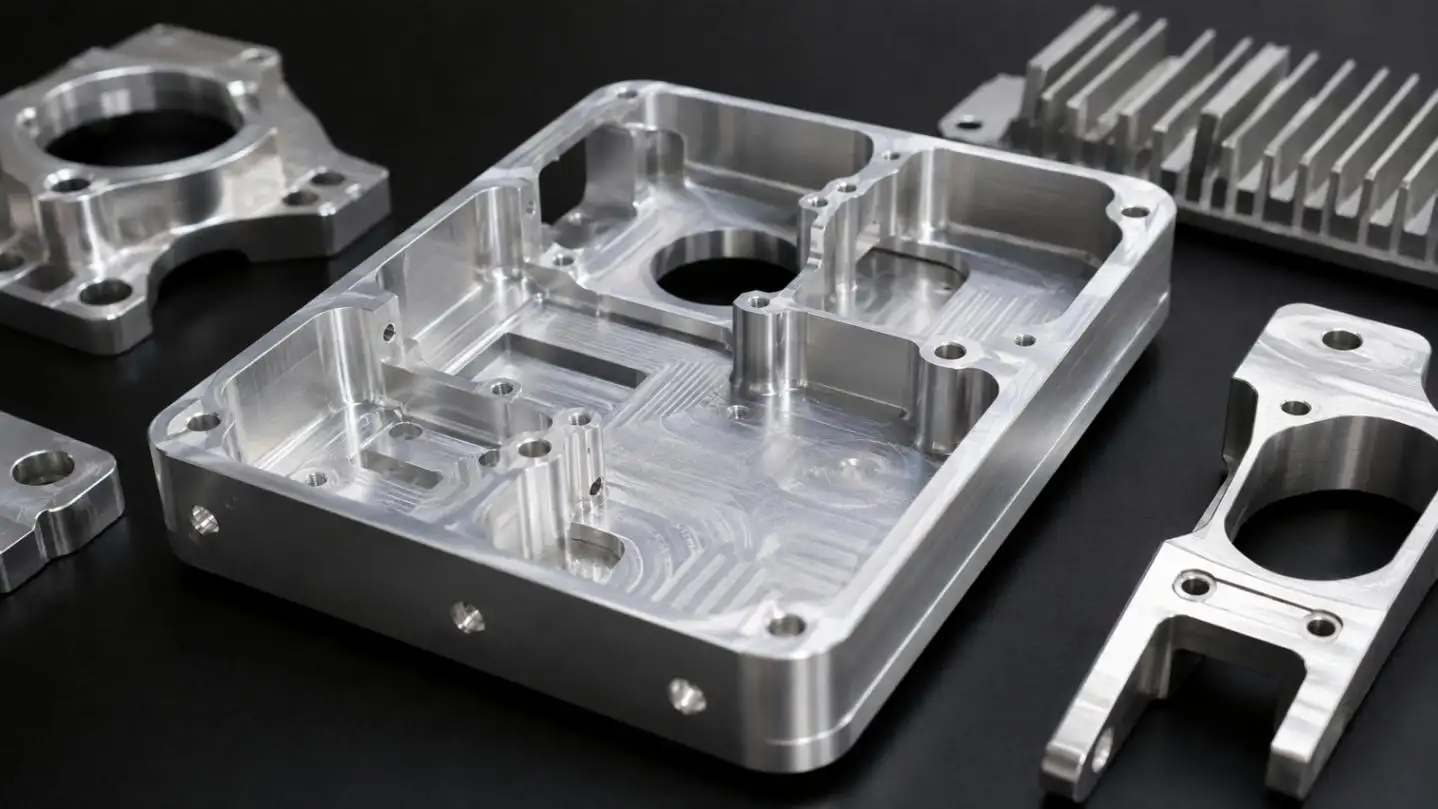 Hide blog post
CNC Aluminum Components: How Surface Finish Affects Anodizing Quality
2026-08-18By KT Engineering -
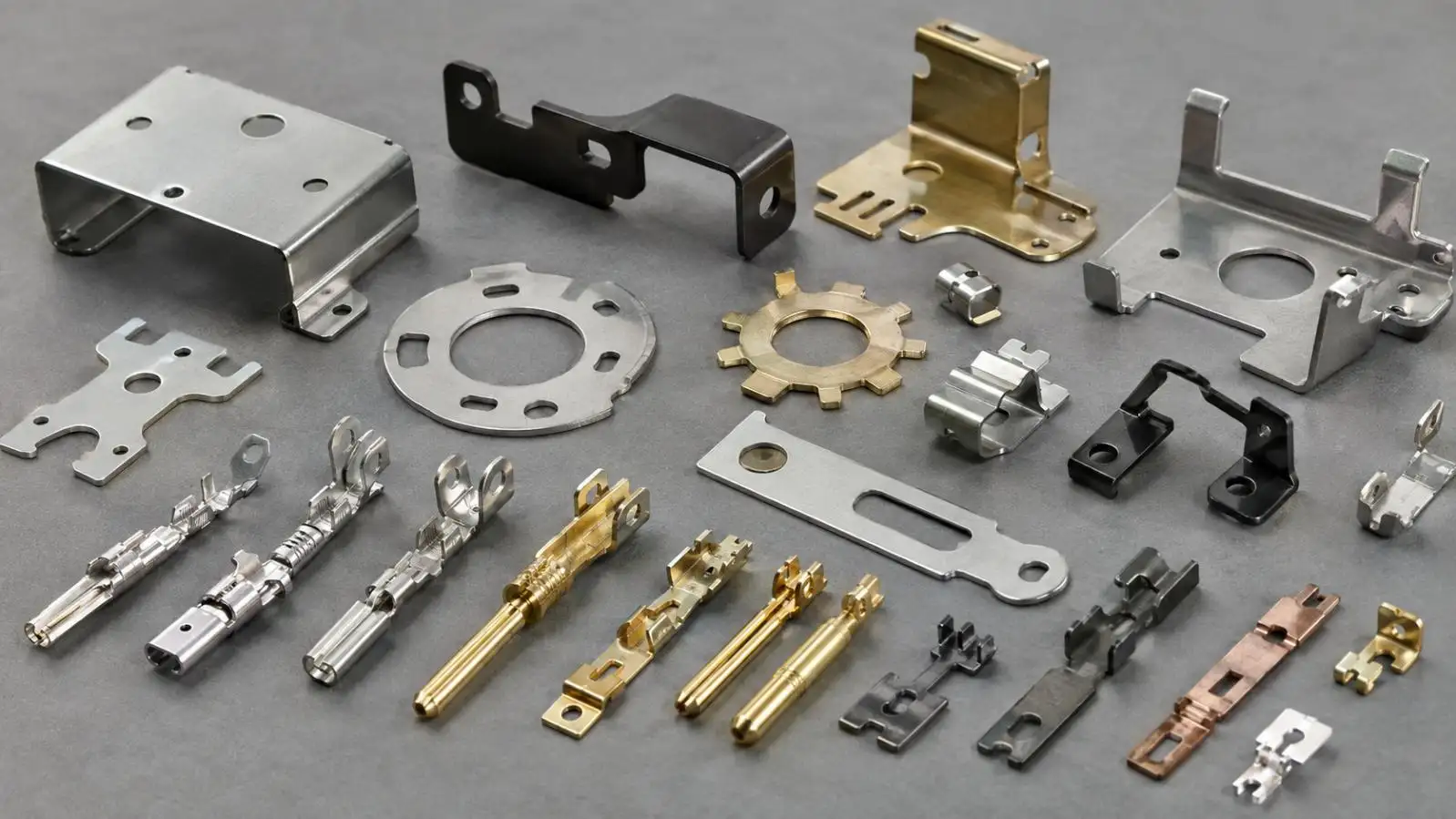 Hide blog post
Stamping Supplier in China: Dongguan Precision Tooling and Metal Stamping Guide
2026-08-18By KT Engineering -
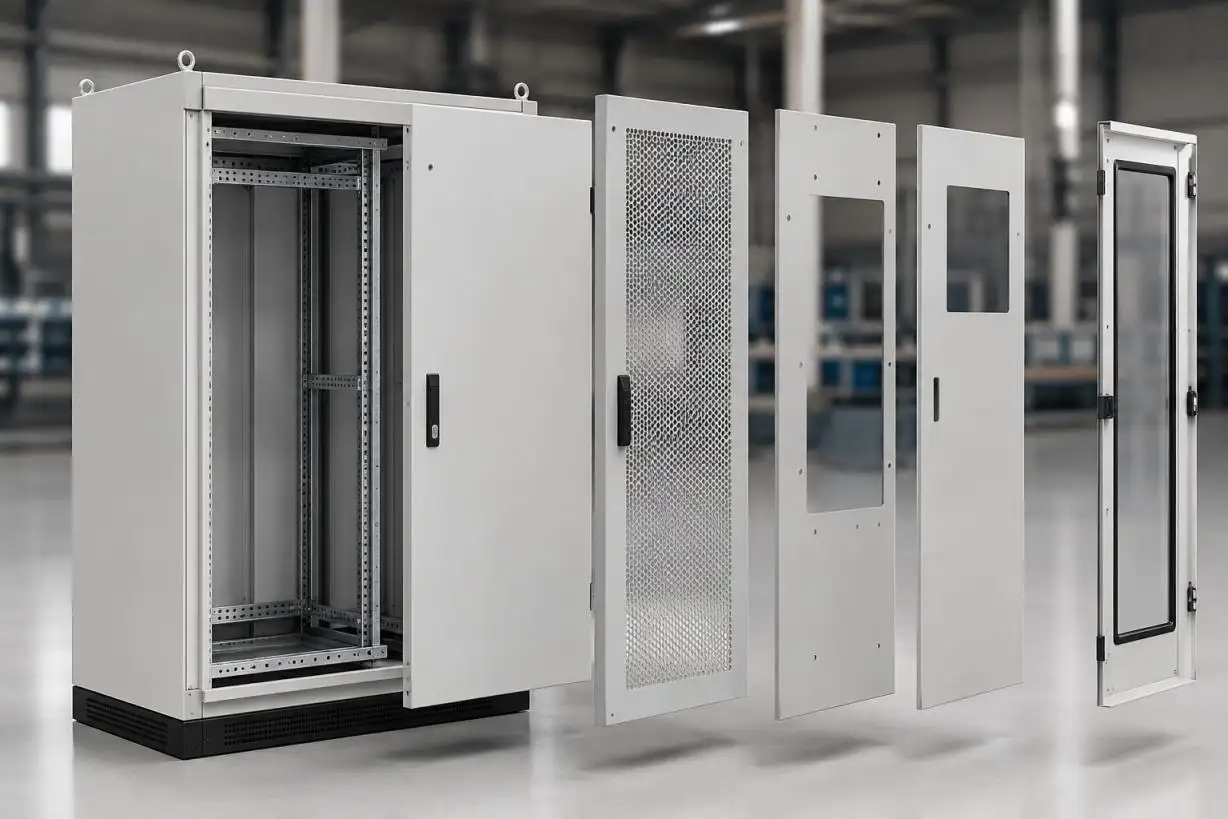 Hide blog post
Cabinet Cover Components: Lightweight, Modular and Smart Enclosure Design Guide
2026-08-17By KT Engineering -
 Hide blog post
Connector Mold Components for Automotive High-Voltage Connectors
2026-08-16By KT Engineering