Contact Us
  Home /
 Precision Mold Machining For Reliable Automotive Connectors & Fasteners


Table of Contents
- The Role of Connectors and Fasteners in the Evolution of Automotive Manufacturing
- Tech Overview of Precision Mold Machining for Automotive Stamping Dies
- Progressive Stamping Molds for High-Volume Automotive Parts
- Standard Specifications for Progressive Stamping Dies in the Automotive Industry
- Selection of Tool Steels for Stamping Dies
- Obtaining Precision with Advanced Die Machining
- KT's Precision Mold Machining Capability for Automotive Applications
- Development of Automotive Tooling Solutions
- Improving Manufacturing Efficiency through Precision Tooling

Modern automobiles use thousands of connection points to maintain their structural integrity and their systems' electrical operations throughout their lifespan. Terminals, connector housings, clips, brackets, and mounts may be small, but their precision manufacturing is crucial to assembly, reliability of electrical contact, and the durability of the vehicle.
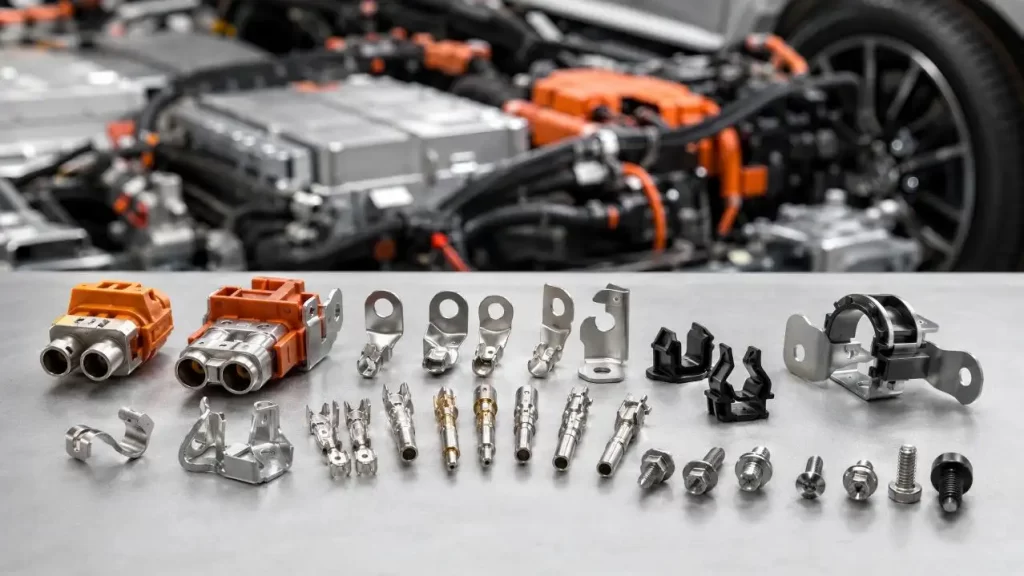
High-volume automotive components rely on precision mold machining as an essential manufacturing process to turn hardened tool steel into durable automotive stamping dies.
The Role of Connectors and Fasteners in the Evolution of Automotive Manufacturing
Connectors and fasteners are incorporated in every modern vehicle. They are used in harnesses and control units, in battery assembly, and in the components of the vehicle, both inside and outside.
As modern manufacturing moves towards the ability to create items of increasingly precise dimensions in a time constrained environment, the same is true for automotive manufacturing. This means the following requirements for automotive manufacturing become more prevalent:
•Assembly Assurance: Connectors are required to generate the mating force and to secure the contacts of the connection.
•Consistent Production: Reliability is desired in the outcomes of the stamping production process.
•Tooling Systems require diminished Cycle Times: Fast and efficient production systems require the tooling to be of the utmost efficiency with little to no waste.
The stamping of dies for fasteners and connectors in automotive manufacturing is best achieved by the precision of mold machining.
Tech Overview of Precision Mold Machining for Automotive Stamping Dies
Precision Mold Machining is the leading edge of manufacturing technology for the production of stamped dies that require the utmost precision.
The stamping of automotive connectors and fasteners comprises the following processes:
•CNC Milling: This is a general process for stamping dies that require precision machining of pockets.
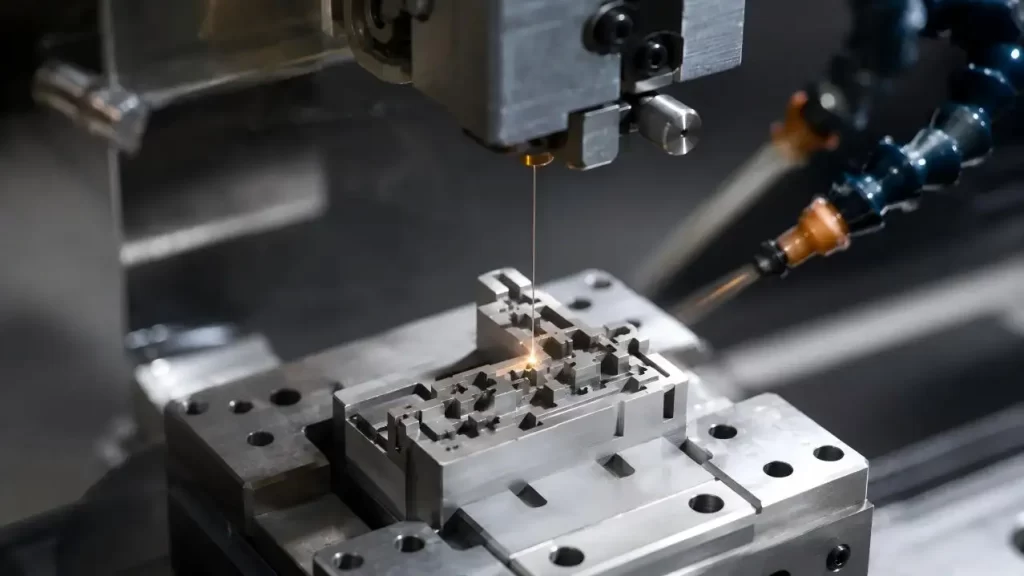
•Wire EDM Machining: This is a general process for stamping die components that require machining of complex sections and cross-sections.
•Precision Grinding: Used for stamping die plates to meet the required levels of surface accuracy and flatness.
•Jig Grinding and Finishing: Used for the required level of accuracy and alignment of holes for guide systems.
Machining operations are done to primary components of dies which include:
•Punches
•Die inserts
•Stripper plates
•Forming blocks
•Guide components
•Wear resistant inserts
Eventually, each stage of a progressive stamping die, during the production cycle, should work with exactitude and dependability.
Progressive Stamping Molds for High-Volume Automotive Parts
Progressive stamping is frequently used with automotive solderless connectors and fasteners since it enables the consolidation of multiple forming processes into a single operation.
In progressive stamping, metal strip materials are moved, in a stepwise fashion, through several workstations, at which one or more of the following operations is/are performed:
•Piercing
•Bending
•Coining
•Embossing
•Cutting
This method of work is especially appropriate for the manufacture of automotive components in large quantities, since with each stroke of the press a fully formed part is produced.
Progressive stamping is used in the automotive industry for a variety of components, including:
•Battery connector terminals
•Electrical contact pins
•Sensor brackets
•Retaining clips
•Mounting fasteners
Standard Specifications for Progressive Stamping Dies in the Automotive Industry
| Parameter | Standard Specifications |
| Die Type | Progressive stamping die |
| Typical Tooling Materials | SKD11, D2, SKD61, Cr12MoV, ASP23, SKH-9 |
| Die Life | 500,000 - 5,000,000 strokes depending on the application, die design, and upkeep |
| Manufacturing Speed | Range from thousands to tens of thousands of parts per hour based on the speed of the press and the design of the parts |
| General Tolerance | ±0.02 - 0.05 mm |
| Critical Features | ±0.005 - 0.02 mm is possible with excellent machining and careful inspection |
| Main Parts | Punches, inserts, die plates, stripper plates, guide systems |
| Materials that Can be Stamped | Copper alloys, stainless steel, carbon steel, and pre- plated metals |
Selection of Tool Steels for Stamping Dies
The primary consideration when selecting a tool steel for a stamping die is wear resistance, with a secondary consideration of dimensional stability and upkeep.
When selecting a tooling material, the stamping condition is the primary consideration:
SKD11/D2 Tool Steel
This is for general stamping applications. SKD11 and D2 are known for:
•High wear resistance
•Good edge retention
•Stable heat treatment
Used for most connector terminals and stamping of medium-strength materials.
SKD61 Tool Steel
Used for applications based on the need for higher toughness and impact resistance.
Advantages:
•Enhanced cracking resistance
•Improved performance for impact loading occurring repetitively
•Can be used for forming components
ASP23 / SKH-9 High Speed Tool Steel
For high speed stamping application
Advantages:
•Outstanding wear resistance
•Longer edge for cutting
•Thin precision components are possible
Cr12MoV Tool Steel
•Balanced hard
•Wear resistant
•Machinability
•Cost efficient
General use in automotive stamping tooling.
Obtaining Precision with Advanced Die Machining
When machining, assembling and manufacturing automotive connectors, a high degree of dimensional accuracy and control is essential.
Several key processes of precision mold machining help satisfy this need.
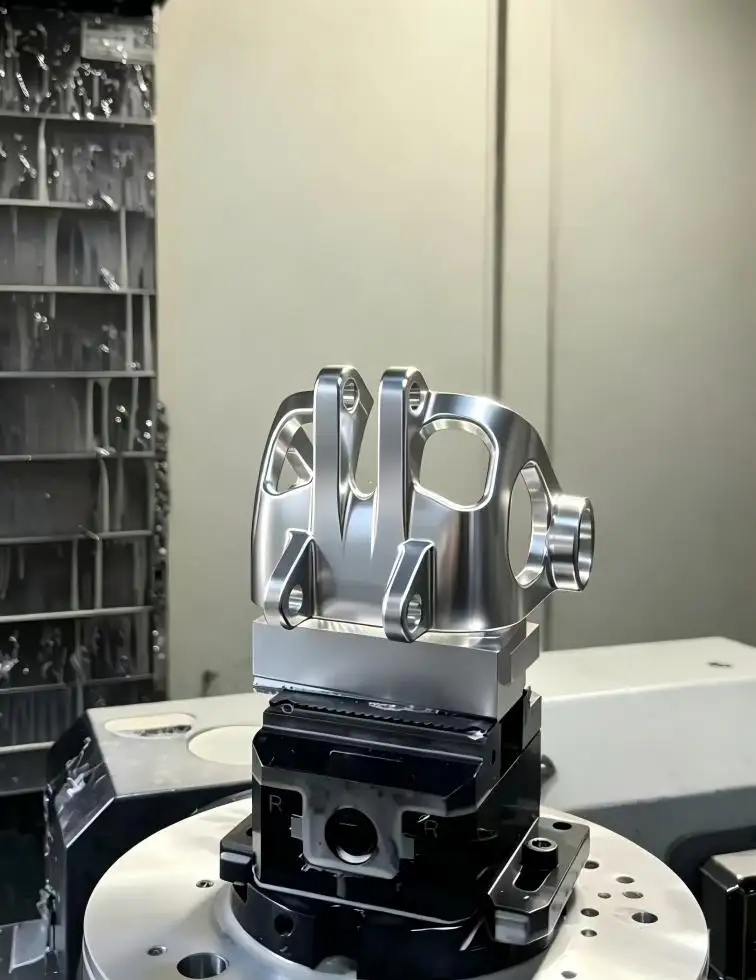
Precision Grinding
Grinding operations create surfaces that are references for:
•Flatness of die plates
•Alignment of components
•Uniformity of feed for strips
Wire EDM Machining
Wire EDM is necessary for machining geometries of connectors due to its capability to provide:
•Accuracy of profiles that is fine
•Minimal physical stresses
•Repeatability that is high for features that are small.
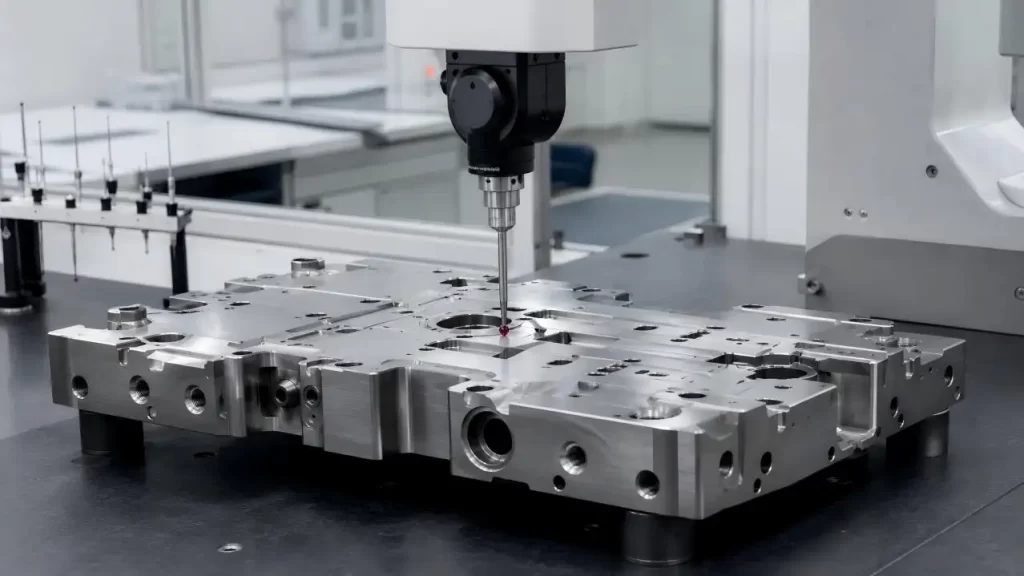
Coordinate Measurement Inspection
CMM Inspection checks:
•Dimensions that are critical
•The position of holes
•Accuracy of profiles
•The relationship of assembly.
This guarantees the compliant machining of die components with the requirements of engineering prior to assembly.
Clearance Optimization
Correct punch-to-die clearance guarantees:
•Shearing that is clean
•The formation of burrs that are controlled
•Wear of tools that is minimized
•The stability of production that is of high quality.
KT's Precision Mold Machining Capability for Automotive Applications
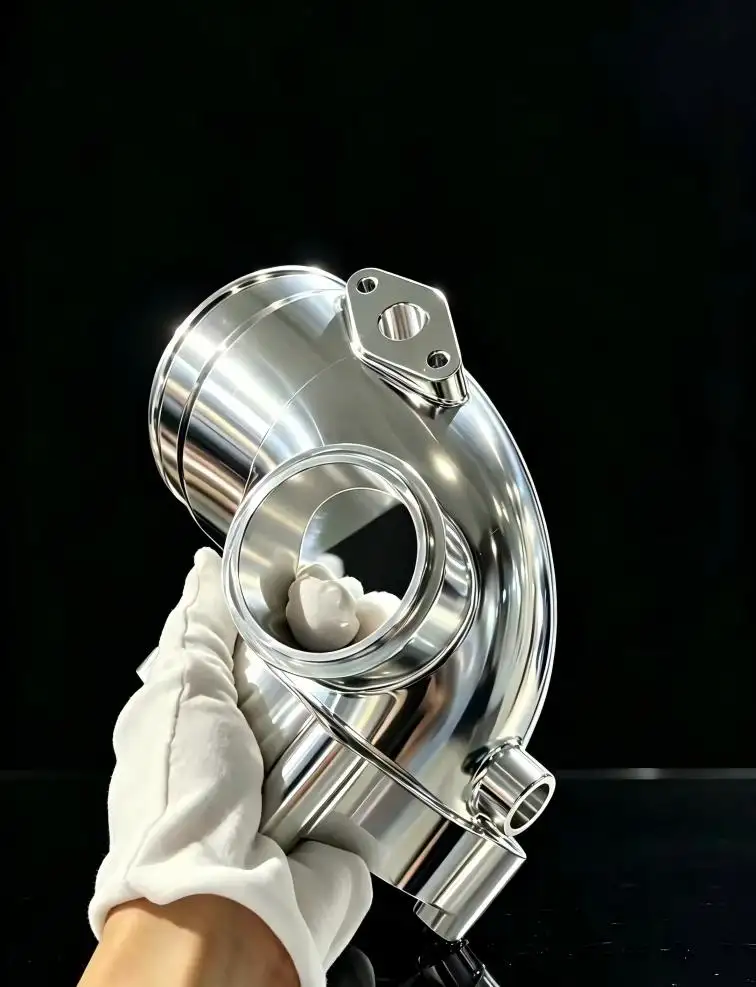
KT TOOL prides itself on the manufacturing of automotive stamping die with capability of precision mold machining of automotive connectors, terminals and fastener components.
Thanks to its infrastructure for CNC machining, wire EDM, grinding and inspection, KT TOOL provides the drafting and machining of progressive stamping dies from the validation of engineering to the deployment of production.
The manufacturing strategy emphasizes:
Engineering-Centric Die Development
For each die design and tooling project, the considerations include:
•Geometric and tactile properties of the component
•Requirements of the press equipment
•Considerations for the projected production volumes
Tailored Progressive Die Design
KT specializes in the design of die frameworks that are unique to each application's requirements, including:
•Effective strip layout design
•Precision placement of forming elements
•Wear inserts that are conveniently replaceable
•Designs that are easier to maintain
Managed Manufacturing Process
Controlled precision machining and measuring of die components result in:
•Consistent die assembly and improved production performance
•Stable dimensional accuracy of die components
•Quality assurance of die components
Years of Component Supply
KT offers additional engineering support for:
•Planning die maintenance
•Changing wear elements
•Die regrinding
•Improving production efficiency
Development of Automotive Tooling Solutions
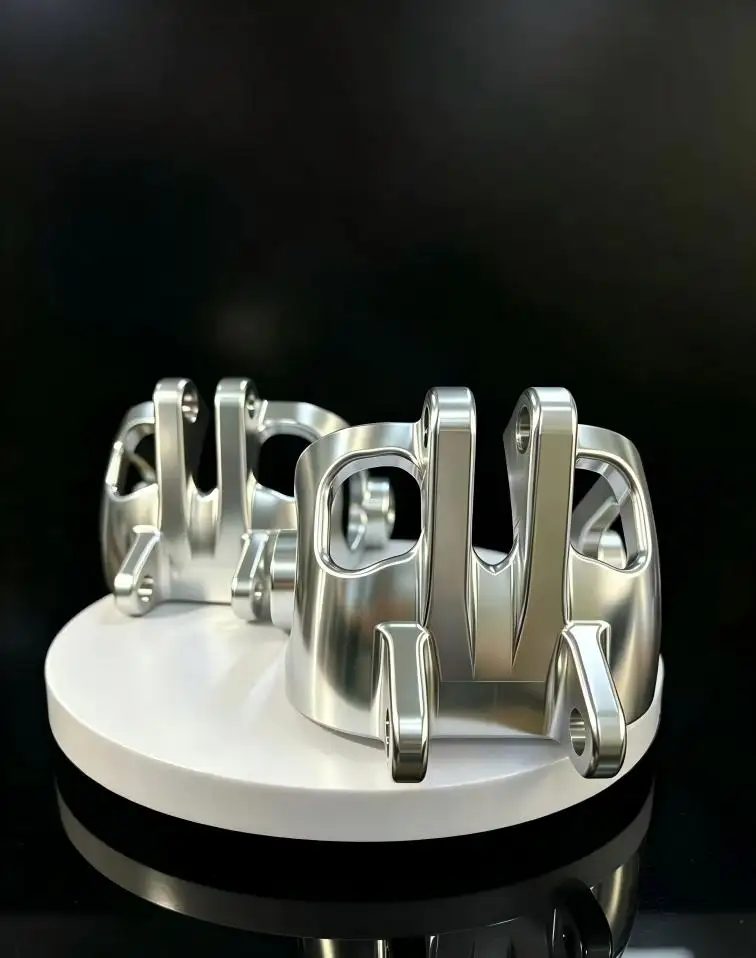
Molded automotive connectors and fasteners require integration of innovative means of miniaturization, reduction of weight, and enhancement of electrical efficiency.
Tooling manufacturers can create innovative solutions for the structures of these components by refining their mold machining.
Innovation in the following areas helps manufacturers meet the challenges:
Design of Strip Layout for Individual Parts
The arrangement of materials on a strip can be optimized to improve:
•Use of material
•Efficiency of production
•Reduction of scrap
Design of Modular Die Inserts
The use of replaceable inserts allows:
•Maintenance to be performed more quickly
•Downtime to be reduced
•Tooling to have a longer lifespan
Preparation for the Integration of Sensors
Modern dies used in the stamping process can have built in monitoring features for:
•Accuracy of feeds
•Detection of parts
•Stability of the production process
Active Stamping Die Simulation Technology
Simulation technology allows the optimization of:
•Control of springback
•Flow of material
•Adjusting for the effects of delay in the production process
Improving Manufacturing Efficiency through Precision Tooling
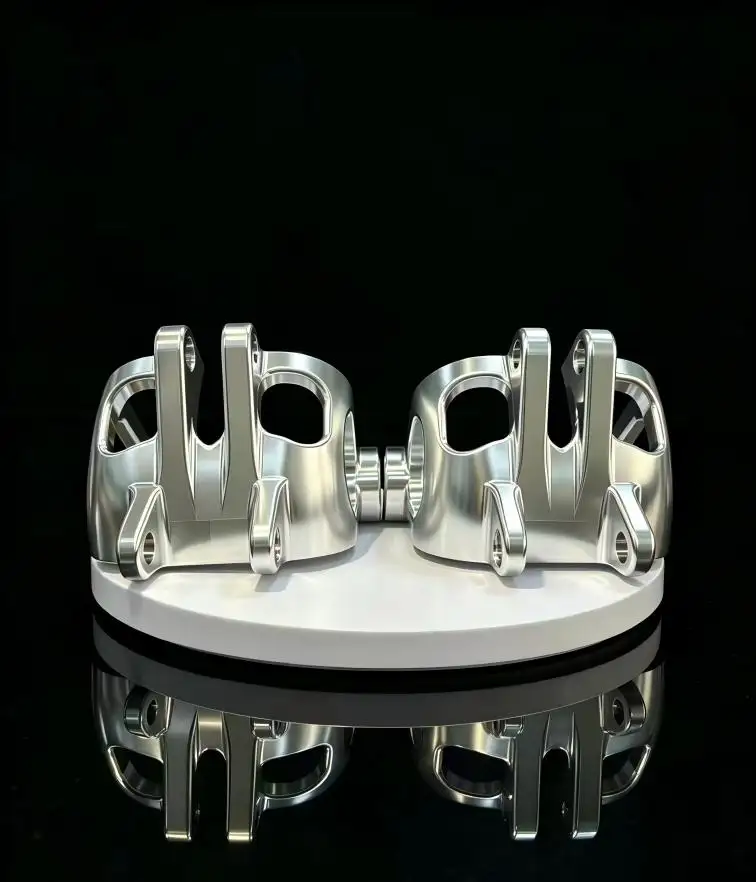
Reflecting on the importance of precision mold machining, it is possible to enhance the efficiency of production processes.
Well designed and precisely machined stamping dies help manufacturers achieve:
•Increased utilization of materials: Strip layouts optimized for die in excess of 25% material utilization.
•Less frequent maintenance: Improved tool finishes lead to fewer occurrences of wear.
•Consistent output: the performance of the tooling leads to a reduction of variance in the production process.
Final Thoughts
Automotive connectors and fasteners require stamping dies that are exceptionally precise and robust as well as capable of producing repeated work.
Manufacturers rely on the precision of machining to consistently produce quality automotive components.
KT has the expertise in stamping die and precision machining, and assists automotive suppliers in creating reliable tooling solutions for the manufacturing of connectors and fasteners.
FAQs
Q1. What is precision mold machining?
Precision mold machining refers to the creation of highly accurate die components through a variety of advanced techniques, including but not limited to, machining, EDM, and grinding.
Q2. Why are progressive stamping dies preferred for automotive connectors?
The design of progressive stamping dies allow for the quick and uniform production of intricate connector and fastener elements.
Q3. What stamping die materials are preferred in the automotive industry?
Typical stamping dies are constructed from tool steels such as SKD11, D2, SKD61, Cr12MoV, ASP23, and SKH-9.
Q4. What is the typical tolerance of stamping dies?
The best quality stamping dies generally achieve a tolerance of ±0.02–0.05 mm, with critical features being of a much tighter tolerance.
Q5. What are the common manufacturing methods of precision dies?
Some of the common methods of manufacturing precision dies include CNC milling, wire EDM, precision grinding, jig grinding, and inspection using CMM.
Talk to the Manufacturer, Not a Middleman
Resources & Insights
-
 Industry Insights
CNC Aluminum Components: How Surface Finish Affects Anodizing Quality
2026-08-18By KT Engineering -
 Industry Insights
Stamping Supplier in China: Dongguan Precision Tooling and Metal Stamping Guide
2026-08-18By KT Engineering -
 Industry Insights
Cabinet Cover Components: Lightweight, Modular and Smart Enclosure Design Guide
2026-08-17By KT Engineering -
 Industry Insights
Connector Mold Components for Automotive High-Voltage Connectors
2026-08-16By KT Engineering