Contact Us
  Home /
 what is rapid prototyping


Table of Contents
- What Is Rapid Prototyping?
- Why Rapid Prototyping Matters
- The Rapid Prototyping Process
- Common Rapid Prototyping Technologies
- CNC Machining
- Vacuum Casting
- Injection Molding for Prototype Production
- Materials Used in Rapid Prototyping
- Advantages of Rapid Prototyping
- Limitations of Rapid Prototyping
- Industries That Use Rapid Prototyping
- How to Choose the Right Rapid Prototyping Method
- Future Trends in Rapid Prototyping
- Final Thoughts

One of the greatest strengths that a company can bring to today's competitive manufacturing environment is speed. Having the ability to convert ideas into functional products quicker gives an enterprise a competitive edge over its rivals. That's where rapid prototyping is essential.
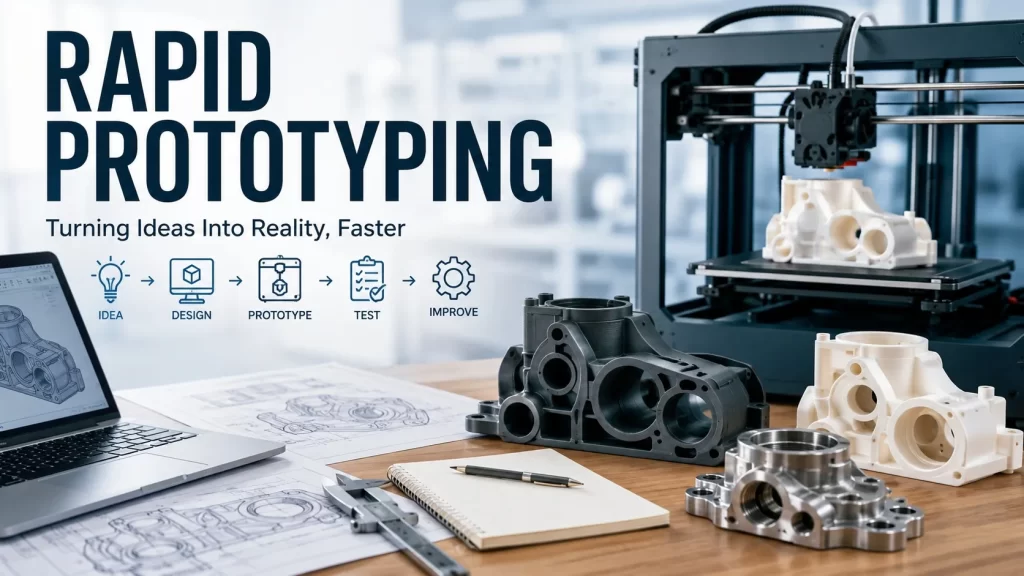
In rapid prototyping, engineers, designers and manufacturers can easily make physical models directly from CAD designs, which helps them to evaluate, test, and refine products before mass production. Today, 3D printing, CNC machining, vacuum casting, and injection molding allow for rapid prototyping, which is faster, more precise and less expensive than ever before.
This guide will tell you all you need to know about rapid prototyping, such as its advantages, manufacturing techniques, applications, and how to select the ideal rapid prototyping technique for your project.
What Is Rapid Prototyping?
Rapid Prototyping is the quick production of a physical model of a design that has been created using a computer-aided design model. Rapid prototyping is not like the traditional manufacturing process, where a long production process is required with expensive tooling; it is just about making a functional or visual prototype in a short time for design verification and testing.
The drive is to create a faster product development process, with the early detection of design problems that can be solved more economically later in that process.
Companies can compare several design concepts within days or even hours depending on the manufacturing process, as opposed to waiting weeks or months for production tooling.
Why Rapid Prototyping Matters
There are many different design decisions when creating a new product. All the changes after tooling is in production can add up to a big expense.
This can be reduced through rapid prototyping by manufacturers being able to:
- Validate product concepts early
- Detect design flaws before production
- Test functionality and assembly
- Gather customer or stakeholder feedback
- Reduce engineering revisions
- Accelerate product launch
Rapid prototyping is an excellent way of decreasing the time taken to bring a product to market and the development expenses, particularly for startups and established manufacturers.
The Rapid Prototyping Process
While each project is different, there are common steps in rapid prototyping.
1. Product Design
It all begins with a 3D CAD model developed with our professional CAD software.
Engineers define:
- Dimensions
- Wall thickness
- Tolerances
- Material requirements
- Functional features
A well-designed CAD model ensures higher prototype accuracy.
2. Manufacturing Method Selection
The prototype's purpose determines the most suitable manufacturing technology.
For example:
- Visual models often use SLA printing.
- Functional plastic parts may use SLS or CNC machining.
- Metal prototypes typically require CNC machining or metal additive manufacturing.
Selecting the correct process balances speed, accuracy, strength, and cost.
3. Prototype Fabrication
The selected manufacturing technology converts the digital model into a physical part.
Depending on complexity, production may take anywhere from a few hours to several days.
4. Post-Processing
Many prototypes require finishing operations such as:
- Sanding
- Polishing
- Painting
- Surface treatment
- Heat treatment
- Assembly
These processes improve appearance or simulate final production quality.
5. Testing and Evaluation
Once completed, prototypes undergo testing for:
- Fit
- Form
- Function
- Mechanical strength
- Assembly compatibility
- User experience
Feedback from testing often leads to design improvements before production begins.
Common Rapid Prototyping Technologies
1. 3D Printing
3D printing remains one of the most recognized rapid prototyping methods.
Popular technologies include:
FDM (Fused Deposition Modeling)
Advantages:
- Low cost
- Fast production
- Good for concept models
Limitations:
- Lower surface quality
- Reduced dimensional accuracy
SLA (Stereolithography)
Advantages:
- Excellent surface finish
- High precision
- Ideal for visual prototypes
Limitations:
- Resin materials may be brittle
SLS (Selective Laser Sintering)
Advantages:
- Strong nylon parts
- Complex geometries
- No support structures
Applications include functional testing and low-volume production.
CNC Machining
CNC machining removes material from solid blocks to create precision parts.
Advantages include:
- Excellent dimensional accuracy
- Wide material selection
- Production-grade plastics
- Aluminum
- Stainless steel
- Titanium
- Brass
CNC machining is ideal when prototypes must closely match final production components.
Vacuum Casting
Vacuum casting uses silicone molds to create multiple polyurethane parts.
Benefits include:
- Small production runs
- Smooth surface finish
- Lower tooling costs
- Flexible material options
It is commonly used before injection mold tooling is built.
Injection Molding for Prototype Production
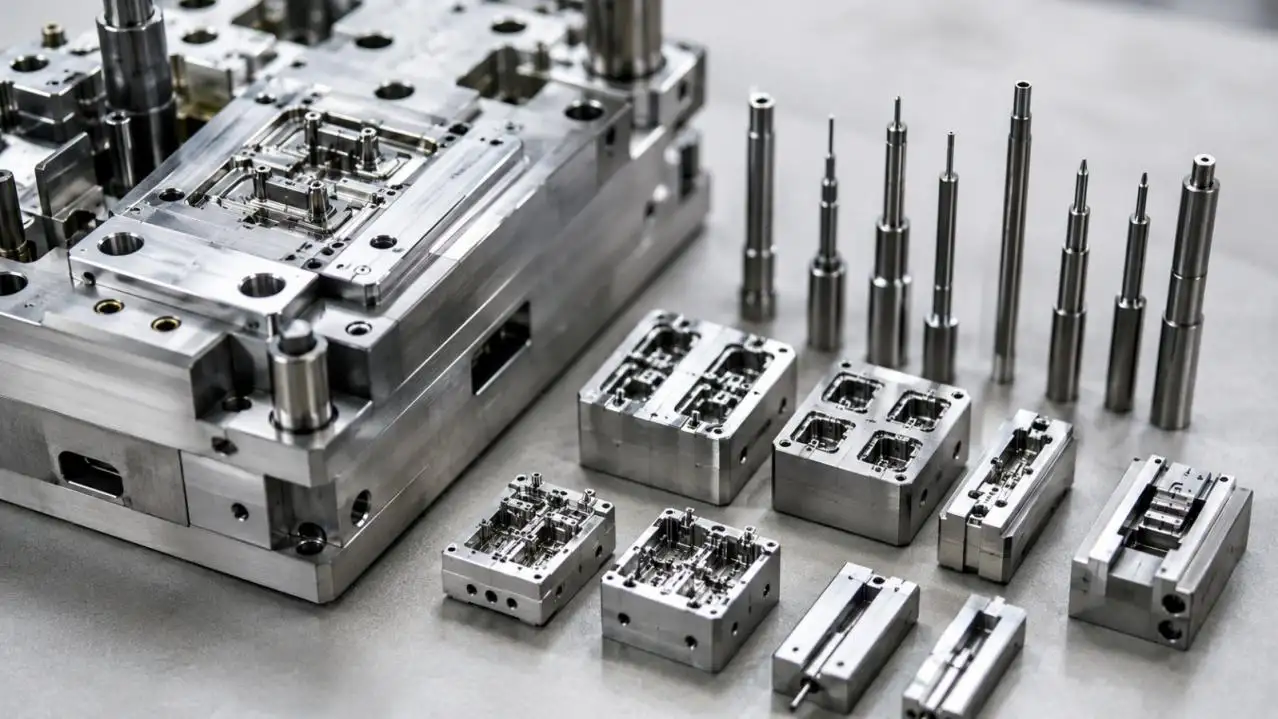
Although injection molding is usually associated with mass production, soft tooling can also produce prototype quantities.
Advantages:
- Production-grade materials
- High consistency
- Accurate performance testing
This approach is suitable when transitioning from prototype to manufacturing.
Materials Used in Rapid Prototyping
Material selection depends on application requirements.
Plastics
Popular options include:
- ABS
- PLA
- Nylon
- Polycarbonate
- PEEK
- TPU
Plastic prototypes are commonly used for consumer products and electronics.
Metals
Common metal materials include:
- Aluminum
- Stainless steel
- Titanium
- Brass
- Copper
Metal prototypes provide realistic mechanical performance for industrial applications.
Engineering Resins
High-performance resins offer:
- Heat resistance
- Transparency
- High detail
- Flexible properties
These are widely used in SLA printing.
Advantages of Rapid Prototyping
Faster Product Development
Engineers can evaluate designs within days rather than weeks.
Lower Development Costs
Identifying design problems before tooling dramatically reduces manufacturing expenses.
Better Product Quality
Repeated testing allows continuous improvements before production.
Greater Design Freedom
Complex internal channels, lightweight structures, and intricate geometries become much easier to manufacture using additive technologies.
Improved Communication
Physical prototypes help customers, investors, and engineering teams better understand product concepts.
Limitations of Rapid Prototyping
Despite its advantages, rapid prototyping has some limitations.
These include:
- Some materials differ from production materials
- Certain 3D printing methods have lower strength
- Large components may be expensive
- Surface finishing may require additional processing
Understanding these limitations helps manufacturers choose the right prototyping strategy.
Industries That Use Rapid Prototyping
Rapid prototyping has become essential across numerous industries.
Automotive
Manufacturers test:
- Engine components
- Interior parts
- Dashboard assemblies
- Lighting systems
Aerospace
Rapid prototyping helps produce lightweight components while accelerating certification testing.
Medical Devices
Applications include:
- Surgical guides
- Medical instruments
- Prosthetics
- Patient-specific models
Consumer Electronics
Companies prototype:
- Wearables
- Smart home devices
- Mobile accessories
- Electronic housings
Industrial Equipment
Manufacturers validate custom mechanical components before production.
How to Choose the Right Rapid Prototyping Method
Selecting the best technology depends on several factors.
Consider:
- Material requirements
- Mechanical performance
- Surface finish
- Dimensional accuracy
- Production quantity
- Budget
- Lead time
If the concept is visualized, SLA printing might be a good choice.
CNC machining can provide a higher level of performance for functional engineering parts.
Vacuum casting is a very good solution if you need to produce a smaller quantity.
Future Trends in Rapid Prototyping
Rapid prototyping continues to evolve with advances in manufacturing technology.
Key trends include:
- AI-assisted product design
- Multi-material 3D printing
- Metal additive manufacturing
- Digital manufacturing workflows
- Sustainable materials
- Hybrid manufacturing combining CNC and additive processes
These enhancements continue to reduce development time and quality.
Final Thoughts
Rapid prototyping has revolutionized the product development process by helping manufacturers to design, test, and improve their products quickly. With 3D printing, CNC machining, vacuum casting or prototype injection molding, businesses can mitigate development risks, enhance product quality and speed up time to market.
The selection of an appropriate rapid prototyping process is determined by your project needs, material needs, cost considerations, and production schedule. The use of rapid prototyping within the development process enables you to make decisions on design sooner, reduce expensive revisions and make innovative products available to market with greater confidence.
Talk to the Manufacturer, Not a Middleman
Resources & Insights
-
 Hide blog post
CNC Aluminum Components: How Surface Finish Affects Anodizing Quality
2026-08-18By KT Engineering -
 Hide blog post
Stamping Supplier in China: Dongguan Precision Tooling and Metal Stamping Guide
2026-08-18By KT Engineering -
 Hide blog post
Cabinet Cover Components: Lightweight, Modular and Smart Enclosure Design Guide
2026-08-17By KT Engineering -
 Hide blog post
Connector Mold Components for Automotive High-Voltage Connectors
2026-08-16By KT Engineering