Contact Us
  Home /
 how to make money with a 3d printer


Table of Contents
- Can You Really Make Money with a 3D Printer?
- 1. Sell Custom 3D Printed Products
- 2. Offer Local 3D Printing Services
- 3. Design and Sell STL Files
- 4. Produce Functional Replacement Parts
- 5. Print Products for Small Businesses
- 6. Create Cosplay Props and Collectibles
- 7. Manufacture Educational Models
- 8. Build Rapid Prototypes for Startups
- 9. Start a Small Print Farm
- 10. Teach 3D Printing Skills
- Where Should You Sell Your Products?
- How Much Can You Earn?
- Tips to Increase Profitability
- Common Mistakes to Avoid
- Final Thoughts

Desktop 3D Printing has become very advanced in a short period of time, which has opened up some great opportunities for small business, entrepreneurs, and hobbyists. If you have an inexpensive FDM printer or a high quality 3-D printer, anything you make will be able to help solve customers problems and make your printer business a success.
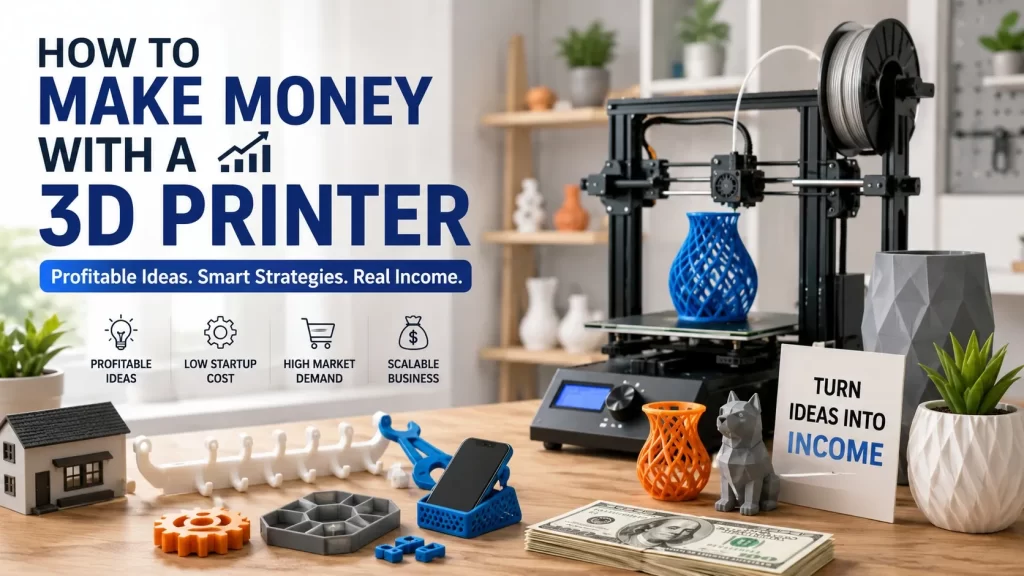
The global additive manufacturing (AM) market is still growing and more industries are embracing custom-made and on-demand production. Meanwhile, online marketplaces allow businesses to connect with customers from all over the globe. But not just printing popular models is the basis for achievement, it's about discovering profitable niches, building a very good quality and establishing a brand that is recognized. Many industry experts agree it is more important to find market demand and manage costs than to be the owner of the most expensive printer.
In this guide you will find out how to make money from your 3D printer, how to price your products and the strategies you can use to grow your 3D printing business.
Can You Really Make Money with a 3D Printer?
Yes—but realistic expectations are important.
Many makers who have succeeded in using the printers began with one, and have moved to multiple printers as demand has grown. There are many factors to consider for income such as:
- Product selection
- Print quality
- Marketing
- Production efficiency
- Customer service
- Pricing strategy
There are also some users who make a few hundred dollars a month in a side business, and there are print farms which make thousands of dollars per month by specializing in products and repeat customers.
1. Sell Custom 3D Printed Products
Often the most common activities are selling physical products.
Do not print decorative items randomly, rather concentrate on items that will solve a problem common to every day.
Popular examples include:
- Cable organizers
- Tool holders
- Phone stands
- Kitchen accessories
- Office organizers
- Automotive clips
- Camera accessories
- Garden tools
- Home storage solutions
It is often the case that customers will pay higher prices for products that are customized to their needs.
Tips for success:
- Design original products
- Improve existing designs
- Offer multiple colors
- Personalize with names or logos
- Maintain consistent print quality
2. Offer Local 3D Printing Services
Many individuals and businesses need parts but don't own a printer.
You can offer services such as:
- Prototype printing
- Replacement parts
- Engineering models
- School projects
- Architectural models
- Product samples
- Custom enclosures
Local businesses appreciate quick turnaround times compared to large manufacturing companies.
Potential customers include:
- Engineers
- Product designers
- Schools
- Universities
- Makerspaces
- Manufacturing companies
- Medical offices
3. Design and Sell STL Files
You don't always need to sell physical products.
Digital STL files offer excellent profit margins because they require no inventory or shipping.
Popular marketplaces include:
- Etsy
- MyMiniFactory
- Cults3D
- Printables
- MakerWorld
Successful digital products include:
- Miniatures
- Home organization systems
- Tool organizers
- Hobby accessories
- Gaming inserts
- Educational models
Once uploaded, digital designs can generate passive income through repeated downloads.
4. Produce Functional Replacement Parts
Many replacement parts for household items are no longer available from manufacturers.
Examples include:
- Appliance knobs
- Vacuum clips
- Furniture connectors
- Window brackets
- Car interior clips
- Garden equipment components
These parts often have very little competition while solving real customer problems.
Always ensure your designs do not violate patents or trademarks.
5. Print Products for Small Businesses
Small businesses increasingly use 3D printing for:
- Product displays
- Packaging inserts
- Marketing materials
- Event giveaways
- Custom fixtures
- Retail displays
Unlike mass manufacturing, 3D printing allows low-volume production without expensive tooling.
Businesses value fast turnaround and customization.
6. Create Cosplay Props and Collectibles
The cosplay industry continues to grow worldwide.
Popular products include:
- Armor pieces
- Helmet kits
- Weapon props
- Display stands
- Figurines
- Movie-inspired accessories
Offer unfinished kits for hobbyists or fully painted premium products for collectors.
Be careful to respect intellectual property rights when selling fan-inspired designs.
7. Manufacture Educational Models
Schools and universities increasingly use 3D printed teaching aids.
Examples include:
- Human anatomy models
- Molecules
- Mathematical shapes
- Historical artifacts
- Geography models
- Engineering demonstrations
Educational institutions often purchase in bulk, creating repeat business opportunities.
8. Build Rapid Prototypes for Startups
Startups frequently require multiple design iterations before mass production.
You can provide:
- Functional prototypes
- Appearance models
- Mechanical testing parts
- Assembly verification
- Product demonstrations
Fast prototype delivery often matters more than extremely low pricing.
9. Start a Small Print Farm
Once demand increases, expand by adding additional printers.
Benefits include:
- Higher production capacity
- Reduced delivery times
- Ability to accept larger orders
- Better equipment utilization
Automation software can manage multiple printers simultaneously, improving efficiency as production scales. Many experienced operators recommend expanding only after achieving consistent demand and repeat orders.
10. Teach 3D Printing Skills
Knowledge itself can become a product.
Offer:
- Online courses
- Local workshops
- School training
- Corporate training
- Printer setup services
- CAD lessons
Many beginners need guidance on:
- Printer calibration
- Material selection
- Slicer settings
- Maintenance
- Troubleshooting
Educational content also helps establish your reputation within the maker community.
Where Should You Sell Your Products?
Diversifying your sales channels reduces business risk.
Popular options include:
Etsy
Ideal for:
- Personalized gifts
- Home décor
- Organizers
- Hobby accessories
Shopify Store
Build your own brand while maintaining full control over pricing and customer relationships.
Amazon Handmade
Suitable for unique handcrafted products with large market exposure.
Facebook Marketplace
Excellent for local customers and fast delivery.
Craft Fairs
Face-to-face events allow customers to experience product quality firsthand.
B2B Sales
Manufacturers, schools, engineering firms, and medical companies often become long-term clients.
How Much Can You Earn?
Income varies depending on your niche, pricing, and production capacity.
Typical side-business ranges include:
| Business Stage | Monthly Income Potential |
|---|---|
| Beginner | $200–$800 |
| Part-Time | $800–$2,500 |
| Small Print Farm | $3,000–$10,000+ |
Remember that revenue differs from profit. Successful businesses carefully account for materials, failed prints, equipment maintenance, shipping, platform fees, packaging, and labor before calculating actual earnings.
Tips to Increase Profitability
Focus on value instead of competing solely on price.
Best practices include:
- Develop original products
- Target underserved niches
- Optimize print settings
- Buy filament in bulk
- Reduce print failures
- Standardize production
- Improve packaging
- Build repeat customers
- Collect positive reviews
- Invest in reliable printers
Customer satisfaction often leads to repeat orders and referrals.
Common Mistakes to Avoid
Many beginners make avoidable mistakes, such as:
- Copying saturated products
- Ignoring licensing restrictions
- Underpricing products
- Selling low-quality prints
- Forgetting shipping costs
- Poor customer communication
- Printing without market research
Treat your 3D printing operation like a business rather than a hobby.
Final Thoughts
A 3D printer doesn't have to be a tool for creativity, it can be the basis for a profitable business. You can sell custom products, provide local printing services, design digital products or establish a print farm, but in any case, you need to solve real customer problems, and ensure quality every time.
Do small tests in various markets, collect customer feedback and constantly enhance products and processes. Your 3D printer can provide you with a steady income, and with the proper strategy you can make your creativity a business.
Talk to the Manufacturer, Not a Middleman
Resources & Insights
-
 News
NewsCNC Machining Robotic Parts: How GD&T Controls Robot Assembly Accuracy
2026-09-24By KT Engineering -
 News
NewsHardware Stamping Springback Control for High-Strength Steel Parts
2026-09-24By KT Engineering -
 News
NewsSpring Stamping Fatigue Life: How Geometry, Material and Edge Quality Affect Cycle Life
2026-09-24By KT Engineering -
 News
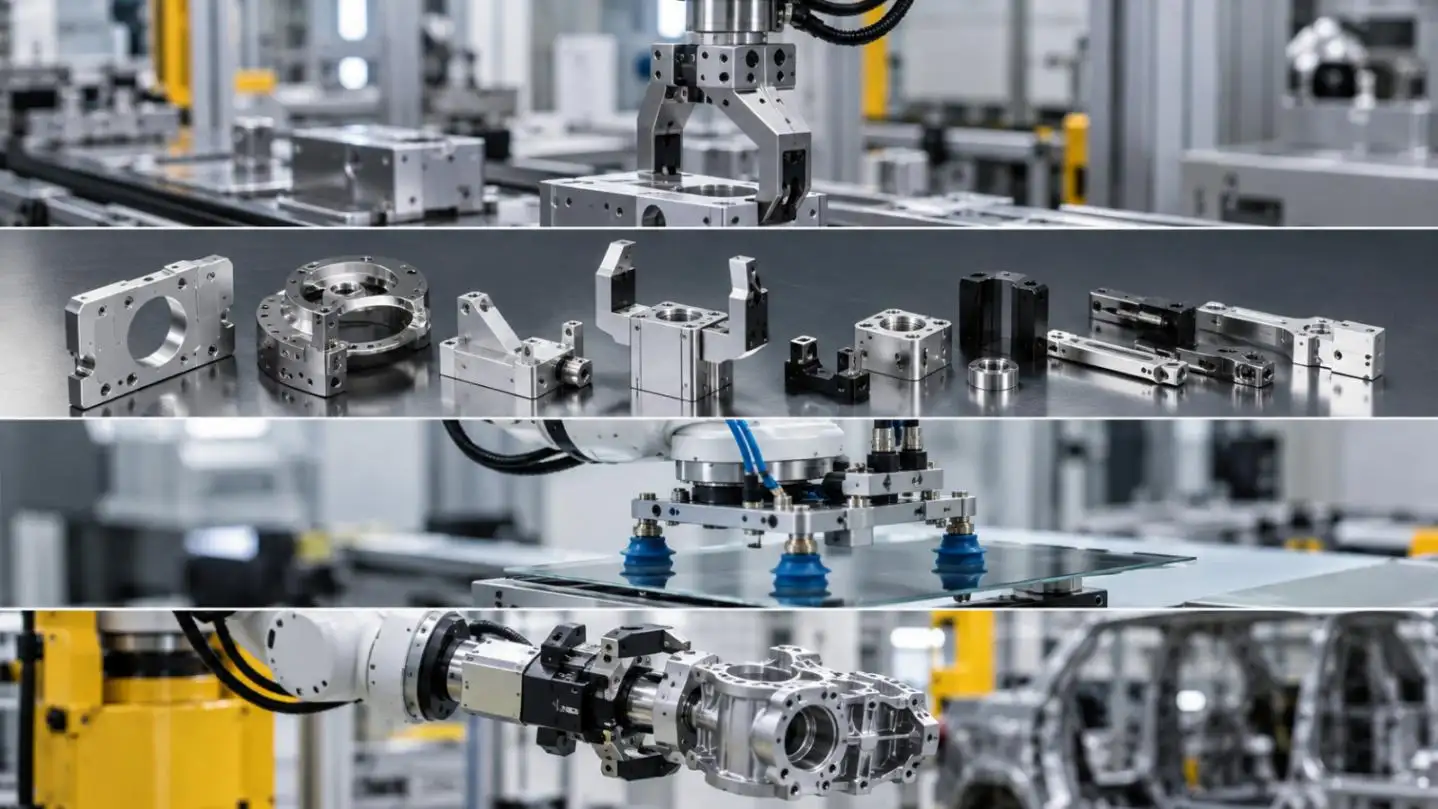
NewsMechanical Automation Parts for Robot End Effectors and Positioning Accuracy
2026-09-23By KT Engineering