Contact Us
  Home /
 5-Axis Micro Machining: Enabling Complex 3D Micro Features for Medical Devices


Table of Contents
- What Are Complex 3D Micro Features in Medical Devices?
- Why 3-Axis Machining Falls Short for Micro Medical Components
- How 5-Axis Micro Machining Addresses These Problems
- Important Medical Applications for 5-Axis Micro Machining
- KT TOOL's Technical Advantages in 5-Axis Micro Machining
- Complementary Processes That Complete the Medical Component
- Prototyping to Low Volume Production

The medical device industry puts a premium on having smaller, more sophisticated implants and tools. Traditional 3-axis CNC machining has limitations when working with complex geometries containing inclined walls as well as curved micro-channels and undercuts. Micro Machining For Medical Devices with 5-axis technology can address these limitations.
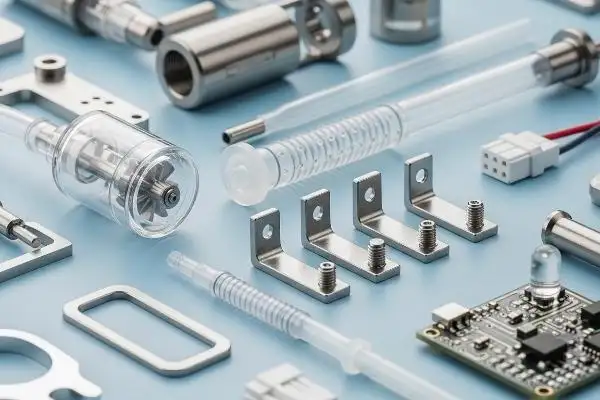
5-axis Micro Machining allows manufacturers the capability of producing complex 3D micro structures with the luxury of machining from multiple angles. This technology is critical to producing a broad range of medical devices from spinal implants to micro-surgical tools with the necessary precision, surface quality, and shortened time to market.
What Are Complex 3D Micro Features in Medical Devices?
Standard mechanical parts have linear designs, unlike medical implants and devices, which have patient custom designs and non-linear designs. Complex 3D Micro features commonly have the following:
•Micro-scale undercuts
•Bone-mimicking curves
•Curved micro holes
•Micro-fin arrays that are angled to assist in bone growth.
Because of the 3-axis machining limitations when working with micro features, machines require a lot of re-fixturing which usually results in alignment errors.
Why 3-Axis Machining Falls Short for Micro Medical Components
With 3-axis machining, the cutting tool must remain vertical, which leads to limitations such as:
•Walls that are not able to be inclined
•Stepped surfaces or "staircase" effects.
•Poor access to deep cavities requires longer tools, which results in more vibration and a greater chance of a poor finish.
•Multiple setups lead to error stacking: parts are frequently moved and reset which leads to problems with tolerancing on a microscale (±0.005mm).
In micro machining for medical devices, a 0.002mm misalignment can make a bone screw or micro-drill completely inoperable.
How 5-Axis Micro Machining Addresses These Problems
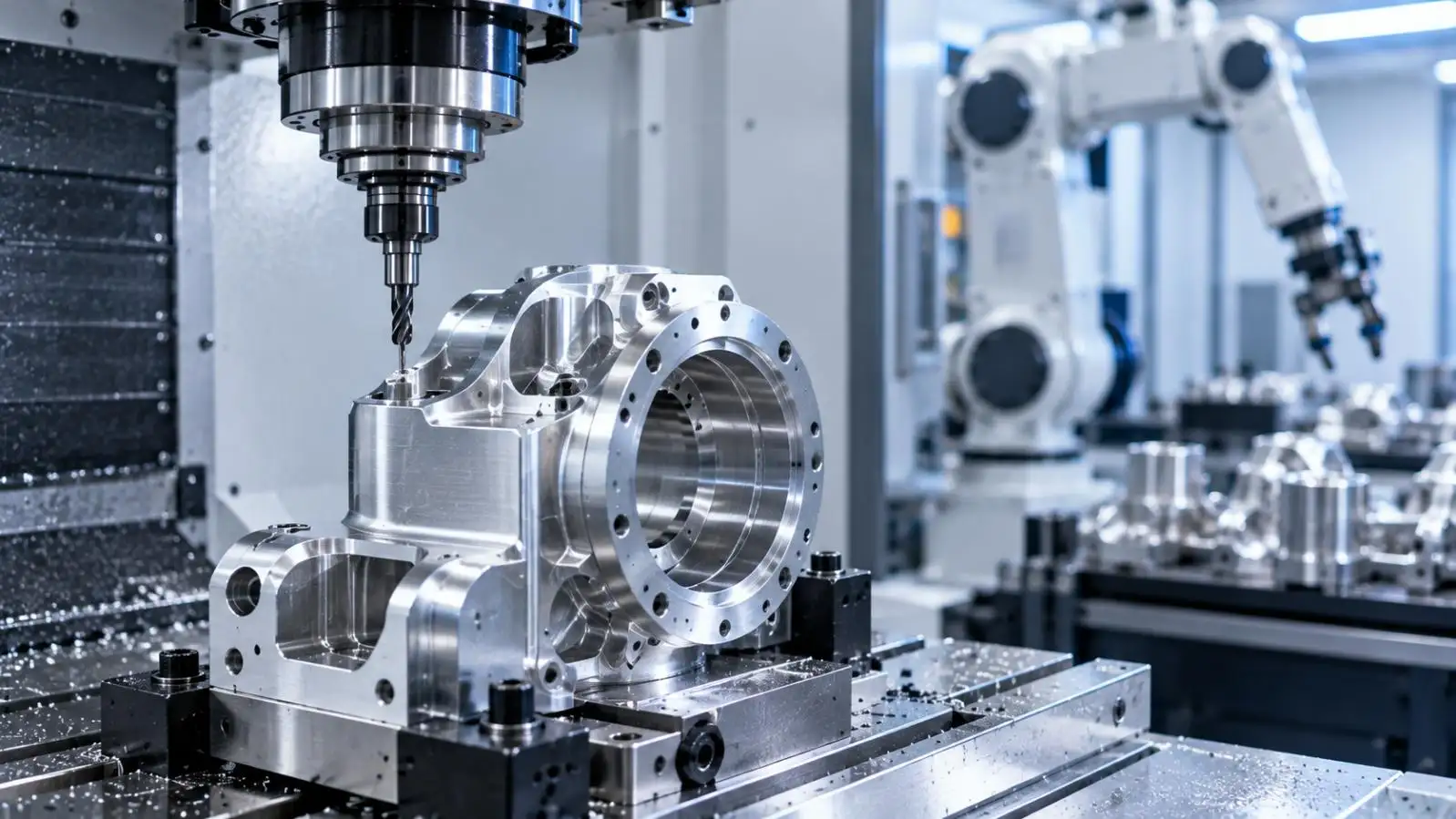
Once a workpiece is secured in place, 5-axis micro machining can orient the cutting tool at an optimal position to the surface of the workpiece throughout the entire machining process. In medical manufacturing, this provides three primary benefits:
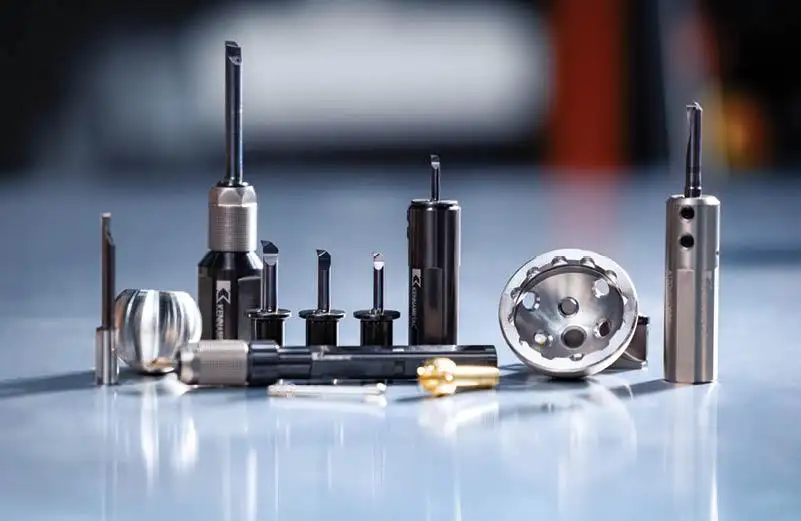
1. Ability to Produce Complex Geometries in a Single Setup
•Since manual repositioning does not occur, parts are completely machined in one setup.
•Tolerance stack-up caused by multiple setups is eliminated.
•Makes sure that on different side of the same part, micro features are aligned.
2. Shorter, More Rigid Micro-Tools
•The machine can tilt the tool or workpiece to keep the tool's cutting edge normal to the surface.
•Allows use of significantly shorter micro-end mills (down to 0.1mm diameter).
•Reduces tool deflection, chatter, and risk of micro-tool breakage.
3. Superior Surface Finish on Freeform Surfaces
•Tool marks are reduced by constant surface speed and engagement.
•Roughness of Ra < 0.4μm can be achieved without the need for secondary polishing.
This is especially important for implantable devices since cell adhesion is influenced by the surface texture.
Important Medical Applications for 5-Axis Micro Machining
5-Axis technology has made additional procedures possible in the operating theater and within the human body:
•Spinal Cages with Complex Lattice Structures: 5-Axis milling allows angled micro grooves to be incorporated which help to guide bone growth.
•Micro Surgical Instruments: Articulating forceps and clamps need to have a high level of alignment when meeting.
•Bone Screws with Variable Thread Pitch: 5-Axis technology allows the design of a bone screw which has a thread that is continuously cut in a curved and tapered fashion.
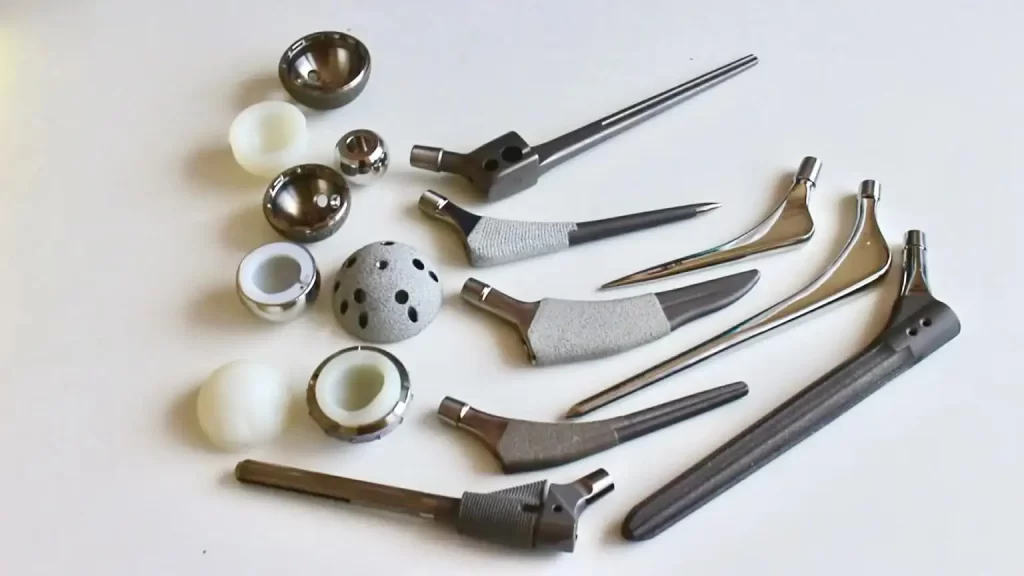
•Artificial Joints (Hip/Knee): Complex bearing surfaces that are free running can be designed and micro-milled with 5-Axis technology.
KT TOOL's Technical Advantages in 5-Axis Micro Machining
When precision and compliance to the medical industry and regulation are required, the choice of manufacturer is important. KT TOOL combines advanced 5-Axis Micro Machining within a complete medical-grade production system.
•Machining precision of ±0.005mm: achievable by the construction of thermally-stable machines and real-time monitoring of tool wear.
•Expertise with medical-grade materials: Titanium, 316L stainless steel, PEEK, and silicone are processed without thermal degradation and burr formation.
•Cleanroom production (ISO 13485 compliant): All 5-axis micro machining is performed in a contamination-free environment.
•Complete Inspection and Traceability: All micro features are measured using CMM or optics and are linked to batch-specific process data.
Complementary Processes That Complete the Medical Component
5-axis micro machining is rarely sufficient on its own. To satisfy the entire scope of implantable and surgical devices, KT TOOL employs:
•Electrolytic polishing is used to eliminate the recast layer, and brings surface finish to Ra < 0.2μm.
•Passivation improves the corrosion resistance of stainless steel surgical tools.
•Sterile processing preparation: Components are cleaned and packaged in accordance with ISO 13485 traceability.
3D micro features undergo these procedures to ensure adherence to cleanliness, safety, and functional standards for clinical application.
Prototyping to Low Volume Production
An aspect of 5-axis micro machining that is an advantage is the scalability of the process. It consistently produces as many parts as required to the same exacting standards as that of a single prototype.
•Prototyping: Rapid assembly of intricate designs that is free of the need for bespoke tools.
•Low volume production: suitable for either patient specific implants or tailored surgical kits.
•Reliability: The same CNC program, tools, and inspection setup are used in both the development and production phases.
Conclusion
As devices continue to miniaturize with added clinical function, Micro Machining For Medical Devices also has to advance. The use of 5-axis technology is no longer a consideration, but a necessity, for components that incorporate undercuts, freeform surfaces, or inclined micro features. 5-axis Micro Machining For Medical Devices, combined with medical-grade materials, cleanroom manufacturing, and robust quality systems, allows KT TOOL to place on the market better and more advanced tools and implants.
Enhance your medical device innovations. Send your CAD files to our engineers for practical insights pertaining to manufacturability, lead time, and pricing.
[Get Free Quote]
FAQs
Q1. What does 5-axis micromachining entail in the context of medical devices?
An advanced CNC process featuring the addition of two rotating axes to the standard three of CNC milling. This permits the addition of complex 3D micromachining features such as freeform surfaces and undercuts to medical devices.
Q2. What are the advantages of 5-axis over 3-axis for micro medical devices?
All features are machined in a single setup; alignment errors are therefore eliminated. 5-axis allows for shorter micro-tools and for complex shapes, surface finishes are improved.
Q3. Which medical devices are the best examples of 5-axis micro machining?
Devices such as spinal cages, bone screws that have variable pitch threads, micro-forceps, and artificial joints that also contain implants which have freeform surfaces, are good examples.
Q4. What is the best tolerance of 5-axis micro machining?
Advanced systems are capable of ±0.005mm and better. This is particularly important for features that mate in micro-surgical devices and for implants that are load bearing.
Q5. What are the medical grade materials that can be 5-axis micro machined?Materials such as Titanium Alloys, 316L Stainless Steel, PEEK, Cobalt-Chromium-Molybdenum, and medical grade silicone can be used and there is no thermal damage or burrs formed on the material.
Talk to the Manufacturer, Not a Middleman
Resources & Insights
-
 Blog
BlogCNC Machining Robotic Parts: How GD&T Controls Robot Assembly Accuracy
2026-09-24By KT Engineering -
 Blog
BlogHardware Stamping Springback Control for High-Strength Steel Parts
2026-09-24By KT Engineering -
 Blog
BlogSpring Stamping Fatigue Life: How Geometry, Material and Edge Quality Affect Cycle Life
2026-09-24By KT Engineering -
 Blog
BlogMechanical Automation Parts for Robot End Effectors and Positioning Accuracy
2026-09-23By KT Engineering