Contact Us
  Home /
 Custom Precision Mold Components for Unique Production Needs


Table of Contents

Limits inherent in conventional tooling systems are revealed by the rapid changes in the current manufacturing systems. Complex product designs have also been coupled with requests for advanced materials that have stressed the long-term reliability and the dimensional integrity of commercially available die components. The use of custom precision mold components can bring added control and resolution within a stamping manufacturing process for these types of problems.
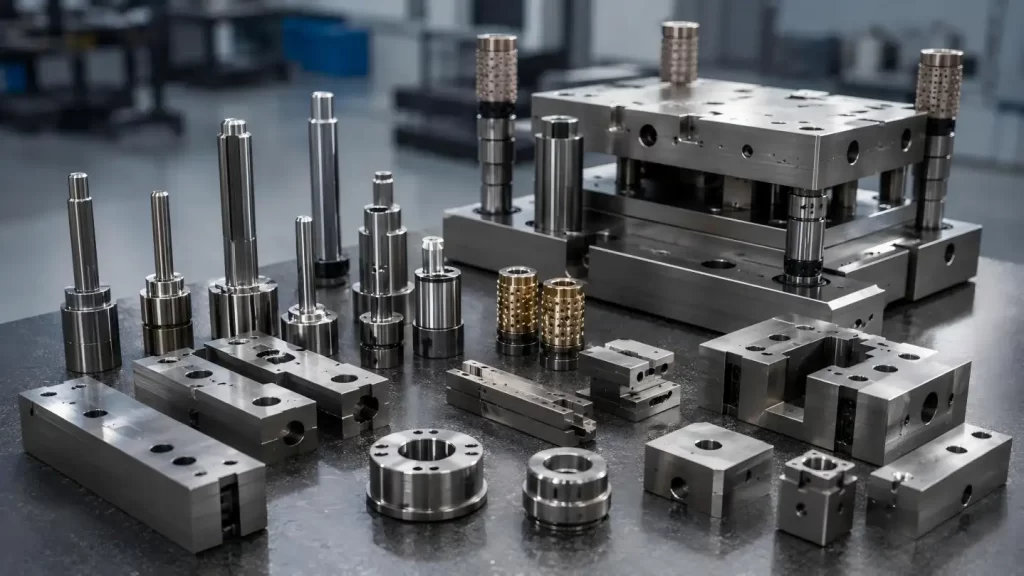
This article brings forth custom stamping solutions designed for specific manufacturing problems and discusses the development and performance factors of precision mold components.
1. What Are Precision Mold Components in Stamping?
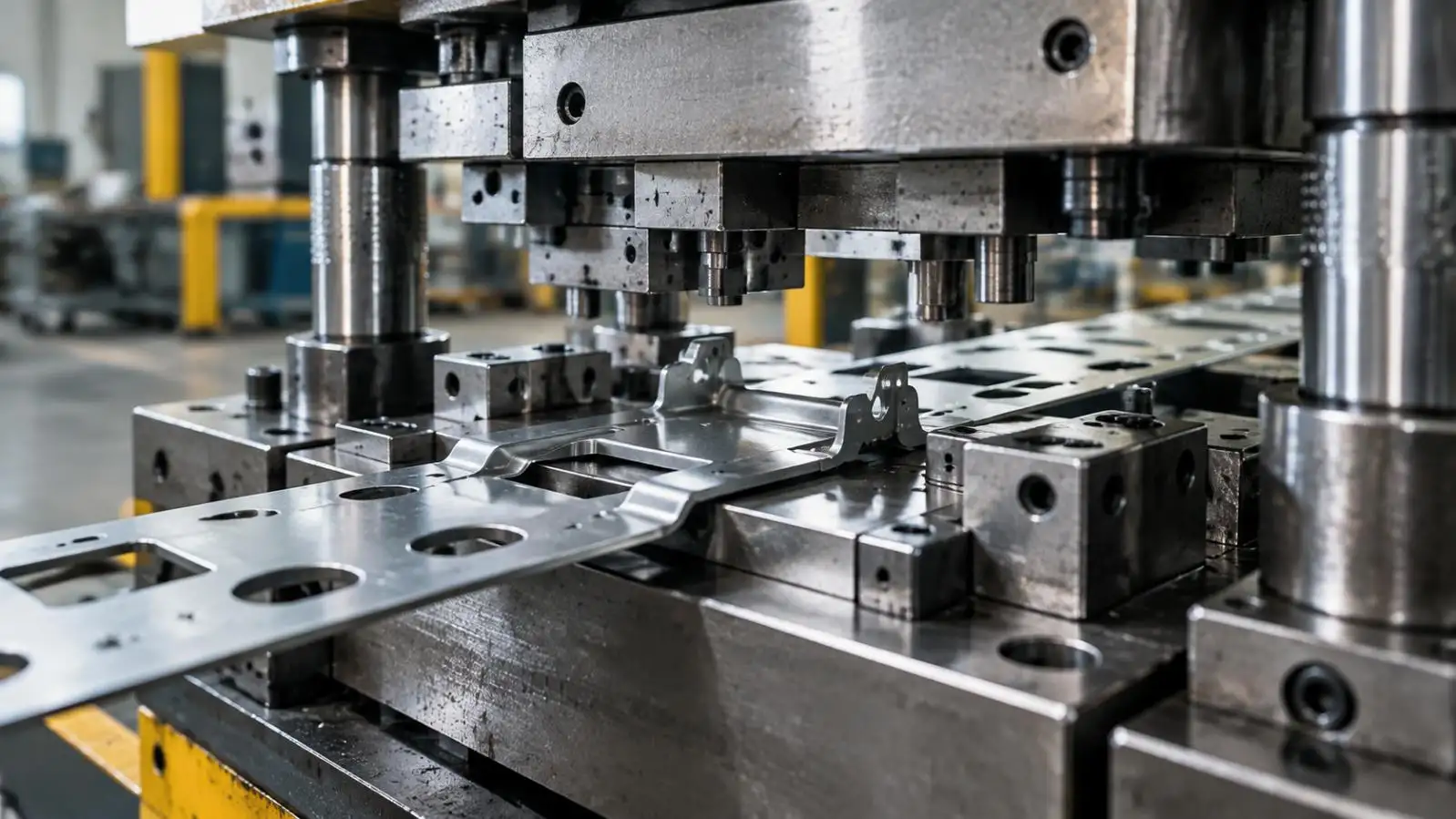
Precision mold components in a stamping system are fully customized die assembly components. They can include:
•Punches: Components that either cut or otherwise deform the stamping material.
•Dies: Components that provide the geometry and contour of the finished part.
•Strippers: Components that accomplish the controlled release of the material after the forming operation.
•Elements: Components that provide the alignment of the upper and lower dies.
•Inserts: Components that provide the wear or forming elements for the features being formed.
The role of each of these components is to influence the final accuracy and the repeatability of the stamping process.
Core Functional Characteristics
- Design for function:
Each of the components is designed for a specific stamping operation such as blanking, piercing, and coining, to name a few. This is done within a defined tolerance.
2.Fit and alignment:
All interfaces of the components are precision-ground to allow stable die alignment and to reduce wear during prolonged production runs.
3.Springback and Other Effects:
The design considers material springback and other effects so that the final part is as accurate as possible.
2. The Role of Customization in Production
For production involving mostly conventional geometries, standard tooling is usually adequate. Still, many of today's industrial components are made of more advanced geometries which often require more specialized manufacturing techniques. Custom molds can provide the necessary precision to close the gaps of standard tooling.
Circumstances for Custom Tooling
1.Intricate Design:
Custom tooling becomes a requirement for designs that have highly sophisticated and intricate geometries for example, soft geometries, small, steep radii, and thin wall sections.
2.Sophisticated or Coated Materials:
Sophisticated and/or ultra-thin materials may require special clearances, coatings, and defined wear-out strategies.
3.Flexible Production Volumes:
Modular die systems can be designed for any production volume level easily from low-volume production prototypes to high-volume production runs.
4.Incorporation of Automation:
Modern die sets are equipped with systems for scrap removal, die alignment, and/or the integration of sensors and guiding pins for the automation of press systems.
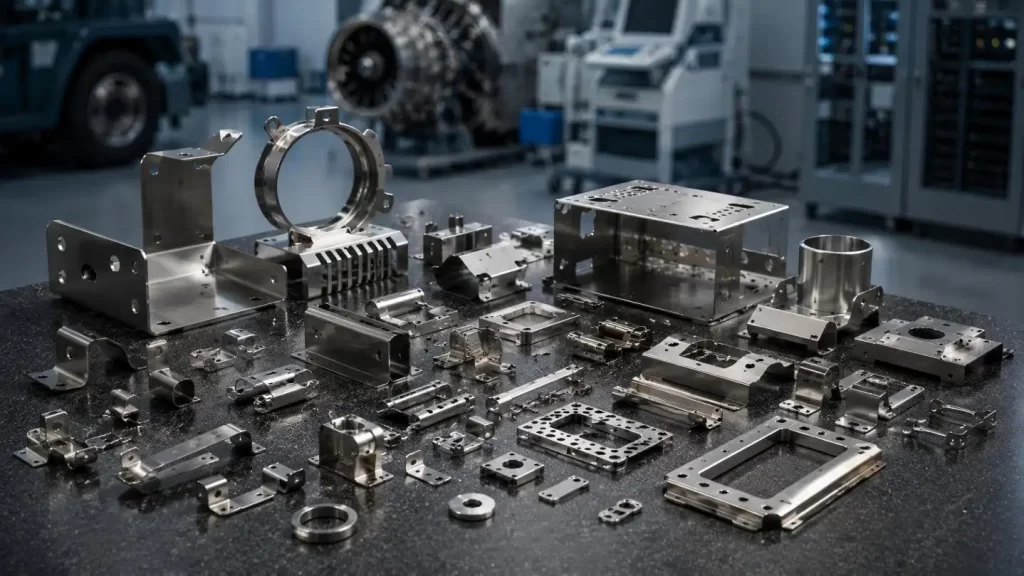
3. Considerations for the Selection of Materials for Precision Mold Components
Selecting a material for the design of a mold is a consideration of wear, tool life, and dimensional stability. The choice of mold material is determined by forming conditions, level of production, and the type of materials being processed.
| Material Grade | SKD11 (D2) | SKD61 (H13) | Cr12MoV | SKH-9 (M2) | ASP23 (PM steel) | RM56 |
| Properties | Good resistance to wear, stable when heat treated | Resistant to thermal fatigue, maintains strength at elevated temperatures | Balanced hardness and toughness | High-speed steel, red hard | High toughness, fine carbide distribution | Very high compressive strength |
| Use Cases | Long-run stamping of cold-materials, abrasive materials | Used for applications where warm forming is involved | Used for applications that involve deep drawing or complex forming | Used for applications that involve high-cycle punching | Applicable for high-performance punches and inserts | Used in coining and heavy-duty forming |
The selection of material is highly dependent on the application, and in this regard, the engineers will take into account:
•Desired volume of production
•Workpiece material thickness and hardness
•Impact and wear conditions
•Desired tool life and maintenance intervals
4. Manufacturing Processes and Quality Assurance
The development of consistent and reliable master mold elements requires disciplined control of the entire manufacturing process.
Core Manufacturing Processes
1.CNC milling and turning
This offers the capability to create intricate designs and simultaneously offers control over die inserts and component sections.
2.Precision grinding
This is used to achieve desired levels of flatness and parallelism and to create finishes of varying degrees of coarseness.
3.Application-specific machining systems
These systems are the result of proprietary manufacturing technologies and are used to enhance the manufacturing process while ensuring stringent tolerances are met for repetitive manufacturing operations.
Quality Verification System
This system is based on the inspection of key machining operations during the manufacturing process and includes the following steps:
•Confirmation of dimensions using calibrated measuring tools
•Verification of the prescribed heat treatment and the resultant hardness and stability
•A final die tryout to check the resultant die for correct stamping and alignment.
This system offers the flexibility and control of a multi-stage system and is ideal for a high-volume production environment.
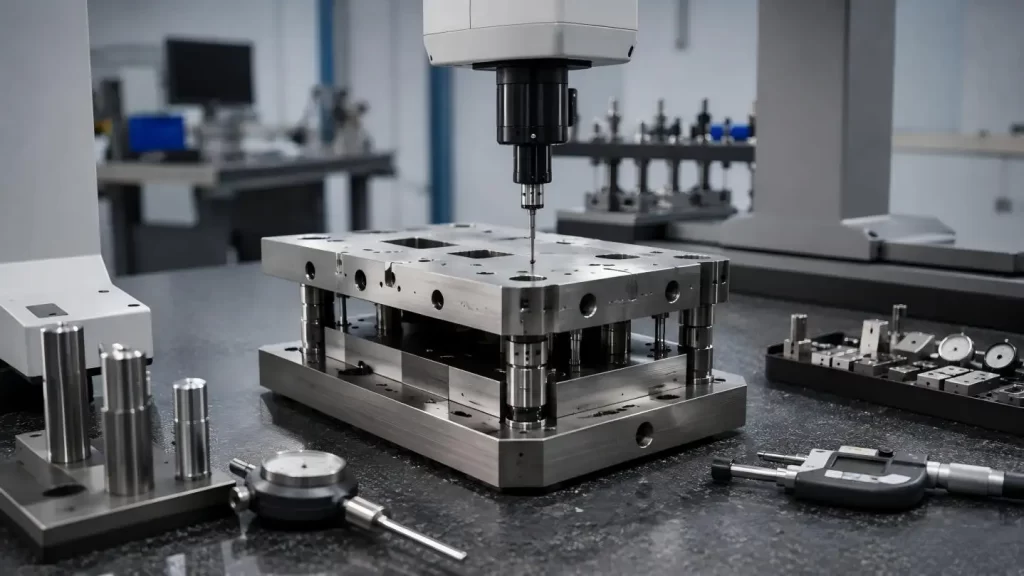
5. KT's Custom Stamping Die Solutions
KT's broad industry experience in the stamping tool industry allows the provision of complete die solutions starting from compound, through single-operation, to progressive dies.
1) Engineering Partnership
KT collaborates to understand and integrate the following for designing stamping tools:
•Geometry and tolerances of the part
•Material and its behavior during forming
•Anticipated production quantities
•Specifications of the press machine
2) Clear Communication of Material and Process Options
Considering the expected production volume and potential wear of the tool, KT advises choosing among the following tool steels: SKD11, SKD61, Cr12MoV, SKH-9, ASP23, and RM56.
3) Unified Manufacturing Process
To unify the entire process and improve reliability of the lead time, machining, grinding, and assembly take place in the same manufacturing system.
4) Quality Management Standards
KT employs:
• The ISO 9001 quality management system, and
• The ISO 13485 regulation of quality management systems dedicated to medical devices
Inspections are performed throughout the production process and are not restricted to final inspection.
5) Tool Life Reference
Life of a stamping die is often estimated to be in the range of 250,000 to 300,000 stamping cycles.
Actual tool life is impacted by many variables, including lubrication, material thickness, maintenance, and the operating environment.
6. Effective Use and Applications
Components of precision molds are helpful in industries that focus on dimensional accuracy and consistency.
| Industry | Typical Applications |
| Aerospace | Shims, structural brackets, mounting clips |
| Aviation | Engine components, retainers |
| Defense | Durable housings, equipment mounts |
| Machinery | Precision gears, housings, and washers |
| Transportation | Brackets and mounts |
| Medical Equipment | Device casing and precision metal components |
| Telecommunications | Shielding cans and housings |
| Chemical Industry | Gaskets, retainers and rings |
| Consumer Appliances | Internal brackets and frames |
Specific die design, clearances, and wear strategies are adapted for each of these applications.
Summary
Custom precision molds are not replacement parts. They establish limits for accuracy in stamping, efficiency in production, and continuous operation.
Successful implementation relies on:
•Choosing the right material for the demands of the application
•Precision machining and a controlled process of heat treatment
•A systematic process of inspection and verification
•The design and the manufacturing teams working together
Integration of these elements enables manufacturers to obtain stable and repeatable output, even in the most demanding production environments.
For manufacturers of components having geometries that are non-standard or of materials that are challenging, collaboration with a specialized tooling provider such as KT, helps convert the design thinking into practical and reliable production of stamping systems.
FAQs
Q1. What are precision mold components?
In die stamping, precision components are the elements that are machined individually to assemble a die that will form, cut, or shape metal sheets.
Q2. Are custom components superior to standard elements?
Definitely. Custom components are built according to specific part geometry, providing greater accuracy and stability.
Q3. What materials are used commonly?
Commonly used materials include SKD11, SKD61, Cr12MoV, SKH-9, ASP23, and RM56.
Q4. How long do stamping die tools usually last?
Most die tools last between 250,000 to 300,000 stamping cycles, but that also relies on how they are maintained.
Q5. What industries are precision mold components used in?
As a general rule, precision mold components are employed in the Automotive, Aerospace, Medical, Electronics, and Machinery industries.
Talk to the Manufacturer, Not a Middleman
Resources & Insights
-
 Industry Insights
CNC Machining Robotic Parts: How GD&T Controls Robot Assembly Accuracy
2026-09-24By KT Engineering -
 Industry Insights
Hardware Stamping Springback Control for High-Strength Steel Parts
2026-09-24By KT Engineering -
 Industry Insights
Spring Stamping Fatigue Life: How Geometry, Material and Edge Quality Affect Cycle Life
2026-09-24By KT Engineering -
 Industry Insights
Mechanical Automation Parts for Robot End Effectors and Positioning Accuracy
2026-09-23By KT Engineering