Contact Us
  Home /
 What are the cost advantages of metal stamping over CNC machining?


Table of Contents
- Understanding Metal Stamping vs CNC Machining
- 1. Lower Unit Cost in High-Volume Production
- 2. Material Efficiency and Reduced Waste
- 3. Lower Labor Costs Through Automation
- 4. Faster Production Speed and Higher Throughput
- 5. Tooling Cost vs Long-Term Amortization
- 6. Consistency and Reduced Quality Costs
- 7. Lower Energy Consumption per Part
- 8. Ideal Scalability for Mass Production
- 9. When CNC Machining Can Still Be More Cost-Effective
- 10. Global Manufacturing Perspective
- Conclusion

Modern manufacturers face a constant challenge of balancing costs, efficiency and scalability when making production decisions. Metal stamping and CNC machining are two of the most popular methods of manufacturing metal parts. Metal stamping may offer substantial cost benefits (particularly for medium to large volume production), although both methods provide high precision parts, depending on the application.
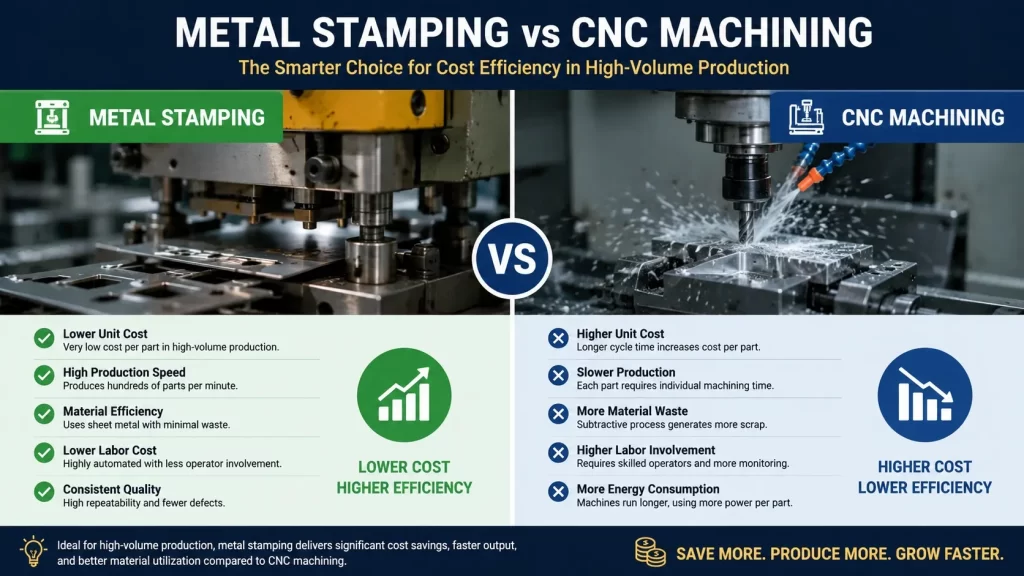
This article examines the major cost variations and why a metal stamping process is often the economical method for the automotive, electronics, appliances, and industrial equipment manufacturing industries.
Understanding Metal Stamping vs CNC Machining
Before comparing costs, it is important to understand how each process works:
- Metal stamping uses high-pressure dies and stamping presses to form, cut, or shape sheet metal into specific designs. Once the tooling (die) is created, parts can be produced extremely quickly in large quantities.
- CNC machining uses computer-controlled cutting tools to remove material from a solid block of metal (or billet) to achieve the desired shape.
Both processes are precise, but their cost structures differ significantly due to tooling, material usage, cycle time, and scalability.
1. Lower Unit Cost in High-Volume Production
The most significant cost benefit of metal stamping is that it is very inexpensive per part.
After the stamping die is produced, the whole production process is greatly mechanized. With one pressing, the finished part can be created in seconds, or several different parts created simultaneously.
CNC machining needs, on the other hand:
- Continuous tool movement
- Material removal for each part
- Longer cycle times per unit
Why stamping is cheaper per unit:
- Fast cycle time (seconds vs minutes)
- Minimal operator intervention
- High repeatability
- Ability to run continuous production lines
Stamping can greatly save labor and machine time per part, for firms that manufacture tens of thousands or millions of parts.
2. Material Efficiency and Reduced Waste
Metal stamping offers significant cost savings in material use as well.
Sheet metal blanks are usually used for stamping, and the modern layout of stamping dies is designed to make best use of material. The use of advanced nesting methods can help minimise scrap significantly.
CNC machining, on the other hand, is a subtractive process. It typically begins with a solid block of metal, and gradually carves away material to form the desired shape.
Cost implications:
- CNC machining: higher scrap rate → higher raw material cost
- Metal stamping: optimized layout → lower waste
If the material used is a high-cost material such as stainless steel, aluminum or copper, the amount of waste can have a significant impact on the total production costs.
3. Lower Labor Costs Through Automation
Metal stamping is a very automated process after tooling is prepared. Single operator may be able to monitor several presses or an automated line.
Common items that are usually needed for CNC machining are:
- Machine programming
- Tool changes
- Frequent monitoring
- More skilled labor per machine
Labor cost comparison:
- Metal stamping: low labor per part after setup
- CNC machining: higher labor involvement per production cycle
For manufacturers in areas of the world where the cost of labour is increasing, like the USA and parts of Europe, stamping is particularly appealing because automation can help them remain competitive with their global suppliers.
4. Faster Production Speed and Higher Throughput
The cost efficiency is directly influenced by speed.
Metal stamping presses can achieve very high speed, typically reaching hundreds of parts per minute, depending on the complexity of the stamping process.
The different parts are slower to make by CNC machining because it takes time to do the following:
- Individual tool paths
- Sequential cutting operations
- Time-consuming material removal
Impact on cost:
- Faster production = lower machine hour cost per part
- Higher throughput = better return on equipment investment
In some industries, such as automotive and electronics, where demand is high and timelines are critical, the speed of stamping can have a significant impact on total manufacturing cost.
5. Tooling Cost vs Long-Term Amortization
Indeed, metal stamping has a higher initial tooling expense than CNC. This must be designed and manufactured with extreme accuracy, which may be costly in the beginning.
The difference is in cost amortization, though.
Metal stamping:
- High initial tooling cost
- Extremely low cost per part after setup
- Best for large production runs
CNC machining:
- Low setup cost
- Higher cost per part over time
Over thousands or millions of units, stamping tooling costs are spread thin, making each part dramatically cheaper than CNC equivalents.
6. Consistency and Reduced Quality Costs
Consistency also affects cost indirectly.
Metal stamping produces highly uniform parts once the die is properly designed. This reduces:
- Rework rates
- Quality inspection costs
- Defective part waste
CNC machining, while precise, is more sensitive to:
- Tool wear
- Programming differences
- Machine calibration drift
In high-volume manufacturing environments, even small variations can lead to significant quality control expenses. Stamping minimizes this risk through repeatable mechanical processes.
7. Lower Energy Consumption per Part
Energy cost is often overlooked but increasingly important in global manufacturing.
Metal stamping presses are optimized for rapid, repeatable mechanical force applications, making energy use per part relatively low.
CNC machines:
- Run longer per part
- Require continuous spindle operation
- Consume more electricity per unit produced
Over large-scale production, stamping typically delivers a lower energy cost per component, contributing to overall sustainability and reduced operating expenses.
8. Ideal Scalability for Mass Production
Scalability is where metal stamping truly excels.
Once the tooling is ready, scaling production is as simple as:
- Running additional press machines
- Increasing production shifts
- Automating feeding systems
CNC machining does not scale as efficiently because each additional unit still requires significant machine time.
Result:
- Stamping scales with minimal cost increase
- CNC scales linearly with production time and machine count
9. When CNC Machining Can Still Be More Cost-Effective
Despite its advantages, metal stamping is not always the cheaper option.
CNC machining is more cost-effective when:
- Production volume is low
- Prototypes or custom parts are needed
- Design changes are frequent
- Complex 3D geometries are required
Therefore, the cost advantage of stamping is most significant in stable, high-volume production scenarios.
10. Global Manufacturing Perspective
From a global production standpoint, metal stamping is widely adopted in manufacturing hubs such as:
- China (large-scale electronics and hardware production)
- United States (automotive and aerospace supply chains)
- Germany (precision engineering and automotive components)
- Mexico (nearshoring for North American supply chains)
In these areas, manufacturers are turning to stamping to lower their per unit costs and to compete and stay competitive with the high pressure of international markets.
Conclusion
Whether it's for the convenience of a short run or the value of saving time, metal stamping can be advantageous over CNC machining under the right circumstances. It has strong characteristics as:
- Lower per-unit cost at scale
- Reduced material waste
- Minimal labor requirements
- Faster production cycles
- Lower long-term operational costs
As CNC machining is still vital in the prototyping and low-volume manufacturing sectors, metal stamping is the preferred method for high-volume manufacturing where economic efficiency is paramount.
Companies looking to streamline their production budgets and gain a competitive edge in overseas markets can reap significant long-term savings by knowing when to use metal stamping.
Talk to the Manufacturer, Not a Middleman
Resources & Insights
-
 Hide blog post
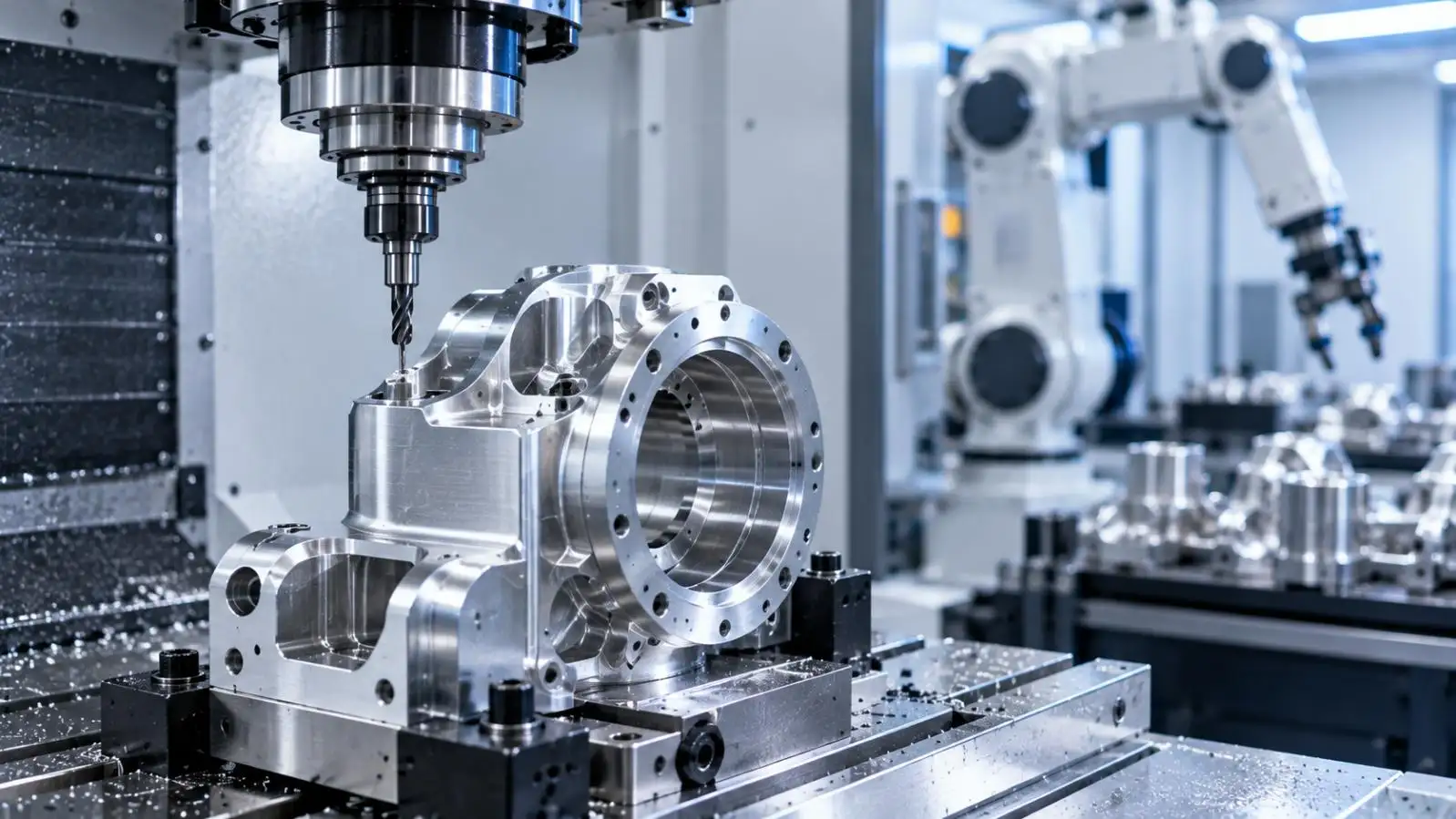
CNC Machining Robotic Parts: How GD&T Controls Robot Assembly Accuracy
2026-09-24By KT Engineering -
 Hide blog post
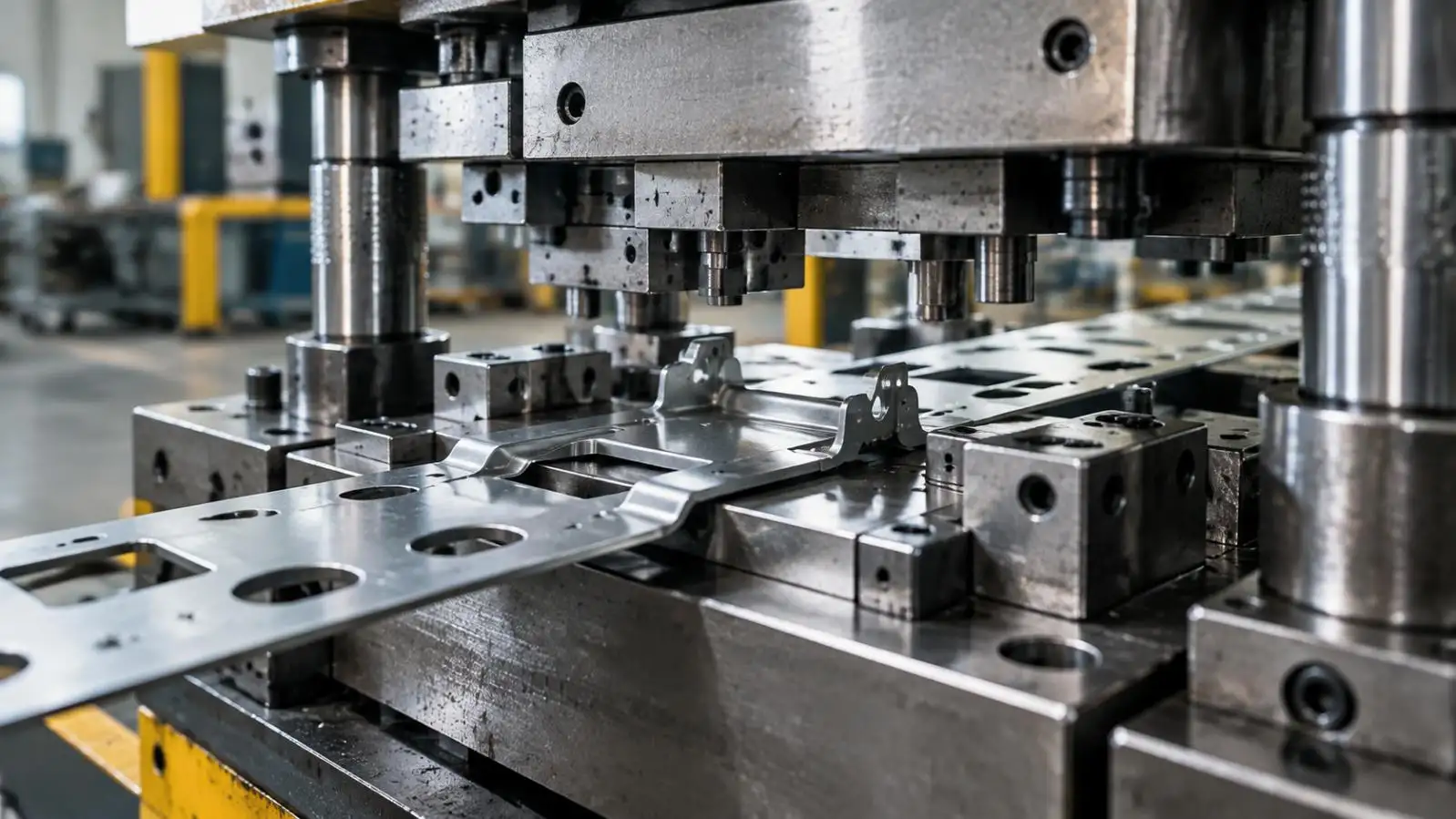
Hardware Stamping Springback Control for High-Strength Steel Parts
2026-09-24By KT Engineering -
 Hide blog post
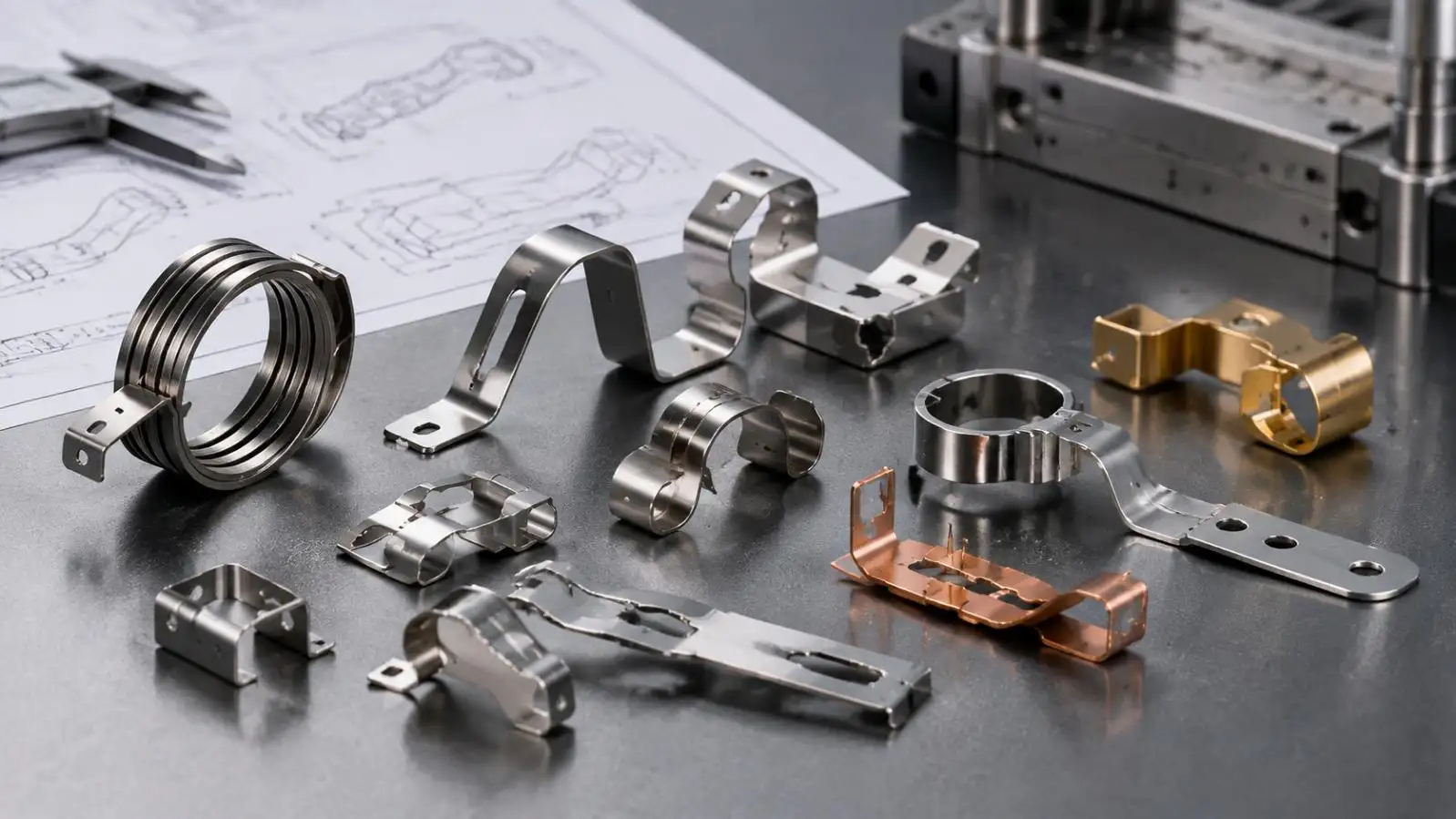
Spring Stamping Fatigue Life: How Geometry, Material and Edge Quality Affect Cycle Life
2026-09-24By KT Engineering -
 Hide blog post
Mechanical Automation Parts for Robot End Effectors and Positioning Accuracy
2026-09-23By KT Engineering